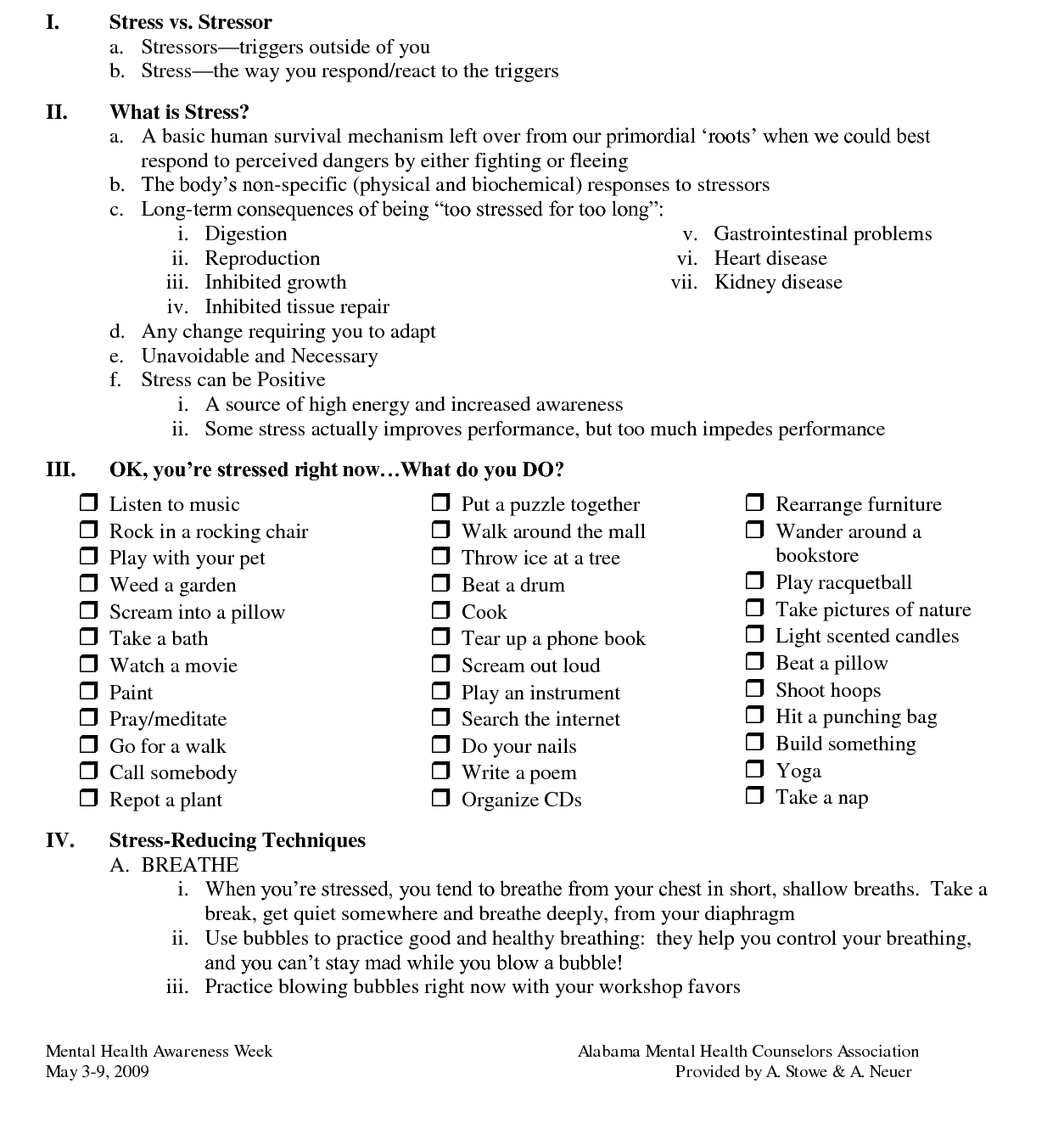
A basic human survival mechanism left over from our primordial 'roots' when we could best respond to dangers by either fighting or fleeing
The body's non-specific (physical and biochemical) responses to stressors
Long-term consequences of being 'too stressed for too long"
Digestion
Reprcduction
Inhibited growth
Inhibited tissue repair
Gastrointestinal problems
Hean disease
Kidney disease
Any change requiring you to adapt
Unavoidable and Necessary
Stress can be Positive
A source of high energy and increased awareness
Some stress actually improves performance, but too much impedes performance
Ok, you're stressed right now... What do you DO?
uncheck all
Stress-Reducing Techniques
BREATHE
When you're stressed, you tend to breathe from your chest in short, shallow breaths. Take a break, get quiet somewhere and breathe deeply, from your diaphragm
Use bubbles to practice good and healthy breathing: they help you control your breathing, and you can't stay mad while you blow a bubble!
Practice blowing bubbles right now with your workshop favors