- Apply
- Visit
- Request Info
- Give



Written by Savannah Striano ’25
Published on October 26, 2026
When children walk through these doors, it’s a level playing field; every student has the same opportunities to learn and grow.
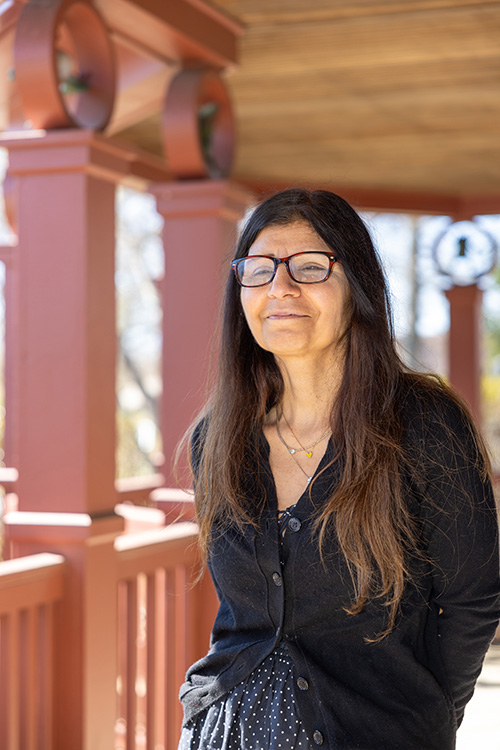
Niloufar Rezai
 9,600
Volunteer/Internship Observation Hours
450
Education Majors Trained
When a group of toddlers walks into the playroom at the Margaret S. Wilson Child and Family Development Resource Center (CFDRC), they seem like typical preschoolers — curious, noisy, and busy. But in the sandbox and dramatic-play corners, their make-believe worlds are helping them develop the crucial thinking, language, and problem-solving skills that form the foundation of early learning.
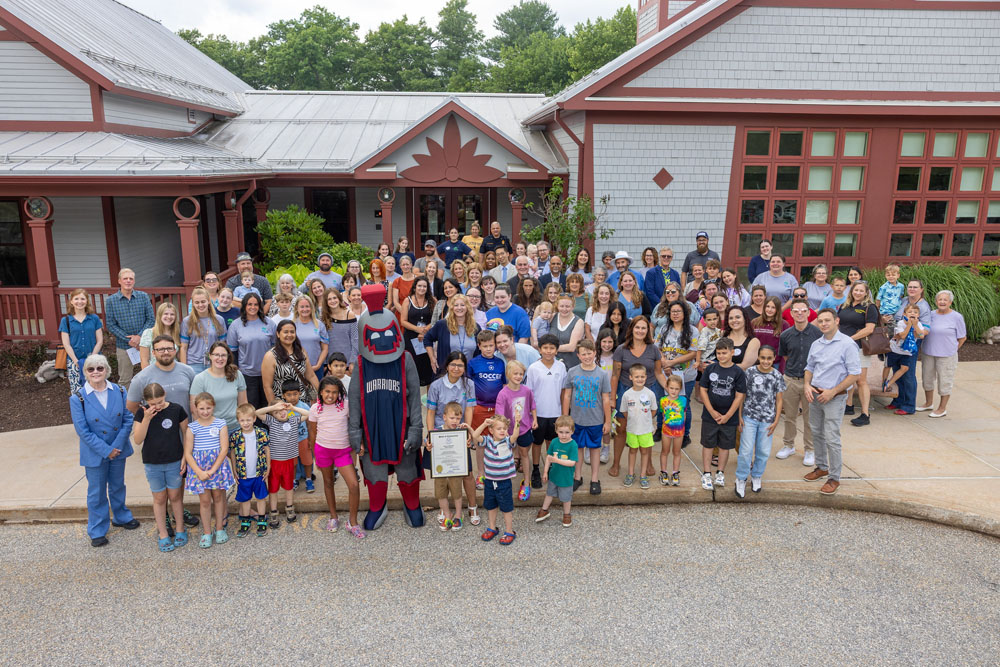
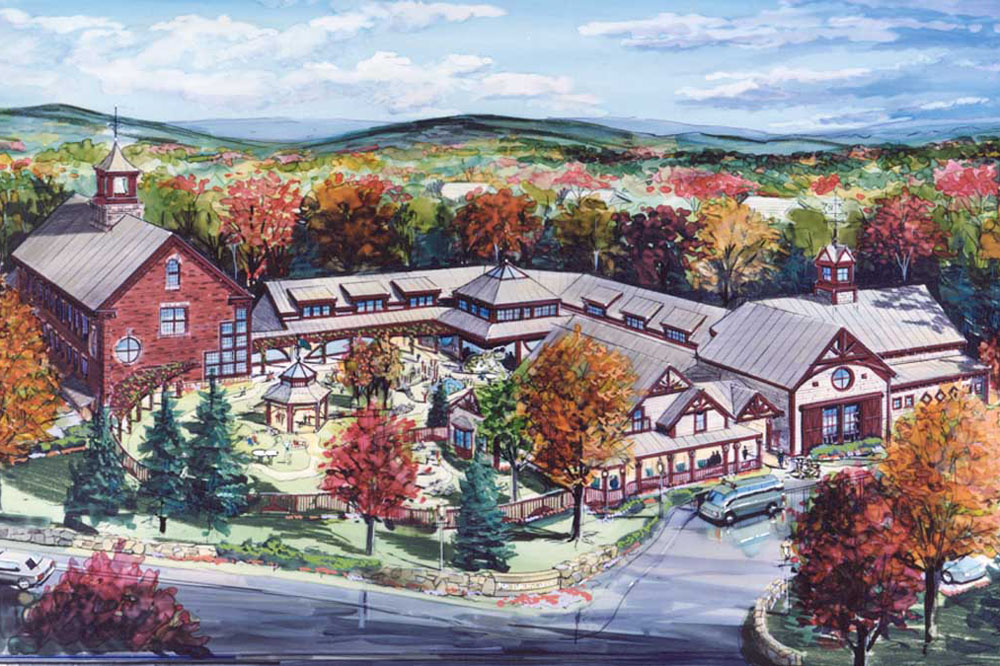
For 20 years, the CFDRC has been more than just a typical preschool — it functions as an early learning center where children learn through play, a launchpad where future teachers learn best practices, and a living laboratory where researchers capture insights that could change how educators understand early learning.
The CFDRC has been a hidden gem within the Willimantic and Eastern Connecticut State University communities since its founding in 2006. Director Niloufar Rezai emphasized that the CFDRC’s impact is made possible through the School Readiness Grant, funded by the Connecticut Office of Early Childhood. Since 2008, the grant has allowed the center to serve children who might otherwise be unable to attend preschool due to financial barriers. “This funding has been instrumental in creating inclusive classrooms where children from economically disadvantaged backgrounds learn alongside their more affluent peers,” she said.
Rezai’s mission is to ensure diversity in every classroom at the CFDRC: “I want them to be diverse in terms of demographics, such as socioeconomics, language, and culture.”
Research underscores the significance of this objective, she says, demonstrating that such environments foster stronger literacy and oral language development — key factors in narrowing achievement and opportunity gaps.
“When children walk through these doors, it’s a level playing field; every student has the same opportunities to learn and grow.”
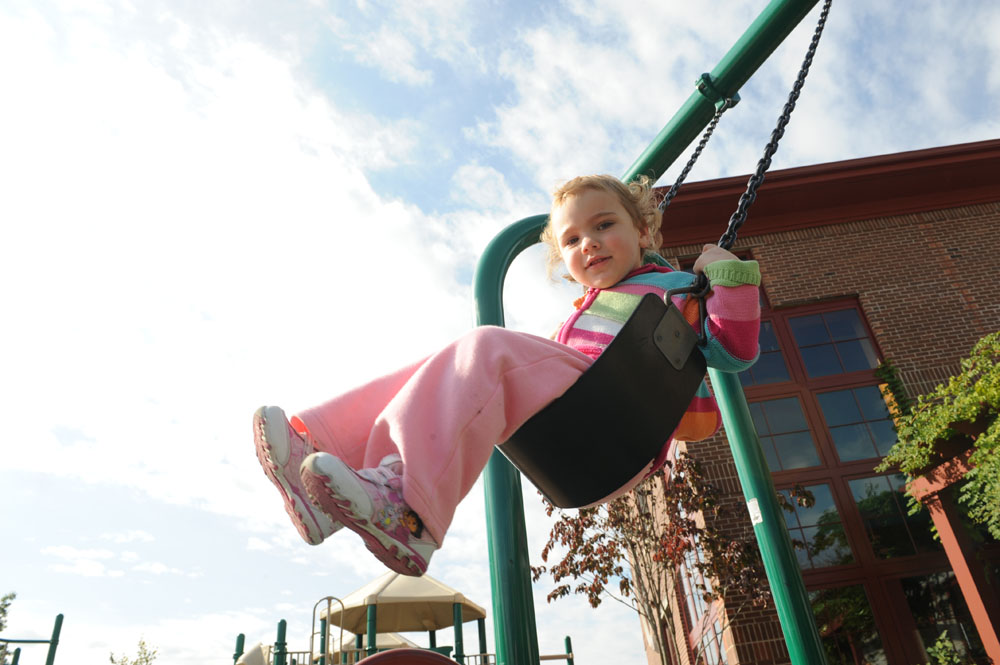
One of the CFDRC's earliest preschoolers takes to the swings (2007).
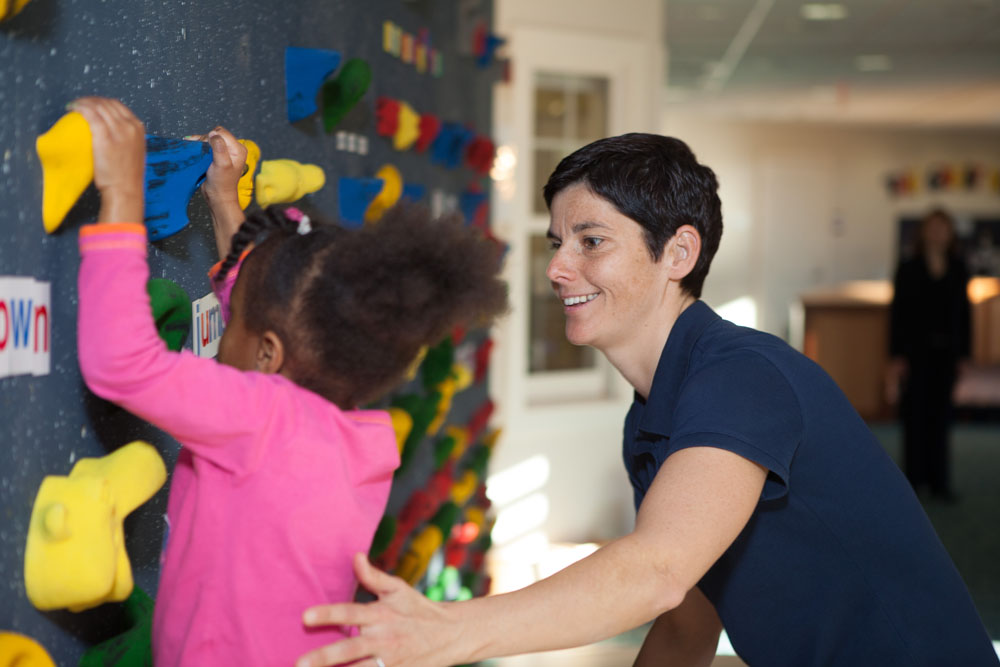
A physical education major spots a child on the CFDRC’s new rock wall (2014).
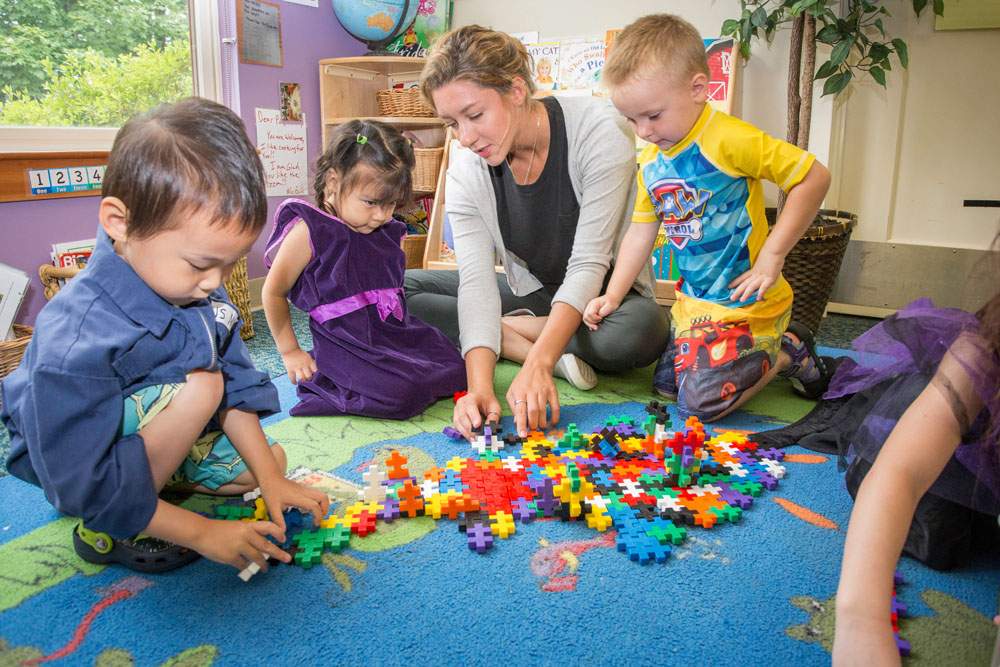
An early childhood education major works with children during the 2018 TIMPANI study.
I continue to be amazed at how research findings and classroom practices at Eastern’s centers have impacted other countries.
Jeffrey Trawick-Smith
Investigations
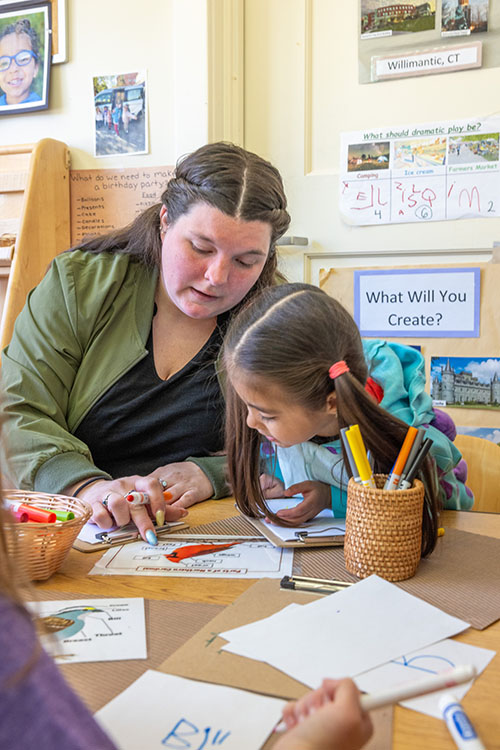
At the CFDRC, children learn by exploring, experimenting, and discovering through play. “We believe strongly that the best vehicle for children to learn is through play … and knowing what questions to ask, when to ask, and when to just observe,” said Rezai.
This philosophy comes to life through semester-long “investigations.” Last fall, for example, the focus was communication — explored through sensory and dramatic play, math, science, and writing to support both cognitive and social-emotional growth.
Emily Grogan ’17 and Coreene Charette are two CFDRC teachers who guided preschoolers through the investigative process. Studies in nonverbal communication began with silent video clips, prompting children to interpret facial expressions, body language, and emotions. “This encouraged them to guess what was happening … and how the people were feeling,” said Grogan.
The inquiry soon expanded into play. Using recycled materials, children built a classroom “post office” where they sent mail, measured envelopes, and wrote letters to their stuffed animals and classmates. The experience extended beyond the classroom with a visit to Eastern’s mailroom, where children observed real-world tools like scanners, sorting bins, and signage. Role-playing as postal workers and customers helped the young students practice both verbal and written communication skills.
Children also explored communication through sign language, braille, and assistive speech devices. Later, the focus shifted to expression through puppetry, movement, music, and art. The semester concluded with a hands-on introduction to tools such as typewriters, telephones, and Morse code.
 Ages Served
18 months to 5 years
International Impact
Sudha Swaminathan, professor and director of the Center for Early Childhood Education (CECE) — the research center that abuts the CFDRC — describes the CFDRC as “the heart of a Venn diagram” between the CECE and some of the University’s undergraduate teacher development programs, including early childhood, elementary, and physical education.
Beyond serving children and families, the CFDRC hosts much of the University’s early childhood research. “Ninety percent of the research on children’s development and teachers’ growth at the University happens through the CFDRC,” Swaminathan said.
 65
Average Annual Enrollment
Since 2006, the CECE has partnered with the CFDRC to publish 13 major studies on children’s development, with several earning international acclaim.
One renowned study was the “Toys that Inspire Mindful Play and Nurture Imagination” (TIMPANI) assessment. Conducted annually from 2009 to 2019, researchers used a specialized rating scale to identify a new “toy of the year.” The research highlighted how different toys support high-quality play that fosters social interaction and creativity across genders, backgrounds, and learning environments.
 1,300
Preschoolers Over Two Decades
Short documentaries highlighting TIMPANI and other Eastern early childhood studies can be found on the CECE YouTube channel, which hosts 250 videos with more than 35,000 subscribers and seven million views globally.
Views peaked during the pandemic, as scholars used these materials as teaching resources during the era of distance learning. Top viewership was in countries such as Canada, the United Kingdom, Australia, India, the Philippines, and Singapore.
Jeffrey Trawick-Smith, professor emeritus and research consultant, said, “When I travel outside the United States, I continue to be amazed at how research findings and classroom practices at Eastern’s centers have impacted other countries.”

The Great Tree within the CFDRC’s Marketplace, named in honor of Carleton P. and Teresa H. James ’49, whose generous donations have supported the CFDRC over the years.

A physical education major helps cool the kids off during Fun Mud Day (2017).
Enhancing Education
The CFDRC also serves as a fundamental piece of Eastern’s undergraduate and graduate early childhood education programs. As education curriculum requires practical teaching experience, Swaminathan said, “Many students are able to complete that experience next door in the preschool.”
Students in the physical education program also benefit from the CFDRC. They routinely conduct “gym” classes for the children and host the annual “Fun Mud Day.” During this event, the CFDRC playground transforms into a muddy landscape for wild and messy play — all supervised by students.
 73%
Underserved Families
For some families, the CFDRC serves as a vital childcare resource for parents pursuing new or continuing education.
As a nontraditional student balancing coursework and parenting, Nicole Smith ’25 said having her child enrolled at the CFDRC made it possible for her to continue her own education. Beyond convenience, she saw firsthand how the center has helped her child grow both socially and academically.
“I don’t think I could have finished my degree without the CFDRC,” Smith said. “Having dependable, loving childcare made it possible for me to stay on track with my classes. The staff was always understanding and communicative, and Eastern was supportive as well.”
The CFDRC always kept us creative and encouraged us to explore so many different subjects.
Jaylena Portuguez
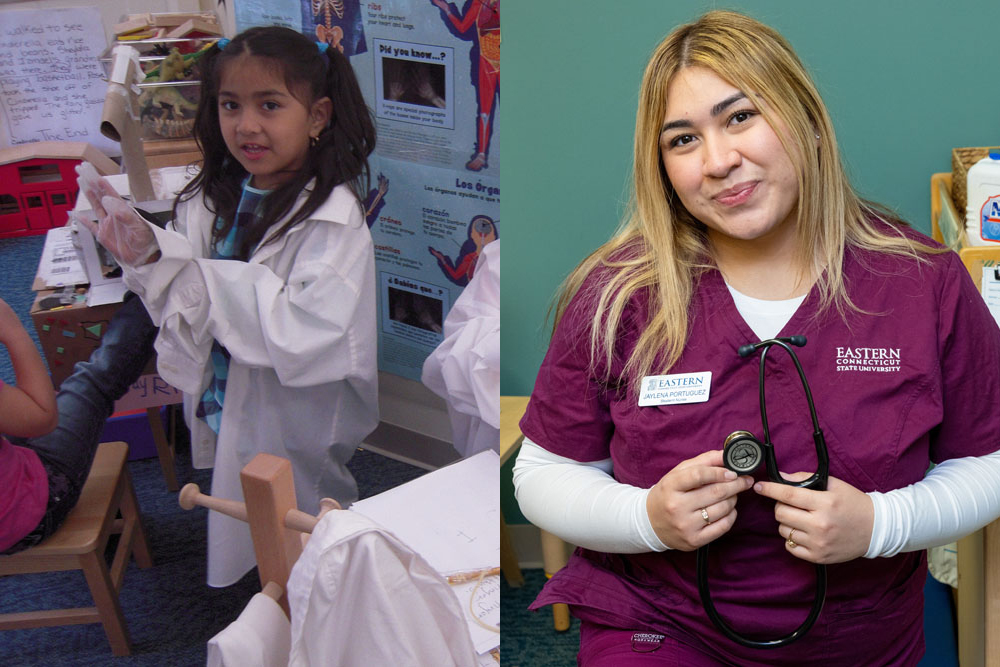
Jaylena Portuguez attended the CFDRC as a child before enrolling in Eastern’s nursing program.
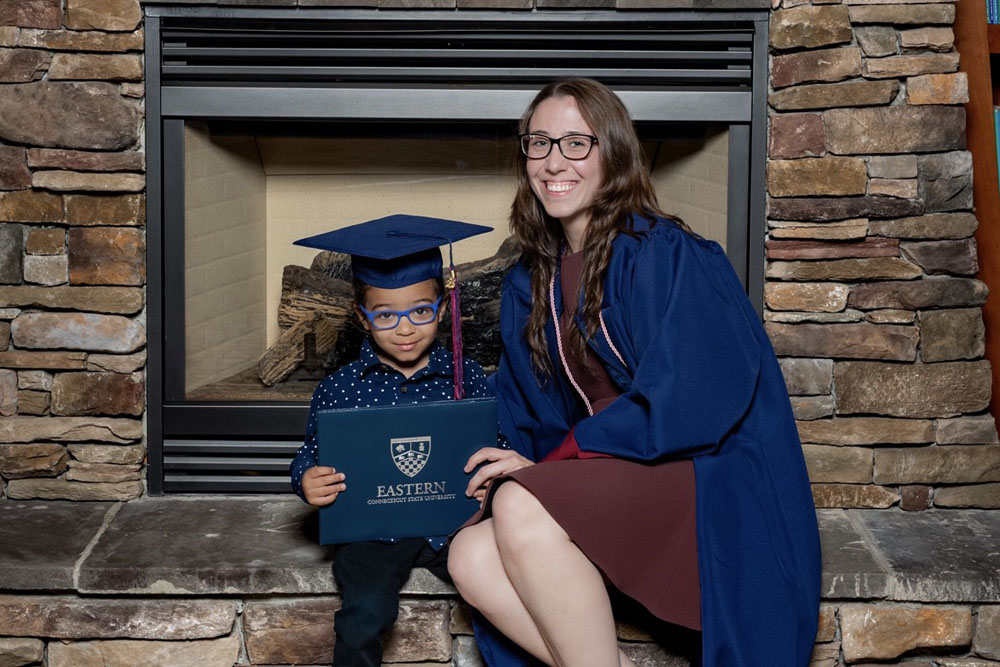
Nicole Smith ’25 celebrates with her child, a former CFDRC preschooler, after graduating from Eastern.
A Full-Circle Moment
Current Eastern student Jaylena Portuguez’s connection to campus began nearly 15 years ago as a preschooler at the CFDRC.
“Even now as a young adult, I can vividly remember my childhood experience,” she said. Some of her earliest friendships began on the CFDRC playground, connections that continued through elementary, middle, and high school. She recalls favorite moments like snack time smoothies, imaginative play in the classroom kitchen, and story time on the circular carpet.
Certain spaces remain especially vivid in her memory, including the large tree near the CFDRC entrance with a small nook inside its trunk: “As a child, it was one of the coolest things.”
 $42K
Median Household Income
She remembers hands-on activities that nurtured creativity and curiosity, from painting in smocks to science explorations like observing the butterfly life cycle and learning about bones.
“The CFDRC always kept us creative,” she said, “and encouraged us to explore so many different subjects.”
Now attending Eastern as a nursing student, Portuguez sees the CFDRC’s impact from a new perspective. She credits early exposure to science for shaping her curiosity and career path, explaining that those early experiences “set me up to always ask questions and seek out answers.”
Languages Spoken: Spanish, Mandarin, Arabic, Nepalese, Polish, Romanian, Hindi, Russian, Swahili, Cantonese, ASL, Serbian, Bengali
She also points to the strong partnership between Eastern and the CFDRC, noting that it creates meaningful, hands-on learning opportunities for students while strengthening the learning environment for the young children.
Portuguez’s connection to the CFDRC has remained constant over the years, first through her younger sister and now through her nephews, who currently attend the center. “It always feels like a full-circle moment,” she reflected.
Since her days at the CFDRC, Eastern has prepared Portuguez for the next stages of life. Recalling her preschool graduation, “I remember feeling nervous about moving on to kindergarten,” Portuguez said, “but also confident that I was ready. The CFDRC prepared me to take on whatever was ahead.”