- Apply
- Visit
- Request Info
- Give



Written by Noel Teter '24
Published on October 26, 2026
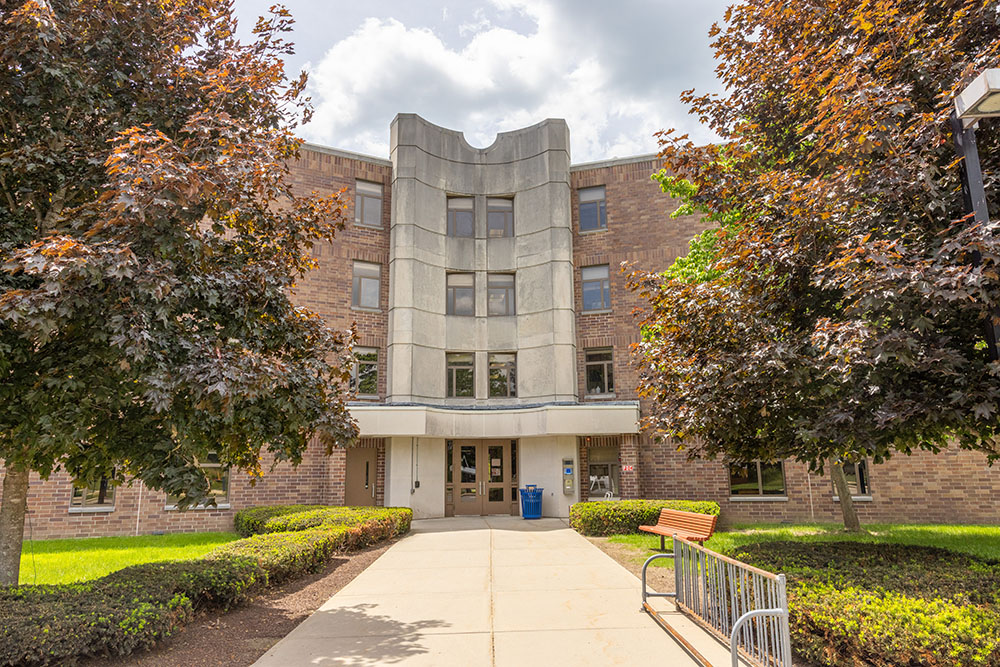
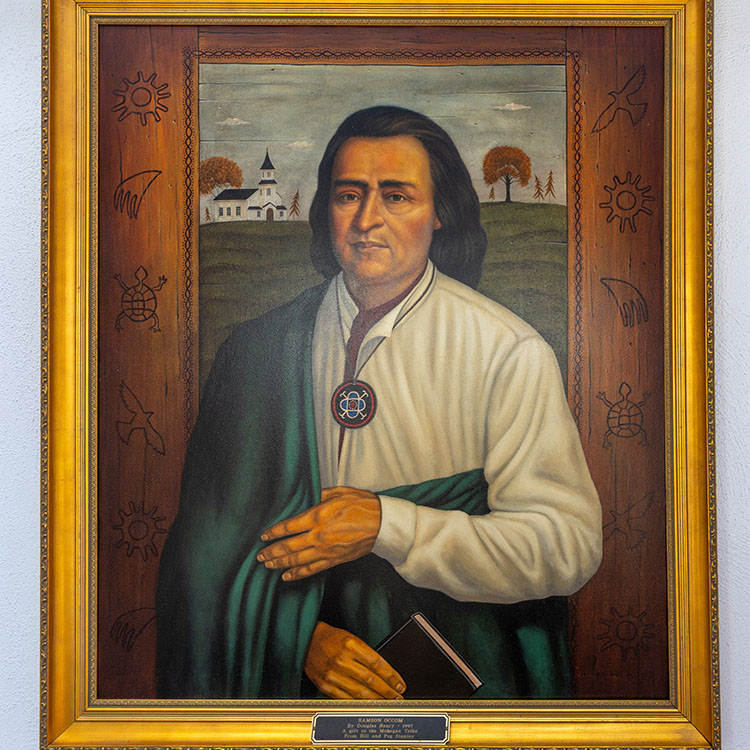
The name “Occum” is familiar to generations of Eastern alumni. Since the 1980s, the monolithic Occum Hall has been a cornerstone of the University’s north campus. What most people don’t know, however, is the historic figure the residence hall is named after: Samson Occom, a prominent 18th-century Mohegan tribal leader, author, and minister from eastern Connecticut.
Born and raised in a wigwam on Mohegan land outside New London, Occom (1723-92) dedicated his life to advocating for Indigenous sovereignty at a time of expanding colonial influence. A champion of education, Occom was also committed to helping his people read and write in the English language, as well as to following the Christian faith.
A champion of education
Occom pursued his education in present-day Columbia, CT, under the instruction of Windham minister Eleazar Wheelock (1711-79). Wheelock later founded the Moor’s Indian Charity School in 1754, a school dedicated to teaching Christianity to Indigenous children.
According to a 1983 biography by former Eastern librarian Kenneth Moorhead, Occom was a schoolteacher and minister on Long Island, NY, before joining Wheelock’s mission in 1761 as a fundraiser and recruiter for the school.
Occom traveled to Great Britain in 1766 to solicit funds, returning home two years later with more than £11,000 — the largest sum collected for any colonial school at the time.
We as Mohegans have always honored Occom … for his elegant ability to walk from the wigwam of his birth to the global stage in support of his dream of an Indian school.
Beth Regan ’79 M’89
According to the biography, he also returned home to betrayal. Wheelock had promised to care for Occom’s family during his absence. Instead, Occom returned to Connecticut and found his family destitute.
Furthermore, Wheelock diverted the funds Occom raised to establish a different school in New Hampshire that would later become Dartmouth College. This institution moved away from the original mission of educating Native American youth, contradicting the promises made to Occom.
Disillusionment and renewal
During the following years, Occom witnessed the American Revolution, which only strengthened his desire to fight for his Indigenous people and their rights to property and education. He remarked that Native American populations showed more Christianity than either side fighting in the war, according to the 1983 biography.
Occom eventually moved to upstate New York and founded the Brothertown Indian Nation in 1785 to create a home for Native Americans who had been displaced by colonial expansion. This settlement welcomed people from many tribes, including the Montauk, Narragansett, Mohegan, Pequot, Tunxis, and Niantic.
Eastern alumna Beth Regan ’79 M’89, chairwoman and justice of the Mohegan Tribal Council of Elders, commented on Occom’s enduring legacy: “We as Mohegans have always honored Occom ... for his writing talents, his herbal medicines, his commitment to education, and his elegant ability to walk from the wigwam of his birth to the global stage in support of his dream of an Indian school.
“He saw firsthand how settler colonists could take advantage of the Indian should they not learn — should they not get an education — especially as it came to the ‘sale’ of their land.”
Bestowing Occom's legacy upon Eastern
Occum Hall arose from a housing shortage at Eastern during the 1970s and ’80s. As quoted in the Willimantic Chronicle, then-Eastern President Charles R. Webb said, “Occum Hall, with its 245 beds, has helped immensely to relieve overcrowding in Eastern’s dormitories.”
The hall’s dedication ceremony on Sept. 28, 1984, boasted a large Native American contingent as reported by the Chronicle.
In a 1983 resolution by the Connecticut State University system, Executive Director James A. Frost cited Occom’s prominence as a historic figure in eastern Connecticut, noting his unyielding commitment to helping tribes in the New England region “maintain independence and preserve their cultures” as the impetus for naming the hall.
Regan praised Eastern for honoring Occom not only through his eponymous building but also through a deeper commitment to fulfilling his mission.
Occum or Occom?
While the Eastern residence hall features the phonetic and alternative spelling, “Occum,” historical archives prefer the spelling used by the man himself: Occom.
“He would be very happy that women are being educated here, as that was the way of our people,” she said, noting the Indigenous women who were educated at the former Moor’s Indian Charity School in Columbia.
“Dozens of Mohegan educators, including yours truly, have since attended Eastern Connecticut State University, and they have created great legacies for educators and education.”