- Apply
- Visit
- Request Info
- Give



Written by Kyle Berson '26
Published on October 26, 2026
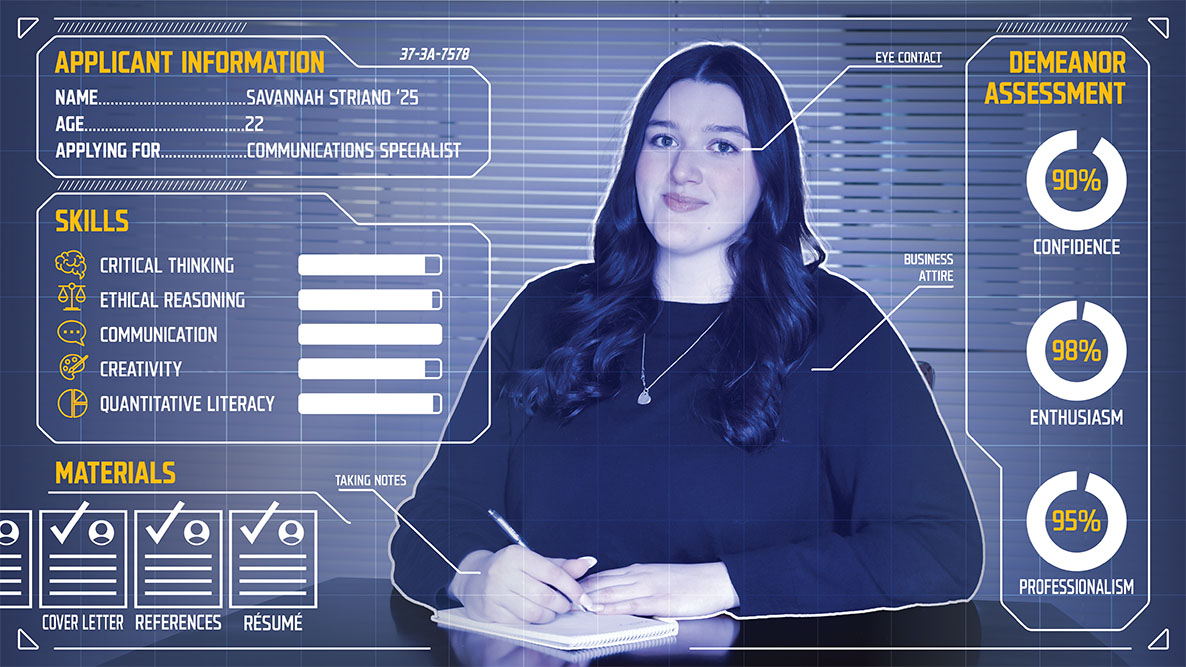
Savannah Striano ’25 was excited for her first interview for a full-time job after graduation. To her surprise, when she logged in to the virtual interview, she wasn’t greeted by a person, but by a series of fast-moving minigames.
One was a matching game, another was a memory game, and the third asked her to express her emotional response to different photographs. Then she was video-recorded while answering basic interview questions.
“It felt nerve-wracking,” she said. “I didn’t know where my answers were going or who was seeing them. … School prepared me with interpersonal skills for interviews with humans, not robots.”
Striano did not advance in the interview process. Baffled by the experience, she looked into the platform that hosted the interview, Hirevue, and learned that the platform uses AI to assess responses and score applicants.
“Did I choose the wrong emotion during that minigame?” she thought, feeling that she would have performed better had she been interacting with a live person rather than a computer program.
The changing hiring landscape
As hiring practices change with the rise of artificial intelligence (AI), an increasing number of employers are adopting new methods to perform a variety of human resources (HR) tasks, from screening applications to conducting interviews.
The implementation of these new technologies has prompted rapid change in the modern job search. With the U.S. Census Bureau and Bureau of Labor Statistics reporting an unemployment rate of 5.6% for recent college graduates (ages 22-27) as of March 2026 — slightly higher than the rate for all workers (4.2%) — it’s important to understand how AI is used in the recruitment process and how job applicants can stand out in this new environment.
In 2025, approximately 43% of employers used AI in HR-related capacities, an increase from 26% in 2024, according to the Society for Human Resource Management’s (SHRM) “Talent Trends Report.” A survey within the report revealed that 60% of respondents, consisting of more than 2,300 HR professionals in diverse industries, expressed optimism for AI rollouts at their organizations. The survey also found that about 24% of respondents were concerned that AI would replace jobs at their organizations.
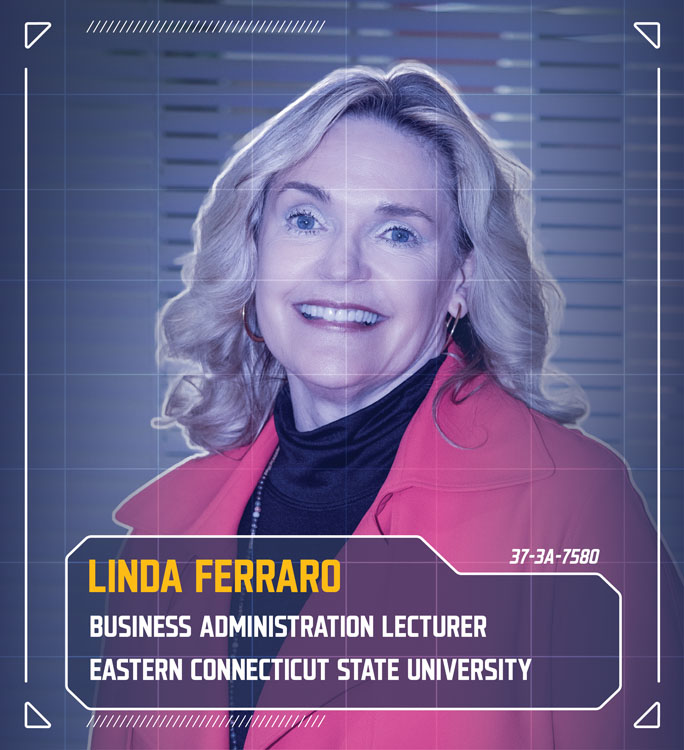
Linda Ferraro, a business administration lecturer at Eastern, explained that HR is one of the leading fields for the workplace implementation of AI tools. “HR professionals are leading the way in understanding how AI can help shape the overall culture of organizations,” she said. As job seekers grapple with this new reality, Ferraro says, “AI in HR helps create a space to focus more on critical thinking and relationships.”
HR professionals utilize AI in several ways. In the recruitment process, the technology is being used to draft job descriptions, postings, and interview questions.
In recent years, applicant tracking systems (ATS) have increasingly implemented AI into their workflows. These systems automate many aspects of the recruitment process for employers, such as screening applicants and their resumes, as well as tracking application statuses and communications.
AI technology is also used in performance management, where AI tools are being used to comb through employee databases to draft performance evaluations, compile feedback, and help set goals.
In onboarding and professional development processes, AI models are being used to draft and personalize training materials for individual learning preferences.
Professional perspectives
In the 2025-26 academic year, Eastern’s Department of Business Administration and SHRM hosted an interactive discussion titled “AI in Human Resources.” One of the event’s lead organizers, Ferraro said, “[AI] allows us to automate some of the repetitive tasks of the job and allows HR professionals to focus more on organizational culture and relationships.”
After conducting in-person interviews, Ferraro explained that she feeds her notes into AI to organize them into specific themes, identify patterns, and generate insights she might not have otherwise considered. While this makes her more efficient at her job, she said, “It doesn’t eliminate the importance of the human.”
Ferraro continued: “I would never give materials to a client without thoroughly assessing whether it was my voice, and that it kept the content I wanted. Using AI, I can more quickly get to the first step in what I ultimately deliver to my client.”
You're not going to lose your job to AI... you're going to lose your job to someone who uses AI.
Jensen Huang, president and CEO, NVIDIA
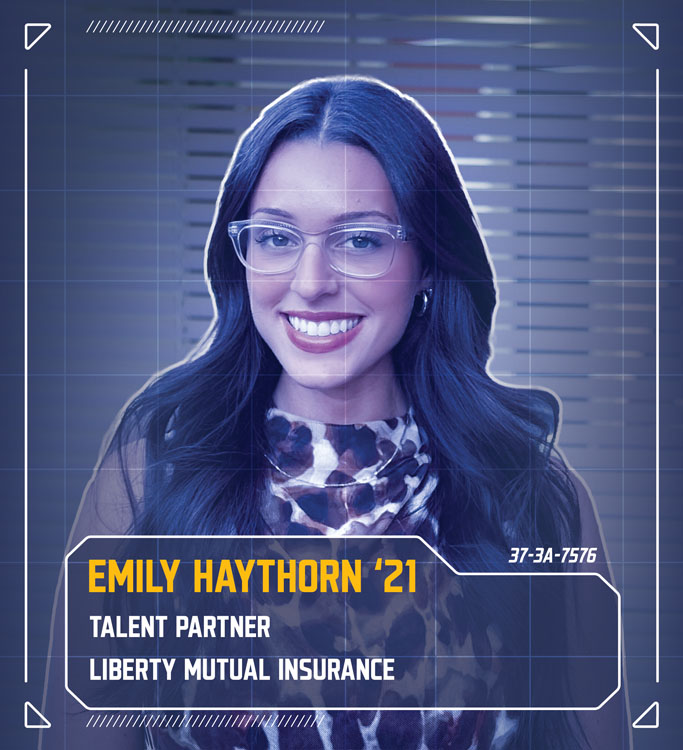
Emily Haythorn ’21, a talent partner with Liberty Mutual Insurance, uses AI as a “thought buddy” when analyzing large datasets for an organization with more than 6,000 employees.
“Data analysis is a big piece of seeing how our organization is performing,” she said. “You can use AI to help take performance measures of how the business is doing and identify gaps, opportunities, and patterns to support being a high-performing culture.”
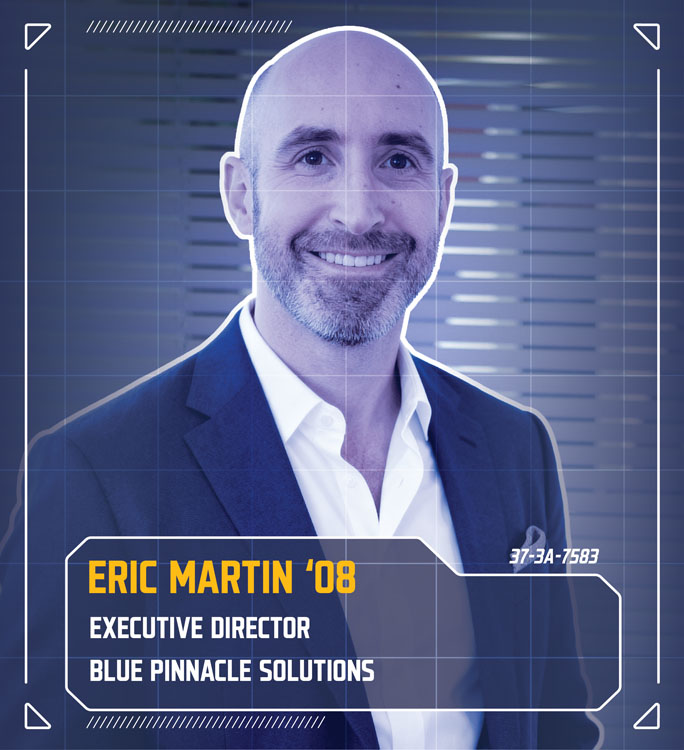
Eric Martin ’08, executive director of Blue Pinnacle Solutions, employs AI to streamline communication. As a strategic HR consulting and services firm, Martin’s team uses AI to draft emails, schedule appointments, create PowerPoints, and summarize information that helps free time to brainstorm, problem-solve, and perform higher-level tasks.
“The old-fashioned way would take hours,” he said. “Now you can do it in a few minutes.”
Martin is also a founding member and innovation partner with the AI for HR Community, a resource hub and networking space for HR professionals to discuss their evolving field. “In early 2025, I didn’t know how to effectively use AI in my world,” he said. “But I did know it was going to have a huge impact on the work that I do.”
Martin added that the AI for HR Community is “bringing HR professionals and leaders together to make sure that everybody has the tools, resources, and knowledge to use AI effectively in organizations.”
The old-fashioned way would take hours. Now you can do it in a few minutes.
Eric Martin '08, executive director, Blue Pinnacle Solutions
AI concerns for HR
AI models are trained on large datasets, fueled by user input. Prompts, photos, spreadsheets, and other information are saved and used to generate its responses. Understandably, there is concern about data privacy and security when AI is used with sensitive information.
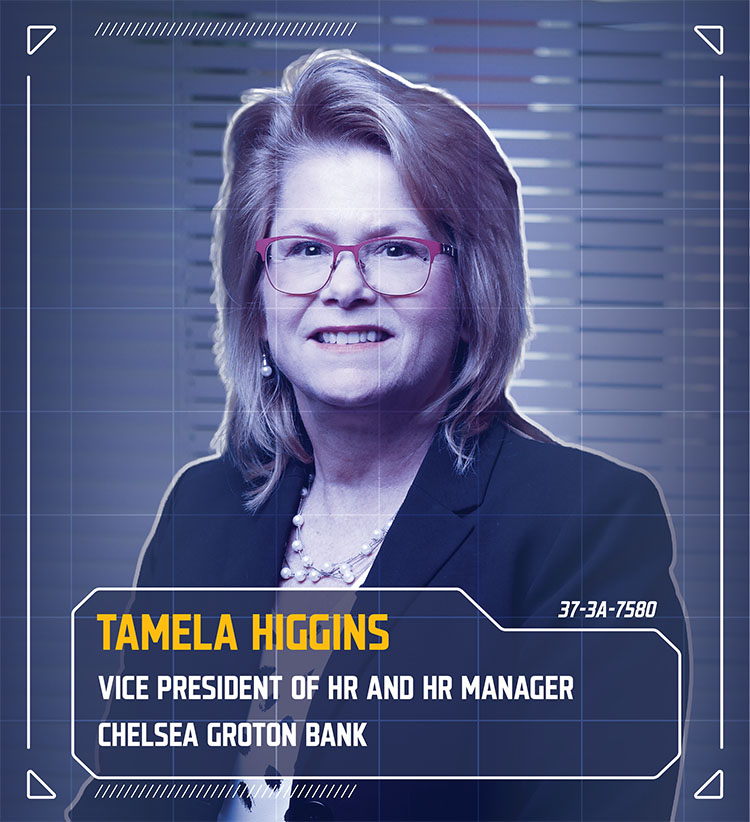
“I’ve heard of several banks that aren’t using AI based on client confidentiality concerns,” said Tamela Higgins, vice president of HR and HR manager at Chelsea Groton Bank, who met with Eastern students last academic year. “Financial institutions are one of the most regulated industries in the United States. How are we going to use this technology to our betterment?”
While AI can help businesses and organizations become more productive, Higgins warned of the consequences of over-reliance on AI in workflows. Algorithmic bias in a model’s training datasets can skew results and outputs or present misinformation in certain scenarios.
“The world used to say, ‘garbage in, garbage out,’” she said. “That still applies today. … If you put garbage into AI, that’s what you’ll get out.”
A report by Georgetown University’s Center for Security and Emerging Technology (CSET) titled “AI and the Future of Workforce Training” found that an AI-powered career navigation tool favored domestic, native English-speaking applicants over foreign applicants, whose education and work experience were often mislabeled by the tool.
The CSET report also referenced a separate Stanford University study, which found a bias in AI writing detection tools. The tools falsely claimed 98% of essays written by non-native English speakers were AI-generated, while only 10% of essays by native English speakers were misidentified in the same way.
Implementation of AI bots in the interviewing, onboarding, and offboarding processes has also exacerbated fears of losing the “human touch” to HR.
At Blue Pinnacle Solutions, Martin believes the robotic aspect of HR will get worse before it gets better. “In HR, investments aren’t being made in people anymore,” he said, explaining that AI advancements are being prioritized over human talent.
“I think this investment dynamic will shift in the coming year as organizations realize that blindly investing in AI is not a winning solution.”
Another risk of generative AI is its potential to “hallucinate,” or generate a confident but false/misleading response. Haythorn of Liberty Mutual touched on how new technology isn’t always accurate. “I’ve had an instance where AI made up [a detail] in a contract because it wasn’t there,” she said. “It doesn’t come out and say, ‘I don’t have this,’ so it fills in the blanks with something else.”
Preparing for an AI-augmented job search
Resume tips for the AI era
Match the Job Description
To stand out to both applicant tracking systems (ATS) and human recruiters, resumes should mirror the language used in job postings. Indeed’s “Career Guide” recommends removing irrelevant skills and experience to improve the chances of a resume making it to a recruiter.
Keep Formatting Simple
An ATS-friendly resume should avoid images, tables, graphics, and other complex formatting. These elements can interfere with how screening software reads and analyzes applications.
Stay Flexible
Not every employer relies on AI-driven screening tools, but resumes that are easy for both computers and humans to read can make a strong impression.
Martin of Blue Pinnacle Solutions described changes to the recruitment process as a temporary “disruption period driven in large part by AI’s unknowns” and an urgency for companies to adopt the new technology.
Martin stressed the importance of staying agile and adapting to new labor market trends. “If you’re a [first-year student] in college right now, what you might need to learn is going to be different in three or four years than someone who’s currently a senior,” he said.
“Leaders will say they want someone who knows AI. In many cases, they don’t know how to apply it. Having a basic understanding of what AI does [and can do] will make you much better off.”
Martin also highlighted the utility of networking in today’s job market. “White-collar jobs are in short supply,” he said. “Seventy percent of all new roles in the professional space are being filled through referrals, not through the traditional application process.
“For a college student, your best bet is to network early,” Martin added. “Go on LinkedIn, find people already in the space, connect with them, and ask for somebody to be a mentor. The degree [alone] may not get you there, unfortunately, and those algorithms don’t make it easier.”
Haythorn landed her job at Liberty Mutual through an internship she obtained in her sophomore year. Graduating when AI use was becoming more popular in the workplace, Haythorn stressed the importance of staying malleable.
“The world is ever-changing,” she said. “It’s all about adaptability. What do we have now? What are we going to have tomorrow, and how are we going to continue to build those skillsets?”
To stay adaptable, job seekers must stay updated with current technological advancements and their practical applications to suit business goals.
“Be curious and explore the technology in your own life,” said Lecturer Ferraro. “Whether that’s ChatGPT, Gemini, or any other model, utilize those tools yourself.”