
- Apply
- Visit
- Request Info
- Give



Written by Thomas J. Balcerski, professor of history
Published on October 26, 2026
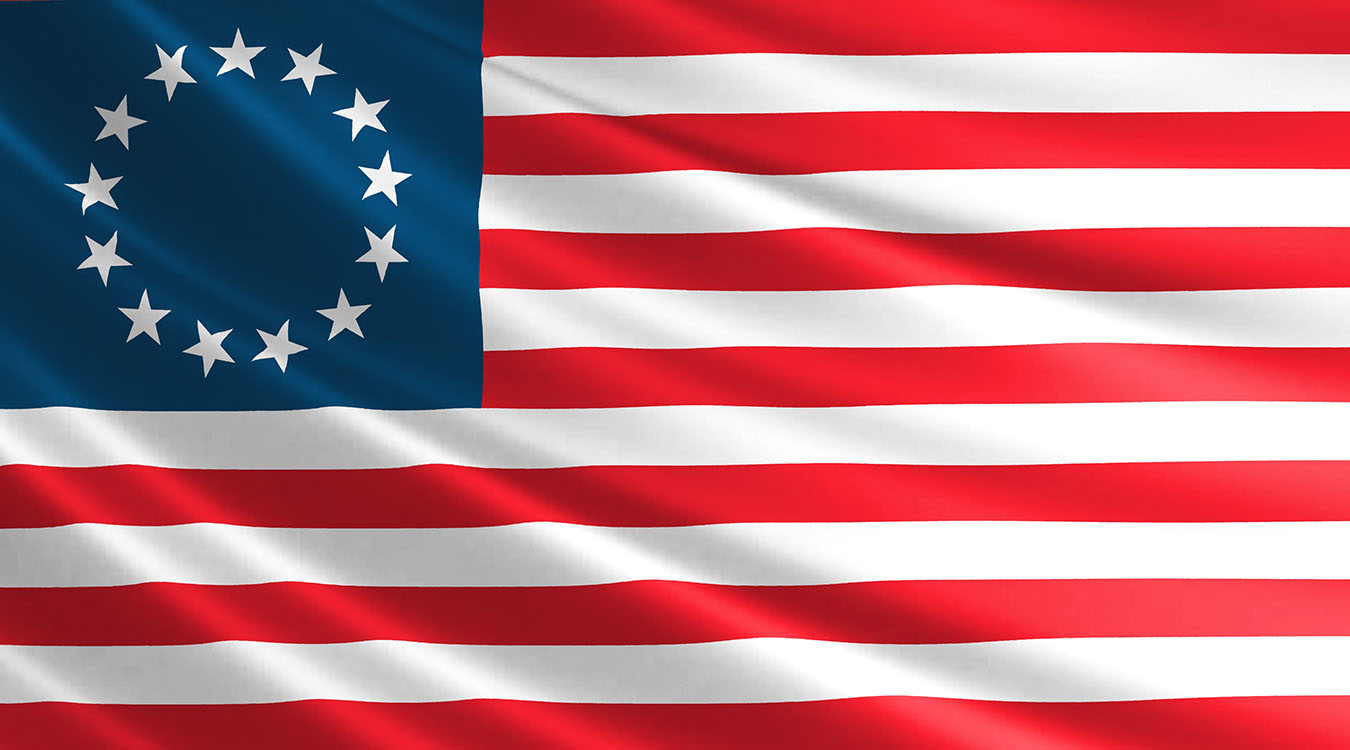
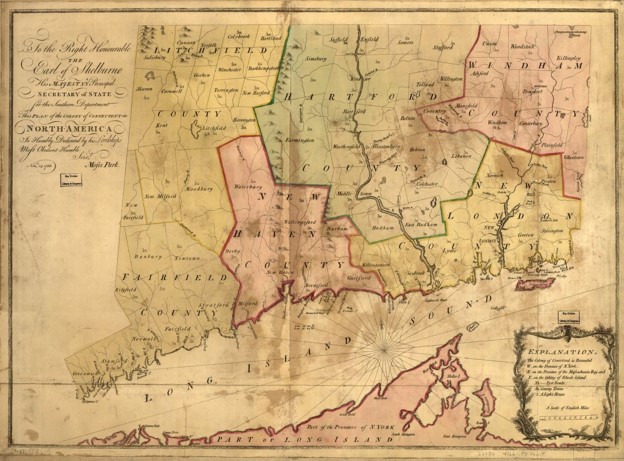
If there was an epicenter of the American Revolution in Connecticut, it may well have been eastern Connecticut. In the years before and during the Revolutionary War, the region produced numerous revolutionaries and soldiers who helped turn colonial resistance into a fight for independence. As the United States marks the 250th anniversary of its founding in 1776, it is fitting to revisit eastern Connecticut’s many contributions to the American Revolution.
During the 1760s and early 1770s, eastern Connecticut and Windham County were a hotbed of patriotism and radical Sons of Liberty activity. When war began in 1775, the region was among the first to send hundreds of fighting men to the aid of General George Washington.
Two of Connecticut’s four signers of the Declaration of Independence, Samuel Huntington and William Williams, and First Continental Congress delegate Eliphalet Dyer all had direct ties to Windham — the historic town that today encompasses Willimantic. Connecticut’s Revolutionary governor, Jonathan Trumbull, also came from Windham County. In total, eastern Connecticut claims four Founding Fathers whose profound contributions helped shape the birth of the United States of America, and whose legacies are still honored across the region today.
One thing I have done which the British will never pardon; I have signed the Declaration of Independence; I shall be hung.
William Williams
Revolutionary Windham
In June 1774, mere months before fighting broke out at Lexington and Concord, the Windham town clerk recorded an extremely agitated state of affairs. By this time, Boston was closed and occupied by British troops. The citizens of Windham were accordingly (text transcribed verbatim):
“ … impressed with a deep sense of the present alarming aspects of Divine Providence over the British Colonys in North America arising from the present depressed situation of the capitall of a neighbouring providence having their harbour & port blocked up by ships of warr in hostile array to the great terror of the people totally and actually restricting all commerce by sea into or from said port thereby forceably preventing the due performance of all private maritime contracts rendering useless their whole navigation stores & warfs built and erected at a vast expence of the inhabitants. A principle which threatens ruin & destruction both to the liberty & property of every subject throughout the whole British Empire.”
Windham was a major Revolutionary War muster point for Connecticut troops and a supply depot for the army. Through a commissary, Windham collected food and equipment across Windham County to support Washington’s Continental Army. The town was also home to a powder manufactory that produced and distributed an impressive 66,074 pounds of gunpowder between May 21, 1776, and Nov. 8, 1783.
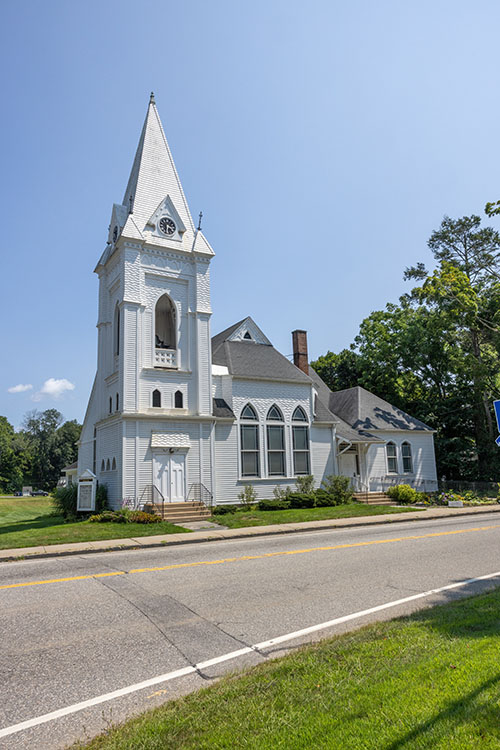
The Willimantic Town Clerk’s Office presently maintains meeting minutes pre-dating the Revolution. Held primarily at today’s First Congregational Church in historic Windham, meeting records as early as 1768 reveal that the citizens of Windham were committed to the Patriot cause, voting to prohibit “British and foreign superfluities.”
A minor controversy erupted in July 1774, when Francis Green, a prominent Boston Loyalist (a colonist who remained loyal to England), arrived at a tavern in Windham on a business trip. Loyalists were generally disapproved of in the Patriot town, and were at times ousted or made to recant pro-Britain statements. When Green’s presence became known, Windham citizens forced him to leave by threat of a cannon positioned in front of the building. Green’s problems continued after he fled to nearby Norwich, where he was once more threatened and made to leave the colony.
By the following year, the town had organized a militia (consisting of the famous “Minutemen”) to defend Windham against British invasion. Although the fighting never came directly to Windham, its citizens still participated in the wider conflict.
Windham at War
The Revolution left a marked influence on the patterns of social and economic life in Connecticut. Gone were the staid habits of a mostly agrarian pre-war society, to be replaced by a more dynamic, industrial state in the 19th century. In nearly every aspect of life, the American Revolution left Connecticut an entirely new place from what once stood before.
The war efforts of 1776 had so engrossed the attention of Windham’s citizens that internal affairs received little attention — no town meetings were held that year until the annual election meeting in December. Records were similarly scarce across neighboring towns, such that historians don’t fully know how Connecticut’s towns and villages responded to the news of the Declaration of Independence.
During a town meeting held in 1780 — as the Continental Army continued to fight for American sovereignty against the British rejection of the Declaration of Independence — Windham voted to secure financial support for the enlistment of 1,000 “able-bodied effective” men, with each soldier receiving £20 for serving a six-month term. In addition, silver bounties of £12 — with more in subsequent years — were offered to each man who agreed to a three-year enlistment, thus sustaining the required quotas through the entirety of the war.
To fund the soldiers, Windham agreed to a tax of “sixpence on the pound” on all residents and real estate. The tax, which had been imposed by the General Assembly in Hartford, was paid in provisions like “beef, pork, and flour.”
Four Founding Fathers Who Called Eastern Connecticut Home
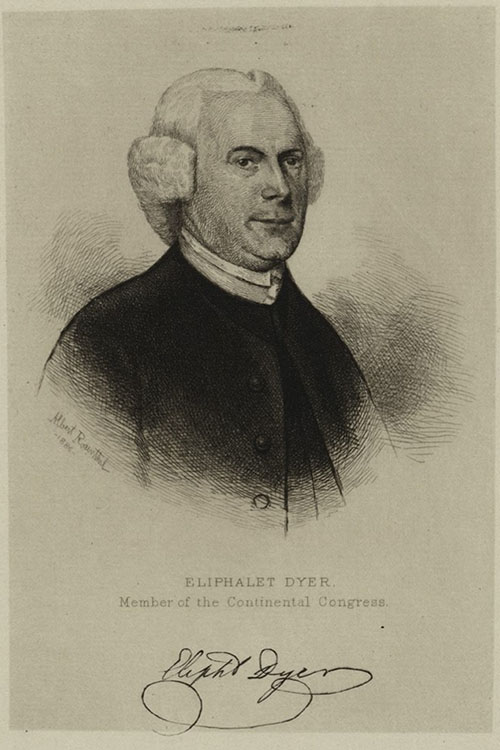
ELIPHALET DYER
In his prime, Eliphalet Dyer was the most influential leader of the Connecticut Colony. Born in Windham in 1721, he rose to become the town’s leading citizen and was regularly elected the moderator of the Windham town meeting. With a military background and extensive landholdings, Dyer was also Windham County’s largest slaveholder, possessing approximately 800 acres and enslaving eight African Americans by the year 1774. He was a principal force behind the Susquehanna Company, which aimed to acquire and settle land in present-day Pennsylvania.
Elected as the colony’s first delegate to the Continental Congress, he missed out on signing the Declaration of Independence. However, he returned regularly to represent Connecticut in Philadelphia, at one point becoming the state’s sole delegate. His strenuous efforts on behalf of the Patriot cause mark him as a forgotten Founding Father of the United States. Although he is less widely remembered, Dyer’s extensive political contributions remain a significant component of Windham’s Revolutionary history. His house still stands in Windham and is privately owned.
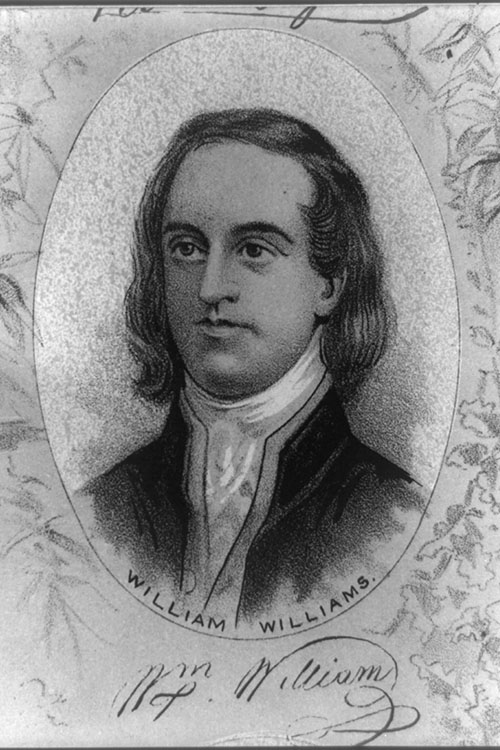
WILLIAM WILLIAMS
Born in Lebanon in 1731, William Williams attended Harvard and was elected a representative to the Connecticut General Assembly at age 25. He married Mary Trumbull, the second daughter of Governor Jonathan Trumbull, and became a leading Whig (or Patriot) until his death in 1811. Williams was thus given the honor of receiving the very first printed copy of the Declaration of Independence to reach Connecticut.
A speaker of the General Assembly and a member of the Town Council of Safety of Lebanon, Williams was an ardent patriot who purportedly participated in one of the greatest exchanges of the entire war. Should the colonies not be successful in the war, he stated, “One thing I have done which the British will never pardon; I have signed the Declaration of Independence; I shall be hung.”
A fellow Town Council of Safety member, Benjamin Huntington, observed that he had never committed his name to any paper or document criticizing the British government and thus was not in danger of being hanged. In response, Williams stood up and declared scornfully, “Then, sir, you deserve to be hanged for not doing your duty.”
Through his personal efforts, Williams secured more than 1,000 blankets from a total population of slightly less than 4,000, and inspired citizens to take the weights out of their clocks to supply lead for bullets.
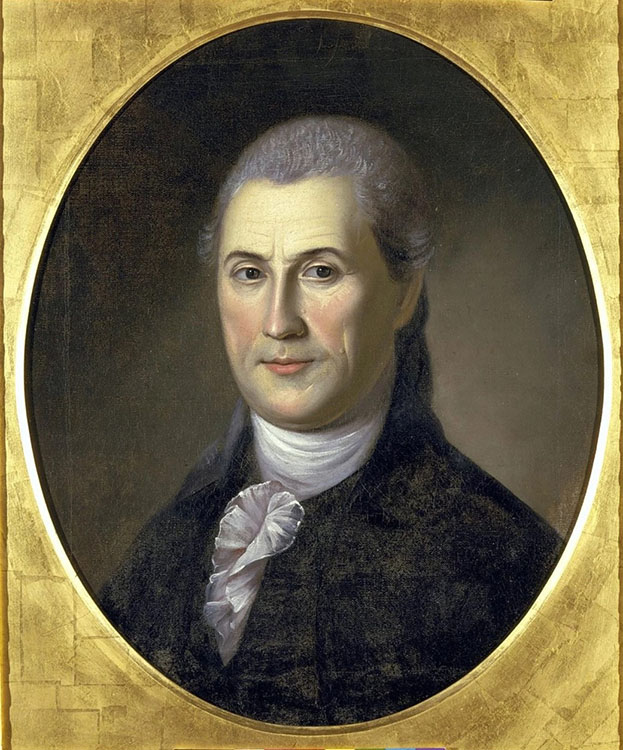
SAMUEL HUNTINGTON
Another Connecticut signer of the Declaration of Independence has a Windham connection. Born in 1731, Samuel Huntington’s birthplace is in today’s neighboring Scotland (prior to the 1800s, this area was part of Windham). He later started a law practice in Norwich, where he lived the remainder of his life.
Huntington began his public life in 1765, when the Stamp Act was being widely discussed. He was a justice of the peace for New London County, a judge of the superior court, served on many committees during the Revolution, and entered the Continental Congress in January 1776.
He was unanimously elected president of the Congress in 1779, continuing as the presiding officer until ill health forced him to resign in 1781. He returned home and resumed his posts as a state judge and on the Council of Connecticut. He was elected governor in 1786 and reelected annually until his death in 1796.
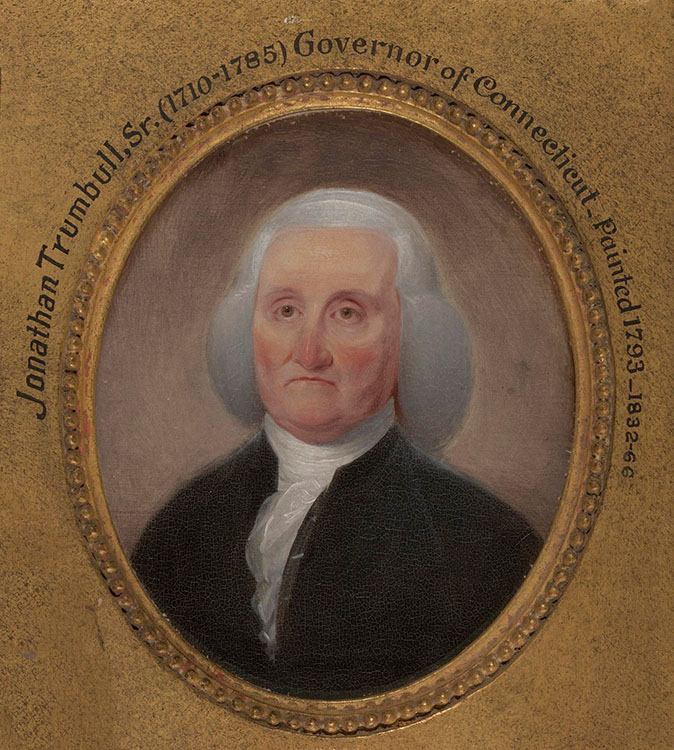
JONATHAN TRUMBULL
Governor Jonathan Trumbull was born in Lebanon. A neighbor and father-in-law of William Williams, “Brother Jonathan” was Washington’s closest ally among the colonial governors — and the only colonial governor to serve the Patriot cause in the war itself. His steadfast commitment to supplying the Continental Army earned Connecticut the moniker of the “Provisions State.”
Trumbull became governor of Connecticut in 1769, serving until the year before his death in 1784. Because of Trumbull’s prominence during the war, Lebanon — and thus Windham County — became the center of Connecticut’s war effort.