


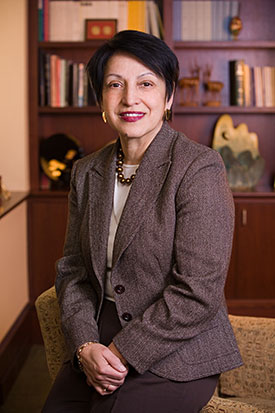
 Under Dr. Núñez’s leadership, Eastern Connecticut State University has received several major national recognitions, including being ranked the #1 public regional university in New England in U.S. News and World Report’s 2021 Best Colleges ratings, Eastern has also been awarded "Green Campus" status by the Princeton Review 10 years in a row.
During her administration, Dr. Núñez has forged closer ties with the local and statewide communities, led a campus-wide strategic planning process, and shepherded the opening of an expanded and remodeled Student Center; a 174,000-square foot state-of-the-art Science Building; the new Center for Community Engagement; and other campus improvements. A new 118,000-square foot Fine Arts Center was completed in spring 2016, the renovated Communication building reopened in August 2018, and Goddard and Shafer Halls were renovated in 2019.
Prior to joining the Eastern community, Dr. Núñez served as Vice Chancellor for Academic and Student Affairs in the University of Maine System from 2003 to 2006. Before her appointment in Maine, Dr. Núñez served as Provost and Vice President for Academic Affairs at Lesley University. From 1993 to 1997 she was University Dean for Academic Affairs and Vice Chancellor for Student Affairs at the City University of New York. Dr. Núñez also served as Associate Dean of Faculty at the College of Staten Island of The City University of New York from 1986 to 1992.
Dr. Núñez also has held positions as a tenured faculty member at Ramapo State College, the College of Staten Island of the City University of New York, and Lehman College of the City University of New York. She is the author of “Pursuing Diversity” (1992) and has published numerous articles in the areas of language acquisition, diversity, academic attainment in higher education, cultural differences in education and retention.
Dr. Núñez received her B.A. from Montclair State College, an M.A. from Fairleigh Dickinson University and an Ed.D. in Language Education from Rutgers University.
In addition to serving on the NSSE National Advisory Board, Dr. Núñez also serves on the boards of such organizations as the President's Alliance on Higher Education and Immigration, the Community Foundation of Eastern Connecticut, the Nellie Mae Education Foundation, and the NCAA Board of Governor's Ad Hoc Committee on Sports Wagering.
Born and raised in Puerto Rico, Dr. Núñez is married to Dr. Richard Freeland, former president of Northeastern University and former Commissioner of Higher Education for the State of Massachusetts. They have two children, Maria, an anesthesiologist in Detroit, Michigan, and Antony, an academic advisor at Naugatuck Valley Community College.
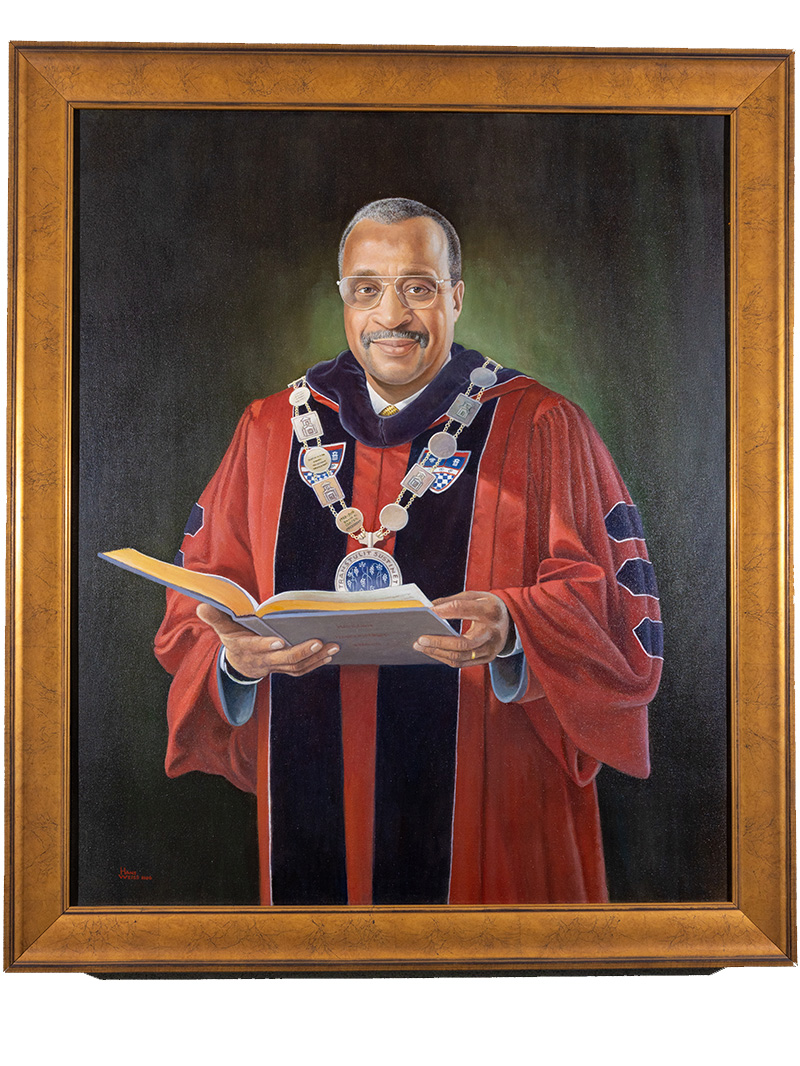 David G. Carter, the University’s fifth president, was inaugurated in September 1988 and led the school for almost 18 years. On Jan. 20, 2006, Carter was appointed chancellor of the Connecticut State University System.
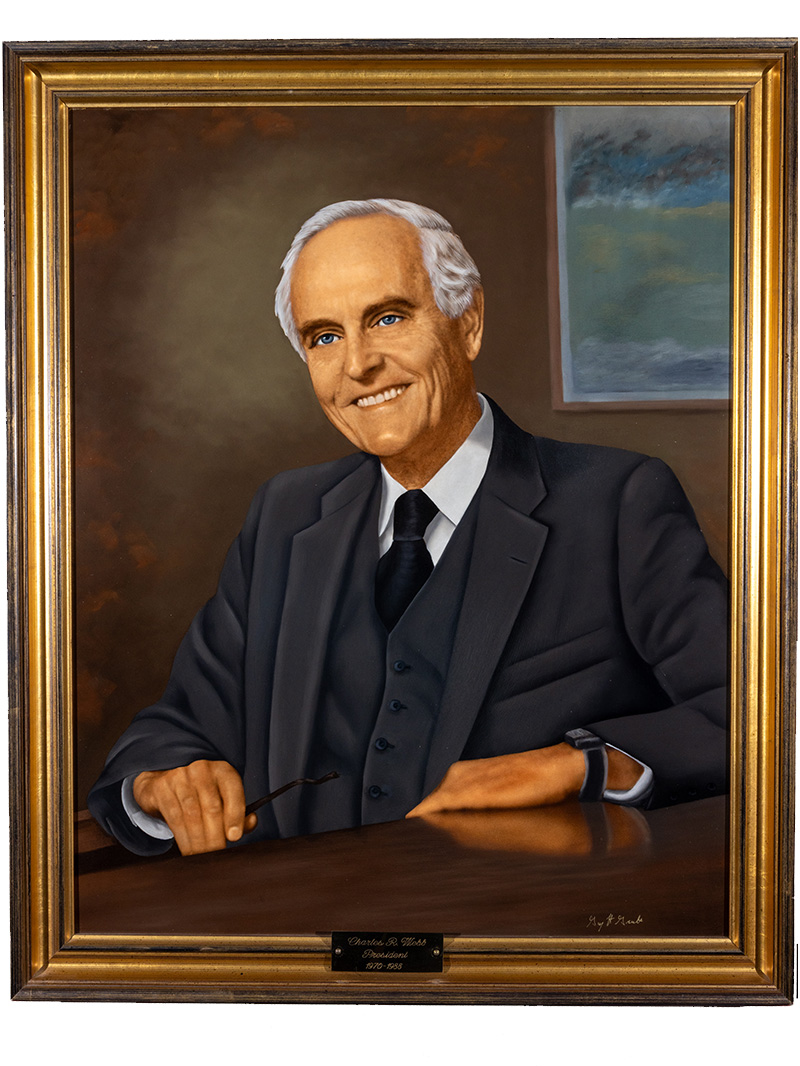 President Webb continued the student centered traditions of George Shafer and J. Eugene Smith, scheduling “open door” hours when faculty and students could visit him in the library.
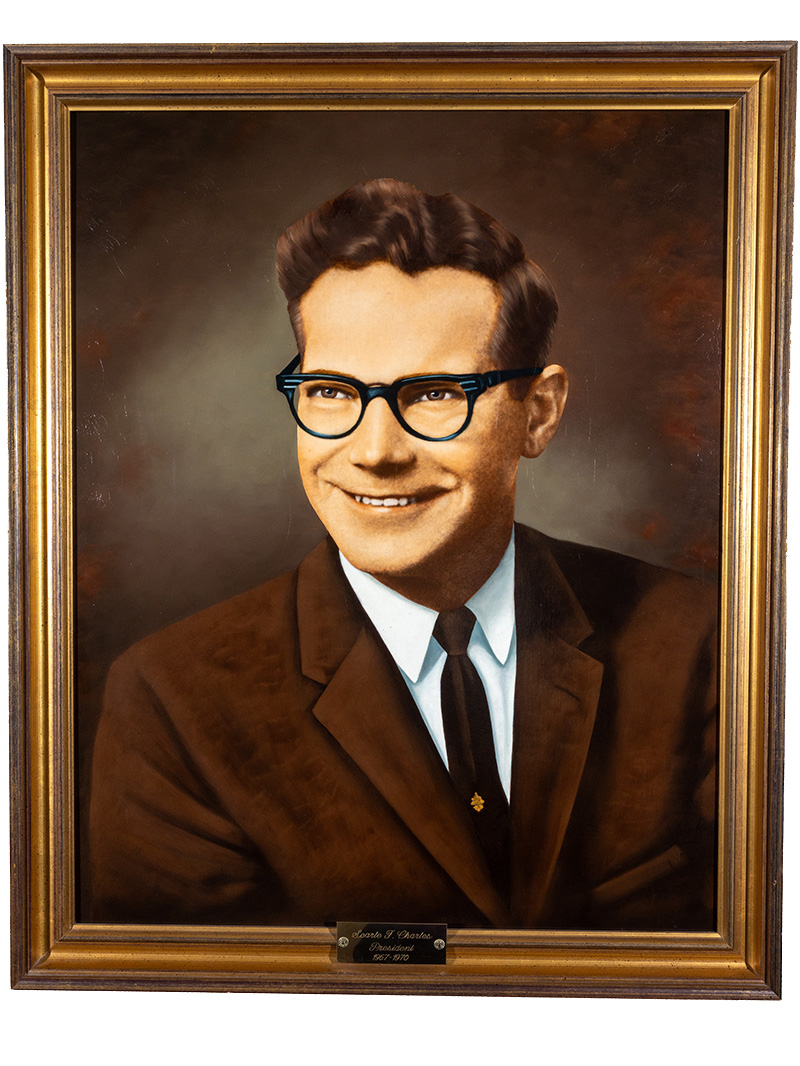 During his brief tenure as Eastern’s third president, Searle Charles led the school through another name change: to Eastern Connecticut State College. He also saw the completion of Goddard Hall and Hurley Hall and the opening of Keelor Hall, the school’s first early childhood education facility. Charles left Eastern to become the executive secretary of the Connecticut Community College System.
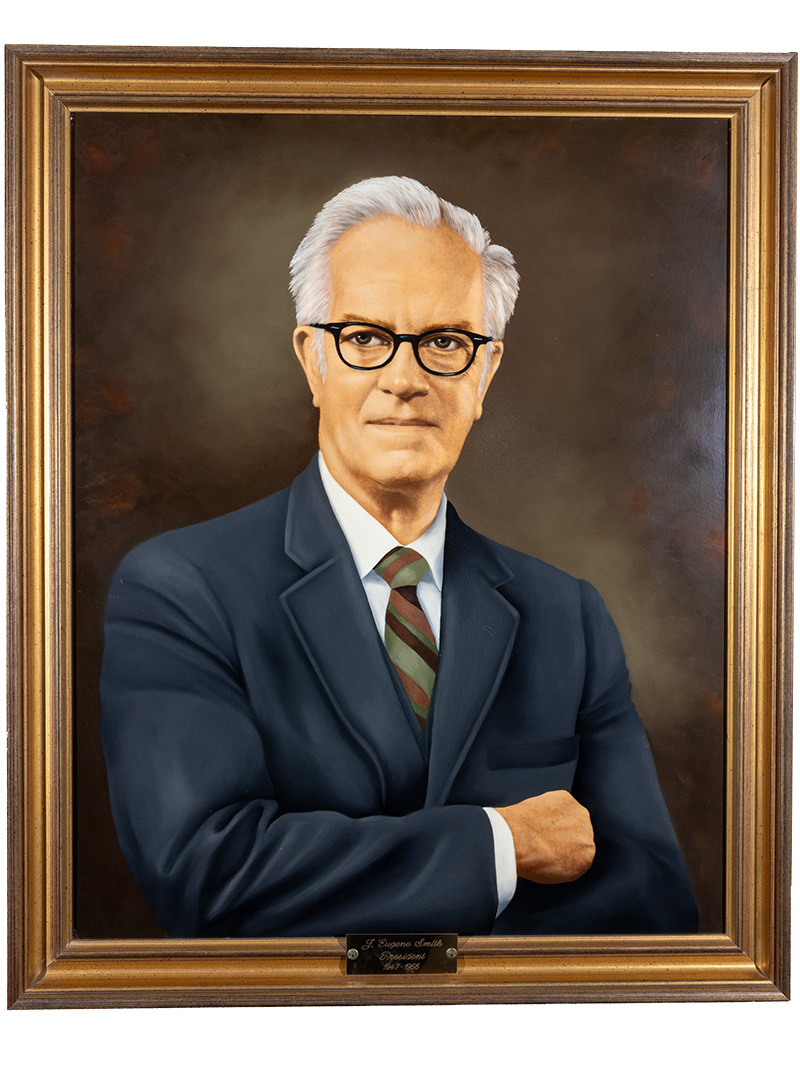 J. Eugene Smith helped broaden the scope of WSTC offerings from a focus on teacher preparation to include liberal arts and graduate programs. During his tenure, the school also “moved up the hill,” building dormitories and classroom facilities, and purchasing other needed buildings.
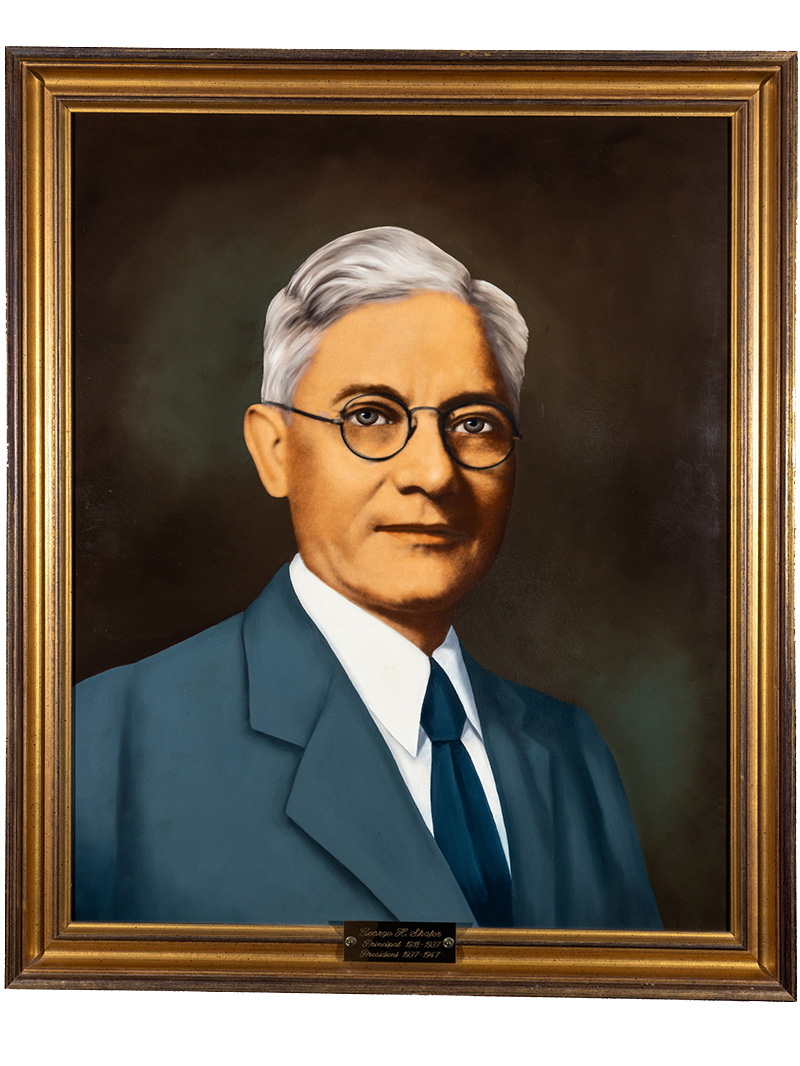 In 1918, George H. Shafer began the longest tenure of any of Eastern’s leaders. Faculty member C. Francis Willey described him as a man “with deep social insight who guided the college throughout the difficult Depression years of crisis and legislative battles.” Shafer served 29 years as the school’s principal and president.
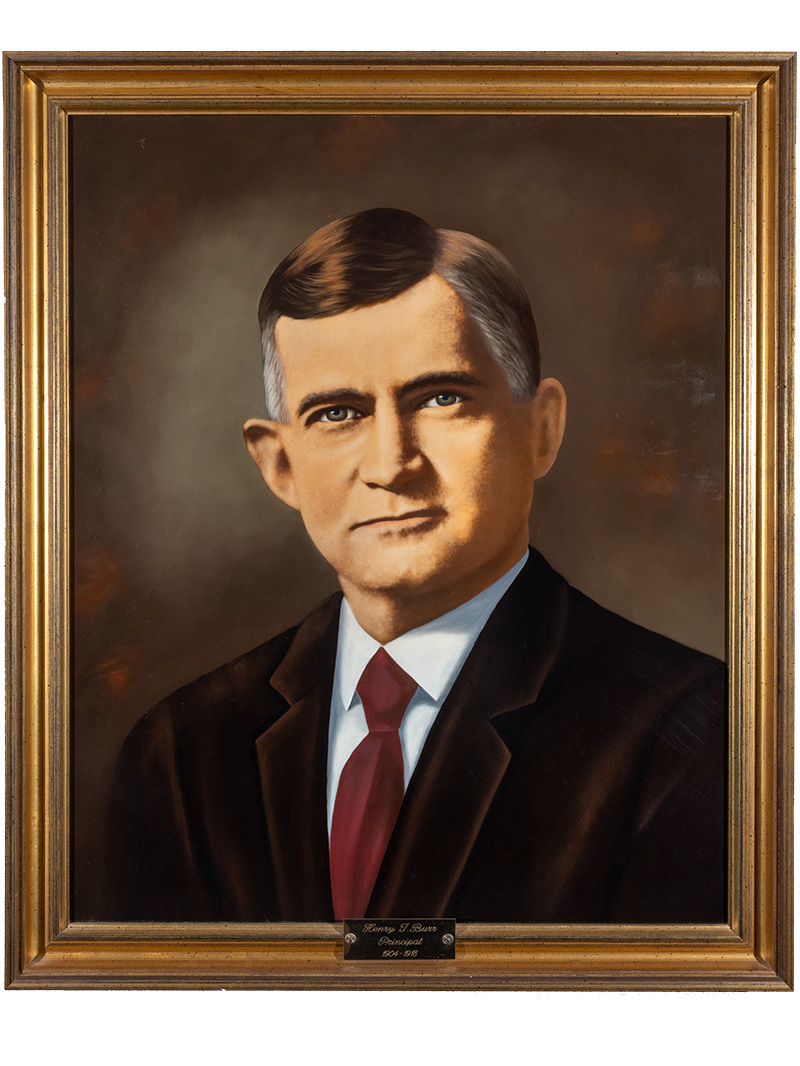 Henry T. Burr served as WNS principal during the World War I era and oversaw construction of a model school where student teachers could practice their craft. The school’s first dormitory was built in 1921 and named in his honor.
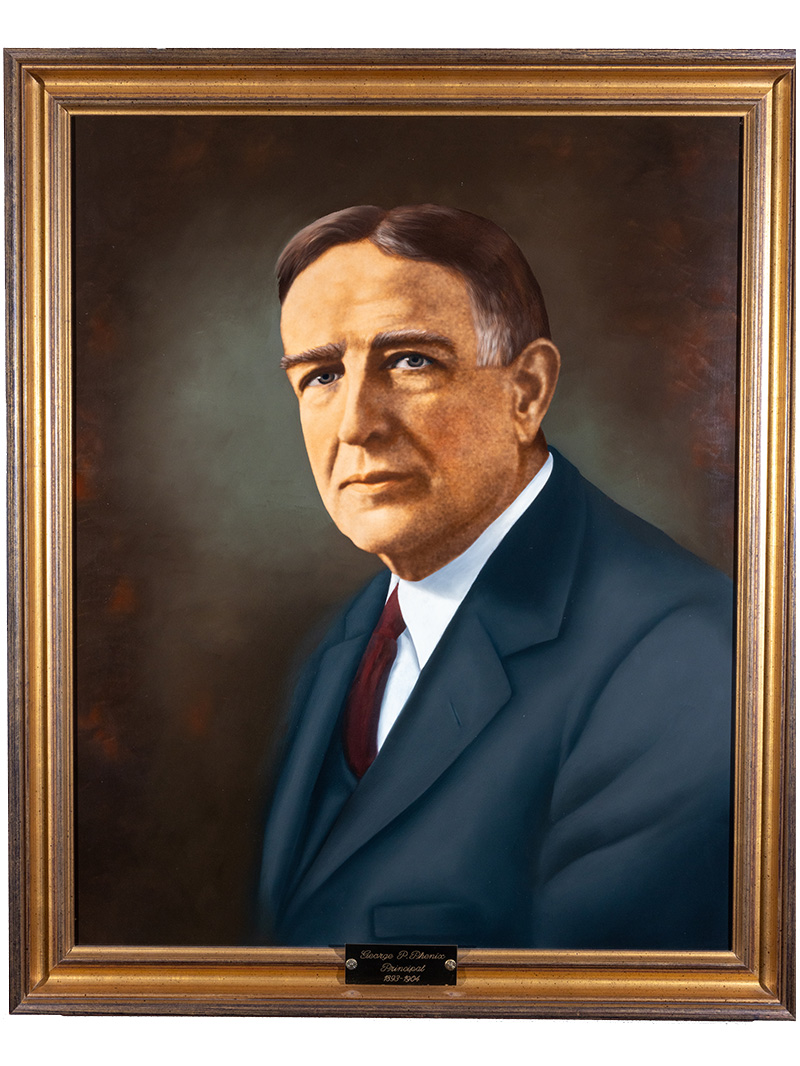 The second principal of the Willimantic State Normal School, George P. Phenix, led the school’s move to a new building. He went on to become a faculty member, administrator, and eventually president of Hampton University in Virginia.
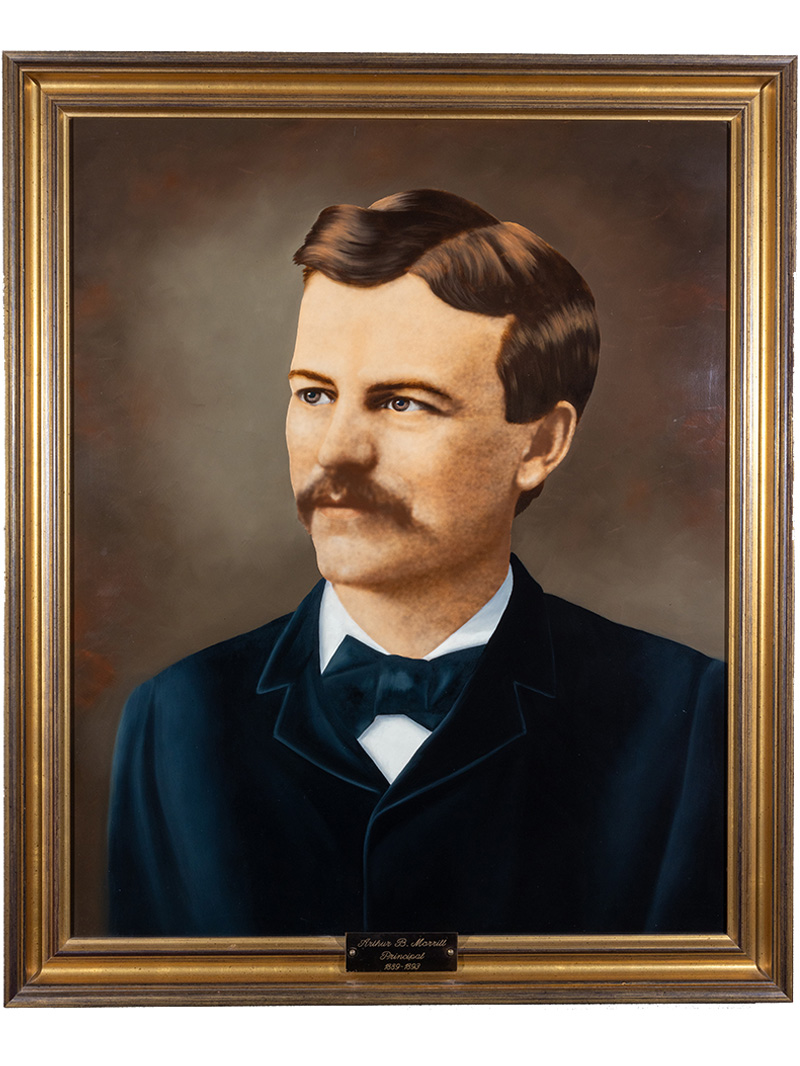 Arthur B. Morrill, a graduate of Yale University, left New Britain Normal School to open the Willimantic program in 1889. He left Willimantic State Normal School (WNS) in 1893 to open the normal school in New Haven. Morrill kept tight reins on students and faculty alike, establishing strict guidelines and a standard notebook for all student work.