
- Apply
- Visit
- Request Info
- Give



Written by Tim Stevens
Published on November 11, 2026
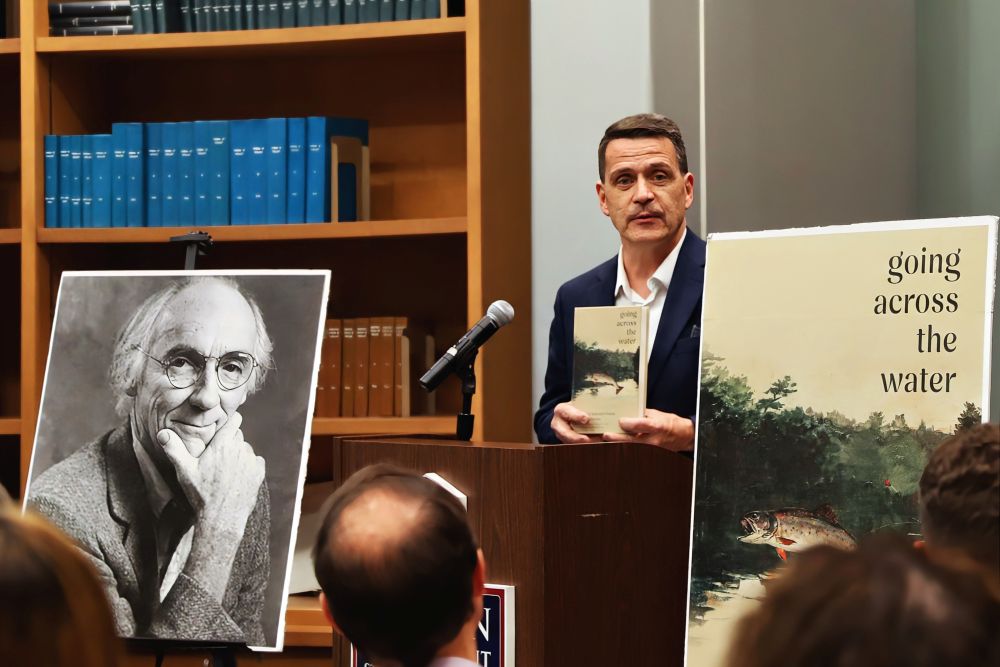
We all have teachers we like, teachers who entertain, even teachers who challenge us. Some of us are lucky enough to find a teacher who changes our lives. For English Professor Daniel Donaghy, that teacher was Harry Humes, a professor and poet at Kutztown University of Pennsylvania.
“I was this first-generation college kid, changed my major four times, trying to find my way, and for whatever reason, I took Harry’s poetry class,” Donaghy, himself a poet, said. “Harry taught me that I matter. Really, just one day keeping me after class to talk to me changed the course of my life.”
In the way that history often rhymes, to borrow a phrase commonly attributed to Mark Twain, the journey that started with those few minutes after class in 1991 reached a crescendo of sorts on Nov. 10 with the release celebration of “Going Across the Water: New and Selected Poems of Harry Humes.”
The 354-page collection brings together poems from Humes’s 15 published books, along with 100 pages of previously unpublished poems, including ones that Humes and Donaghy may have been the only two people to see until now. The book also includes two essays that provide further context—one by Donaghy exploring the collection’s development and Humes’s literary importance, and another by Michael Garrigan examining the contemporary significance of his work — as well as a foreword by Bruce Weigl, a two-time Pulitzer Prize finalist.
For Donaghy, the collection represents more than a retrospective of Humes’s writing. It is an opportunity to recognize Humes’s place in contemporary American literature, particularly Appalachian literature.
A missing link of Appalachian literature
Born in 1935 and raised as the son of a coal miner, Humes wrote about working-class life, class, and the anthracite coal region of Pennsylvania. Donaghy sees Humes’s work as part of a larger literary conversation, connecting him with writers such as James Wright, Theodore Roethke, David Wagoner and Weigl. That perspective would eventually become central to how the book was presented to publishers.
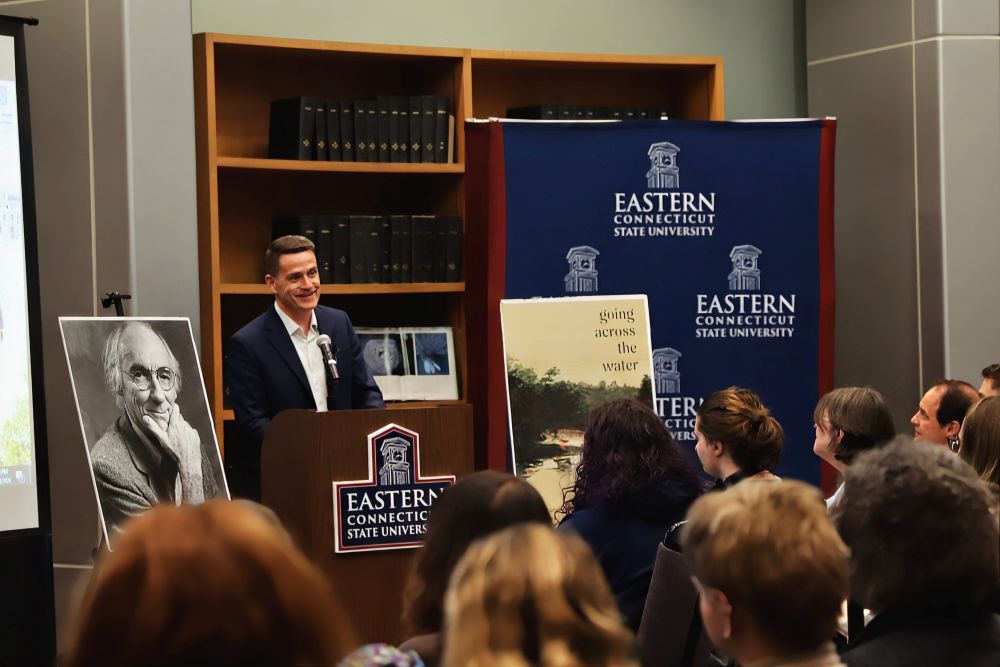
Donaghy recalled the book’s beginnings during the Nov. 10 release event on Eastern’s campus, which doubled as a tribute to Humes. Fellow poet Paul Martin was visiting Eastern with Humes around 2014 when the three began talking about a possible Humes new-and-selected collection — what Donaghy describes as the “greatest hits” of a poet’s career. Humes had previously considered assembling such a collection but repeatedly turned his attention to writing new work instead.
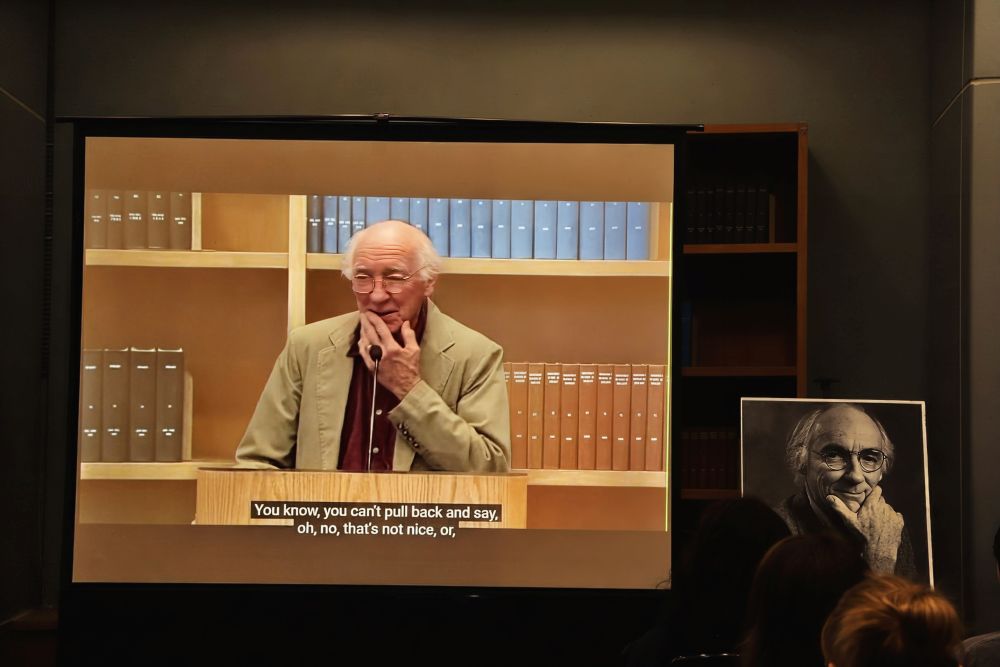
Martin, however, had another idea, suggesting Humes collaborate with his friend and former student. The idea landed immediately.
“He turned to me and said, very seriously, ‘Look, if you can help me with this, I’ll kiss your feet,’” Donaghy remembered.
Deciding to do it, however, was only the first step. Everyone involved wanted something deeper from the project than just a collection of greatest hits, but exactly how to accomplish that proved elusive. That was, until (Michael) Garrigan, a Pennsylvania poet from a region similar as Humes, hit on an idea.
“I have to give credit to Garrigan here. He’s the one who suggested, ‘What if we pitched it as a book of, really, a missing link of Appalachian contemporary literature? Not just a poet’s greatest hits, but a major contribution to American literature?’”
Garrigan’s suggestion helped establish the book’s broader literary significance. Ohio University Press’s Swallow Press imprint, which publishes work connected to Appalachian literature and culture, agreed to publish the collection.
An act of remembrance
The project was made possible in part by the extraordinary amount of material Donaghy had accumulated over the years. The two had exchanged poems by mail and later by email, often every week or two, for more than 20 years. Through that correspondence, Donaghy had seen hundreds of Humes’s unpublished poems. Hume’s wife, Nancy, also provided additional drafts and folders of work.
For Donaghy, the book quickly became an intense labor of love. After his friend’s death on Apr. 4, 2025, it also became an act of remembrance.
“I sat at the dining room table on the last stretch of putting this book together, and I opened up this bag, which contained every letter Harry ever wrote to me,” Donaghy told the audience on Nov. 10. “I read those letters one by one, and I just cried the most thankful tears, proud that I had such an attentive and beautiful friend for so long.”
Their friendship, which Donaghy said gave him a “second father” in Humes, guided the Eastern professor for years, shaping him into both the writer and instructor he is today. Speaking to the latter, Donaghy said his former professor’s example has echoed through his own teaching, especially in how he interacts with students and the kind of environment he strives to create in his classroom.
“My mission is very clear,” Donaghy said. “I’m there for everyone. I’m especially attentive to people who maybe aren’t sure if they belong there, aren’t sure if they have anything to contribute, aren’t sure if their stories matter. I want to open doors so that people can realize the power and potential and value of their own stories.”
“Learning from him still”
This commitment springs in part from the similarities between their upbringings. While Humes grew up in a coal-mining family in eastern Pennsylvania and Donaghy in inner-city Philadelphia, both came from working-class backgrounds. Donaghy has spoken about growing up in an environment where men were expected to suppress their emotions.
“You’re totally hard. You’re totally silent. You’re told to suck it up. You’re told to do a lot of things other than express yourself,” he said.
When Donaghy arrived at Kutztown, he brought difficult family experiences and uncertainty about his future. Humes helped him discover that those experiences were not something to hide, but material that could become meaningful through writing. It was a lesson Donaghy carried into his own classroom, particularly for students who may not yet recognize the value of their own stories.
In his poem “Tonight on the River,” which he read at the book’s release celebration, Donaghy reflects on one of the many lessons Humes left him with: “Coal miner’s son helping me over the bridge from that world to this one, showing me that I’m often the least important part of a poem or a fly cast and how to get out my own way, on the page or the river, how to let the subject step into sun.”
Near its conclusion, Donaghy described returning to the river and continuing to learn from Humes, even in his absence: “Then try my fly there, a way of learning from him still, of thanking him, a way of standing tall with him again against the ancient, relentless current pushing on us all.”
It is a fitting sentiment for a collection that has taken more than a decade to bring together. And for the student whose life he changed more than 35 years ago, bringing those words together has been another way to keep a beloved teacher and friend close.