- Apply
- Visit
- Request Info
- Give



Written by Ed Osborn
Published on November 11, 2026
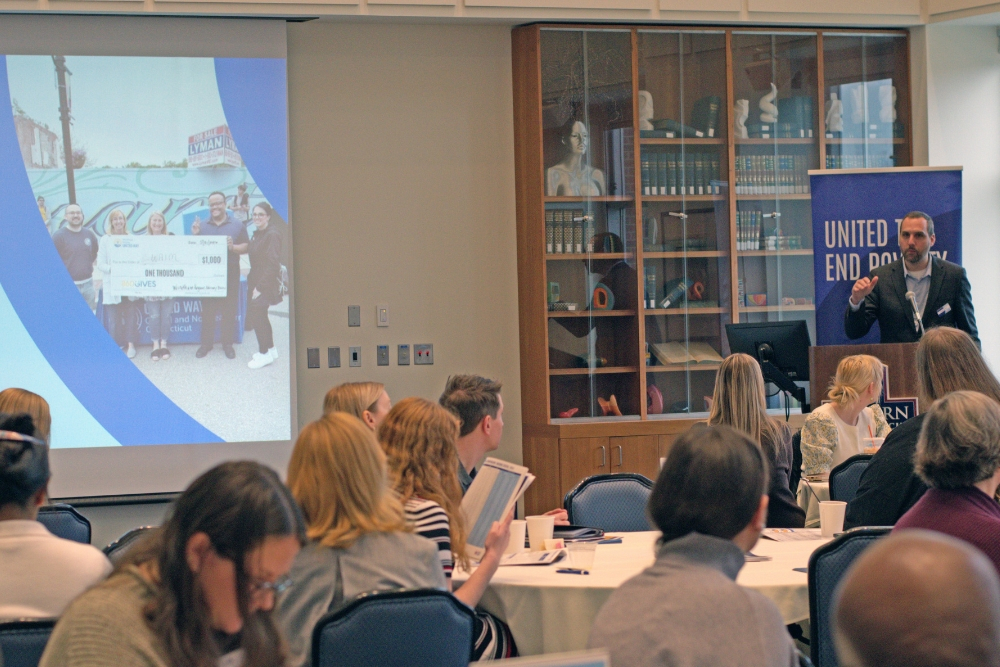
Attendees of United Way's Community Breakfast discuss poverty in the region.
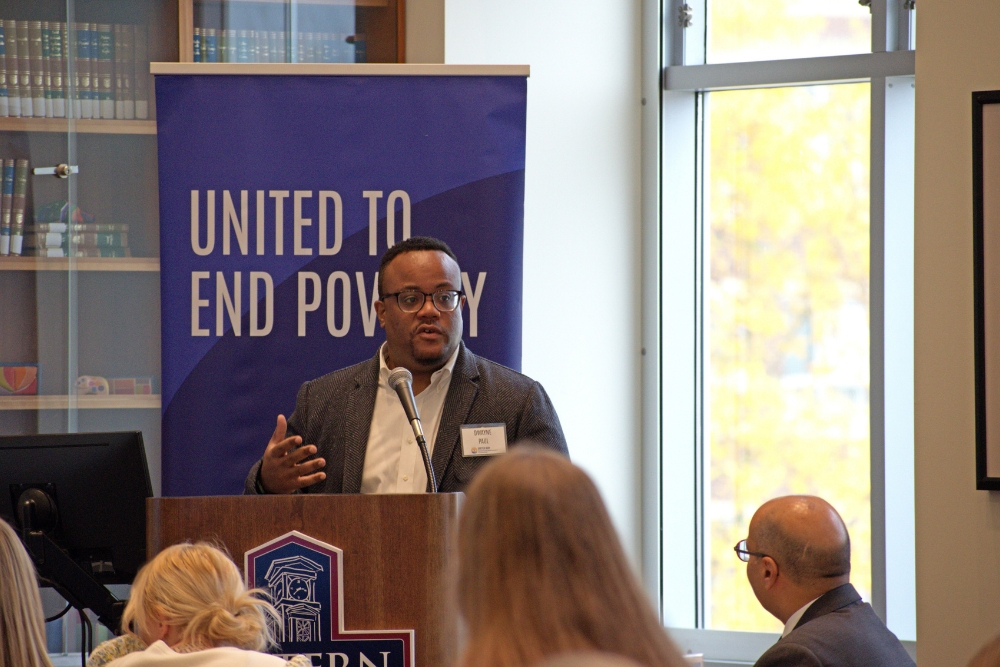
Attendees of United Way's Community Breakfast discuss poverty in the region.
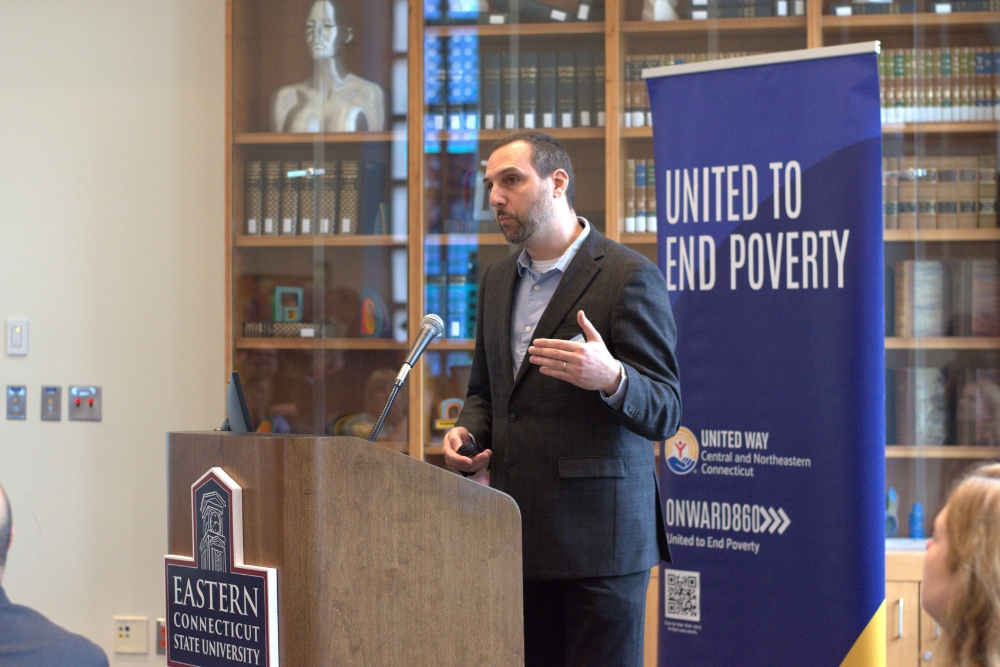
Attendees of United Way's Community Breakfast discuss poverty in the region.
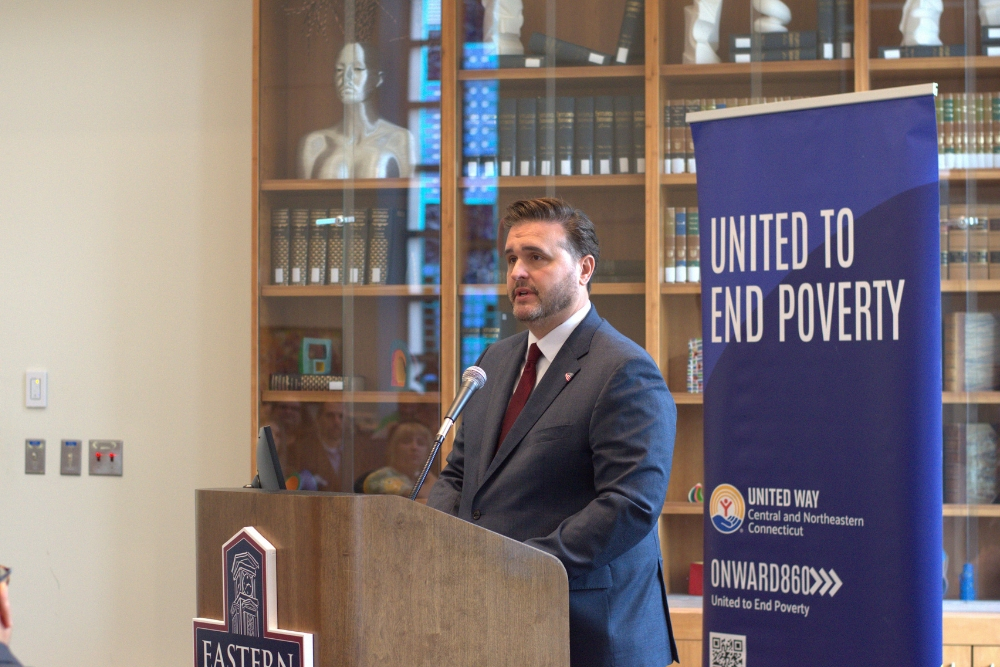
Attendees of United Way's Community Breakfast discuss poverty in the region.
Eastern Connecticut State University hosted the Windham Region United Way Community Breakfast on Nov. 9 in the Paul E. Johnson Sr. Community Room in the J. Eugene Smith Library. The highlight of the event was the presentation of the United Way's 2026 ALICE Report (Asset Limited, Income Constrained, Employed), which outlined the financial challenges facing working individuals and families across Connecticut.
By learning the details of economic hardship facing eastern Connecticut residents, local business leaders, community officials, legislators, educators, and nonprofit groups can better work together to fight poverty in the Greater Windham area.
Dignitaries at the breakfast included Eastern President Karim Ismaili, who gave welcoming remarks; Angela Smart, advisory board chair of the Windham Area United Way; Eric Harrison, president and CEO of the United Way of Central and Northeastern Connecticut; State Rep. Susan Johnson; State Rep. Gregory Haddad; Erin McBride representing U.S. Senator Chris Murphy; and Lana O’Connor, director of Eastern’s Center for Community Engagement.
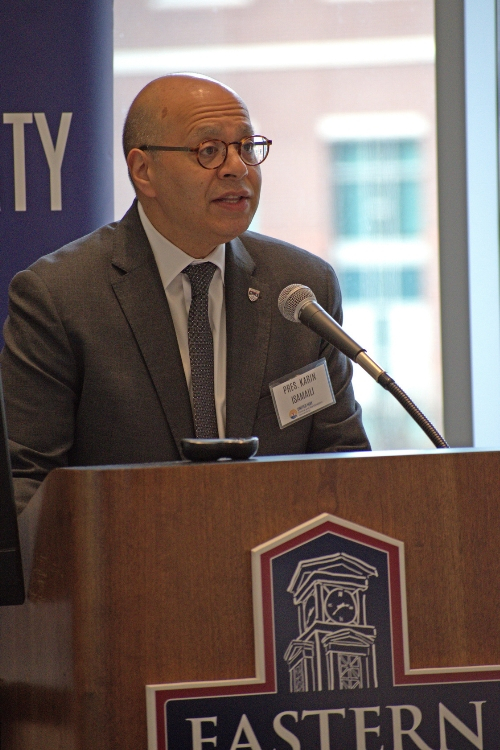
In proudly pointing to Eastern’s 135-year history of community involvement, Ismaili said, “The ALICE Report reminds us that financial hardship is not always visible. Many of our neighbors work hard every day, contribute to our local economy, and do everything they can to support their families, yet still struggle to afford basic necessities. These are people who are essential to the strength of our communities, and their experiences deserve our attention and understanding.”
“Your presence here today demonstrates a shared commitment to advancing United Way’s mission to end poverty in the 860 region and creating opportunities for everyone to succeed, regardless of zip code,” said Smart to those assembled during her remarks.
Referencing the ALICE Report, Harrison pointed out, “We're talking about older adults who have to choose between buying groceries and filling a prescription, parents forced to weigh childcare costs against putting food on the table, and people wondering whether they can afford both the rent or mortgage and the utility bill. At United Way, we believe no one should have to face these difficult choices.”
The ALICE Report was presented by Russell Hansen, director of Impact and Engagement Operations for United Way, followed by a discussion about the potential for community partnerships led by Dwayne David Paul, executive director of the Windham Area Interfaith Ministry.
Hansen reviewed data that showed that while 11% of Connecticut households were below the federal poverty level in 2024, an additional 28% of the state’s residents were living under financial hardship, unable to fully meet their families’ needs.
The ALICE Report looked at a number of key expenses where families are having difficulty managing, including food, transportation, healthcare, housing, and childcare. In the 2021-24 timeframe, the ALICE threshold exceeded the overall rate of inflation (5.6% to 5.0% for CPI).
In addition to providing data on how many households are living with hardship, the ALICE Report also identified the level of income needed to manage a household budget. United Way has advocated for legislation to pass a $600 per child credit that would impact 550,000 children in Connecticut, resulting in $326 million in tax revenue and a $5 to $1 return on the public’s investment.
And, as always, education makes a big difference in fighting poverty. While 46% of people with less than a high school diploma fall below the ALICE threshold, that figure declines to 32% of those with a high school diploma, 26% for people with some college, and only 10% for people with a bachelor’s degree.