
- Apply
- Visit
- Request Info
- Give



Written by Tim Stevens
Published on November 10, 2026
12th Annual Social Policy Summit
12th Annual Social Policy Summit
12th Annual Social Policy Summit
12th Annual Social Policy Summit
12th Annual Social Policy Summit
12th Annual Social Policy Summit
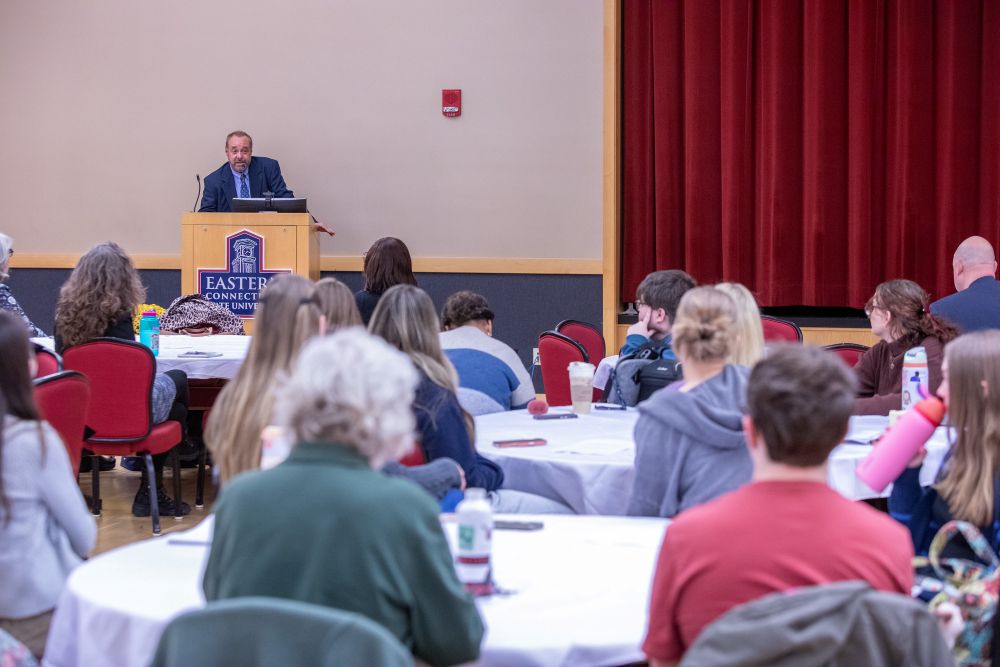
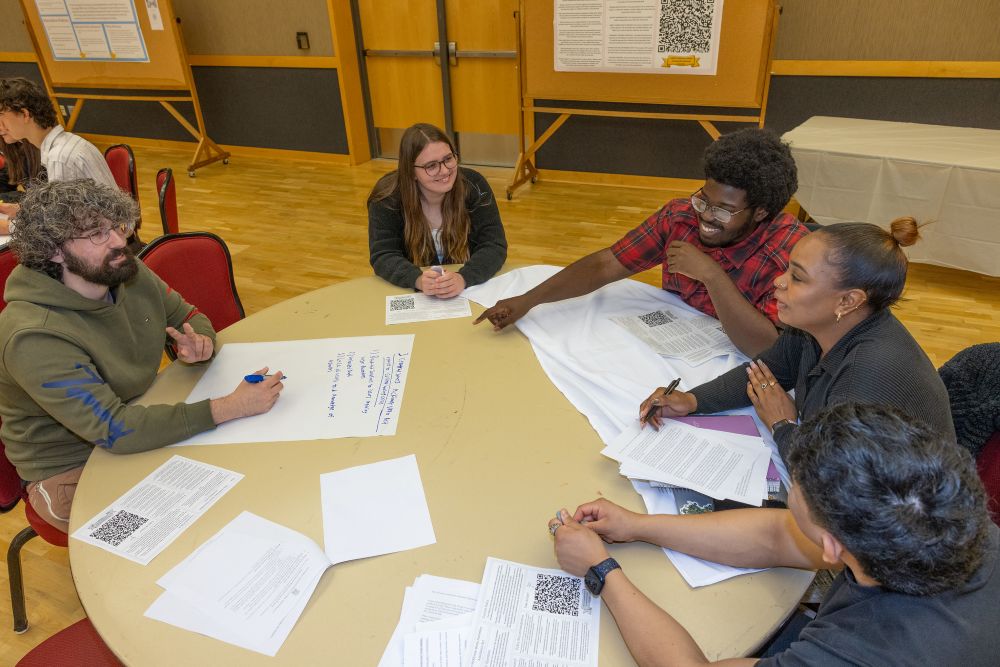
“Housing really is a crisis,” Professor Paul Trubey announced during his opening remarks at the 12th Annual Social Policy Summit. Held on Nov. 3, the annual event is an opportunity for junior and senior social work students to dive into a pressing social issue, hear from experts in the field, and brainstorm solutions.
This year’s topic, housing, was inspired by what organizations like the National Low Income Housing Coalition recognize as a real and pressing issue: Connecticut’s shortage of affordable housing.
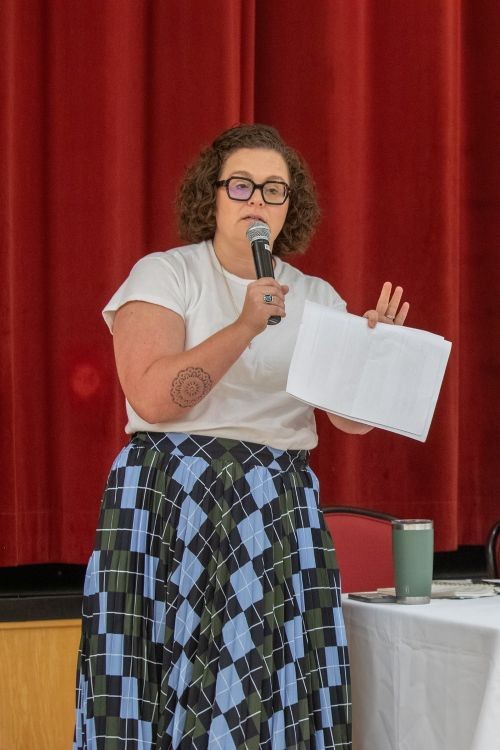
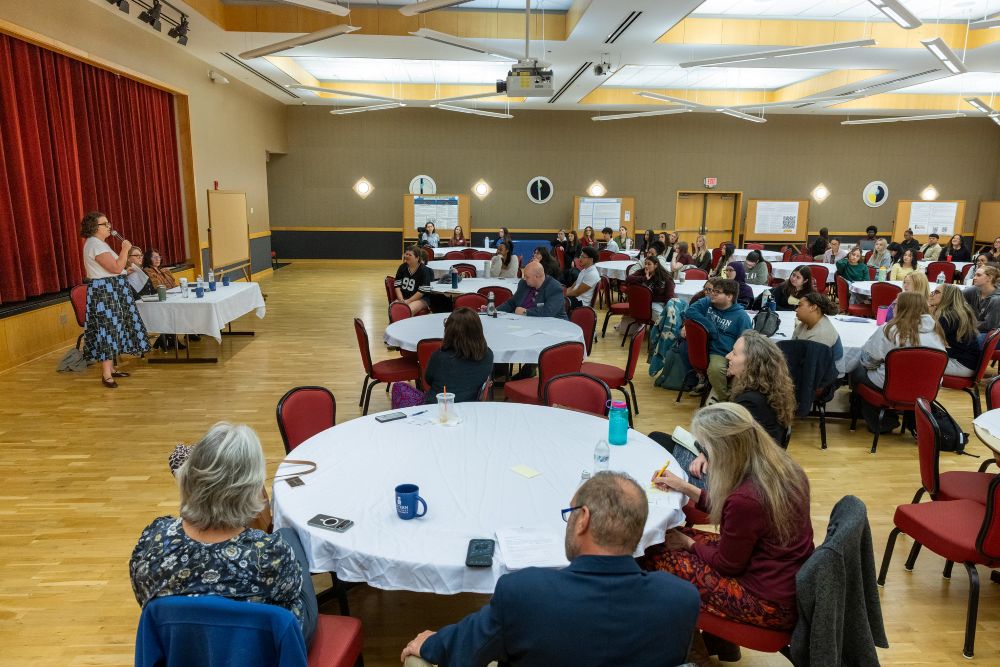
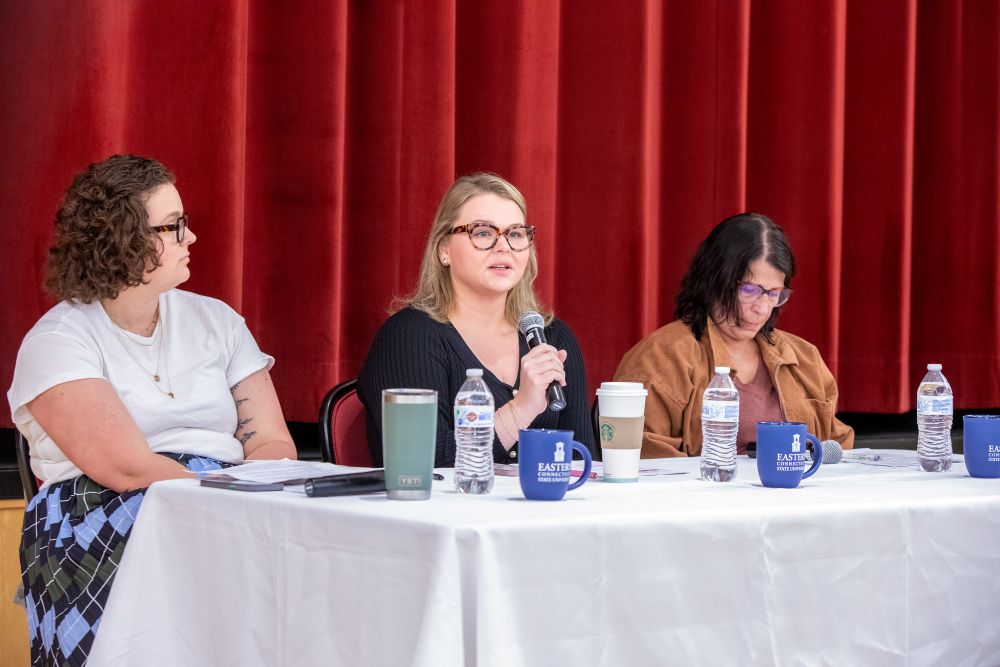
To discuss the issue, the University brought in Monika Nugent, manager of public policy/advocacy with The CT Community Nonprofit Alliance; Beth Sabilia, director of the Center for Housing Opportunity-Eastern Connecticut; and Emma King, executive director of Access Community Action Agency in Willimantic.
While the Summit’s focus was broad and varied, Sabilia sought to personalize it for the assembled Eastern students. “Where are you going to live when you graduate?” she asked. Using that question as a springboard, she walked the audience through similar questions about other groups who need and struggle to find affordable housing, including retirees, families, and the economically disadvantaged.
Nugent echoed some of Sabilia’s concerns before giving an overview of how the Connecticut Legislature has addressed housing concerns in the past. Using last year’s HB 8002, which became Public Act 25-1, she illustrated many of the steps a piece of legislation must go through before passage and the governor’s signature. She also touched on HB 5002 to show how, even after legislative passage, vocal objections and a gubernatorial veto can stop a bill from becoming law.
King built on Nugent’s presentation by discussing the unintended consequences of even well-intentioned policy choices. Citing “Housing First,” she examined how the policy created challenges for both caseworkers and clients. While the intent is to help clients find permanent housing without having to satisfy other requirements like sobriety, she said in practice it often forces less-than-ideal housing solutions in order to ensure people receive at least some support.
For this and several other reasons, King admitted that social work can be a stressful career path. Nonetheless, she affirmed the importance of the work, especially for those planning to utilize their degrees to develop and guide public policy.
“That’s what makes social work so important: bridging that lived experience to policy,” said King. “So we need to keep talking about the customers and clients served, so that we can advocate for actual policy change that will impact them in a positive way.”
Nugent joined with King, pointing out that even Eastern students who choose not to work in public policy specifically still have an opportunity to play a role in the formation and passage of legislation.
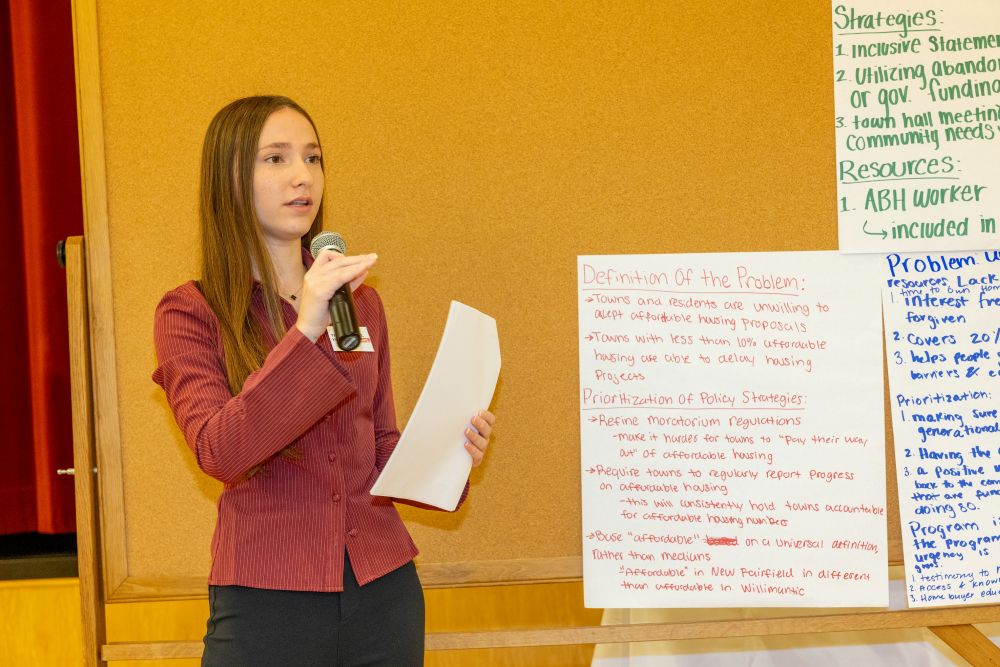
Students present ideas and solutions concerning Connecticut's housing crisis.
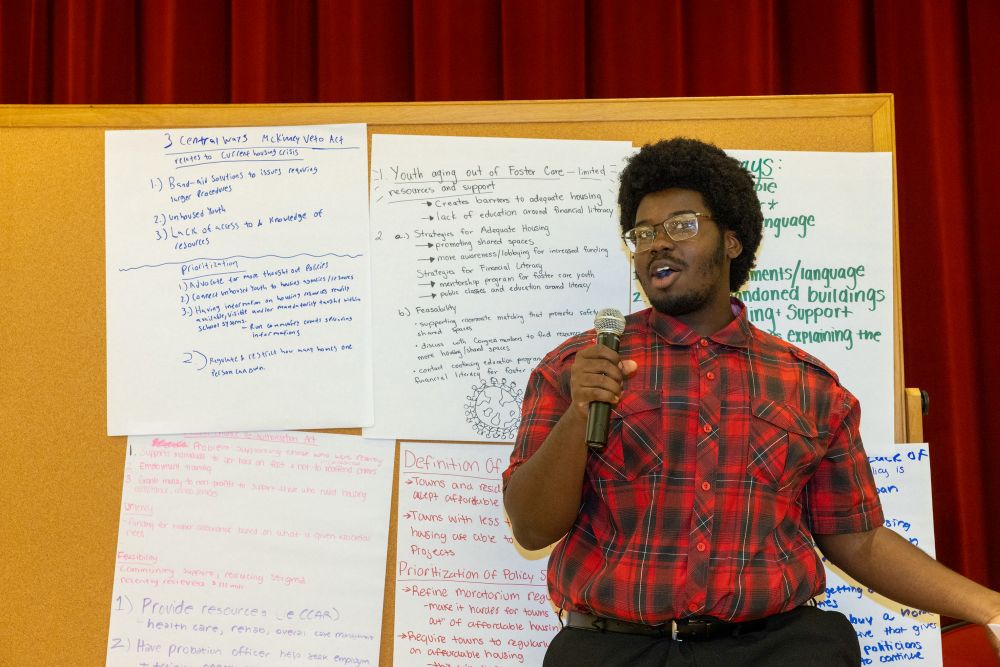
Students present ideas and solutions concerning Connecticut's housing crisis.
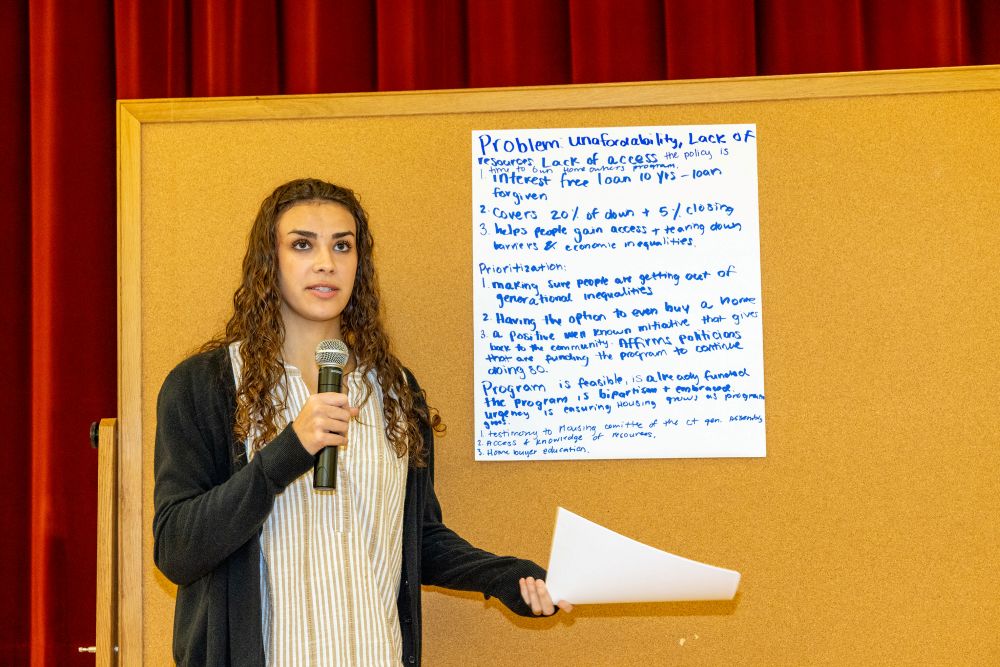
Students present ideas and solutions concerning Connecticut's housing crisis.
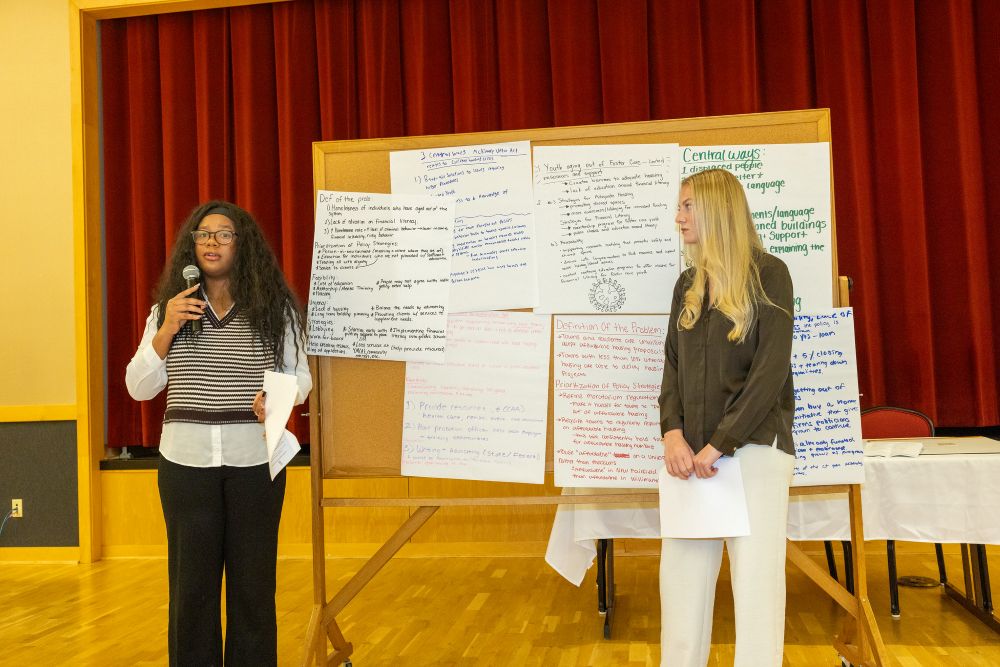
Students present ideas and solutions concerning Connecticut's housing crisis.
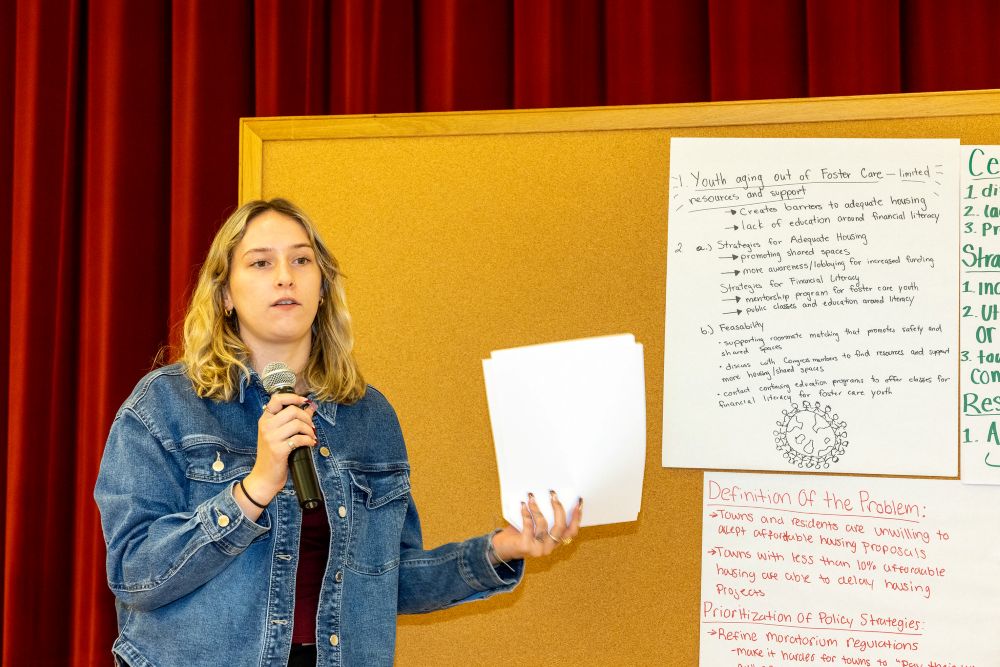
Students present ideas and solutions concerning Connecticut's housing crisis.
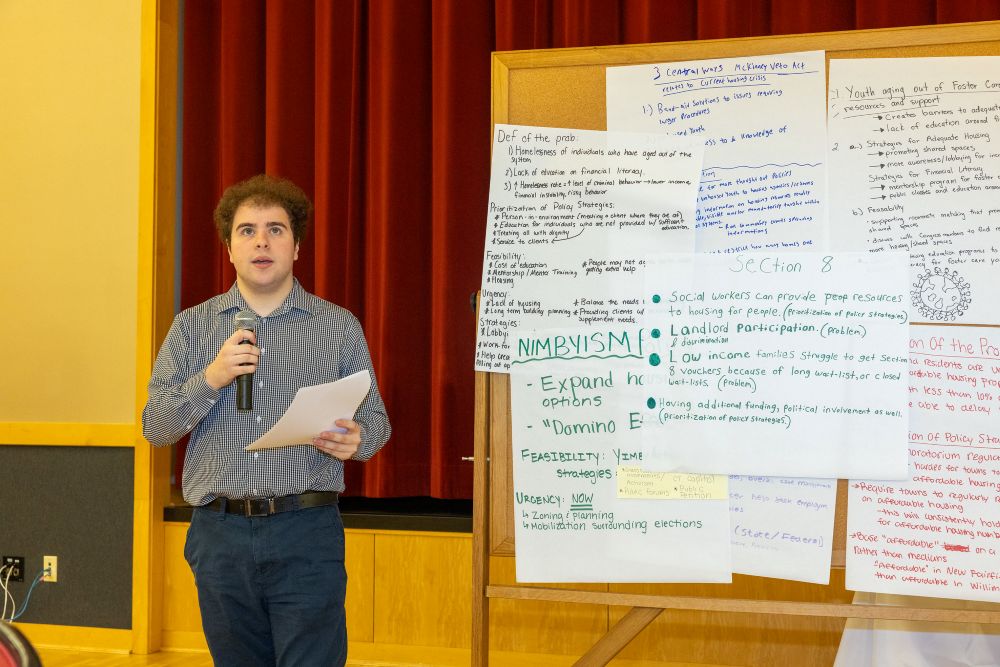
Students present ideas and solutions concerning Connecticut's housing crisis.
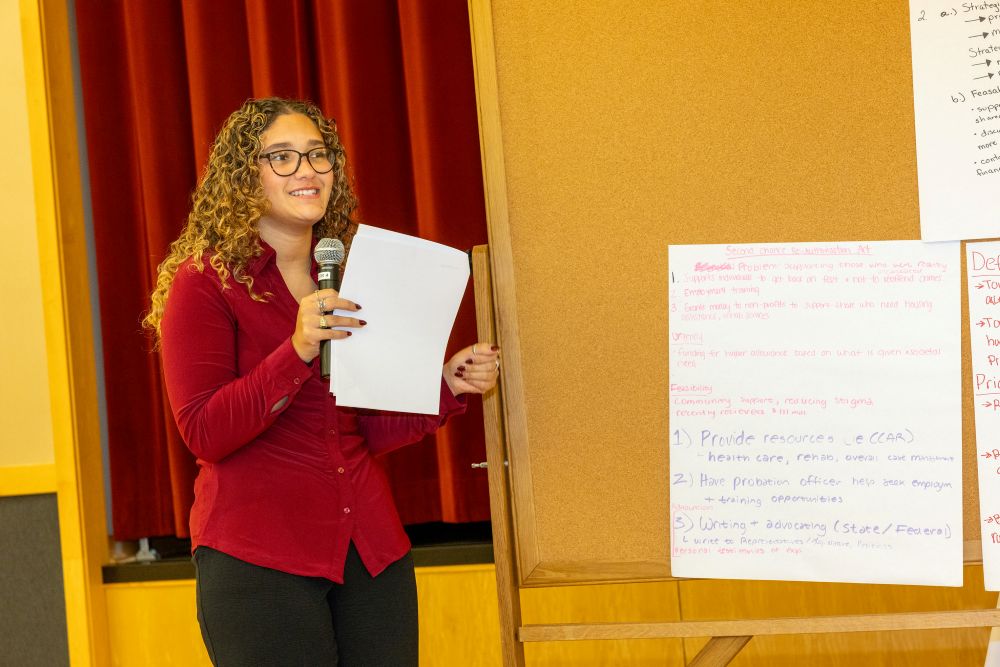
Students present ideas and solutions concerning Connecticut's housing crisis.
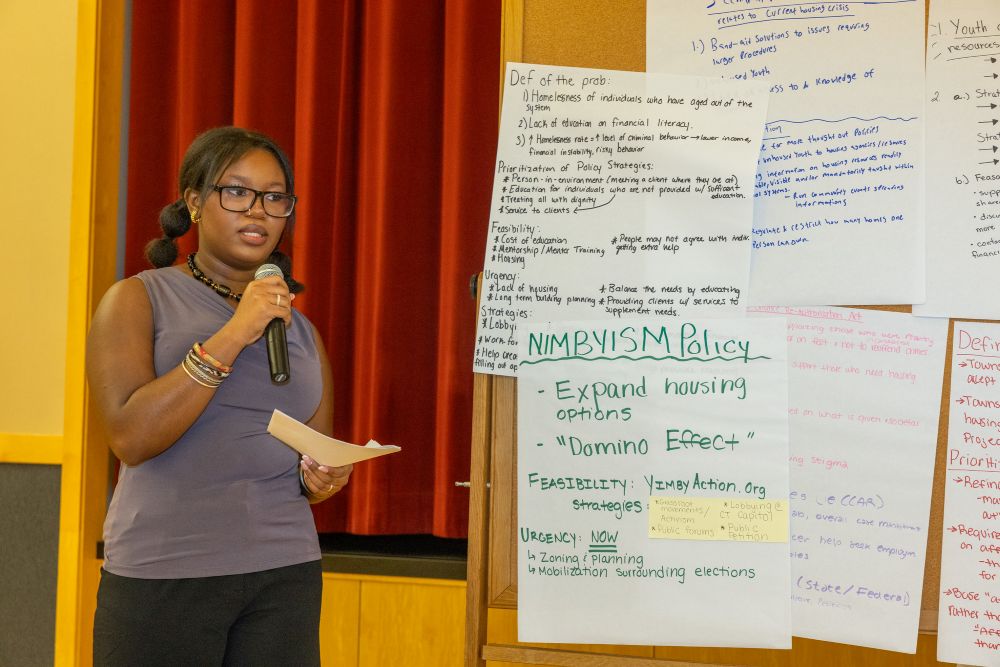
Students present ideas and solutions concerning Connecticut's housing crisis.
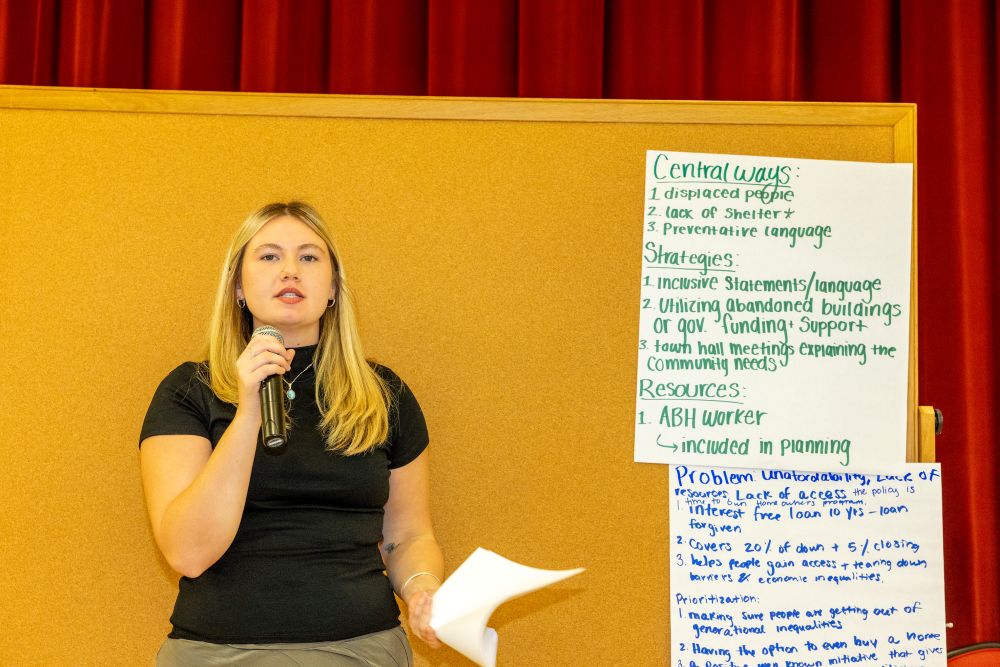
Students present ideas and solutions concerning Connecticut's housing crisis.
“Every bill must have a public hearing in order to be considered … and all of the testimony travels with [the bill],” said Nugent. “That’s really the opportunity for you to voice your opinion, concerns, or questions.”
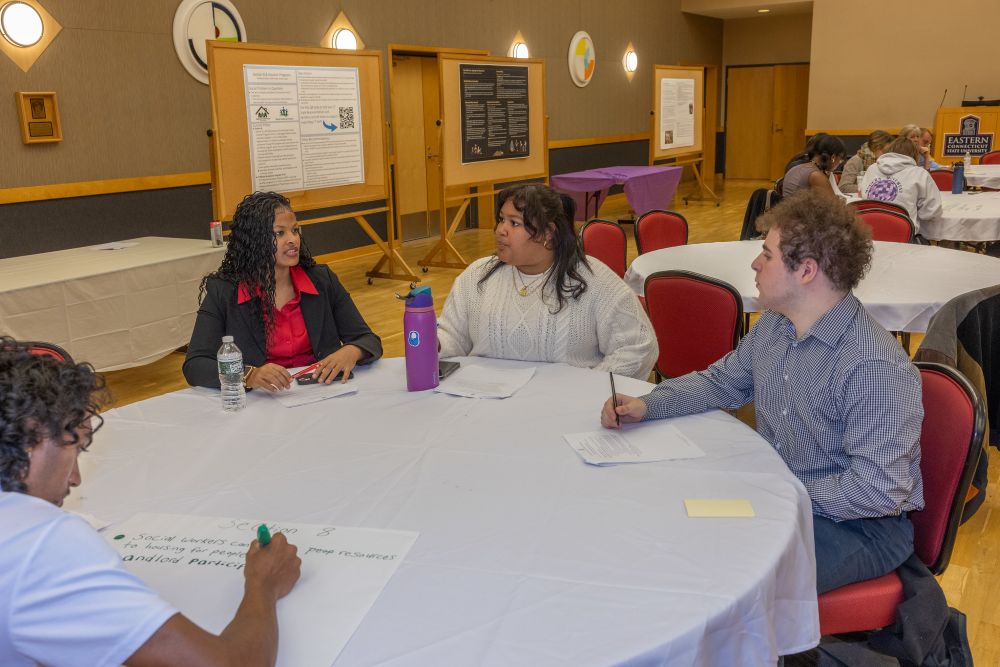
Recognizing that social workers not only work directly with clients but can also help shape policy, Eastern required the junior and senior social work majors in attendance to collaborate on a series of poster presentations. The students covered a range of topics, including combating the Not In My Backyard (NIMBY) movement, CHFA loans, and rural homelessness.
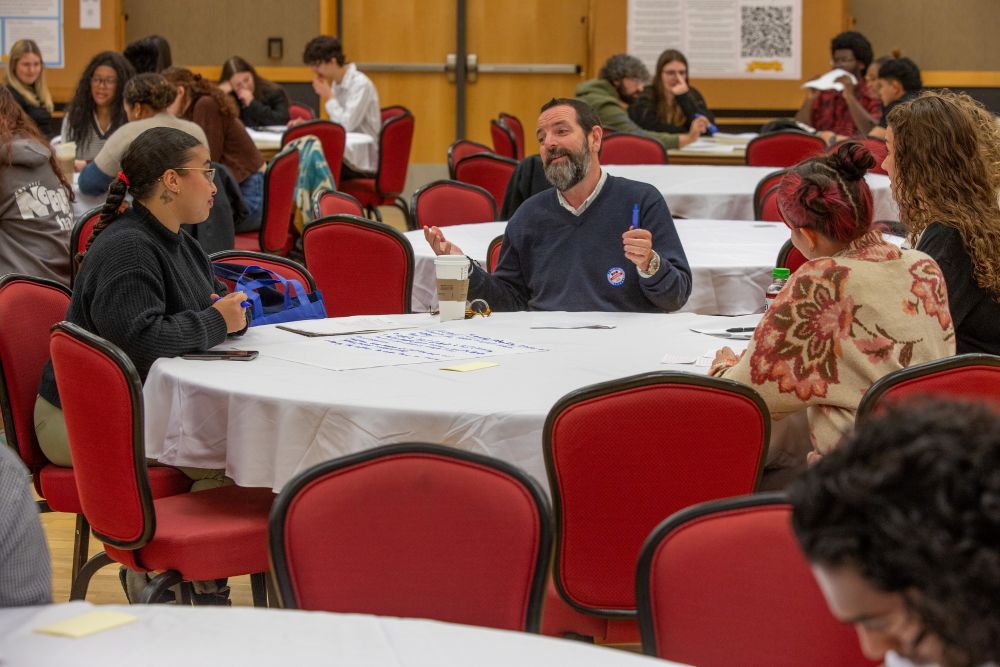
Designated question-and-answer sessions and in-person reviews of the student groups’ posters encouraged interaction among attendees. The event concluded with an activity in which participants prioritized housing-related issues and briefly developed plans to address them.
As in years past, the Social Policy Summit balanced realism with encouragement, seeking to produce Eastern graduates who understand the challenges of their chosen path but also recognize their tremendous potential to make a difference.