
- Apply
- Visit
- Request Info
- Give



Written by Timothy Stevens
Published on October 14, 2026
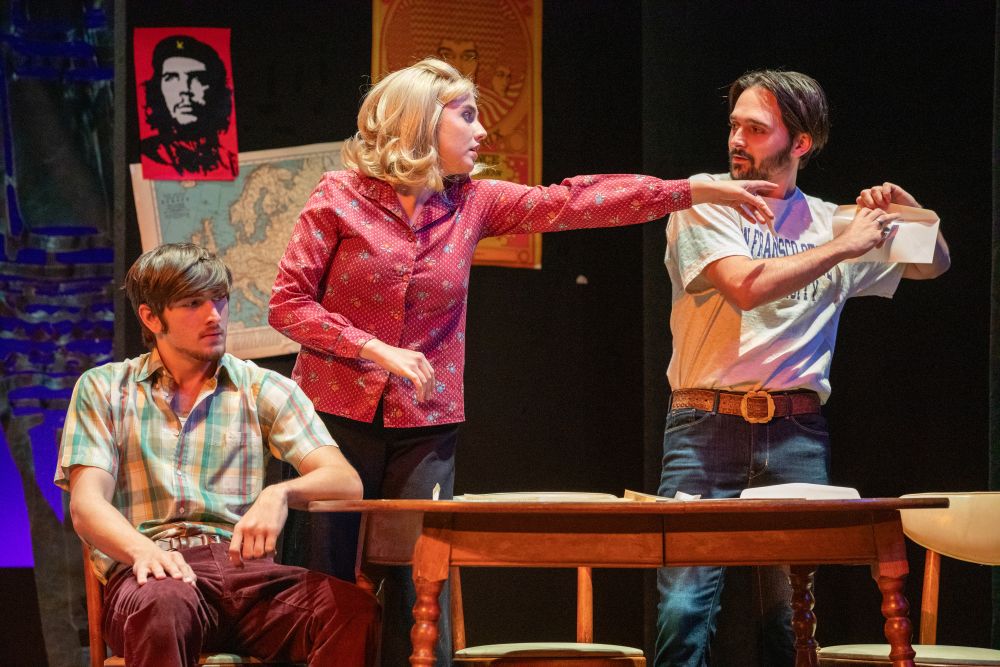
Scenes from "Moonchildren"
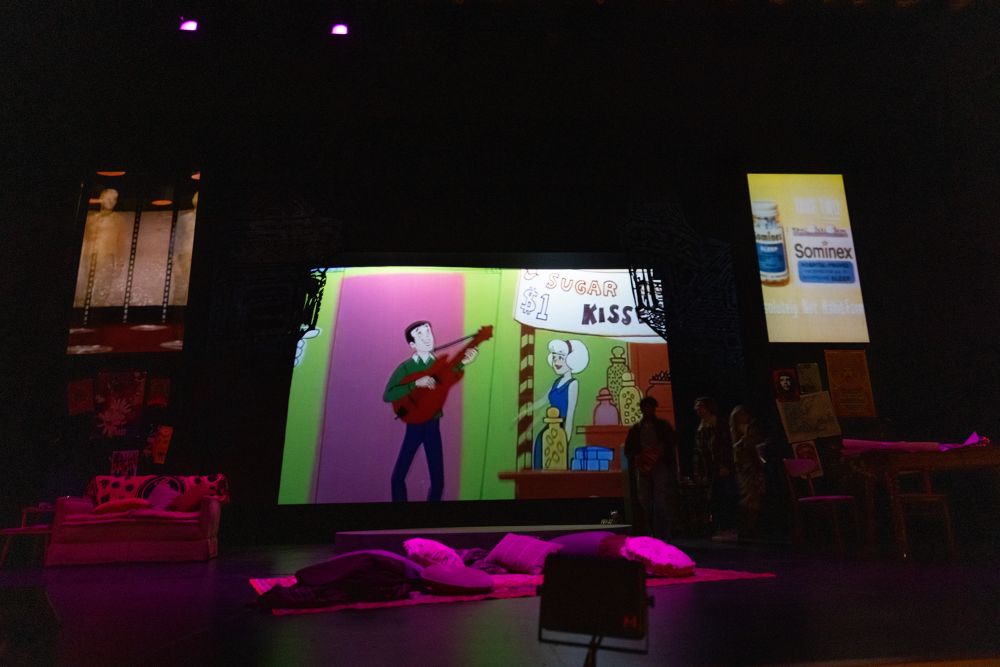
Scenes from "Moonchildren"
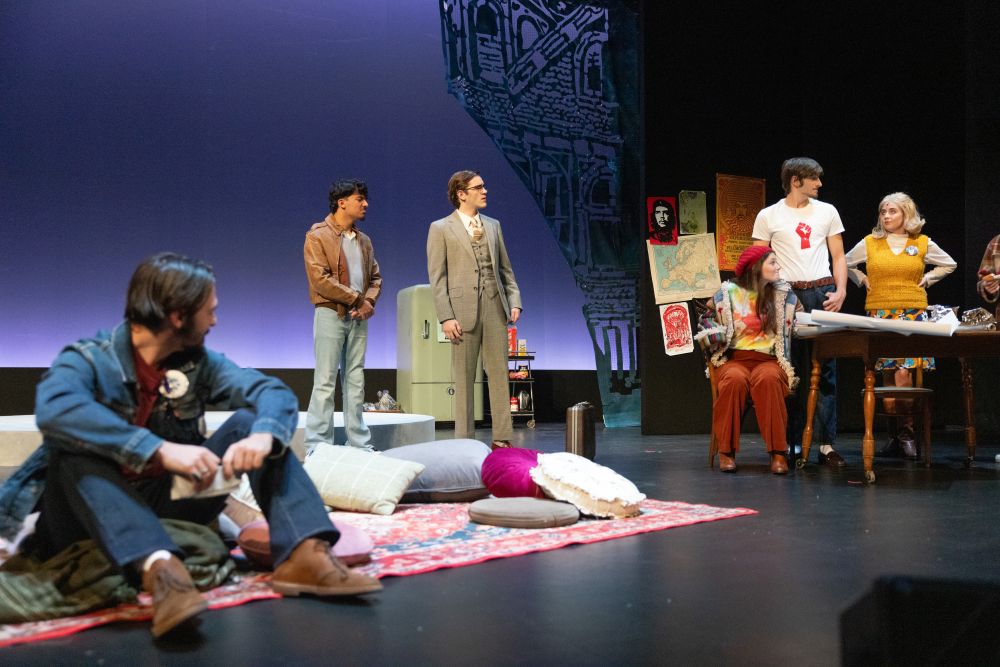
Scenes from "Moonchildren"
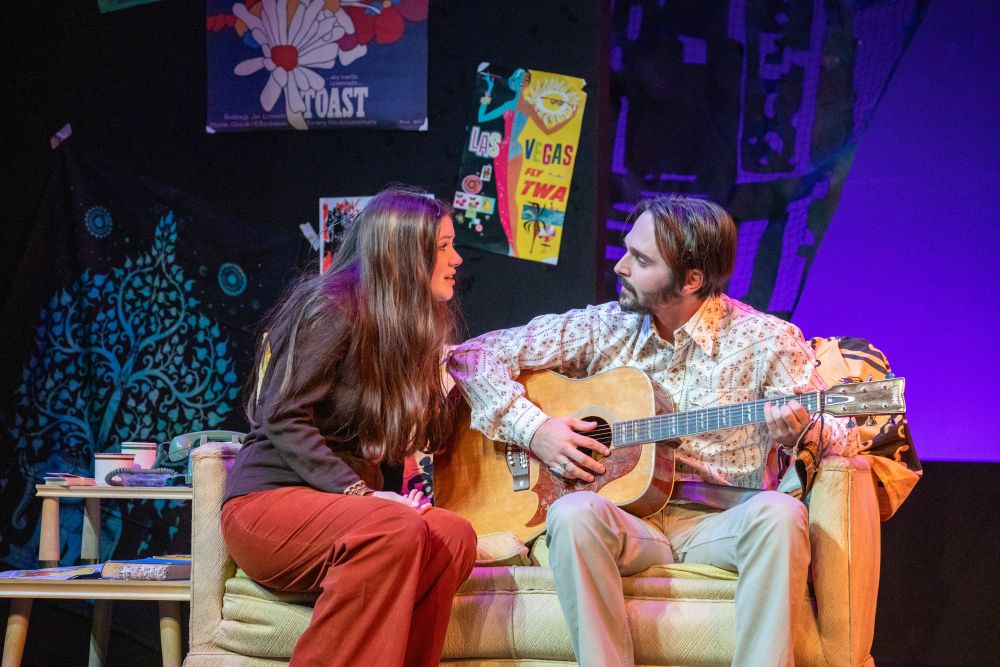
Scenes from "Moonchildren"
Scenes from "Moonchildren"
Scenes from "Moonchildren"
Like the heavenly body in its title, Michael Weller’s play “Moonchildren” has a way of coming back around. Despite being first performed 56 years ago (under the title “Cancer”), the many of the play’s message remain every bit as relevant today. The Communication, Film, and Theatre (CFT) program presented this classic dramatic-comedy as its first mainstage production of the year, from Oct. 8-14 in the Fine Arts Instructional Center (FAIC) Proscenium Theater.
“Uncertain times,” said Director David Pellegrini, noting parallels between the challenges the characters face and those of today’s college students. “Massive changes in society. Sexual revolution and youth culture transforming everything about American life.”
Sound Designer/Sound Supervisor Travis Houldcroft echoed that assertion: “I think the audience members see their own lives within the scenes of the show. [It] shifts from very funny moments to absurd moments — sometimes funny, sometimes not — to poignant moments, all while feeling very personal.”
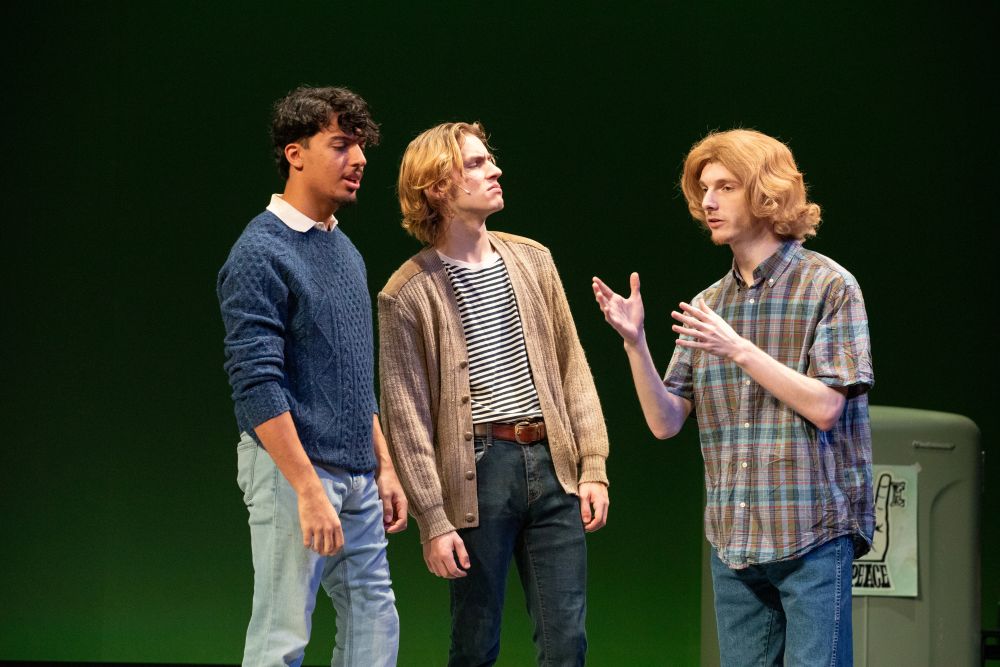
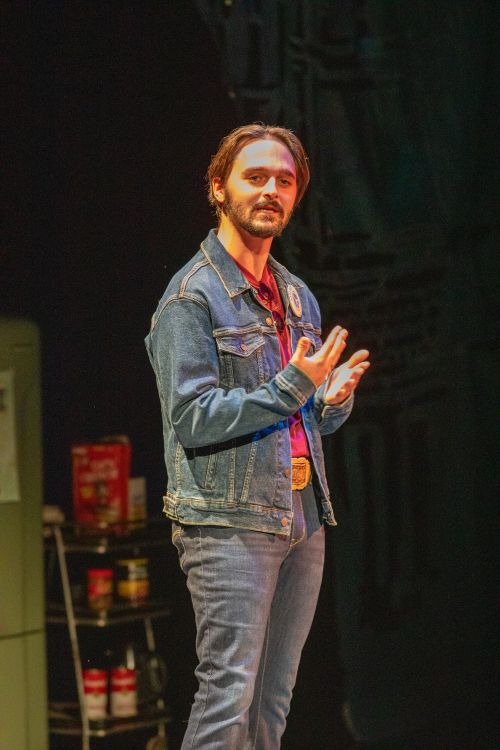
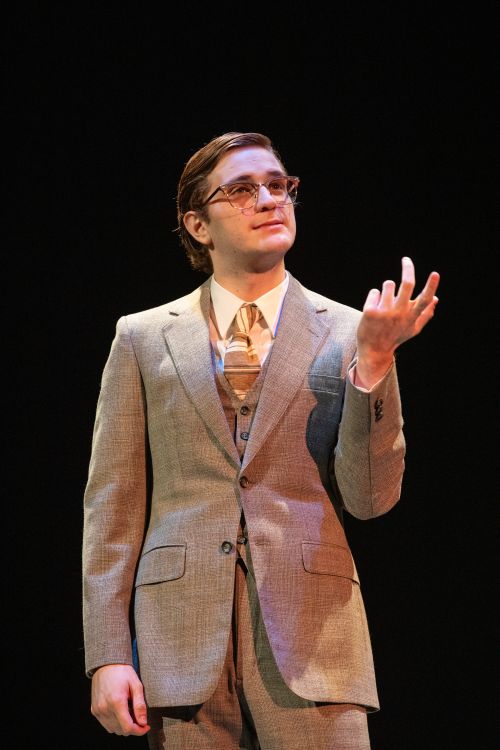
The play’s ability to embrace a range of tones ensures “Moonchildren” feels like a work of entertainment, not just a didactic lecture with high production values. As Colin Gilligan ’29, who plays Dick, one of the central charecters, reveals, the tonal variability helps the play pack a dramatic punch.
“I don’t think many of us ever anticipated that this show, one that was labeled as a comedy, can get so emotionally vulnerable and intense at times,” said Gilligan. “I think that makes ‘Moonchildren’ truly special.”
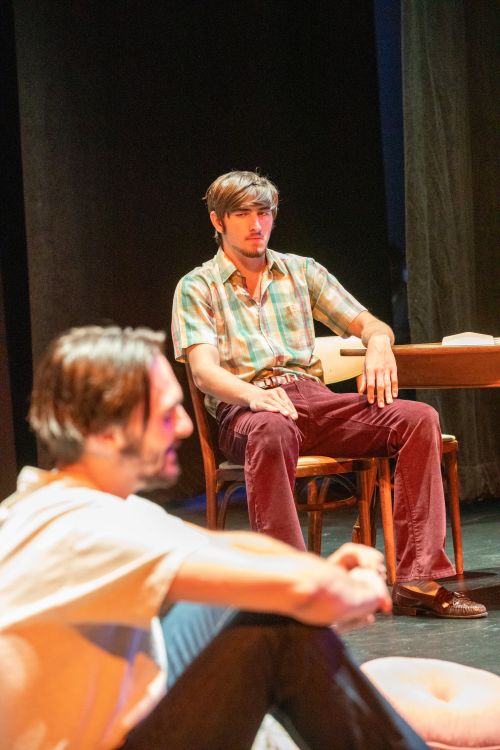
Thomas Goodin ’26, who plays Uncle Murray, agreed, describing it as “a production with a great deal of humor” and “serious emotional repercussions.”
In particular, Gilligan pointed to the play’s rising sense of dread as its most affecting aspect.
“[It’s] gripping,” he said. “That whole ‘60s culture of impending doom, the Vietnam War, the threat of nuclear war, fighting for peace and civil rights, the wear and tear of this huge cultural upheaval.”
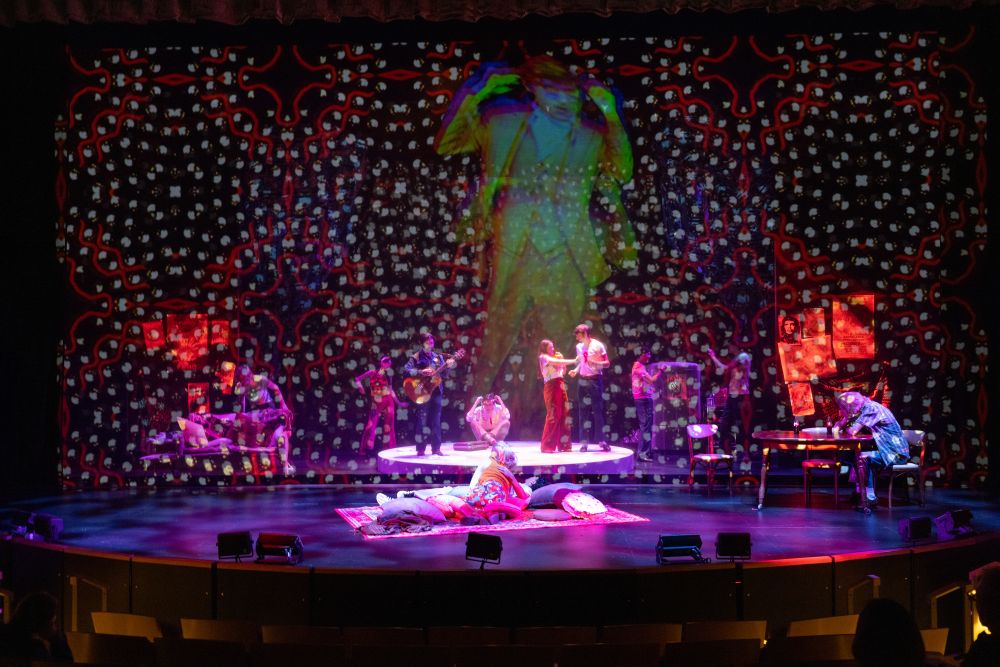
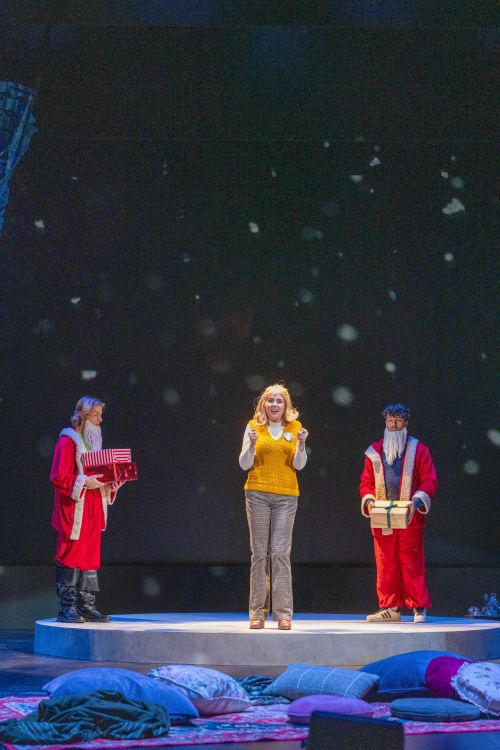
That tension between the ordinary and the extraordinary also shapes the production’s visual design. Lighting Designer Tim Golebiewski describes Pellegrini’s approach as moving between characters’ exterior and interior worlds, which he complements with lighting changes that create “dramatic shifts in the quality of light; in one moment we’re in an apartment, the next we seem to be floating in space.”
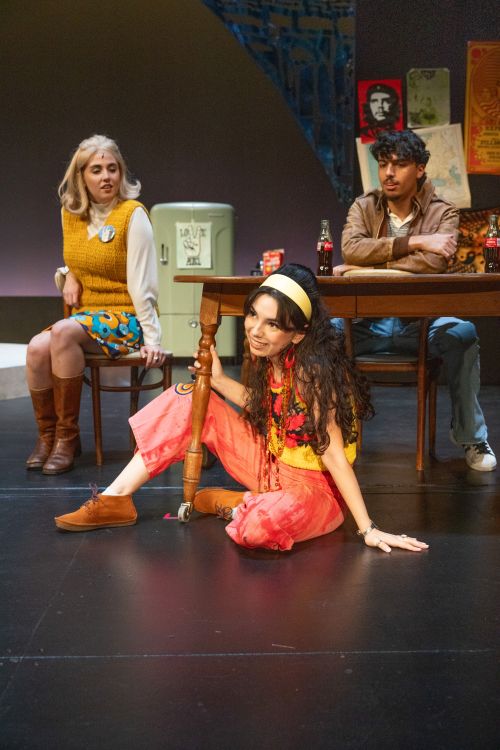
Scenic/Projections Designer Kristen Morgan sees that tension between the sets and the projections created by students Daniel Cattelan ’28, Dakota Lawson ’29, and Lucas Walley ’28 as well. “The set is very minimal, which gives focus to the amazing visual media montages … that really help tell the story of the era to the audience,” said Morgan.
Technical Director/Production Manager Jason Wadecki is quick to note sound and music also play a significant role, stating, “The ‘60s music certainly helps keep you in the groove of the time period.”
Houldcroft makes sure to share the credit for the show’s auditory language with Director Pellegrini. “David thinks very musically when it comes to his productions, so he always brings a great wealth of musical ideas to the table as we work,” he said. “We use a piece by Fleetwood Mac called ‘Why’ to unify the show. It was new to me, [but] I also wanted to make sure that we weren’t just using the same cliché songs that every 1960s-era production would use.”
Lawson, who also has a small role in the play as the milkman, finds the collaboration compelling. He confesses, “From lighting to sound to the stage crew … these different teams com[ing] together to put on this well-flowing production feels almost like magic to me.”
Scenes from "Moonchildren"
Scenes from "Moonchildren"
Scenes from "Moonchildren"
Scenes from "Moonchildren"
Scenes from "Moonchildren"
Scenes from "Moonchildren"
The juxtaposition of the familiar and the surreal is especially important for realizing what Pellegrini views as the biggest and most disconcerting connection between the show’s original era and today: the specter of endless conflict.
“Nobody’s worried about being drafted and sent to the front right after graduation here today,” Pellegrini said. “But it’s that idea of war in general and what that might mean when so many are engaged in it. When your society is just continuously being engaged in war.”
“The play has an anti-war message, but it is actually empathic toward the military,” Pellegrini continued, referencing his Director’s Statement, which acknowledges an “inadequacy of our nation to … care for the veterans who make it home.”
Eschewing a polemic, he prefers to frame it as a wake-up call for students who might not otherwise be inclined toward activism. By looking back, he hopes Eastern students will recognize that precarious feeling of balancing between hoping and fearing the future.
More than half a century after it first raised a curtain, Weller’s play unfortunately feels all too recognizable. Through accomplished performances and technical design, this Eastern production brings audiences back to a similar time of upheaval and uncertainty, offering recognition if not exactly hope.