
- Apply
- Visit
- Request Info
- Give



Written by Tim Stevens
Published on October 20, 2026

A recent youth poll from the Harvard Institute of Politics found that only 33% of voters between 18 and 29 expect the 2026 election to be conducted fairly, suggesting faith in voting is at a nadir among a cohort already known for low participation.
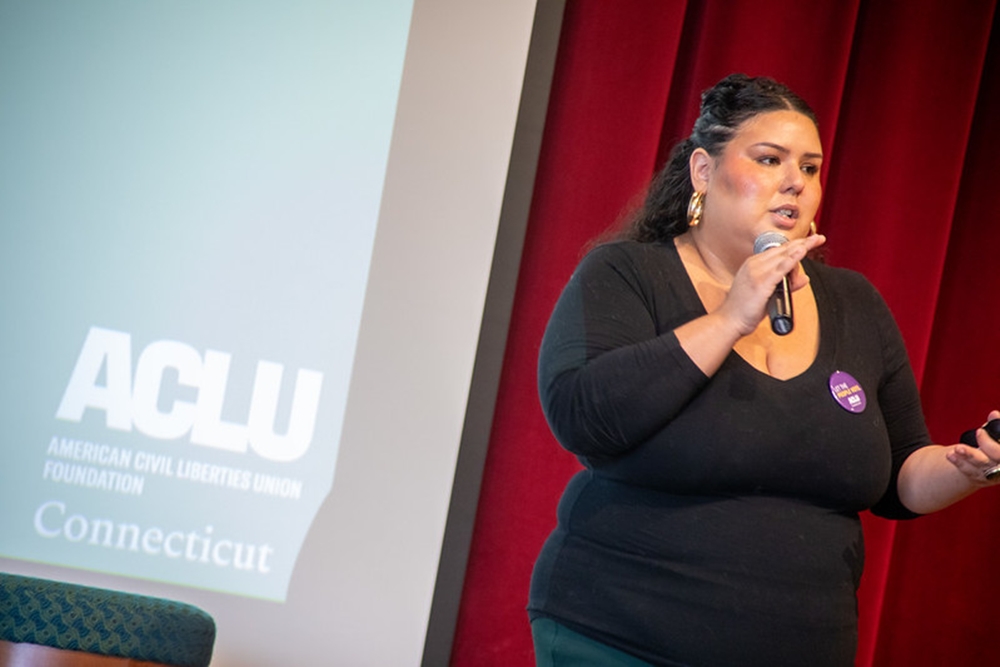
As part of Eastern’s efforts to promote civic involvement, the University hosted members of the American Civil Liberties Union on Oct. 14 to discuss how to register and vote in Connecticut.
As Connecticut approaches its 2026 general election on Nov. 3, the ACLU’s Gustaf Marks-Hamilton pointed to the state election of 2022, in which a single vote decided a heavily contested race for state representative in Southington.

“It was decided by one single vote,” said Marks-Hamilton of the race between incumbent Tony Morrison and winner Christopher Poulos. “Your vote is valuable, and your vote is important.”
Registering and Finding Where to Vote
To cast that all-important vote, though, people need to be properly registered. The ACLU’s Cristher Estrada-Perez encouraged any students unsure of their registration status to start with the CT Voter Registration Lookup. There, with their legal name, date of birth, and town of residence, they can check their current status. If they are registered, it will also tell them where to find their current polling place.
For those not registered or looking to change their place of residence or party affiliation, they should visit Connecticut’s Official Online Voter Registration website for fast and easy online registration.
But don’t wait too long. Estrada-Perez warned students that they have until Oct. 16 — 18 days before the election — to register to vote online. Thus, there’s a good chance that if you are reading this, you may already be too late.
Don’t worry, though, you still have options! Connecticut also allows in-person registration at polling places on Election Day. So students who missed the 18-day window can visit their polling location on Nov. 3 with proof of identity and residence. They can fill out the paperwork and vote right there and then.
Early Voting
While voting on Election Day has been the default for years, COVID and other recent events have led to an increased acceptance of in-person early voting in many states, Connecticut among them. This year, early voting takes place between 10:00 a.m. and 6:00 p.m. every day from Oct. 19 to Nov. 2, explained Estrada-Perez. She warned the audience that not every polling place is available for early voting, however. Therefore, voters should check with the town registrar to see which sites are available to them.
Absentee Voting
Like with early voting, no-excuse absentee voting has become increasingly popular since 2020, with Connecticut joining the movement in 2024. Now absentee ballots can be requested, without question, at the CT Online Absentee Request Portal. The site opens 45 days before any referendum, primary, or general election.
In-Person Voting
Estrada-Perez concluded with the method most people think of when they picture voting: in-person on Election Day. In Connecticut, polls open at 6 a.m. and close at 8 p.m. However, she reminded people of what newscasters say the night of every election: “If you are in line, stay in line.” Voters in line at polling places before 8 p.m. can still vote even if they don’t have a ballot by the cut-off. Once onsite, you still have the constitutional right to cast that ballot.
Out-of-State Students
For out-of-state residential students, Estrada-Perez stressed that they must choose whether they wish to vote in Connecticut or back home, but cannot legally do both. She urged them to check their own states’ rules regarding registration and absentee ballots as well to ensure they make the best decision under the present circumstances.
Connecting with Peers
Bringing things full circle, Estrada-Perez and Marks-Hamilton encouraged the audience to reach out to peers who might feel alienated from the voting process. The less faith people invest in the system, they said, the less likely it is to reflect citizens' needs and wants. While there are many excellent ways to get involved in the democratic process, the most basic and necessary is casting a ballot.
Students seeking additional information on voting in Connecticut are encouraged to visit the CSCU Library Consortium’s Voting Guide.