
- Apply
- Visit
- Request Info
- Give



Written by Noel Teter ’24
Published on September 16, 2026
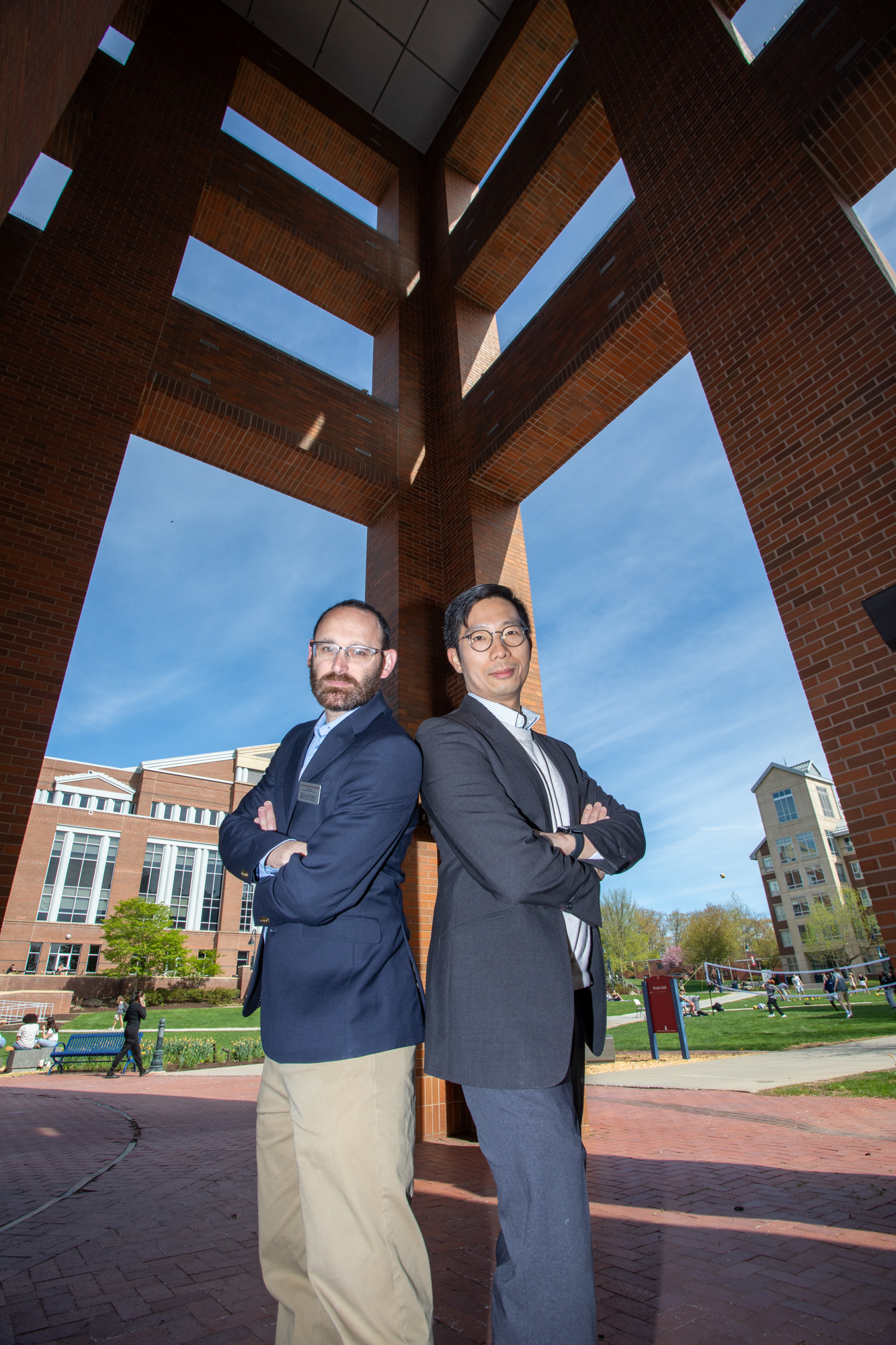
A pair of Eastern Connecticut State University professors have joined forces to research cyberbullying. Education Professor Kwangwon Lee and computer science Professor Garrett Dancik linked their disciplines in an article released earlier this year in the journal “Computers in Human Behavior Reports.”
Titled “Mapping Cyberbullying Research: A Systematic Analysis of Thematic Trends and Interdisciplinary Integration,” the article arose from a disconnect between the social sciences and computer science in cyberbullying research.
Lee was approached by Professors Young-Eun Lee and Eunhye Park from Gachon University in South Korea to serve as a co-author on their manuscript investigating this disconnect. “We wanted to identify the current state of cyberbullying research and how or if this research is interdisciplinary between the social sciences and computer science.”
Lee approached Dancik to assist with the study because of his computer science background. “Given the importance of the topic and the reputation of Dr. Lee and the other co-authors, I immediately said yes,” wrote Dancik.
Lee added: “Dr. Dancik’s contributions really helped situate this study as a true interdisciplinary collaboration. … His expert lens enriched the quality of research addressing the current gap between the social sciences and computer science.”
According to Lee, the study’s methodology combines two types of statistical analysis with the goal of understanding current trends in cyberbullying research. The first is bibliometric analysis, a quantitative research method used to analyze large volumes of literature.
The study also employs topic modeling, which identifies themes in large collections of text. “This study is the first, to our knowledge, to combine these methods to specifically focus on the current state of cyberbullying research through an interdisciplinary lens,” wrote Lee.
This eclectic methodology yielded two major themes. First, computer science research on cyberbullying emphasizes detection methods, specifically those that use AI, reflecting the prevalence of AI in the computer science field and a proactive approach to cyberbullying solutions.
Conversely, the pair, along with Lee and Park of Gachon University, found that social science research on cyberbullying focuses instead on its psychological impacts and the roles of teacher interventions. These findings aim to bridge the gap between the perspectives of these disciplines and to push for interdisciplinary solutions to cyberbullying.
“This was our first time working together, but I would definitely be open to future collaborations,” wrote Dancik. “Given how integrated technology and AI are in our society, there are certainly many questions that can be explored.”