
- Apply
- Visit
- Request Info
- Give



Written by Collin Moffitt '27
Published on September 15, 2026
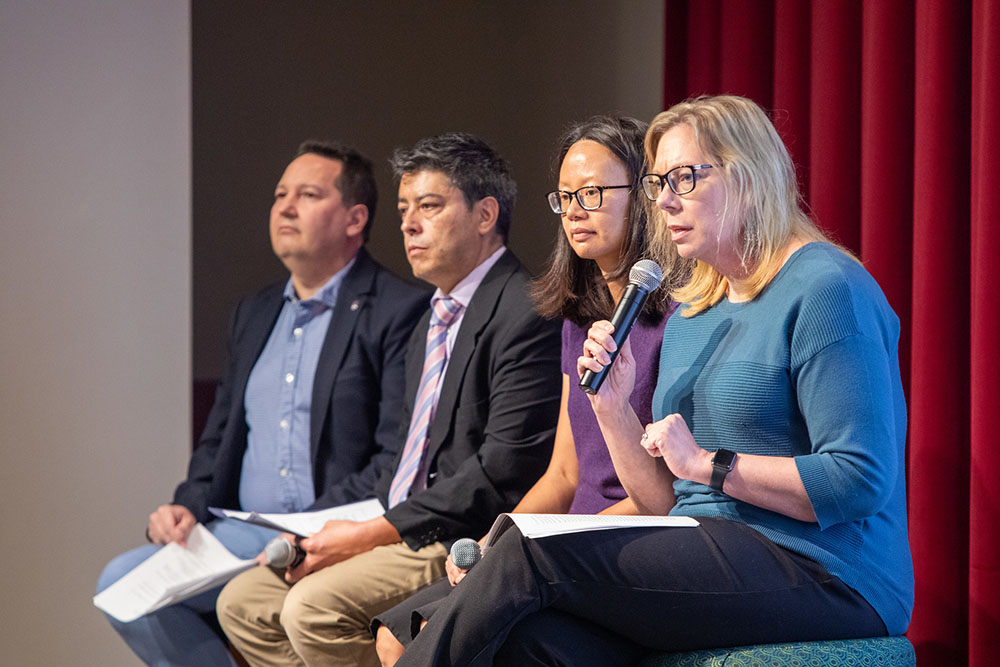
Professor Caitlin Carenen speaks on the panel.
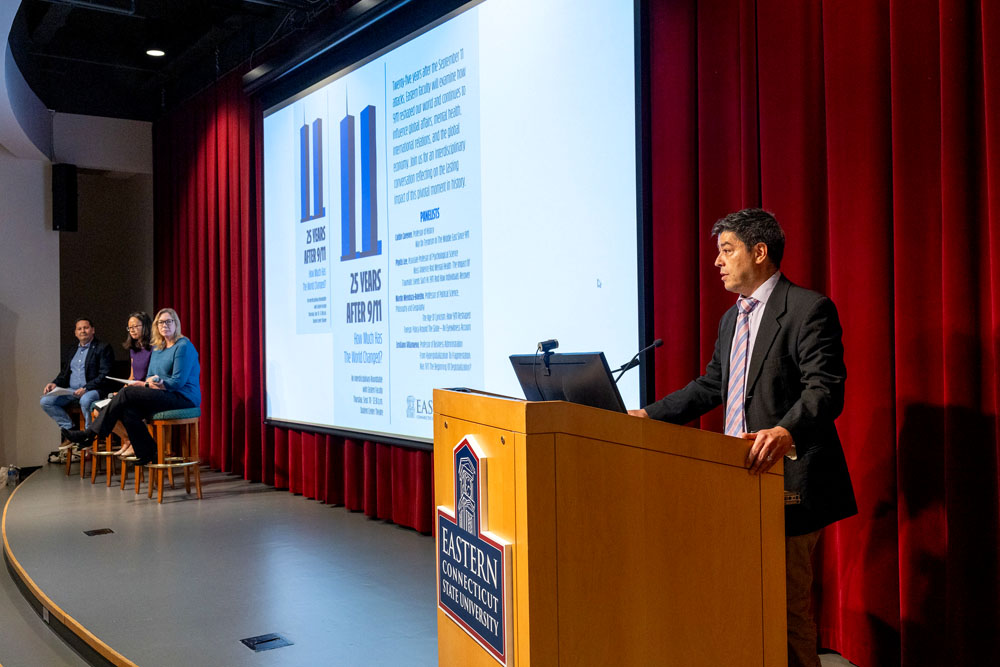
Martín Mendoza-Botelho, professor of political science
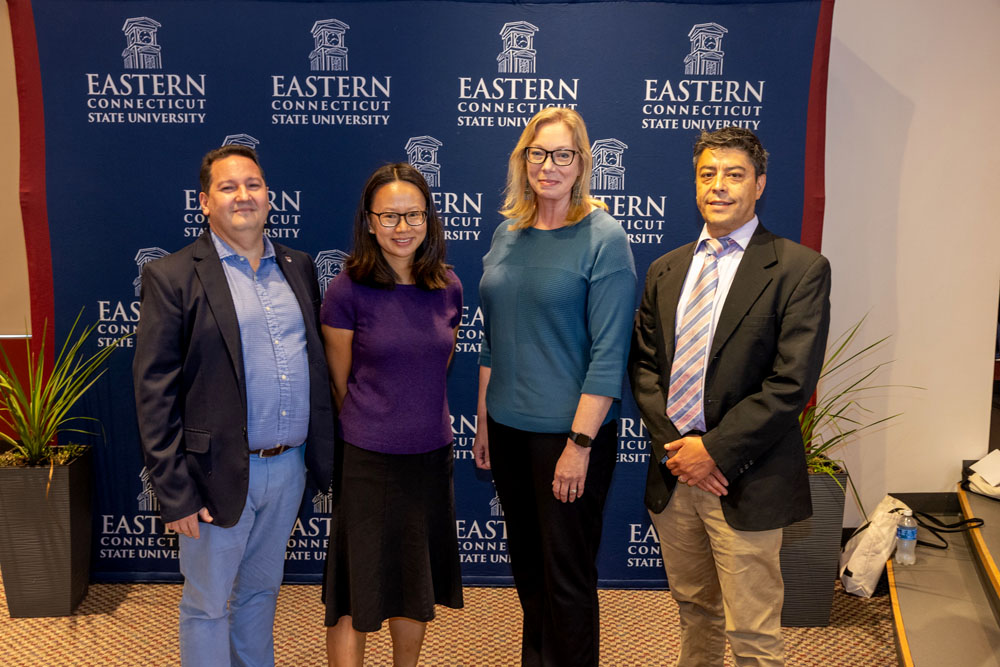
Panelists
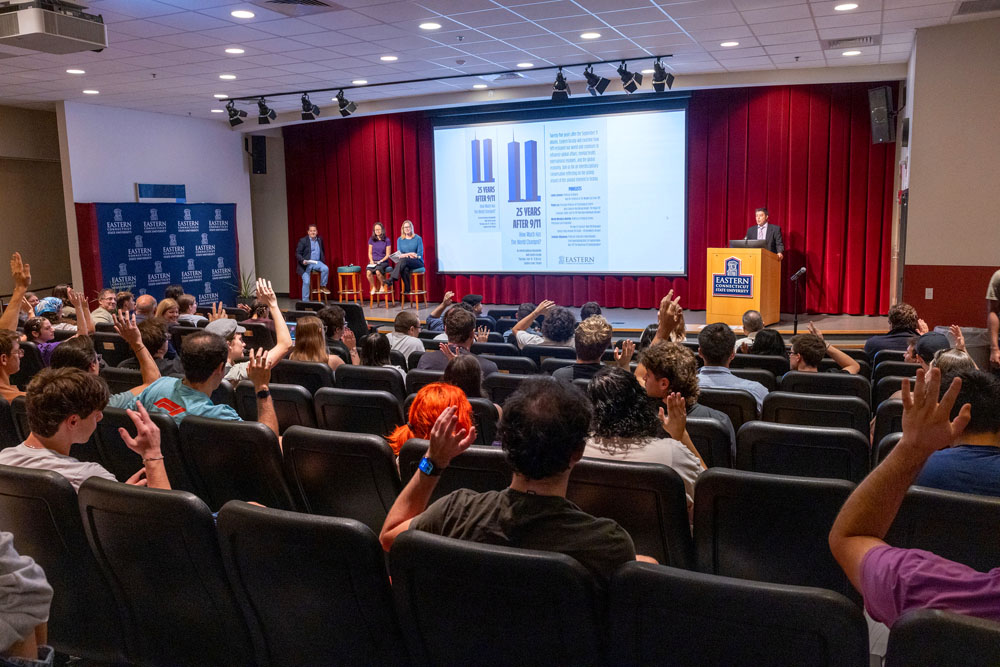
Panelists
Eastern Connecticut State University convened a panel of faculty on Sept. 10 to discuss the ongoing historic, political, psychological, and economic impacts of the attacks on Sept. 11, 2001. Held in the Student Center Theatre, the panelists approached the topic from different perspectives, giving audience members a dynamic view of the attacks 25 years later.
History Professor Caitlin Carenen, who teaches American foreign policy and terrorism, talked about the historical context surrounding the attacks, including the war between Afghanistan and the Soviet Union in the 1970s, which Carenen said led to the rise of Osama Bin Laden and the formation of al-Qaeda.
“When we think about what the lesson is 25 years after 9/11, it's something we should be very cautious about in drawing big conclusions,” said Carenen, stressing that 25 years is a small blip on the historical timeline.
Carenen noted that the Taliban, the government that oversaw Afghanistan when the US declared war two decades ago, is back in power. "Two trillion dollars later, thousands and thousands of lives lost, and the same government is in charge,” she said.
Phyllis Lee, professor of psychological science, discussed the psychological concept of "flashbulb memory," a vivid recollection usually linked to a traumatic event.
She shared her own flashbulb memory of 9/11, when she was a high school student in Boston. Lee described watching the news broadcast on TV while passing by the library.
From her perspective as a psychologist, Lee described the national response to 9/11 as a trauma response. She noted the surge in patriotism as a coping mechanism. Lee described how, for some people, patriotism morphed into prejudice and hatred towards individuals of Middle Eastern or Muslim descent.
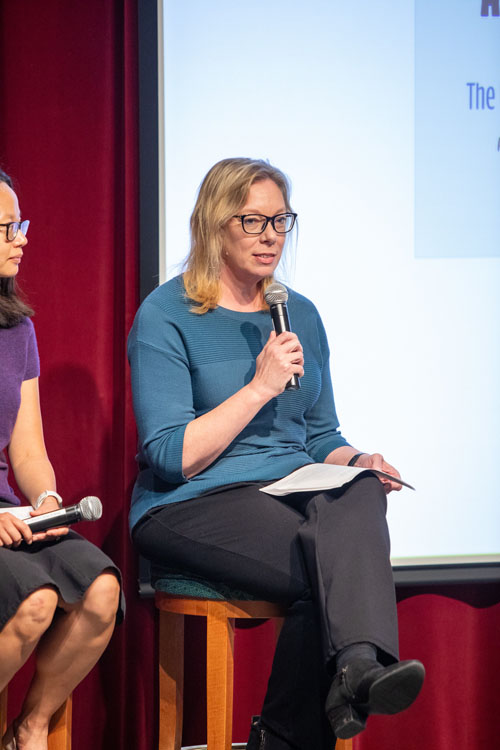
Caitlin Carenen, professor of History
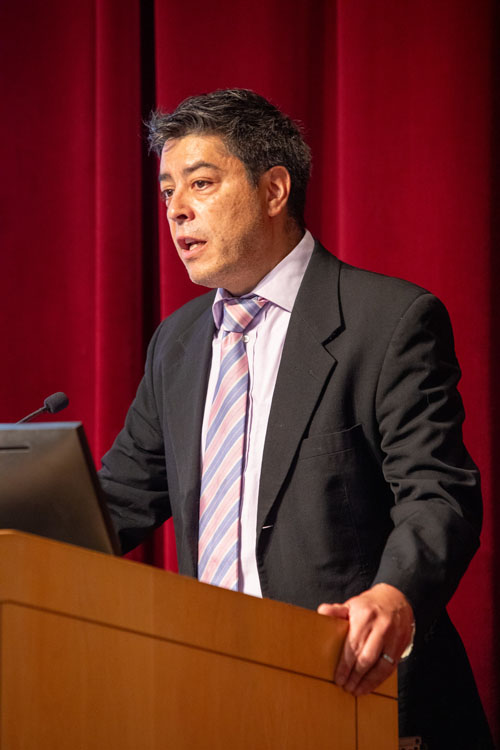
Martín Mendoza-Botelho, professor of political science
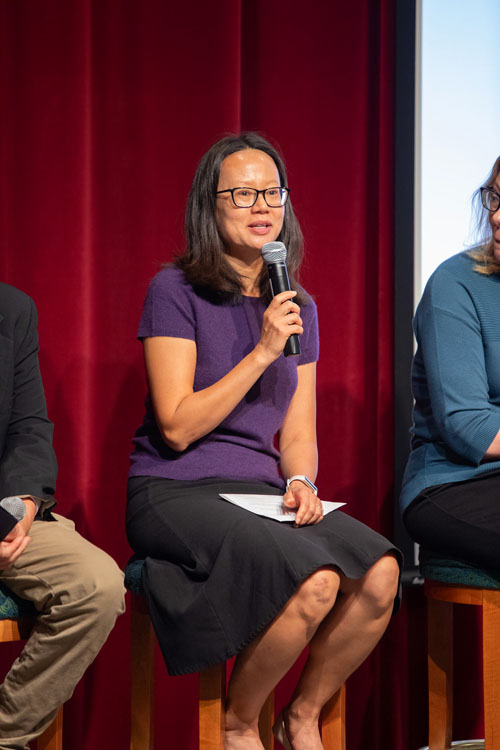
Phyllis Lee, professor of psychological science
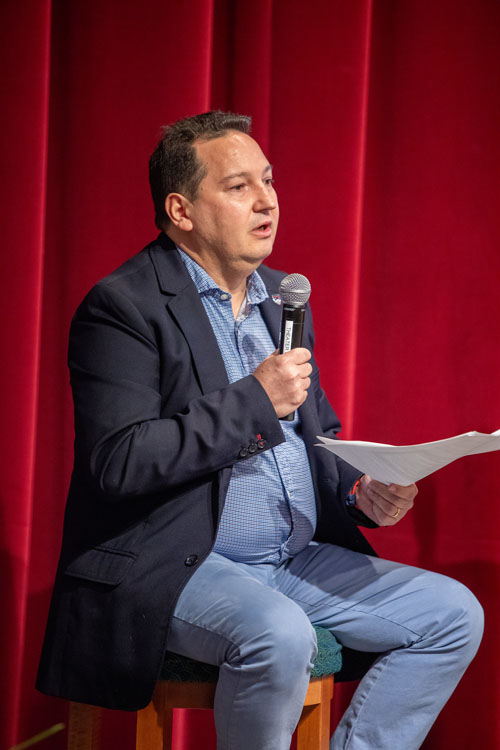
Emiliano Villanueva, professor of business administration
Political science Professor Martin Mendoza-Botelho explained the direction the world was heading pre-9/11, noting that the post-Cold War world was less isolated and that worldwide military spending was low. Then the Sept. 11 attacks happened, and a dramatic shift followed, including an emphasis on national security and military development.
“If you look at 9/11, this is where the world starts rearming,” said Mendoza-Botelho.
He explained that because the world had to rearm after the attacks to match their “closest rival,” it led to a more unstable and isolated world, with countries less willing to cooperate and undermining the influence of the United Nations.
Emiliano Villanueva, professor of business administration, expressed an economic perspective on the impacts of 9/11.
Before 9/11, he said there were fewer barriers to international commerce and a more globalist view on trade.
“Sept. 11 exposed a fundamental contradiction: the same interconnected systems that allow people, money, goods, information, and businesses to move rapidly across borders can also create vulnerabilities,” he said. “After 9/11, governments placed much greater emphasis on borders, transportation security, financial monitoring, immigration procedures, and geopolitical risk”
Villanueva then discussed how changes in how nations and citizens viewed global trade led to the beginning of de-globalization after the "hyper-globalization" of the late-20th century.
“Perhaps the question is no longer ‘is globalization ending?’ but ‘where are we in the cycle of globalization?’" asked Villanueva. "Are we still experiencing globalization, or are we moving toward deeper de-globalization?”