
- Apply
- Visit
- Request Info
- Give



Written by Ed Osborn
Published on September 16, 2026
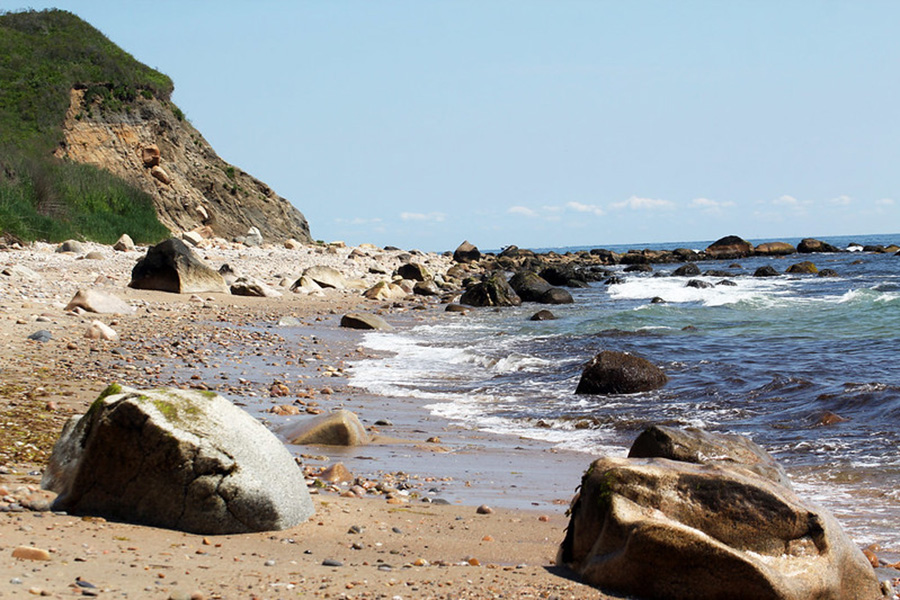
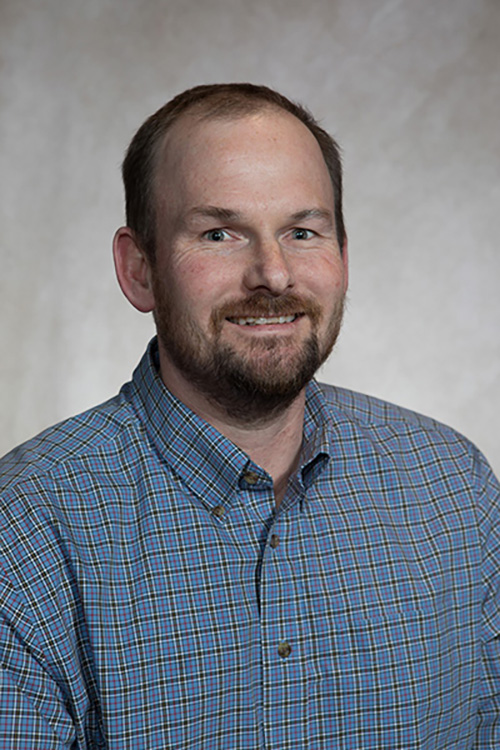
Environmental earth science Professor Bryan Oakley is one of two principal investigators on a grant project examining coastal erosion on Block Island, RI. The two-year, $270,000 grant from the Rhode Island Sea Grant concludes in 2028 and will examine how shoreline erosion and bluff retreat shape coastal vulnerability on Block Island across time scales, from decades to seasonal change.
Titled “Bluff to Beach: Quantifying Shoreline Dynamics and Sediment Flux to Improve Coastal Resilience on Block Island, RI,” the grant project includes co-principal investigator Nathan Vinhateiro, science director of the Coastal Institute at the University of Rhode Island, as well as Eastern EES Professor Meredith Metcalf and Jason Parent, assistant professor of natural resource science at the University of Rhode Island.
The impact of climate change on coastal communities has become a focus of the scientific community for some time. Research suggests that the rate of global sea level rise has doubled in the past three decades. As the grant proposal notes, “Scientific information is vital to understanding coastal systems for prudent, science-based management of such important resources.”
The grant targets Rhode Island and Block Island for good reason. “Rhode Island’s coastal communities are grappling with the impacts that rising seas and coastal storms are having on infrastructure, community health, economic productivity, and ecosystem function.”
Using high-resolution mapping, LiDAR (light detection and ranging) equipment, UAV data, and sediment analyses, the field team is quantifying shoreline change, sediment flux, and areas of heightened erosion risk. The results will support coastal planning and decision-making by providing new tools, datasets, and visualizations to help communities adapt to erosion, flooding, and sea level rise.
Three or four members of the project team will be Eastern undergraduate students, who will interpret and digitize bluff-crest positions using LiDAR technology; collect and analyze sediment samples; and assist in field mapping high-tide swash using hand-held GPS equipment.
“Climate change is creating challenges that no single institution can solve alone,” said Oakley. “By bringing together the EES department at Eastern, the University of Rhode Island, local organizations, and municipal leaders, we’re building a collaborative framework that connects research with action.
“Our goal is not simply to study coastal change at a variety of time scales, but to provide communities with the information they need to build resilience,” continued Oakley. “One of the strengths of this project is that it was developed in response to questions being asked by the Block Island community itself. The collaboration ensures that the research is grounded in real-world concerns about erosion, sea-level rise, and coastal resilience. That's exactly how applied environmental earth science should work.
“At the same time, we’re creating hands-on research opportunities for Eastern students, allowing them to collect and analyze data, work with cutting-edge technology, and contribute directly to a project that will help guide future coastal management decisions. That's a win for the researchers, the students and the community.”
Oakley has worked closely with the Block Island community on erosion issues for years, and the grant calls for continued collaboration. The Coastal Resilience Committee was established in 2021 to proactively address issues of erosion and sea level rise on Block Island.
Two members of the committee — Judith Gray and Nigel Grindley — wrote, “One of Dr. Oakley’s strengths is connecting his research to the needs of municipalities. On Block Island, he is providing the science upon which decisions are being based as we prioritize projects to reduce the impacts of sea level rise and changes in storm patterns. He is helping us understand shoreline erosion and how it can be addressed to retain, for as long as possible, both our essential infrastructure and our beautiful beaches.”
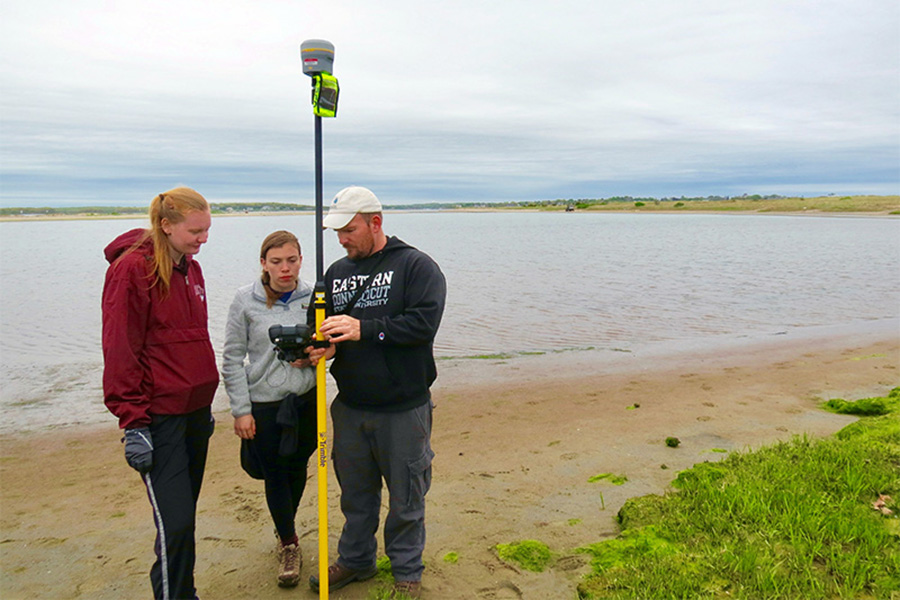
Oakley and former EES students measure seashore changes at Napatree Point during a previous research project on the Rhode Island coast. Photo credit: Janice Sassi, Watch Hill Conservancy.
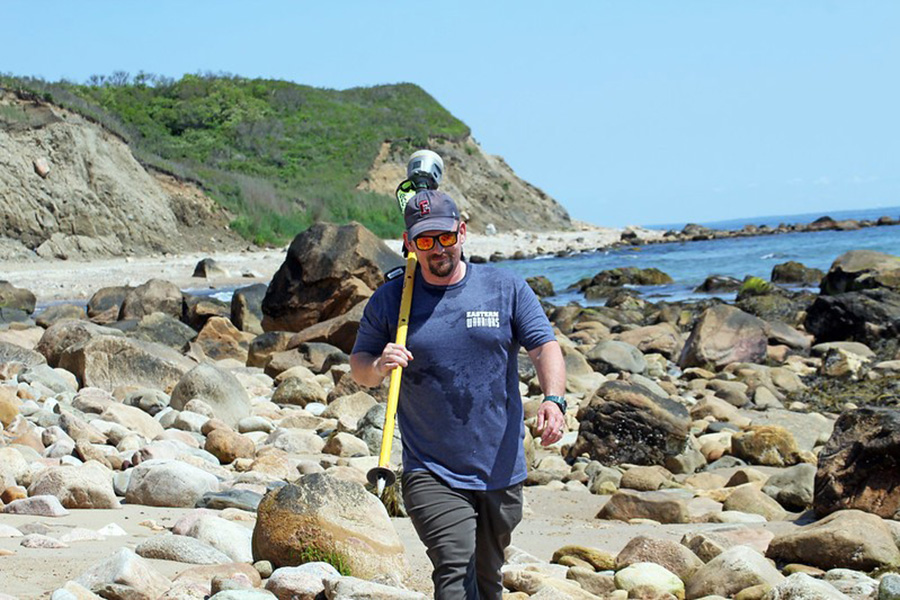
Oakley walks along the coast of Block Island.
The grant is one of seven current projects being funded by Rhode Island Sea Grant (RISG). RISG is one of 34 programs in the National Sea Grant College Program working to enhance environmental stewardship and long-term economic development and responsible use of coastal and marine resources.
Oakley and his colleagues believe their work can impact communities beyond Rhode Island. “We expect the project results will be of interest to the broader geosciences and coastal management communities … to a range of areas with similar bluff-backed shorelines. Coastal bluffs composed of glacial deposits occur throughout New England, along the Great Lakes shorelines, and in northern Europe.”
Oakley has been examining erosion on Block Island and other Rhode Island locations for more than 10 years, including shoreline monitoring at seven Block Island locations since 2013. His expertise in coastal geology has made him a popular expert consultant to coastal communities along Rhode Island’s shores, and he has used the sites to teach advanced research skills to his Eastern Connecticut State University undergraduate students.
In addition to Block Island, another coastal area Oakley has extensively researched is Rhode Island’s Napatree Point, a long, thin sandy spit that has seen its footprint move dramatically over time. With help from several Eastern students in 2021, Oakley published his research on Napatree Point, which showed that storm surges, not rising sea levels, cause erosion at that location.
WatcH an Eastern mini-doc on a previous block Island project: