
- Apply
- Visit
- Request Info
- Give



Written by Ed Osborn
Published on September 28, 2026
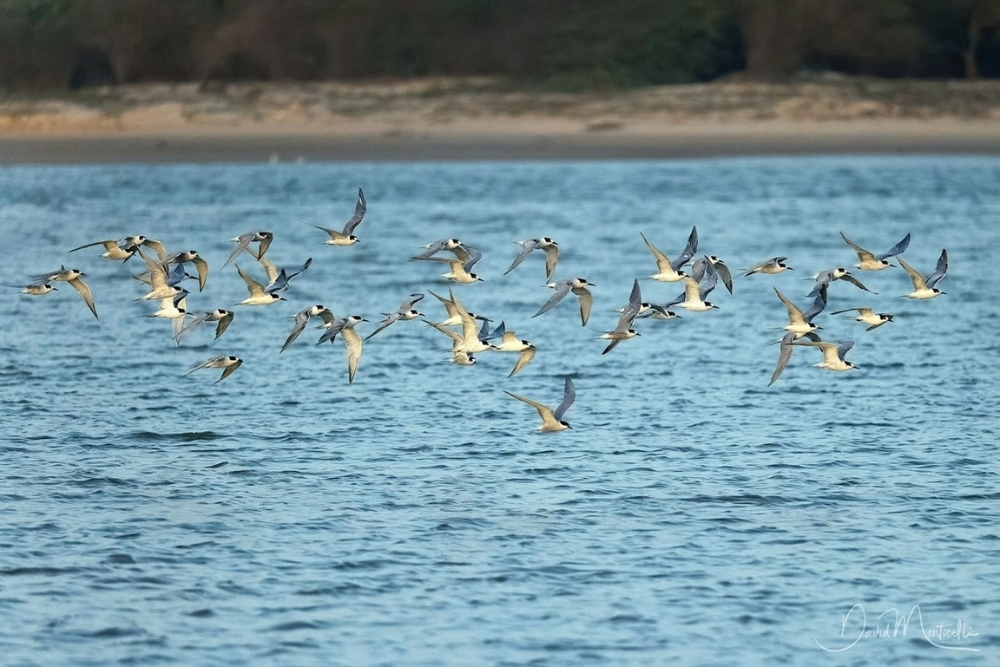
Roseate Terns are a locally threatened migratory seabird. Photo by David Monticelli.
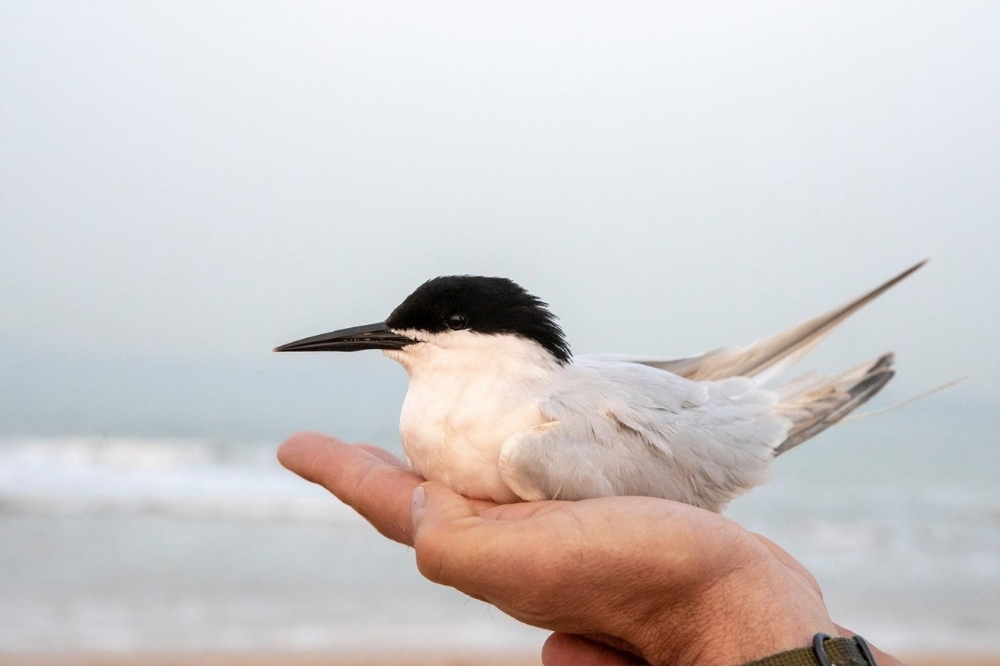
A researcher holds a Roseate Tern in the palm of their hand. Photo by David Monticelli.
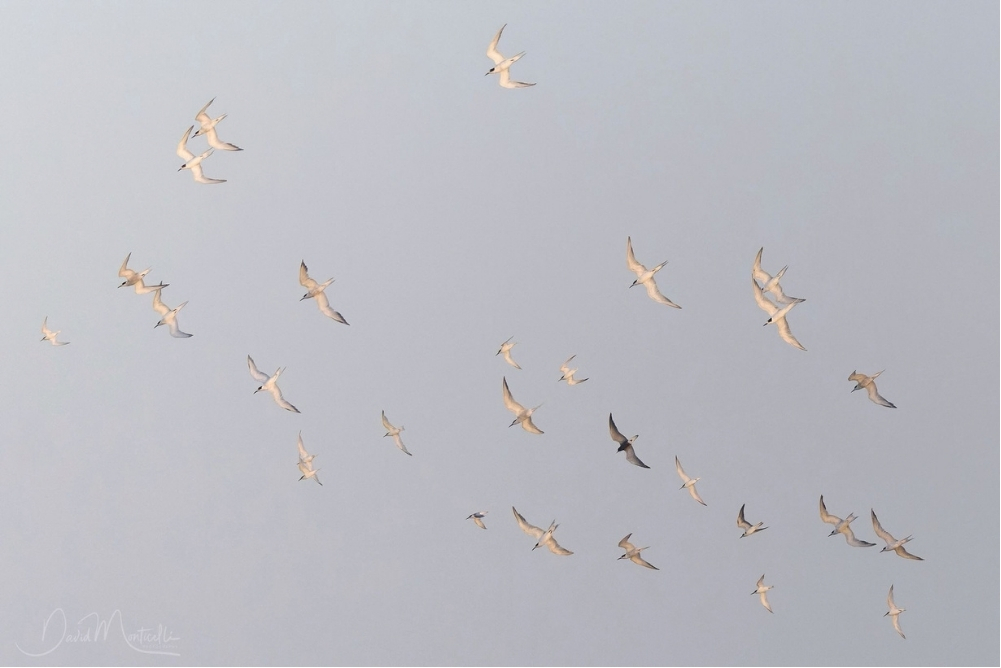
Roseate Terns are a locally threatened migratory seabird. Photo by David Monticelli.
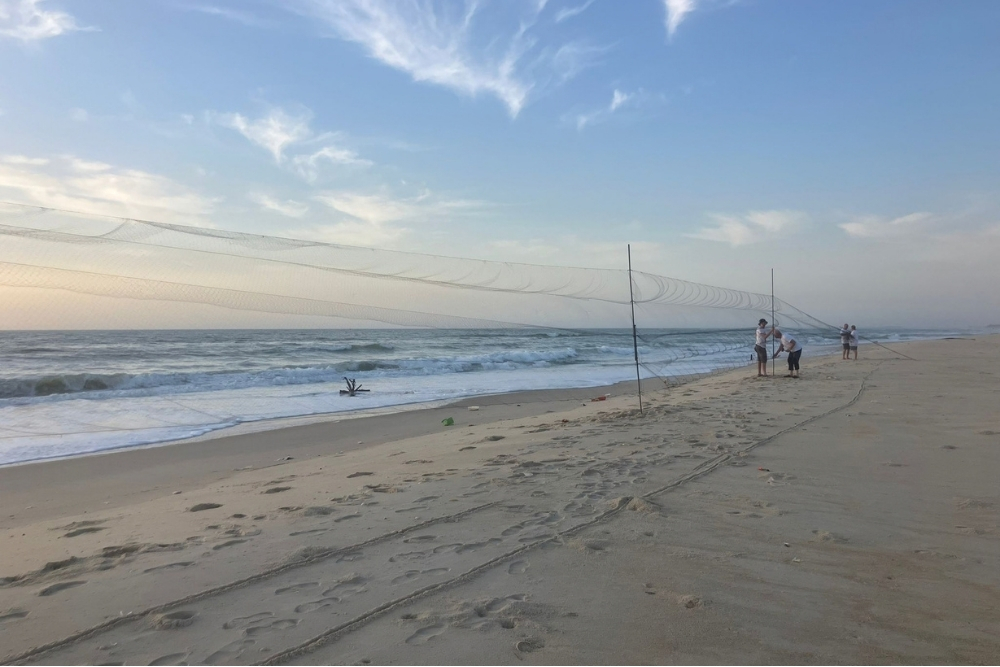
Researchers conduct field work on the Roseate Tern's coastal habitat. Photo by David Monticelli.
Eastern's Director of Sustainability Studies Patricia Szczys and alumnus Jacob Dayton ’19 have continued their research collaboration with a recent article in IBIS, the International Journal of Avian Science.
Titled “Sampling on the migration route: Genetic structure and population assignment of Roseate Terns on the East Atlantic Flyway,” the article examines data collected from Senegal, Africa, to evaluate the genetic diversity of Roseate Terns in the Atlantic Flyway and Northwest Europe breeding populations. Szczys and Dayton were two of seven contributors to the study.

Patricia Szczys, director of sustainability studies
As the abstract for the article explains, the Roseate Tern is a “locally threatened seabird that breeds in four discrete metapopulations across the Atlantic Ocean Basin: Northwest Atlantic, Caribbean, Azores, and Northwest Europe. While this species is well-monitored and the focus of long-term management efforts across the breeding distribution, significant knowledge gaps remain for the Northwest Europe and Azores metapopulations with regard to genetic diversity, population structure and connectivity outside the breeding season.”
As “the first baseline genetic diversity and inbreeding estimates for the Northwest Europe metapopulation … (the study) measures differentiation among metapopulation across the North Atlantic Ocean Basin, filling the last gap in population genetic information for this species in the Atlantic basin.”
The article’s findings are significant, and “contribute the first comprehensive documentation of the genetic diversity of Roseate Terns utilizing the East Atlantic Flyway and the Northwest Europe metapopulation, document gene flow within Northwest Europe, and demonstrate the value of sampling birds during migration for population genetic studies.”
Szczys’s research focus on migratory birds — especially the Roseate Tern — spans nearly three decades.
“This project is an important contribution to the conservation of Roseate Terns in the Atlantic Ocean basin,” noted Szczys. “We used new tools and strategies for documenting baseline information for long-term monitoring and it is all the more exciting that this work continued a 10-year research collaboration with Jacob.”
Dayton first began conducting undergraduate research at Eastern in his first year. In addition to his work with Szczys, he interned at Jackson Labs in Farmington, CT. He was also named Eastern’s first Goldwater Scholar in 2018 and was recognized as a Henry Barnard Scholar in 2019, one of only 12 recipients in the Connecticut State University System.

After graduating from Eastern in 2019, Dayton continued his studies as a doctoral student at Tufts University, earning his Ph.D. in biology in August 2024. While at Tufts, he continued conducting research, was a teaching assistant in nine courses, and was a Visiting Fellow at Harvard University’s Rowland Institute. In January 2025, he began working at Alltrna, a company founded in 2018 that is focused on using tRNA biology to treat thousands of diseases.
“Eastern’s Biology program taught me how to be a scientist,” said Dayton. “I started in conservation genetics with Dr. Patty Szczys and have since worked in areas ranging from genome instability and circadian biology to entomology and, now, RNA biology. While these fields may seem very different on paper, the skills I developed at Eastern have carried me throughout my career. The ability to think critically, design experiments, interpret results, solve problems, apply techniques/ideas across fields, and communicate clearly has been essential as I’ve moved from The Jackson Laboratory to graduate school at Tufts, and now a career in biotechnology.”
Dayton continued, “As my undergraduate research advisor and professor, Patty Szczys first introduced me to research as a career and encouraged me to pursue graduate school. She taught me how to approach science rigorously, think about the broader impact of research, and communicate scientific ideas effectively through presentations and writing. She has remained an important mentor and collaborator ever since, and it’s especially meaningful that we’ve now published three papers together (one during my undergraduate years, one during graduate school, and now one after graduate school).”