
- Apply
- Visit
- Request Info
- Give



Written by Collin Moffitt
Published on September 23, 2026
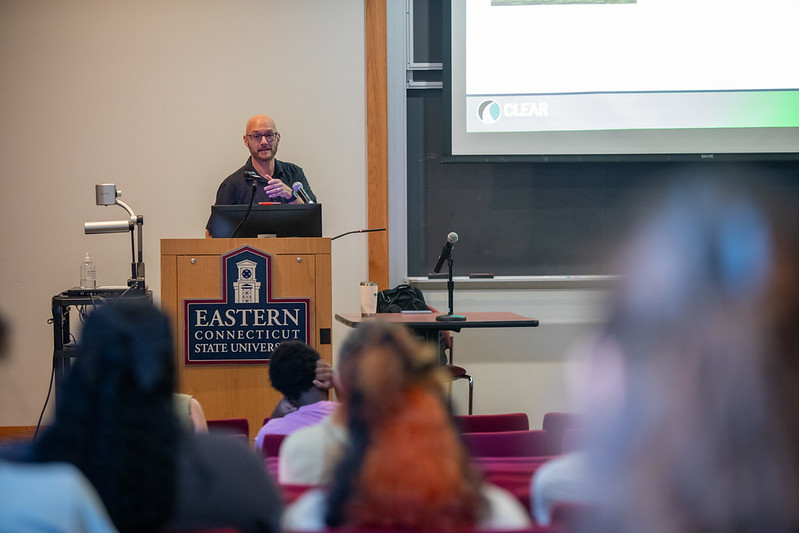
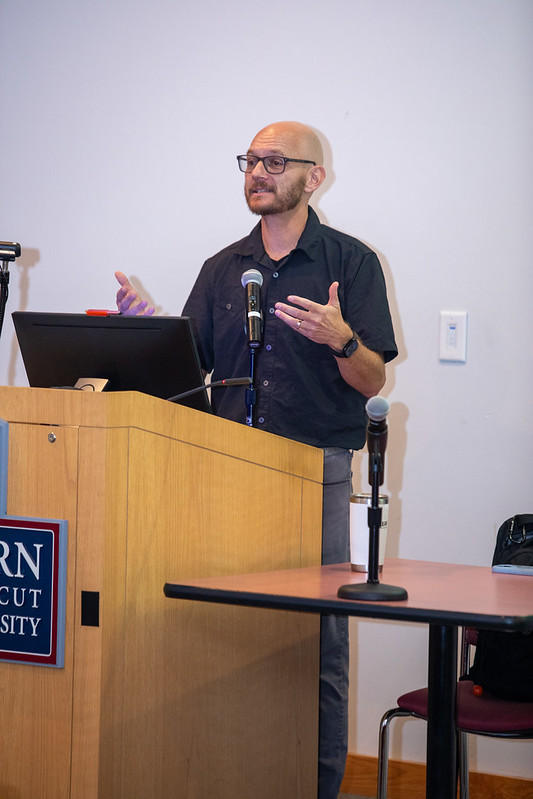
Eastern Connecticut State University and the Center for Housing Opportunities hosted an open classroom event on Sept. 18th with guest speaker David Dickson, senior extension educator at the University of Connecticut and the director of the Center for Land Use Education (CLEAR).
The open classroom covered topics such as water quality, housing, land use, and land cover, with the goal of educating the audience on the importance of safe and affordable land use today.
“Land use is basically what we allow the land to be used for," explained Dickson, whether it's housing, agriculture, commercial development, or recreational space.
Dickson then gave an example of the importance of land use, giving the example of Ohio's Cuyahoga River in the late 1960s, explaining how it would regularly catch fire due to factories dumping their waste in the river until Cleveland mayor Carl Stokes raised awareness around the issue, leading to national coverage and the passing of the Clean Water Act, which limits the pollutants factories can dump into bodies of water.
Dickson explained his work at CLEAR and efforts tracking land cover in Connecticut.
“We take aerial imagery, satellite imagery, or airplane imagery of the landscape. ... Then we divide that imagery up into different pixels,” said Dickson. “Then we categorize that pixel as predominantly one of those things, and so then that's the land cover for that pixel. We do that for the entire state, and then we have a sense of what we have actually on the landscape.”
Dickson then discussed housing in Connecticut and the challenges surrounding it.
“We rank eighth worst (in the United States) in terms of friendliness to renters,” Dickson said. “Housing prices are going up all the time.”
Dickson described doing work to find out why housing in Connecticut was so unaffordable. “We looked at geospatial mapping again,” he said. “What they found is that in large parts of the state, you can’t do affordable housing because of the zoning requirements.”
With the zoning requirements limiting affordable housing, Dickson explained that as of July 1, 2026, towns will have to change their zoning to allow for middle housing in areas that are zoned for commercial use and have to develop housing growth plans and targets.
“Middle housing is housing that can have two to nine housing units in it,” Dickson said. “So, if you have a commercial downtown area, you now have to allow them to build (middle housing) which provides more affordable housing options.”
Another challenge, according to Dickson, is parking availability in new middle housing complexes. Dickson suggests putting affordable housing near public transit, so new residents won’tneed a car.
Dickson wrapped up his presentation with a few words about his desire to help communities make affordable housing a reality.
“We just have to figure out how to support these people who are serving these positions,” Dickson said. “They volunteer their time to make good decisions; we need to help them make those good decisions.”