
- Apply
- Visit
- Request Info
- Give



Written by Kyle Berson '26
Published on August 12, 2026
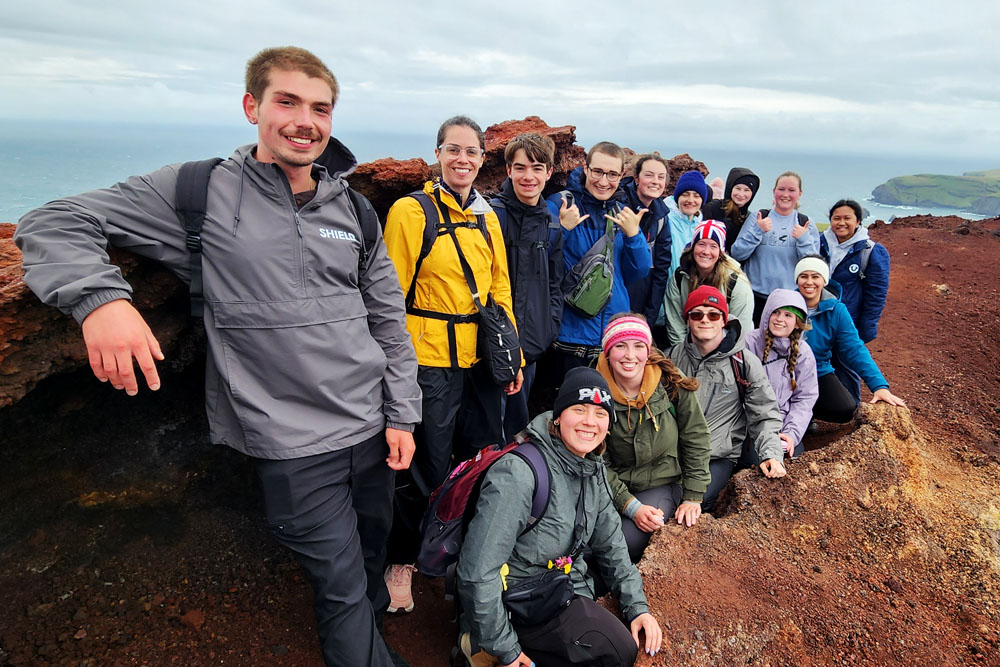
Psychology students visit Eldfell Volcano on the island of Heimaey.
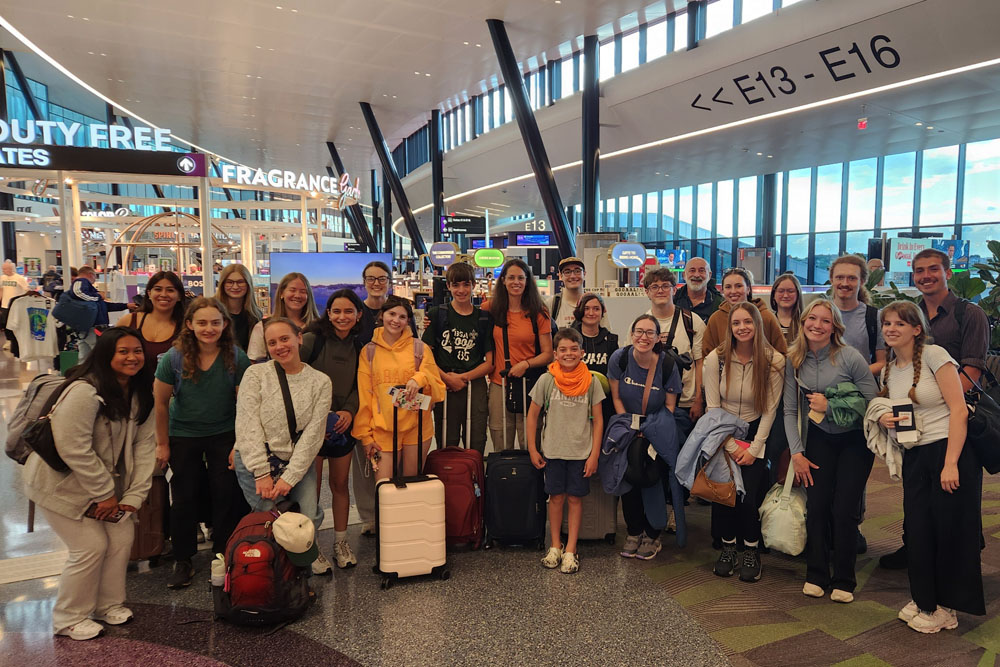
Students prepare to fly from Boston to Iceland.
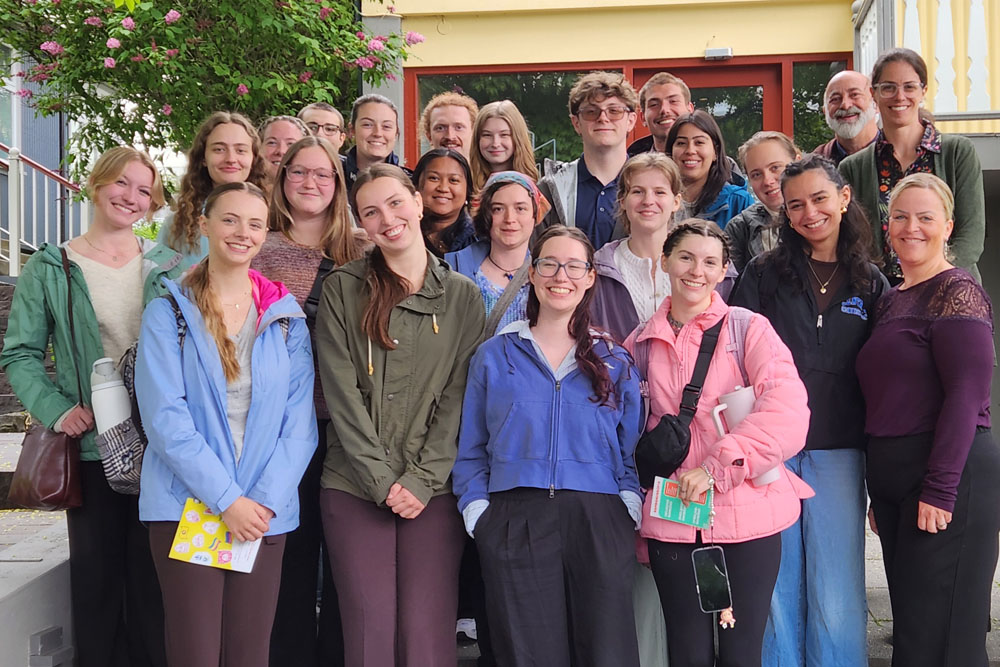
Students visit Bergið Headspace in Reykjavík, Iceland, a support center for young people.
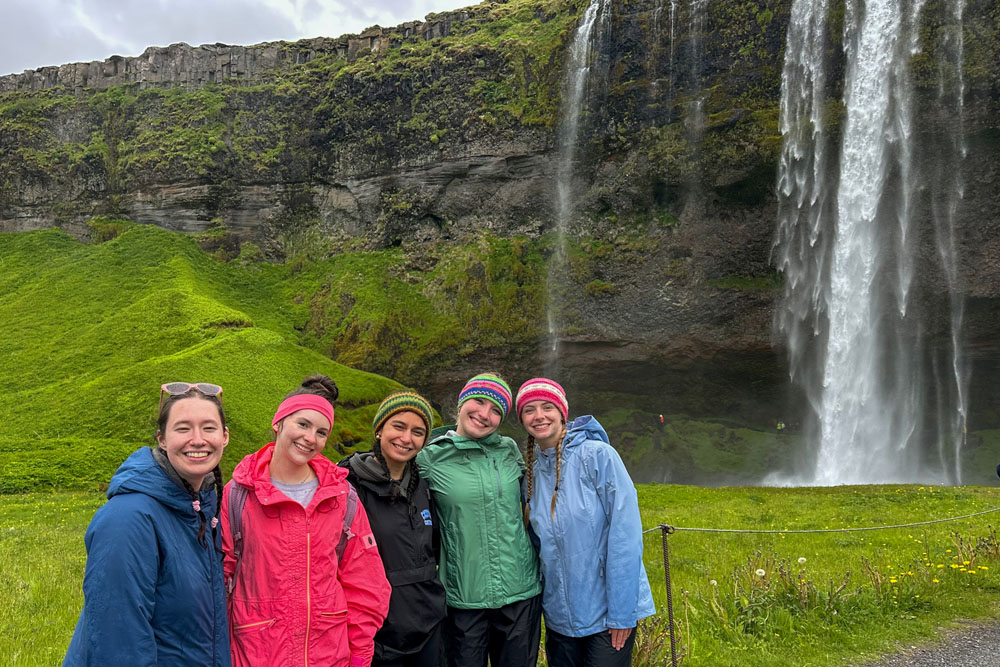
Psychology students visit a waterfall.
Why is Iceland, a cold, remote island nation, consistently ranked among the happiest countries in the world? This June, 20 students from Eastern’s psychology program traveled to Iceland on a “global field course” to answer that question.
Led by psychological science Professors Peter Bachiochi and Jenna Scisco, the course, “Global Studies in Psychology,” examined social support and family structures, mental health care, culture, sustainability, and connections to nature, among other factors that contribute to the country's incredible sense of well-being.
Scisco said highlights of the trip included studying mental health benefits of Icelandic hot springs, exploring free counseling services for teenagers and young adults, and speaking with Sigrún Þóra Sveinsdóttir, a specialist in mental health promotion at Iceland’s national Directorate of Health.
The class stayed in the nation’s capital, Reykjavík, and traveled to various towns, islands, beaches, volcanoes, and other locations to gain a better understanding of well-being in the country.
“We experienced how spending time in nature and being physically active boost our well-being,” Scisco said. “We visited beautiful waterfalls, a black sand beach, hiked in a lava tunnel, took a ferry ride to the Westman Islands, and hiked up the Eldfell Volcano.”
Bachiochi said the students gained international perspectives on psychology while also building confidence and expanding their comfort zones.
“The students developed a level of self-confidence that they just can’t get in the classroom,” he said. “From navigating new airports to overcoming physical challenges and trying new foods, they stepped out of their comfort zones in memorable ways.”
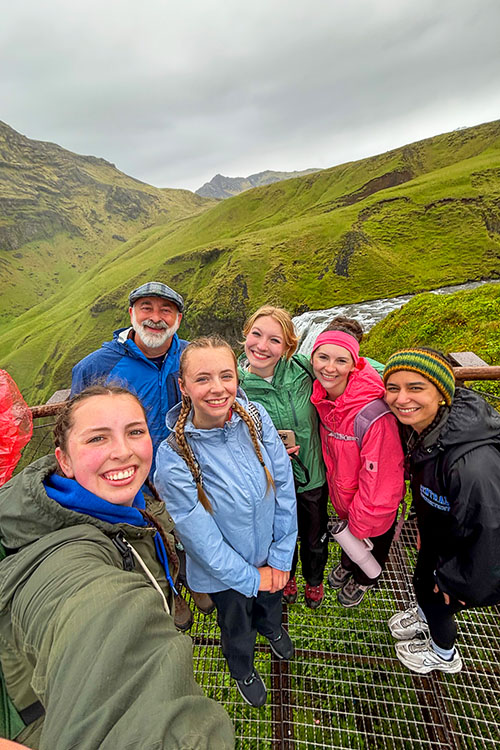
Psychology students visit an Icelandic fjord.
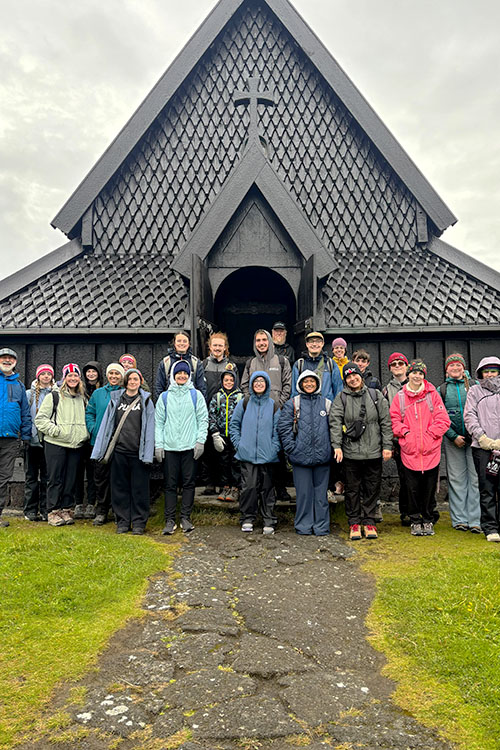
Students visits Stafkirkjan church, a replica of Norway's Haltdalen stave church, built in the 1170s.
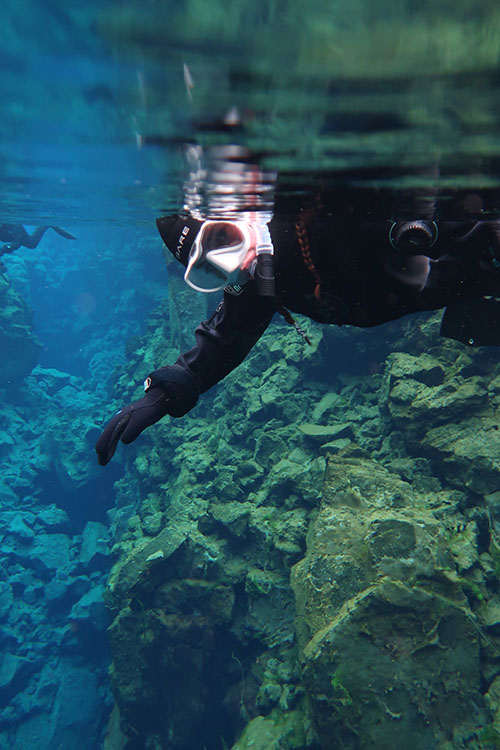
Ella Adams-Pickles ‘26 snorkels between the European and North American tectonic plates in Thingvellir National Park.
“With one foot in front of the other on a steep, rocky trail with no railings and high winds, I climbed the Eldfell Volcano,” wrote Jenna Moore, a junior psychology major. “Standing at the top, all I could think about was how proud I was of myself. … I realized I can do hard things, even when I believe I would never do them.”
A common theme among many students was stepping outside of their comfort zones. Messina Dufresne, an incoming senior studying pre-early childhood education and psychology, said she appreciated that Eastern offers experiential learning opportunities to both commuter and residential students.
“As a commuter student, being able to push myself outside of my comfort zone and be immersed in learning about other cultures is incredible,” she said.
Dufresne, who aims to become an educator and psychologist post-graduation, said exploring mental health from an international standpoint has helped widen her perspectives on the subject. “It made me very eager to use what I’ve learned from [Iceland] to make a difference.”
Students studied Nordic well-being from multiple perspectives. Recent graduate Sara Leduc ‘26 analyzed the topic through a workplace perspective.
“Seeing Iceland’s open approach to mental health, education, and work-life balance firsthand helped bring the concepts we studied in class to life,” she said. “I left with a greater appreciation for how organizational policies and societal values can shape employee well-being.”
Ella Adams-Pickles ‘26, a recent psychology graduate, said the trip helped her solidify her goal of becoming a mental health counselor.
“Being able to travel to Iceland and talk to locals and professionals in the field gave us a more in-depth understanding of not only mental health treatment, but also the culture of a tight-knit community,” she said.
“Learning about how they approach mental health treatment in Iceland gave me a lot of insight into successful methods considering that they are ranked first in the world for well-being,” Adams-Pickles continued.
Beyond their academic work, students had the opportunity to explore a new country and culture, connect with locals and other students, and make lifelong memories.
Leduc fondly remembered meeting a local student while getting ice cream in Reykjavík.
“We ended up talking for quite a while about life in Iceland, education, mental health, and our future goals,” she said. “It was such a genuine conversation that gave me insight into everyday life from a local perspective. It reminded me how meaningful just one conversation can be.”
Leduc continued: “Ultimately, this trip shifted my understanding of well-being from something internal and individual to something deeply structural and environmental. What stood out most to me was how naturally social systems and nature were integrated into everyday life.”
In addition to the trip to Iceland, four other academic programs hosted global field courses in Costa Rica, Northern New England, Italy, and Austria.
What do these experiences offer that standard courses cannot?
For Scisco, it’s all about breaking out of comfort zones: “Students strengthen [their] resilience and interpersonal skills, build self-efficacy for navigating logistics in unfamiliar environments, and practice cognitive flexibility regarding cultural beliefs,” she said.
For Leduc, taking a global field course fostered academic, professional, and personal growth.
“I came home with a broader perspective on well-being, a deeper appreciation for different cultures, and memories that I'll carry with me for years to come,” she said.