
- Apply
- Visit
- Request Info
- Give



Written by Kyle Berson '26
Published on August 19, 2026
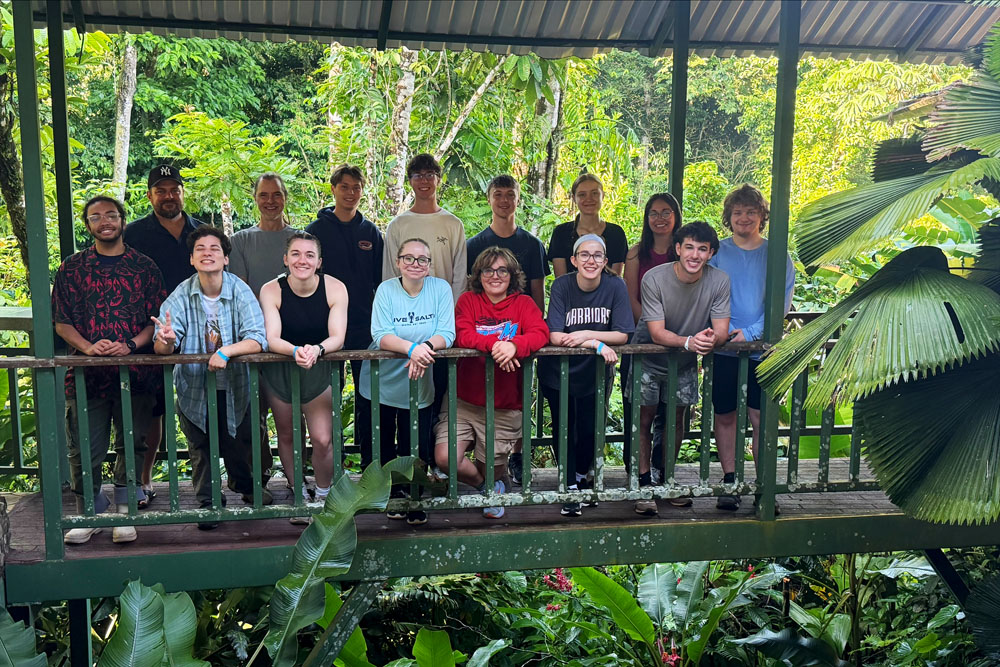
Students from "Tropical Biology" and "Tropical Ecosystems," stand on a bridge in the Costa Rican rainforest.
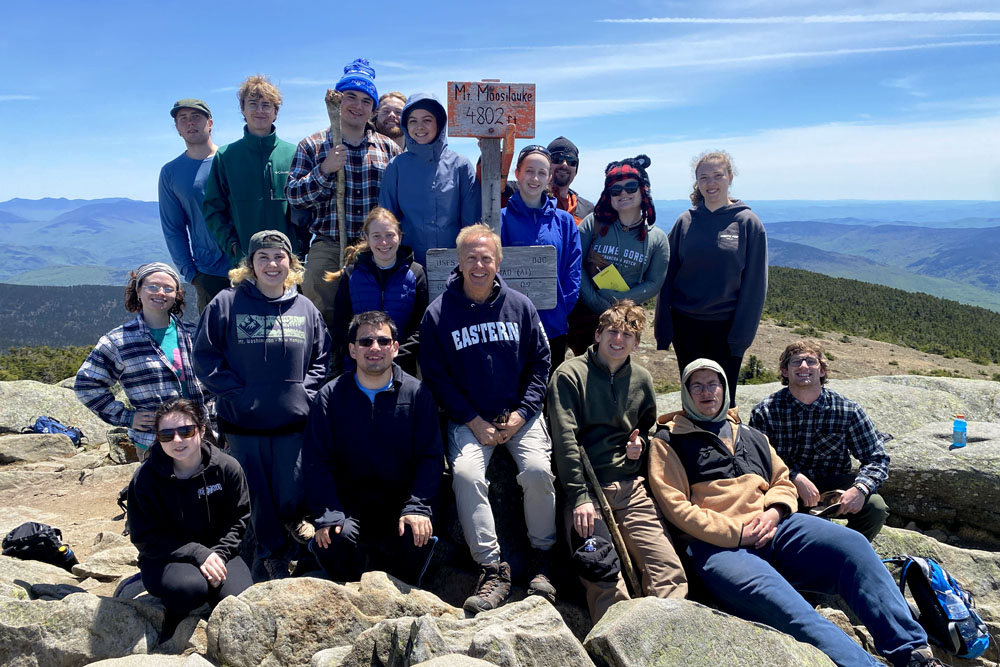
Students and professors from "EES Field Course" stand atop the peak of Mount Moosilauke in northern New Hampshire.
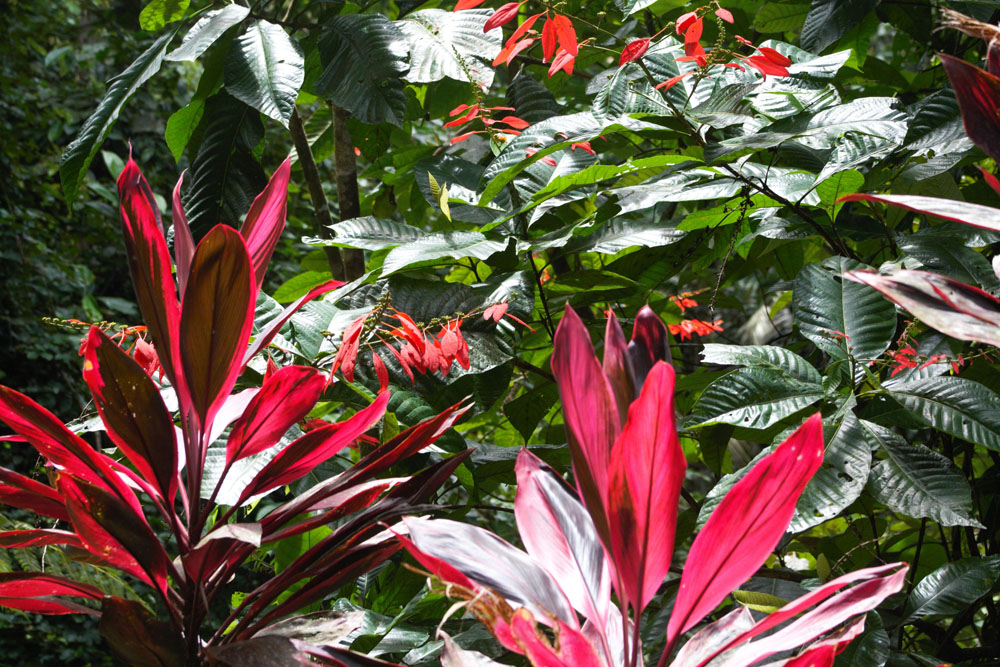
A photo of Costa Rican fauna, courtesy of Samantha Molzon.
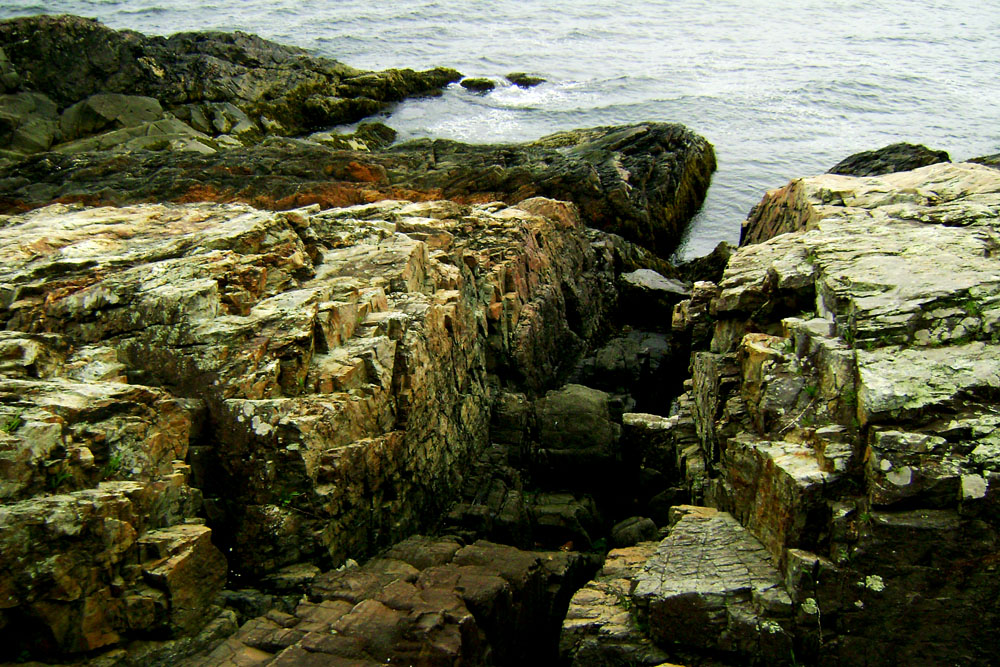
A photo of rocky New England coastline, courtesy of Rebecca Drazul.
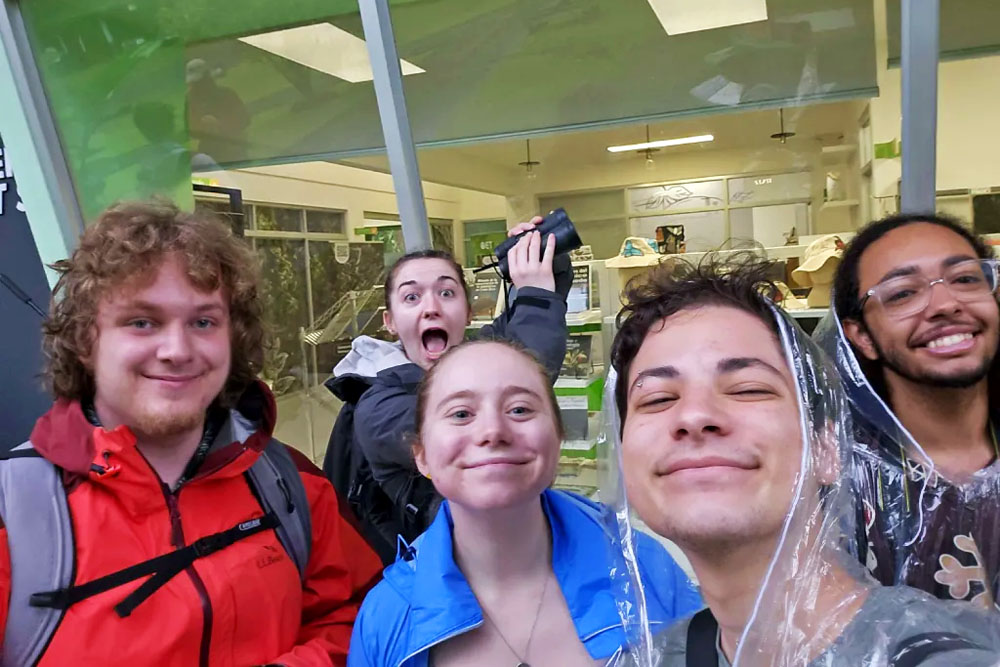
A group photo of "Tropical Biology" and "Tropical Ecosystems" students at an outdoor equipment store.
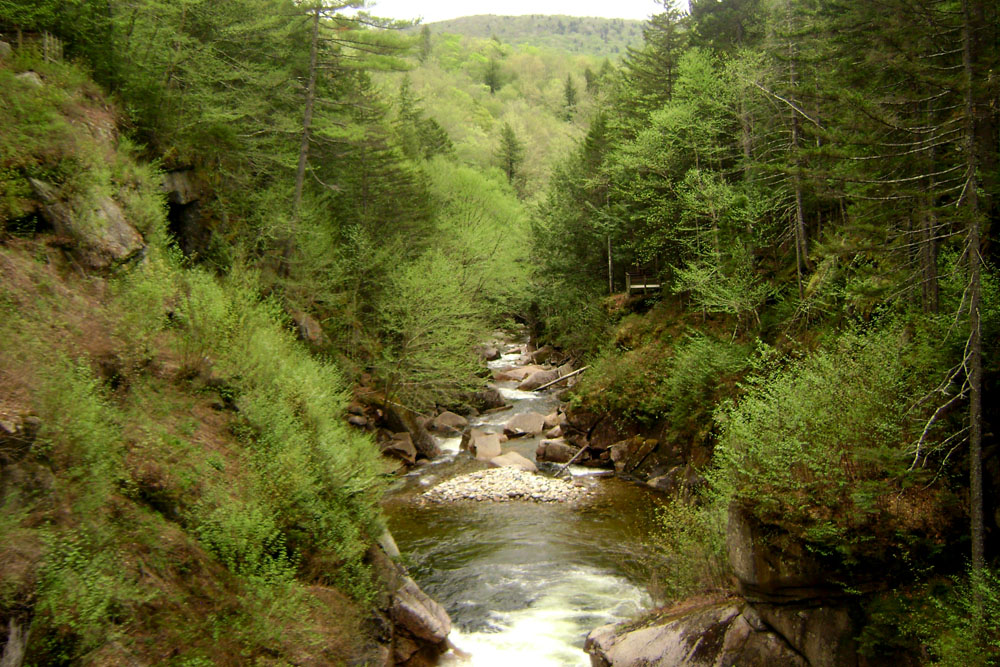
A photo of a New England stream, courtesy of Rebecca Drazul.
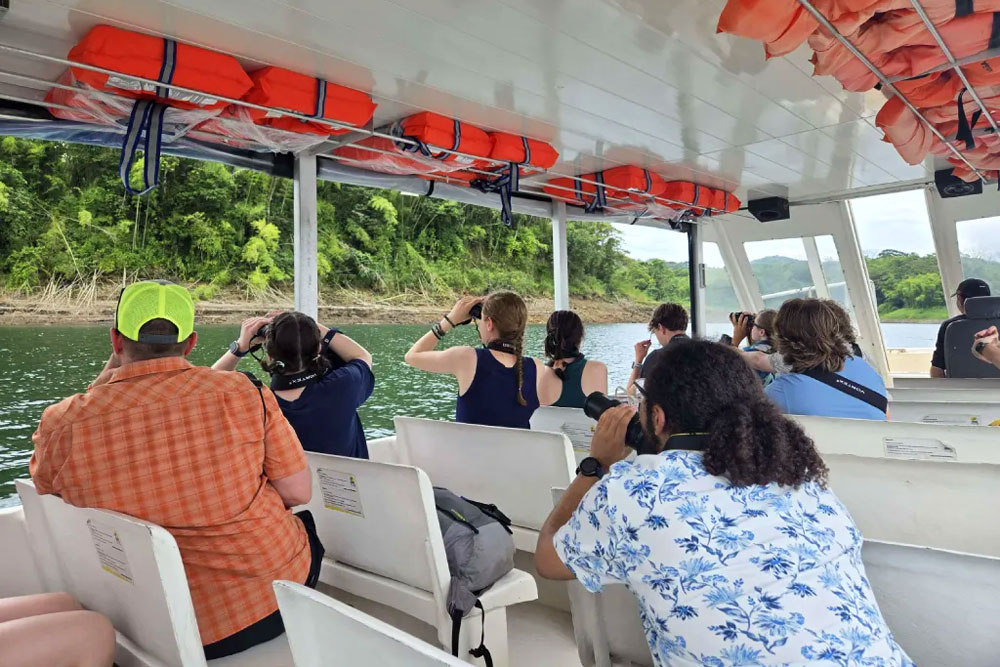
Students in "Tropical Biology" and "Tropical Ecosystems" tour a Costa Rican river ecosystem by boat.
Twenty-nine Eastern students studied tropical ecology in Costa Rica and mountainous geology in northern New England during two global field courses (GFCs) this summer. Led by Eastern faculty, the students included 12 biology majors (Costa Rica) and 17 environmental earth science (northern New England) majors.
Eastern students went on three additional GFCs this summer, including tips to Italy, Austria, and Iceland.
The courses “Tropical Biology” and “Tropical Ecosystems,” led by biology professors Brett Mattingly and Matthew Graham, focused on biodiversity and ecosystems in Costa Rica’s tropical rainforests.
During the field course, students explored the region's flora and fauna, visited pineapple and coffee plantations, spoke to local farmers, and conducted independent research.
“The life in those forests is so different from that of our own, but so similar at the same time,” said Alexander Diaz, a senior biology major who went on the trip. “It was my first time being on a plane and leaving the country in a very long time.”
Coursework started in the spring semester, with students discussing research methods in a tropical environment and designing their own research projects to conduct in the Central American rainforest.
Biology students stand on a bridge in the Costa Rican rainforest.
Alexander Diaz and classmates take a group photo outside of an outdoor equipment store.
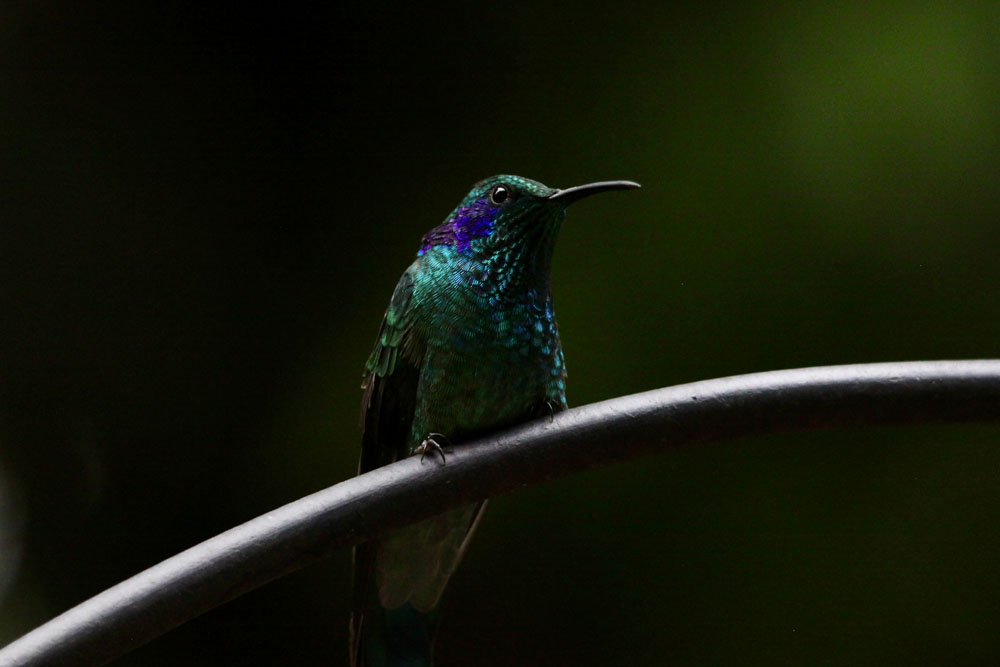
A purple-eared hummingbird sits perched on a branch. Photo courtesy of Maya Perea.
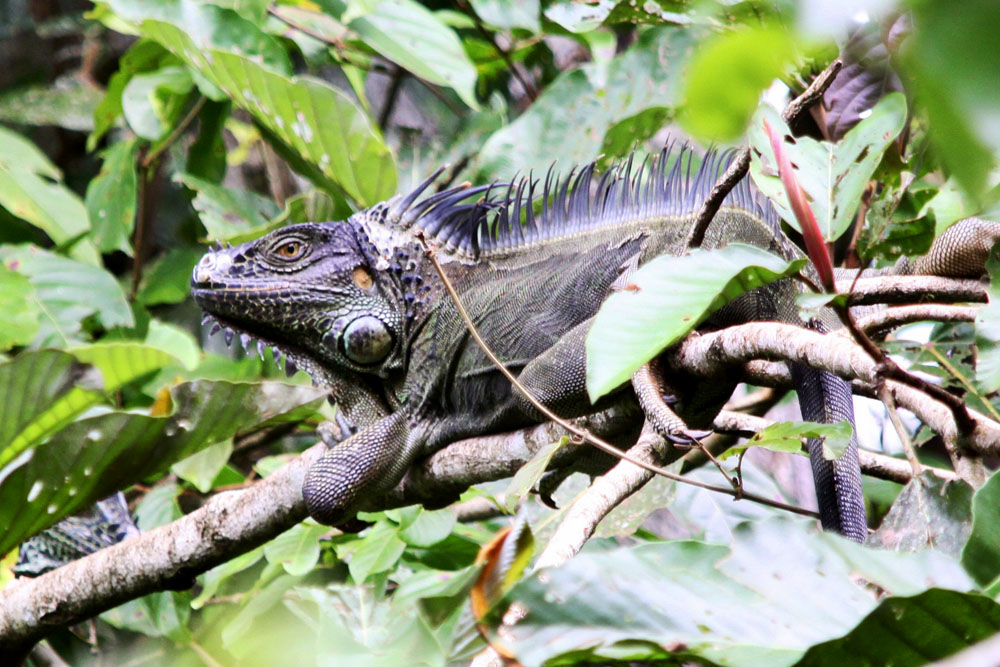
An iguana hides in a tree. Photo courtesy of Maya Perea.
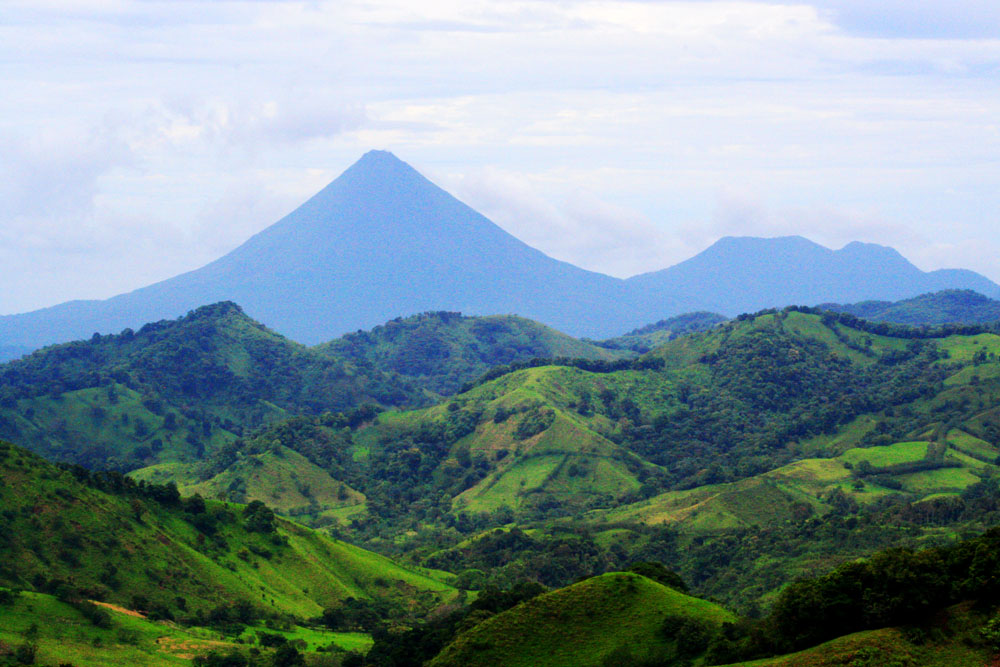
A volcanic landscape in Costa Rica. Photo courtesy of Samantha Molson.
A photo of rainforest fauna in Costa Rica. Photo courtesy of Samantha Molson.
Students on the trip also gained insight into Costa Rican culture and environmental stewardship.
“Costa Rica is very notable for its protection and preservation of the rainforest,” said Amanda Wrobel, a senior biochemistry major. “Experiencing a culture that was so in touch with the natural world was amazing to see.”
She also commented that their tour guide was extremely knowledgeable about the local environment.
“He was able to identify almost any plant or animal we encountered and could tell us what they were used for or what role they play in the ecosystem,” she said.
Wrobel also held fond memories of exploring “Bat Jungle,” a rescue center in Mondeverde for injured and sick bats. The attraction helped her better understand how complex evolution helps a species gain specific physical traits for specific biological reasons.
“Bats don’t have feathers or tails like birds, so the only thing keeping them in flight is their muscles,” she learned. “They use an absurd amount of energy to fly around at night and must eat twice their body weight in food every night to sustain this energy.”
While the group visited museums and attractions, they spent most of their time in the rainforest.
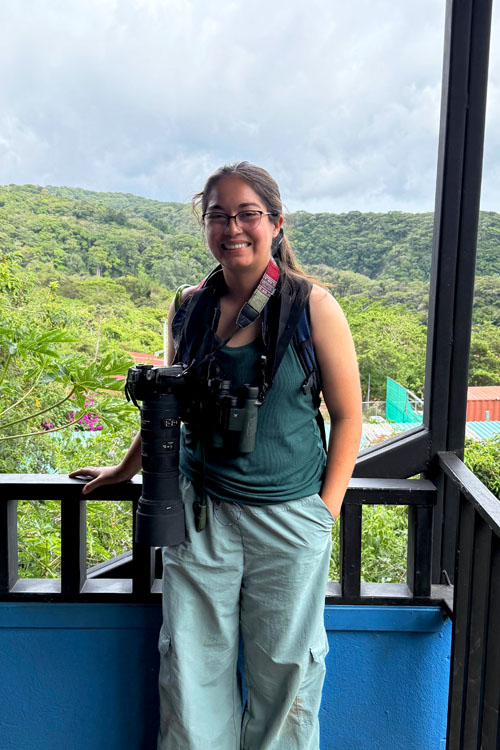
“I have always had a deep fascination with the rainforest,” said Maya Perea, a senior biology major. “Seeing it in person was nothing short of inspiring. I knew on day two that I needed to find my way back to the highland rainforests of Costa Rica.”
One major takeaway Perea had from the trip was stark. “Every guide we had told us what we as young biologists already know: ‘We have to protect what we can,’” she explained.
Central and South American rainforests remain some of the most harshly impacted regions of climate change, pollution, and deforestation on Earth. The guides urged students to advocate for stronger environmental protection through research and voting.
While understanding the reality of deforestation and pollution, Perea was still able to enjoy the natural beauty of the country. “You look out the window on the bus and you understand why Michael Crichton based ‘Jurassic Park’ on these green, forested lands,” she said.
For the course’s final project, students created poster presentations on the methodology and outcomes of their research.
Samantha Molzon, a senior biology major, spent five days with classmates studying how different types of habitats impact avian diversity. The group spent each morning birdwatching in different habitats to come to their conclusions.
“The wildlife and diversity in Costa Rica are unbelievably rich and exciting, and could not be any more different than Connecticut,” Molzon said.
Diaz’s group, on the other hand, studied fungal diversity in the country. “A group member and I were especially familiar with fungi found here in Connecticut,” he said. “It was a lot of studying on tropical species prior to the trip.”
Beyond exploration and research, students were able to build stronger connections with classmates and professors, while also meeting new people with similar interests.
“It’s so nice to experience something like this along with students who are just as passionate as you, or even more so,” Diaz explained. “I was able to connect with so many intelligent peers and made new friends as a result.”
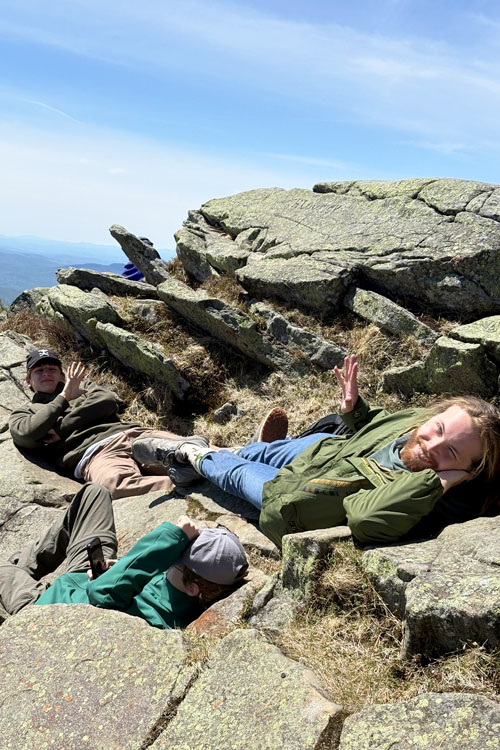
Boden Tito and a classmate sit atop a mountain peak.
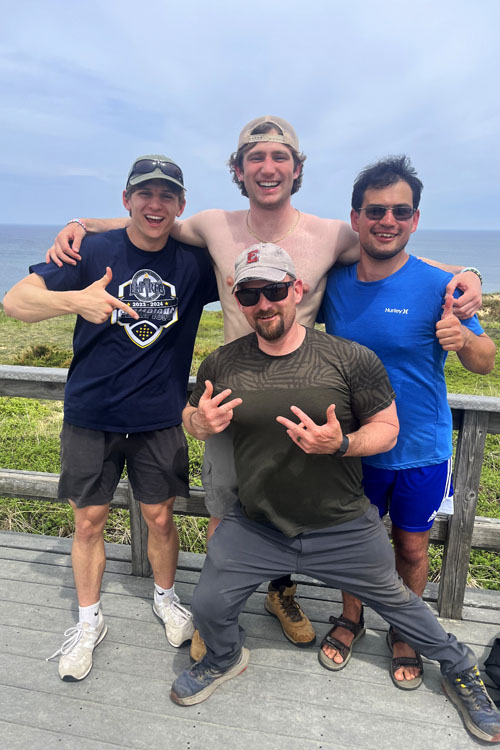
EES students pose for a group photo along the New England shore.
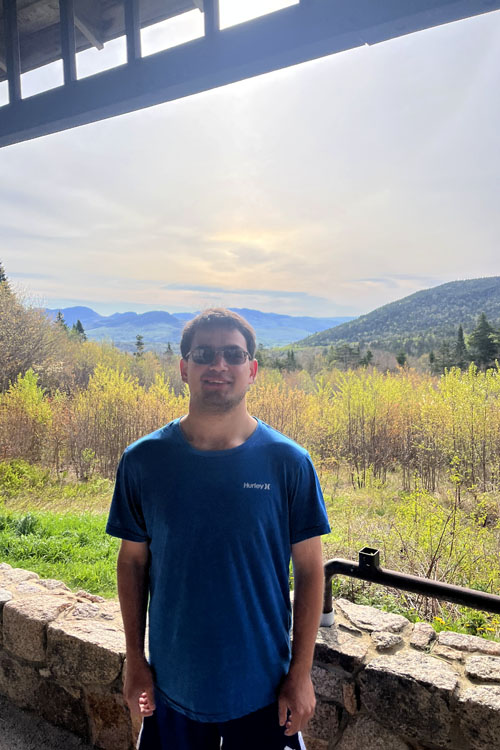
Harrison Moss stands in front of a mountain range.
Environmental earth science (EES) students explored the diverse geological history of Eastern’s own backyard in the course, "EES Field Course,” instructed by EES professors Bryan Oakley and Dickson Cunningham.
This course brought students to New Hampshire, Maine, and other locations in northern New England, observing, studying, and researching geologic phenomena in the region.
“Students examined firsthand many of the most impressive and scenic geological and environmental features of northern New England,” Cunningham said.
Students learned field skills used to identify geomorphological features in terrain and connect them to different possible causes.
Rebecca Drazul, a senior EES major, explained that the geologic features they studied would not have been accessible in Connecticut.
“We got the chance to see all kinds of geological and environmental processes, from tectonic folds to a striking ‘ghost forest’ to active ebb dunes shaped by wind and water,” she said.
“The trip even brought us to geological features perched high on mountain summits,” she added, explaining that the class viewed geologic formations from the summit of Mount Moosilauke in New Hampshire.
“After completing the course, I thought of myself as 10 times the geologist I was before,” said Boden Tito, a senior studying EES. “With field experience in my educational toolbelt, I can take what I learned to class and the workplace.”
Tito emphasized the value of immersive field instruction. “Sure, we have mapping and field-related courses [on-campus], but spending dedicated time on an excursion, learning from two professors with different backgrounds [is valuable].”
After the trip, he held fond memories of campfires with classmates, lunches in the rain, and sharing musical tastes on the road. “The best parts of New Hampshire and Maine were the scenic views and beautiful natural surroundings around us,” he said.
“Learning the geological explanation for everything around us added to my appreciation of the time needed to construct the landforms and habitats we got to explore every day.”
Beyond learning, students got to explore scenic New England, enjoy the outdoors, meet new people, and try new things.
Drazul explained that while staying in a New Hampshire hostel, the class got to meet plenty of tourists with interesting stories. “We got the chance to talk to people who were hiking the Appalachian Trail,” she said, a famous hiking path that stretches almost 2,200 miles from Georgia to Maine.
While Eastern offers a diverse range of programs, courses, and experiential learning opportunities on campus and within Connecticut, global field courses complement its local programs while offering hands-on learning experiences that stimulate learning, promote practical skill development, and encourage students to explore new places outside of their comfort zone.
“I grew closer with my classmates and made memories with them in a place I would have never visited without the course,” said Alexander Diaz, a senior biology major who traveled to Costa Rica for his global field course.
“From having monkeys swing overhead while we collected our project data to spending hours looking at Costa Rica’s landscape from a bus, I had a great time.”