
- Apply
- Visit
- Request Info
- Give



Written by Kyle Berson '26
Published on July 22, 2026
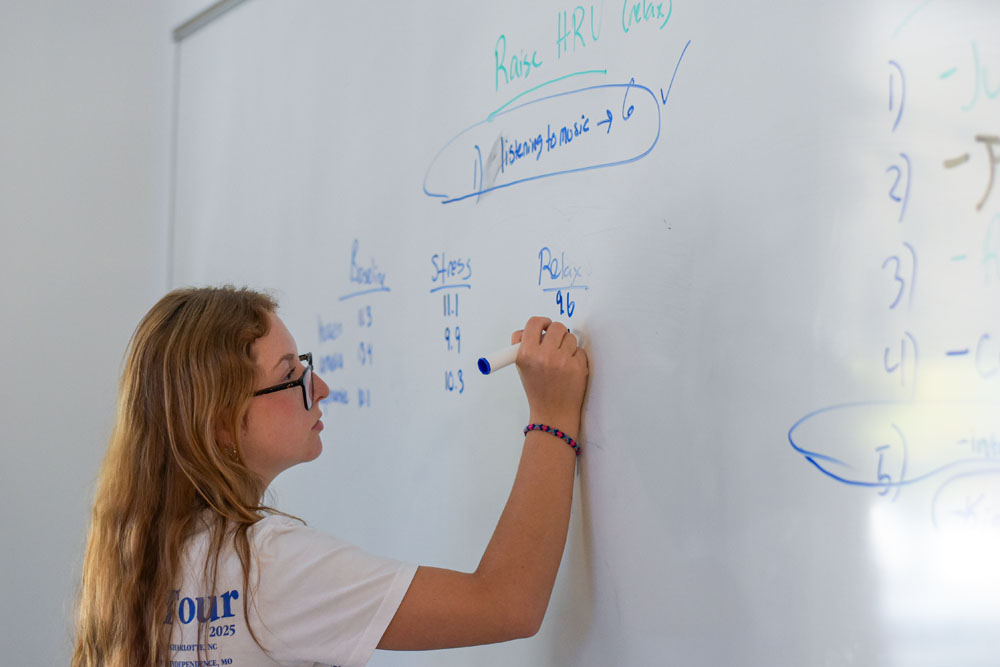
A student writes notes on a white board during "Resilience: The Science of Grit and Overcoming."
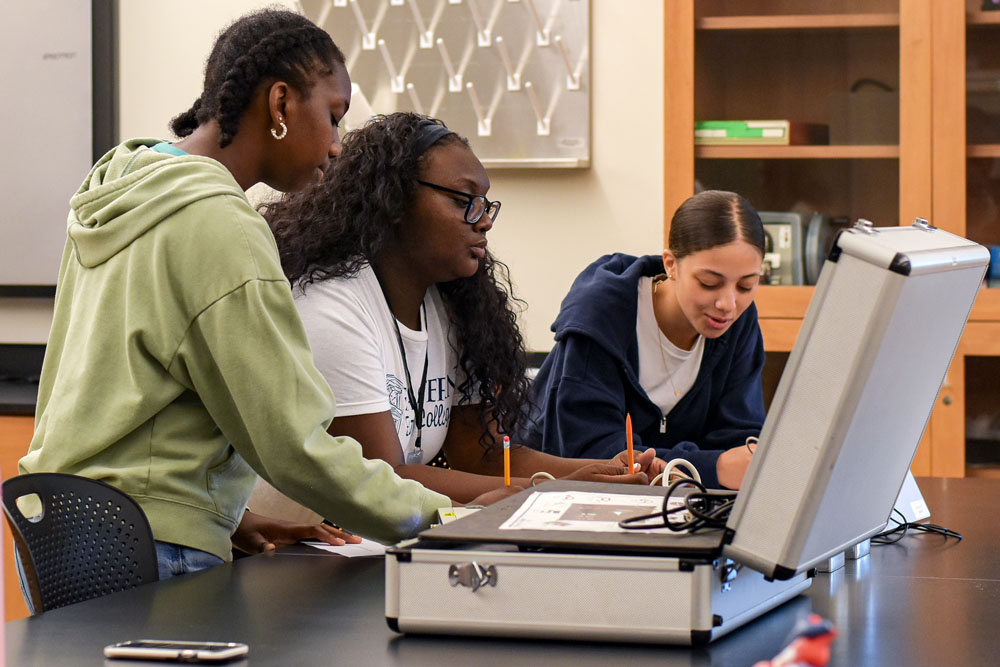
Students in "Human Health: How the Body Works" study an instrument.
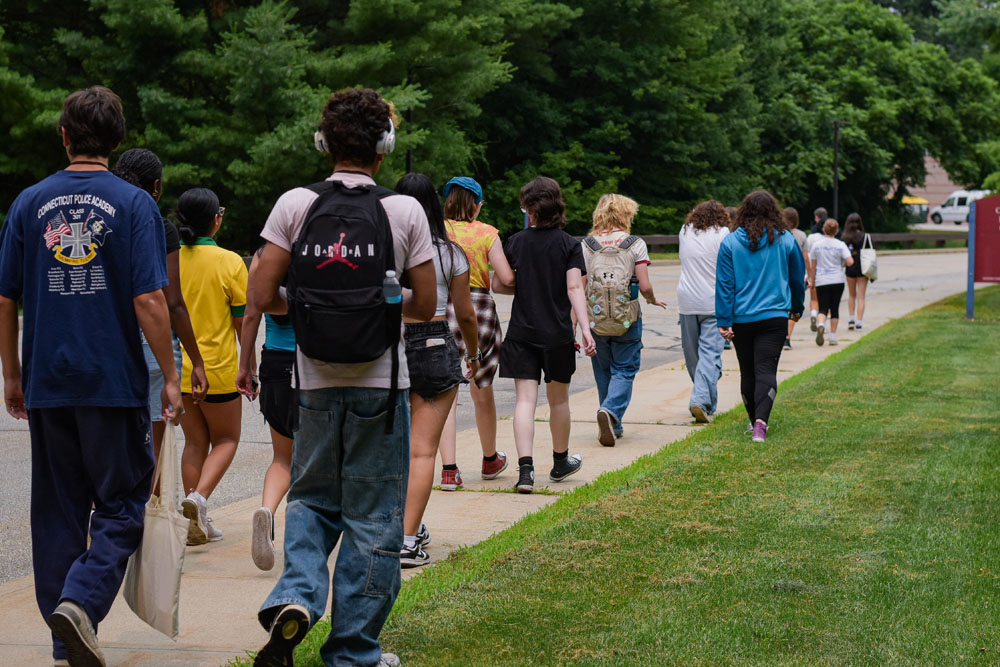
Students take a nature walk throughout Eastern's campus.
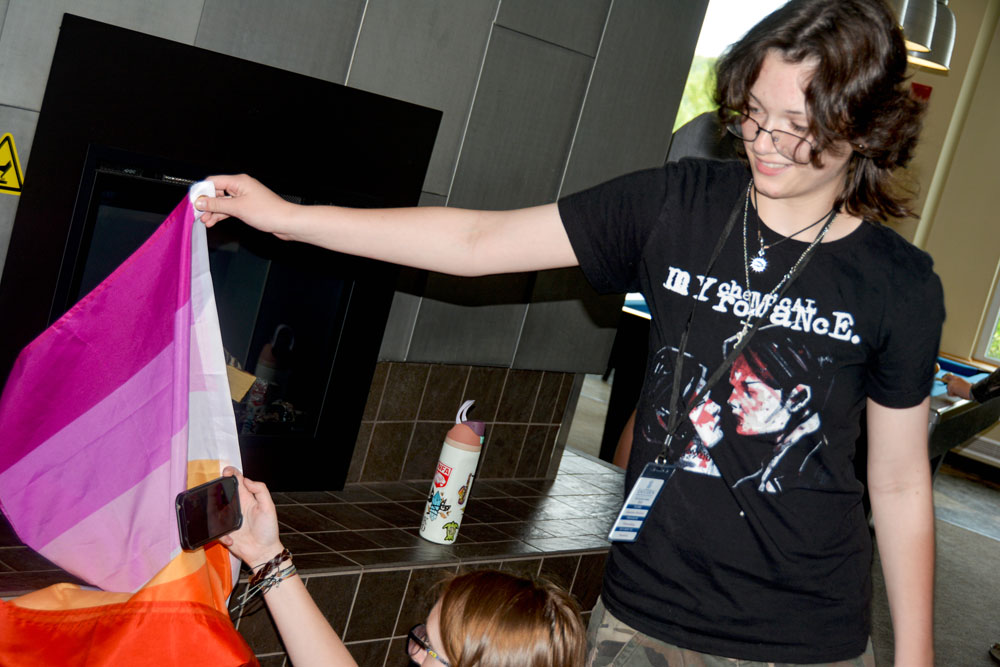
Students in "Introduction to Film" producing a short film.
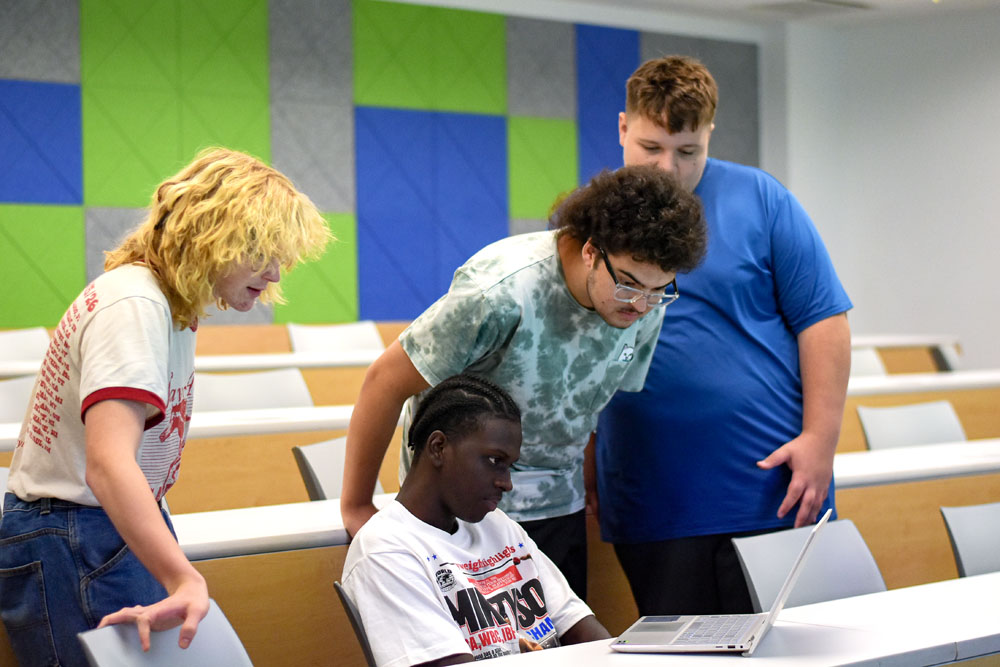
Students in "Introduction to Film" brainstorm their short film.
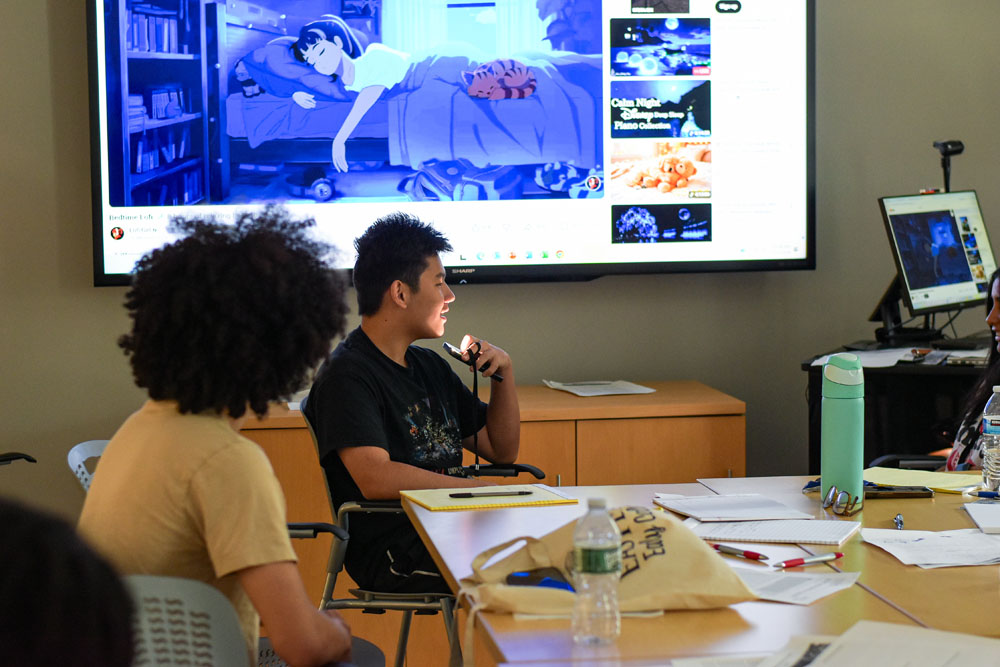
A student tells a story in "Resilience: The Science of Grit and Overcoming."
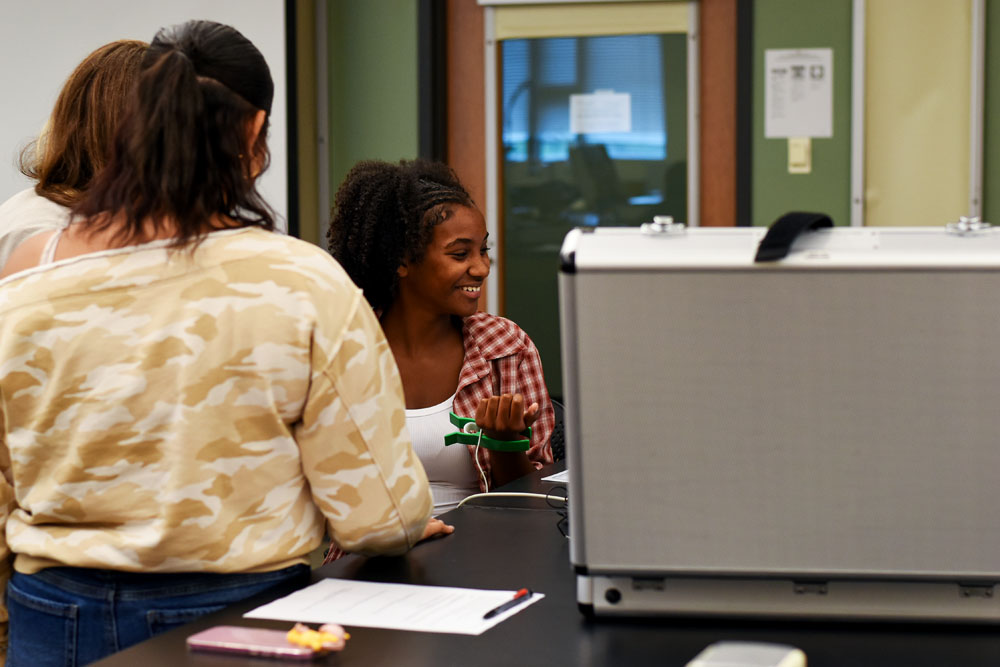
Students chatting in "Human Health Lab: How the Body Works."
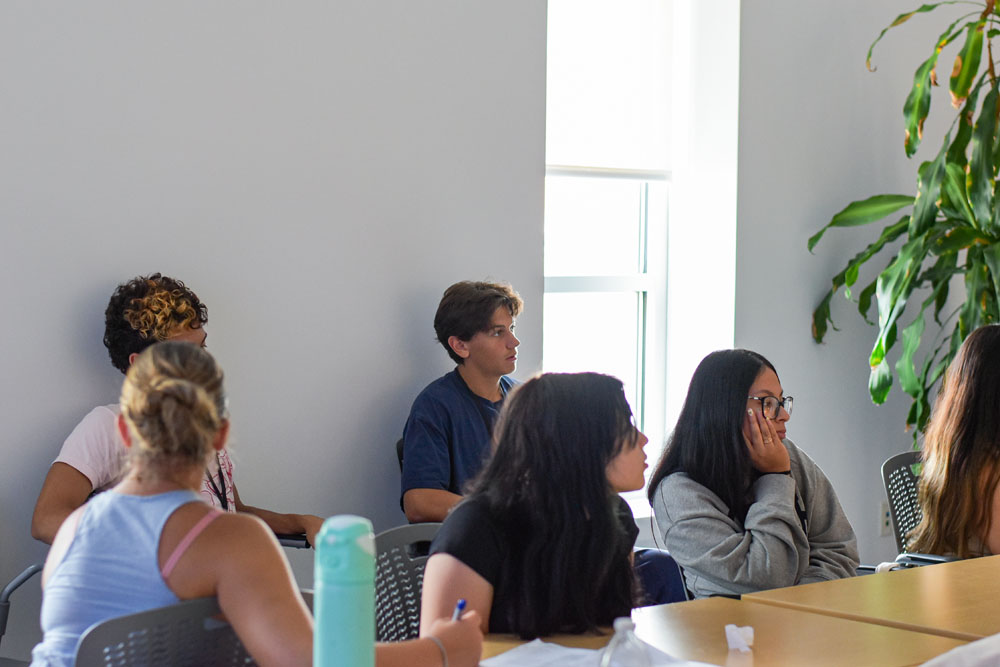
Students in "Resilience: The Science of Grit and Overcoming" listen to psychological science professor T. Caitlin Vasquez-O'Brien's lecture.
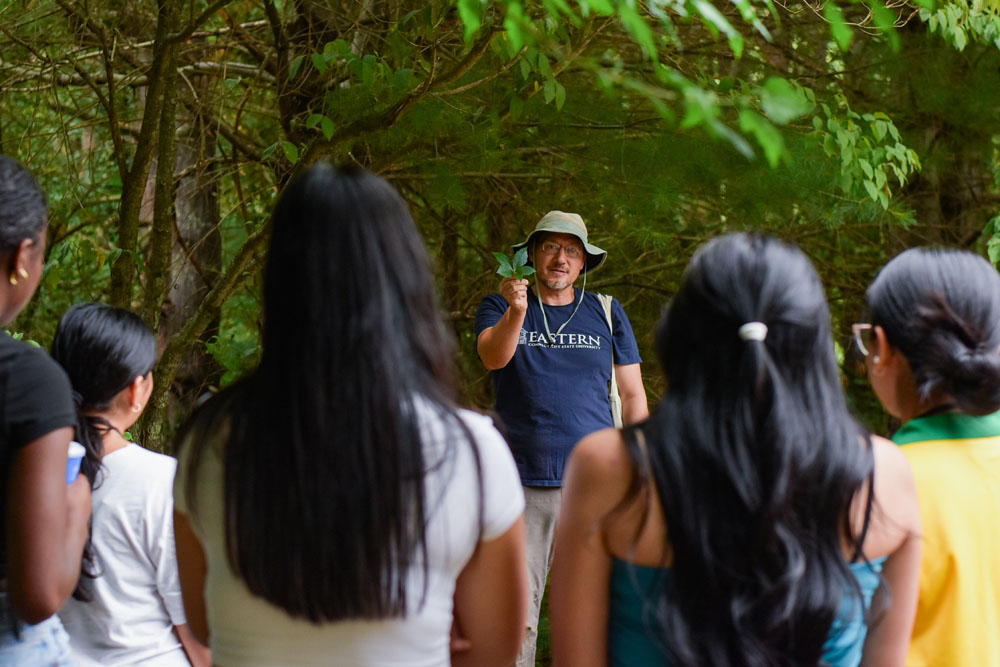
Students take a nature walk throughout Eastern's campus.
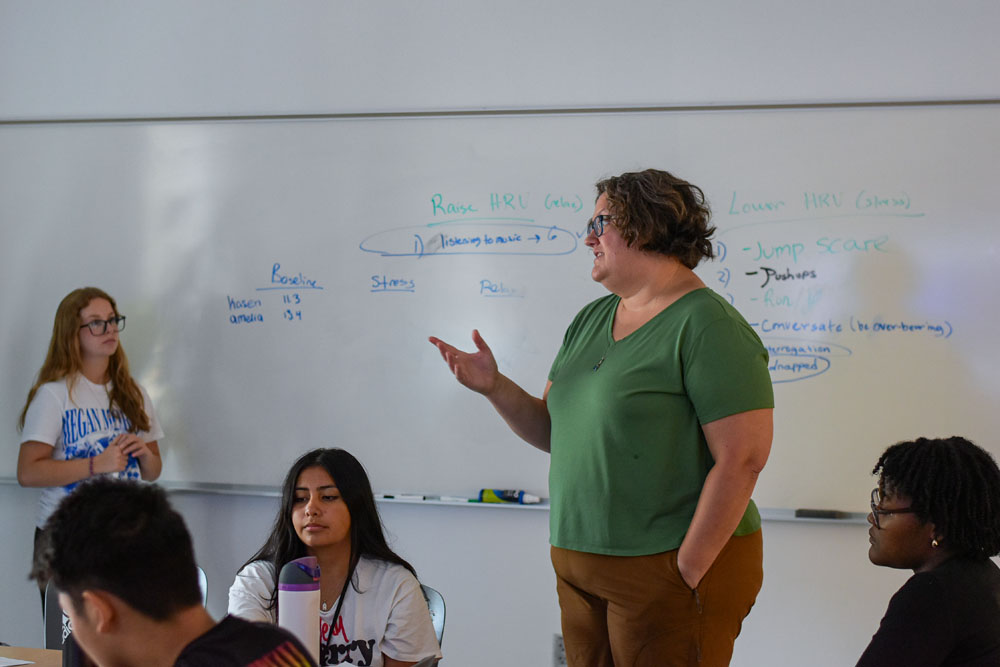
Students in "Resilience: The Science of Grit and Overcoming" listen to psychological science professor T. Caitlin Vasquez-O'Brien's lecture.
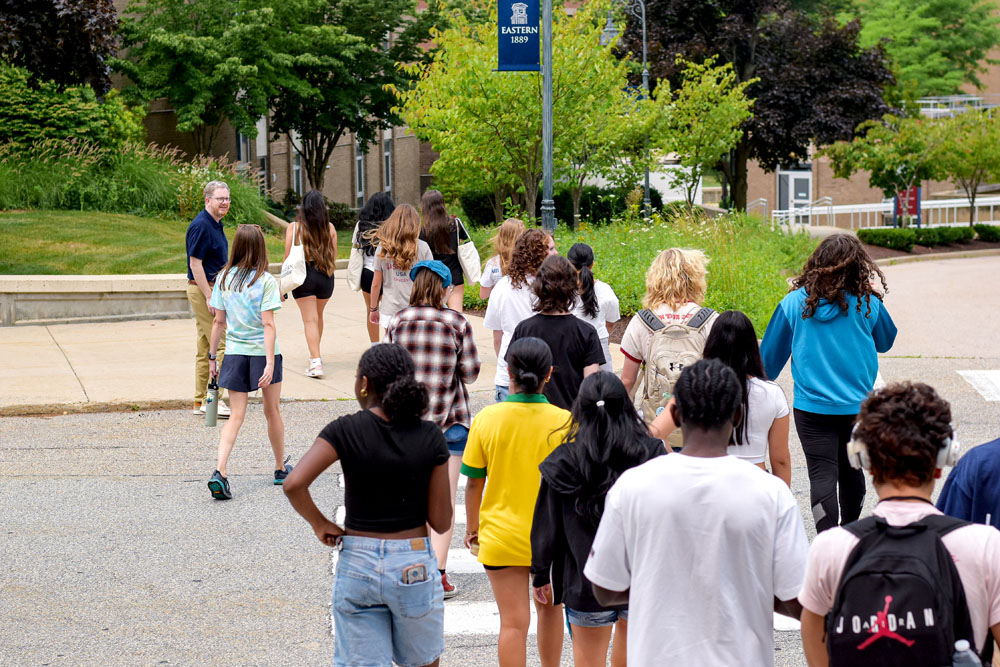
Students take a nature walk throughout Eastern's campus.
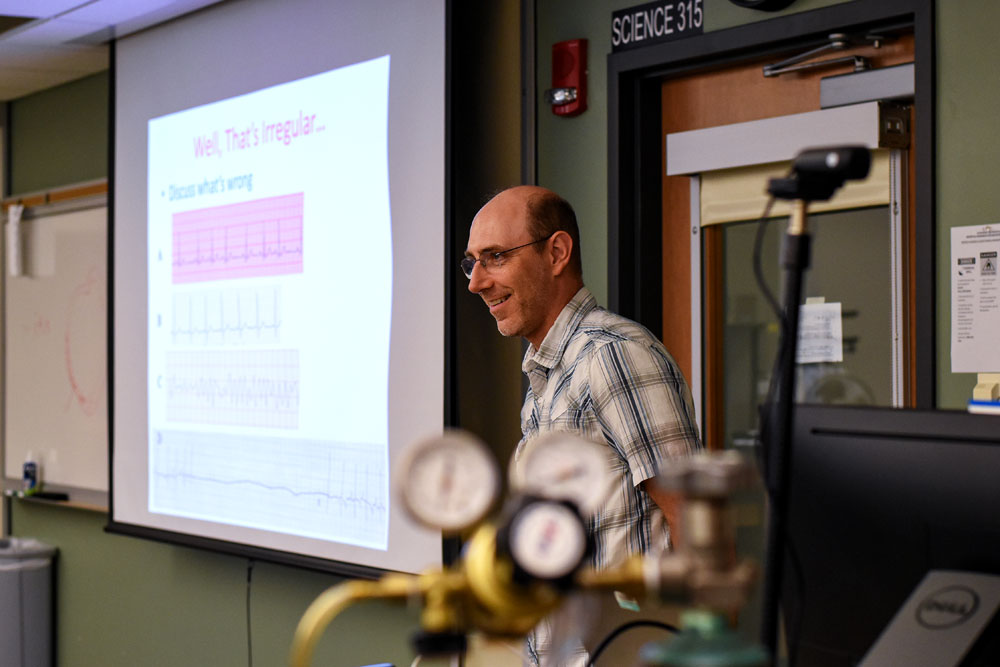
Professor Kurt M. Lucin lectures in "Human Health Lab: How the Body Works."
Local high school students got a firsthand look at college life during Eastern’s fourth annual Pre-College Summer, held July 13-17. The weeklong, summer-camp-style academic program welcomed 37 high schoolers to campus, where they explored one of three disciplines: psychology, health science, and filmmaking.
Funded by the Community Foundation of Eastern Connecticut, this year's program was offered free of charge to students living in local communities, including Windham, Norwich, Groton, and Colchester.
“The grant helps us pay for those key parts of the program for those students who would most benefit,” said director of Co-Curricular Academic Programming Chris Drewry, who described the program as a “low-stakes, low-stress way to get interested in college.”
Drewry also noted that the program makes attending college a realistic goal for students who may not have seen higher education as an option in their future. "Interacting with faculty starts to make the idea of college seem attainable.”
He recalled one student who quickly felt at home on campus. Before the end of the week, "he knew he wanted to apply to Eastern,” Drewry said. “He’s very excited about attending college.”
Audrianna Dega, who participated in the health sciences track, said the experience helped her think more about her future.
“I feel like I’ve learned a good amount,” she said. “I think it’s helped me stay focused and on track but also figure out what I’d want to do in the future. It’s also (been good) just seeing if this is a college that I’d want to go to.”
Throughout the week, students directed short films, conducted psychology experiments, and even dissected a sheep heart, gaining hands-on academic experience, exploring outside of their comfort zones, and building connections with faculty and other students.
Resilience: The Science of Grit and Overcoming
Students explored the human psyche in "Resilience: The Science of Grit and Overcoming." Led by psychological science Professor T. Caitlin Vasquez-O'Brien, students examined how individuals overcome obstacles from biological, psychological, and sociocultural standpoints, and conducted mini-experiments to support their studies.
“For many students, the transition from high school to college can be overwhelming,” said Vasquez-O'Brien. “This stress contributes to college dropouts and failure rates. Experiencing college for a week is a great opportunity for students to learn how it all works in a safe and structured environment.”
The psychological science professor tied the transitionary stress into her lecture. Vasquez-O'Brien’s students explored resilience in the human psyche using common methodologies, mini-experiments, and laboratory observations.
The program enrolled 13 students, who learned to use eye-tracking and heart-rate monitoring technology to assess the human body’s stress response system. Students also observed their peers in a lab environment to supplement learning.
“Programs like these are invaluable opportunities for high schoolers to experience a college environment,” Vasquez-O'Brien commented. “Research in psychology shows that school transitions are inherently stressful. Experiences like this are also great to add to resumes as they apply to college.”
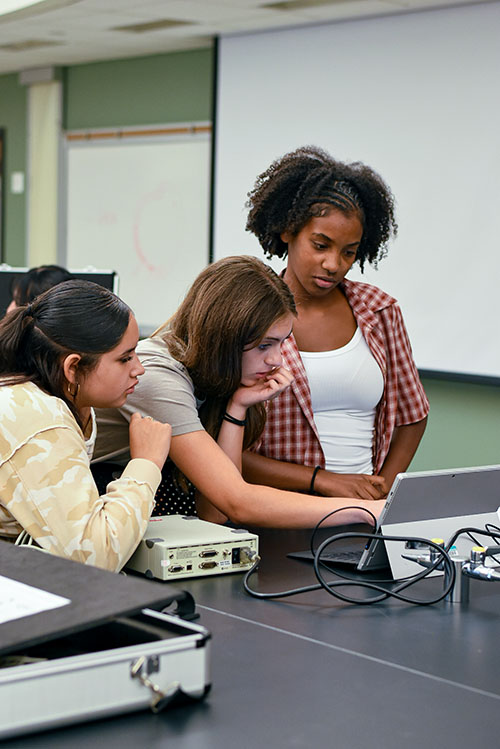
Human Health Lab: How the Body Works
In "Human Health Lab: How the Body Works," biology Professor Kurt M. Lucin introduced students to the field of health sciences and Eastern’s popular health sciences major.
Students learned how health care professionals record and track vital signs, and how they use collected data to help make accurate and effective decisions and diagnoses. The course explored health and disease in the endocrine, neuromuscular, and cardiovascular systems.
“Students walked away with a much deeper understanding of different body systems and diseases,” Lucin said. “They dug into case studies, then took it a step further by conducting their own authentic scientific research projects and collecting data.”
Kylah Barrett, a student at Groton’s Ella T. Grasso Technical High School, enjoyed that the lab was hands-on and found it engaging. She also referenced the dissection of a sheep heart in class, a demonstration meant to help students visualize the cardiovascular system.
“Even though it was kind of gross, at the end when you figure out what everything is and see everything, it was very cool,” she said. “My favorite part was seeing the valves of the heart.”
Lucin praised the high schoolers for their engagement and maturity throughout the course.
“There were moments where I genuinely forgot I was working with high school students,” he said. “The level of curiosity and focus they brought to the program felt more like what you would expect from college students.”
Students concluded the week by presenting their research findings to friends, family, and faculty.
“They really got the full experience of not just doing science, but communicating it too,” Lucin said.
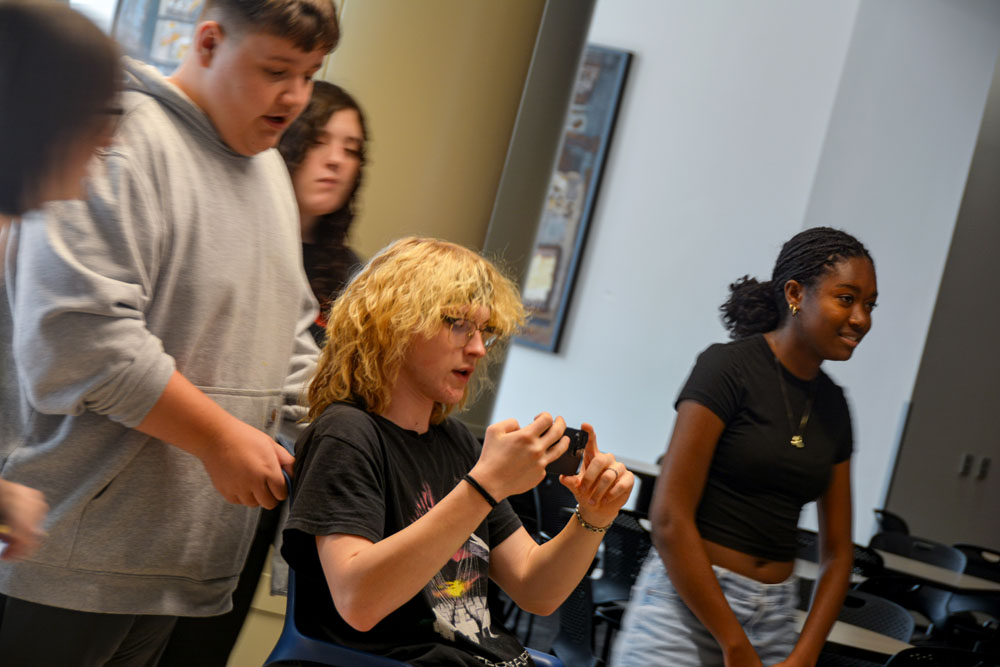
Intro to Filmmaking
Led by directing and film Professor Brian Day, Introduction to Filmmaking explored the fundamentals of filmmaking and the entertainment industry, with students in this program making short films from ideation to completion.
Drawing from his experience working on feature films and television productions like "Muppets from Space" (1999), "Mean Girls" (2004), and "Stepping into the Shade" (2024), Day guided students through every stage of the filmmaking process, while giving room for creativity to flow.
Students in the class learned basic film theory, then brainstormed, wrote, filmed, and edited short films for display at the end of the program. “They get to learn by doing,” Day explained.
Magnus King, a student at Norwich Free Academy, enjoyed working with other creative minds.
“One thing I enjoyed the most was working with other people and seeing their creative sides,” he said, " ... trying to be able to use everyone’s creative skills and work together to make something that could be a masterpiece.”
King also highlighted a lecture he found especially useful, where Day taught methods of camera angles and types of film shots.
For Day, the impact extends beyond filmmaking skills.
“It’s great to see [the students] build friendships and experiences. The interactions between them are always fun to watch. Some students ask specific questions about college that show me they are thinking about themselves here.”