


Skip to Main Site Navigation Skip to Content Skip to Footer
Back To Top

Sustainability Pathway

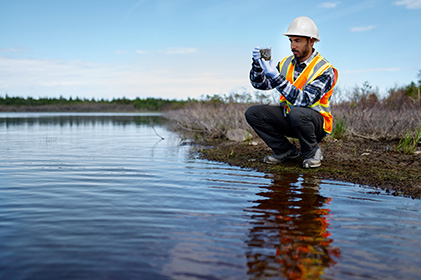
two business professionals going over paperwork in an office a marine biologist analysing water test results and algea samples an engineer holding a laptop analyzing data with wind turbines and the skyline behind them

Coming Soon

Fall 2026

What are Sustainability Careers?

Sustainability impacts a wide range of careers. Architects and engineers may incorporate elements of sustainability into their designs. Renewable energy corporations employ technicians, planners, environmental specialists, and more. Large corporations may hire sustainability managers or consultants to inform their work. Meanwhile, policy analysts and environmental advocates interface with the federal, state, and municipal levels of government to push towards sustainability goals. In fact, virtually every job can be considered a climate job, and the skills taught in this pathway will enhance any line of work.

How does the co-op program work?

Eastern’s Sustainability Pathway merges classes taught by Eastern faculty with short and long-term experiential projects. In the first three years of the program, students take part in courses that build familiarity with sustainability careers and the skills necessary to thrive in them. In year four, students complete a two-semester internship in the field that allows them to utilize the skills they have learned and make professional connections.

Across the four years of the program, students will also build their Sustainability Portfolio. The Portfolio helps students develop core competencies with individually tailored projects and presentations, and also functions as proof that they have mastered skills critical to Sustainability careers.

Throughout the program, support from the Office of Career Services will strengthen students’ resume-building and interview skills, ensuring they make a memorable first impression to recruiters in the field.

What courses do I need to take?

  • Career Pathways in Sustainability 1 (SUS 102) is the introductory course to the Sustainability pathway. The course is designed for students from every discipline, and those who are undeclared. Students explore how to connect climate and sustainability with a variety of career paths.

    Through interactions with professionals from diverse sectors, students will discover organizations, agencies, and businesses addressing sustainability issues in Connecticut. Students will gain insight into their roles, motivations, and challenges while gaining practical skills and knowledge to help you succeed in sustainability-related fields and as an engaged citizen in your community.

    Examples of organizations students may engage with include:

    • Environmental Conservation Police
    • Hartford Office of Sustainability
    • Groton Sustainability and Resilience Division
    • Connecticut Department of Administrative Services
    • Connecticut Department of Energy and Environmental Protection
    • Public Utilities and Regulatory Authority
    • U.S. Department of Energy
    • U.S. Department of the Interior
    • General Services Administration
    • National Oceanic and Atmospheric Administration
    • Other sustainability careers within the private and public industries
  • Career Pathways in Sustainability 2 (SUS 202) builds on the skills learning in SUS 102. Students will continue their exploration of career pathways and develop skills through application of concepts covered in SUS 102. Students will deepen their understanding of complex sustainability challenges and engage with professionals from diverse sectors.

    This course expands the breadth of engagement with organizations, agencies, and businesses in Connecticut. This course introduces the theme “Every Job Is A Climate Job” by exposing students to ways in which they can bring added-value climate literacy and skills to “non-sustainability” careers, catalyze climate action at work and in their communities.

  • This course builds on the concepts and outcomes of SUS 102 and 202 to deepen the preparation for sustainability-related and sustainability-focused careers.

    Case studies developed from state and regional employer surveys will engage students with complex sustainability issues they may face in the workplace that require them to think critically, employ ethical reasoning, and make recommendations based on measurable outcomes (quantitative literacy).

    Students will visit partner state agencies, non-profits, and businesses in Connecticut. Students will also begin developing their job search skills, with class time dedicated to resume preparation and mock interviews through the Office of Career Services. Finally, students will also begin preparation for their final co-op experience in their senior year.

  • SOC 375/490 and CRM 475/490 are internships in the Sociology and Criminology department, respectively. Unique to the Eastern's Career Pathways Program, this internship lasts a full year and provides students with six academic credits. By extending the internship across two semesters, rather than the typically required one semester course, employers are able to provide students with a wider array of more in-depth experiences.

    Students will have more time to experience ESPS careers firsthand, as well as develop a stronger professional network. Students will be able to meaningfully contribute to ESPS work and highlight to a potential future employer their aptitude for the job.

How do I join?

The first step to joining Eastern's Sustainability Pathway is to register for SUS. This can be done via eWeb. For additional information on the program, sign up here. For general information on registering for courses, you can refer to the Office of the Registrar.