Skip to Main Site Navigation Skip to Content Skip to Footer
Back To Top

Eastern's Career Pathways Program

High Paying, In-Demand Careers in Connecticut


Program Goals

Eastern's Career Pathways Program brings together classroom and experiential learning opportunities to prepare students for work in the public and private sectors. These pathways will allow Eastern students to gain firsthand experience in in-demand jobs and expand their professional networks, while developing the skills that federal, state, municipal, and private employers say are most needed.

Are you a student interested in high paying, in-demand employment opportunities? See the co-op programs available to you below.

Are you an employer interested in partnering to expand or develop a new co-op program? Contact our program coordinator for more information.

Emergency Services and Public Safety Pathway

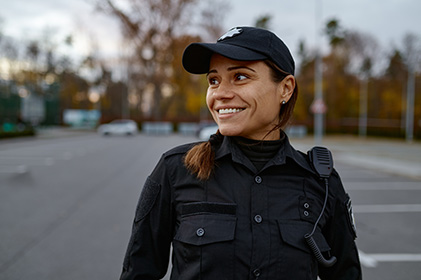
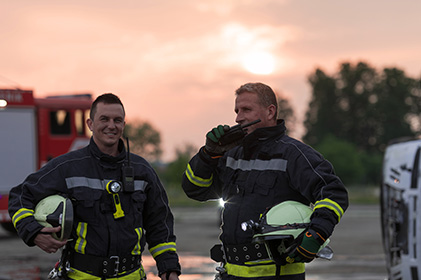
smiling police woman standing in a parking area two smiling fireman, one talking on a walkie-talkie with a firetruck in the background police detective looking at bagged evidence with red/white striped barrier tape in the foreground
  • Careers in emergency services and public safety range from law enforcement and fire safety, to the emergency telecommunications professionals working in dispatch, to forensic scientists, and more. ESPS professionals come from many backgrounds and their jobs vary considerably.

  • Eastern’s Emergency Services and Public Safety Pathway merges classes taught by Eastern faculty with short and long-term experiential projects. In the first three years of the program, students take part in courses that build familiarity with ESPS careers and the skills necessary to thrive in them. In year four, students complete a two semester internship in the field that allows them to utilize the skills they have learned and make professional connections.

    Across the four years of the program, students will also build their ESPS Portfolio and take part in the ESPS Club. The Portfolio helps students develop core competencies with individually tailored projects and presentations, and also functions as proof that they have mastered skills critical to ESPS careers. The ESPS Club provides additional opportunities to utilize the skills they learn in class, complete their Portfolio, and further establish their professional network. To learn more about the ESPS Club, see below.

    Throughout the program, support from the Office of Career Services will strengthen students’ resume-building and interview skills, ensuring they make a memorable first impression to recruiters in the field.

  • Step One:  CRM 102/SOC 102 Emergency Services and Public Safety Careers 1

    Emergency Services and Public Safety Careers 1 (SOC 102/CRM 102) is the introductory course to the ESPS pathway. Students are encouraged to take this course in their freshman year, but can be taken later. The course exposes students to ESPS careers at the Connecticut Department of Emergency Services and Public Protection and other agencies, including:

    • Connecticut State Police
    • Probation and Parole
    • Department of Corrections
    • Commission on Fire Prevention and Control
    • Emergency Management and Homeland Security
    • Police Officers Standards and Training Council
    • Scientific Services and Forensics
    • Statewide Emergency Telecommunications
    • Other Emergency and Public Safety Careers

    Students will also learn about ESPS careers at the municipal level. These classes are taught through a series of presentations by professionals in the field, who will share the skills needed to excel in their careers, their day-to-day experiences, and more.


    Step Two:  CRM 202/SOC 202 Emergency Services and Public Safety Careers 2

    Emergency Services and Public Safety Careers 2 (SOC 202/CRM 202) builds on the skills learning in ESPS Careers 1. The course helps students to better understand practical application of skills in the ESPS field. This is done through a series of field trips to the Connecticut Department of Emergency Services and Public Safety, and/or to other state or municipal agencies. Students spend time at these sites, and build a better understanding of the skill set required in the field, as well as how to attain those skills.

    Students will also learn about summer internship programs and other experiential opportunities. These can be a good tool for those students who are undecided on what type of ESPS career to pursue.


    Step Three:  CRM 302/SOC 302 Emergency Services and Public Safety Careers 3

    Emergency Services and Public Safety Careers 3 (SOC 302/CRM 302) helps students begin to implement the skills they have been developing in ESPS Careers 1 and 2. This course focuses on durable and employer identified skills. A key focus will be communication skills, both written and verbal, particularly as these skills relate to interactions with the public and emergency service reporting requirements.

    The mastery of these and related skills will help prepare students for their year-long internship experience in their final year of the program.

    Students will also continue work on their professional portfolios. By the end of year three in the program, these portfolios should be near-complete and illustrate the range of durable skills mastered through the ESPS courses and club.


    Step Four:  CRM 475/490 or SOC 375/490

    SOC 375/490 and CRM 475/490 are internships in the Sociology and Criminology department, respectively. Unique to the Eastern's Career Pathways Program, this internship lasts a full year and provides students with six academic credits. By extending the internship across two semesters, rather than the typically required one semester course, employers are able to provide students with a wider array of more in-depth experiences.

    Students will have more time to experience ESPS careers firsthand, as well as develop a stronger professional network. Students will be able to meaningfully contribute to ESPS work and highlight to a potential future employer their aptitude for the job.

  • The ESPS Club is a core component of Eastern's Emergency Services and Public Safety Pathway. Participation in the club will help students take their ESPS skills development beyond their courses, offering additional hands-on learning experiences, skill-building opportunities, and professional networking. It will also help facilitate the completion of their ESPS Portfolios.
  • The first step to joining Eastern's Emergency Services and Public Safety Pathway is to register for SOC 102 or CRM 102. This can be done via eWeb. For additional information on the program, sign up here. For general information on registering for courses, you can refer to the Office of the Registrar.

Program Contact Information

Dr. William Lugo
Professor: Criminology and Sociology
Webb Hall, Room 434
(860) 465-0163
lugow@easternct.edu

John Fournier
Program Coordinator
Webb Hall Room 419
(860) 465-0654
fournierj@easternct.edu