- Apply
- Visit
- Request Info
- Give

Brian Day and Daniel Donaghy
Dates: June 1 – June 5
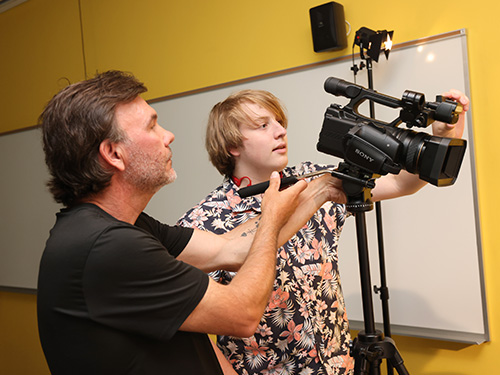
Students in the disciplines of English and Communication, Film, and Theatre will collaborate to produce completed poetry films, a rising storytelling art form which some consider to be a brand-new genre of filmmaking. During the week, students will generate ideas for poems, write poems, plan the filming of poems, and complete the filming and postproduction for their poetry films. The goals of this institute include enhancing project collaboration skills between disciplines, growing communication skills within groups and storytelling media, learning to use new tools and methods, and creating final products which could be included in student portfolios and/or submitted to professional film festivals around the world.
Allison Speicher
Dates: June 1 – June 5
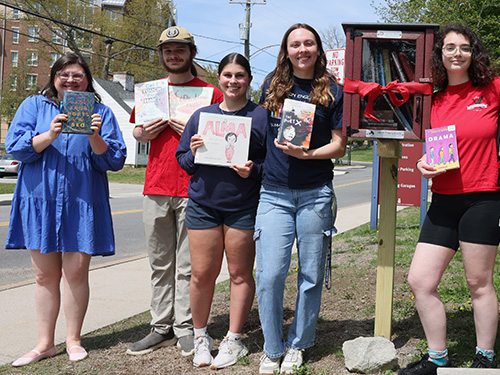
This program is designed to aid students in discovering their passion and purpose as literary scholars. Students will select their own texts to study and may choose from a broad range of forms, such as picture books, film adaptations, and canonical novels. The instructor and peer mentor will help to widen students’ understanding of the breadth of resources available to them and guide them toward identifying and filling a gap in the critical conversation surrounding their chosen text. Upon completing the institute, students will have crafted an innovative research question (and a working thesis reflecting their tentative answer to it), a literature review, a bibliography of at least eight sources, an abstract for a conference presentation, and a research plan for completing their project. Completion of the project may be pursued through an independent study, tying the project to coursework, or pursuing it as an English capstone.
Steve Muchiri, Ph.D.
Dates: June 1 – June 5
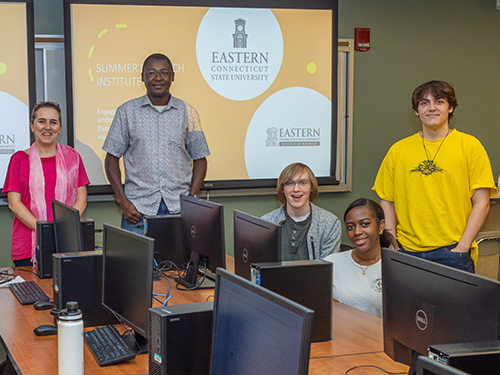
This program exposes undergraduate students to healthcare management-related issues, enables students to research the dynamics of healthcare management systems, and teaches them how to analyze and understand the role of Industry 4.0 and Big Data in decision-making processes in the healthcare industry. This is done through exploring how healthcare data can be analyzed to monitor hospital performance and understand patterns in patient readmissions. Students will be organized into three parallel “mini-labs”, each focusing on a different diagnosis and using the same Nationwide Readmissions Database structure but within different clinical contexts, with the goal of allowing students to compare how readmission risk, discharge planning, and post-acute care differ across acute medical, emergency cardiac, and elective surgical patients. Statistical process control tools will be used within each mini-lab to visualize how readmission rates evolve for their assigned condition, highlighting stability, variation, and potential performance shifts. The institute will train undergraduates at the intersection of healthcare and data analytics, with this project providing students with a springboard for advanced research opportunities.
Lora Lee
Dates: June 8 – June 12
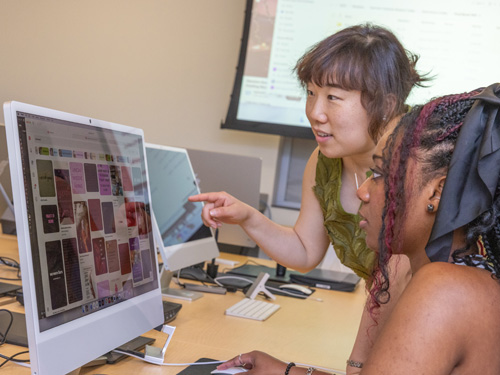 In this institute, students step away from screens to immerse themselves in the tactile, meditative world of hand lettering and illustration, discovering the joy of shaping expressive letterforms and images by hand. Working with brushes, watercolors, gold leaf gilding, and a range of specialized lettering tools, they will build a strong foundation in typography and modern calligraphy, practice alphabets across a variety of styles, and explore the interplay of text and image composition. From there, students will experiment with format and design, creating their own stationery, posters, cards, journaling pieces, and other original illustrated works, culminating in a final display celebrating each student's creative growth. The skills gained extend well beyond the classroom, equipping students to design visuals for academic projects, craft handmade cards and signs, develop personal journals, and build confidence through more intentional penmanship and visual communication.
Martin Mendoza-Botelho
Dates: June 8 – June 12
This program will aid students in developing their own research tools to analyze contemporary political problems domestically and/or internationally. They will be provided with basic statistical analysis instruction and will work collaboratively in a research area of their choice. Such research areas may include public perceptions of and attitudes toward environmental issues, political effects of social variables such as gender, socioeconomic status, or race, the impact of ideological and political polarization on democracy and its institutions, and views on reproductive rights due to changes in national legislation. Students will be exposed to important tools, methods, limitations, and benefits of the research process. Activities will allow students to engage extensively with likeminded peers through debates and peer-discussion reviews, with students presenting their findings in a formal setting at the conclusion of the institute to facilitate collective analysis.
Phyllis Lee & Caitlin Vasquez-O'Brien
Dates: June 8 – June 12
This program is built from a framework of the Pixar films Inside Out (1 and 2) with the goal of helping students to develop from an everyday understanding of emotions into scientific inquiry. Students will be exposed, through hands-on research experiences, to theories, methods, and ethical practices that define psychological research on emotion. Each student will be given access to empirically validated research tools and resources, including a heart rate variability tool to access emotionality, eye-tracking equipment, and the SPSS Survival Manual. These methods and tools will be applied to help students shape their own research questions. The institute will prepare students for core required courses in the psychology as well as position them to pursue further research opportunities, including independent projects and faculty-mentored research assistantships that will strengthen students’ future career opportunities.
Barbara Murdoch
Dates: June 8 – June 12
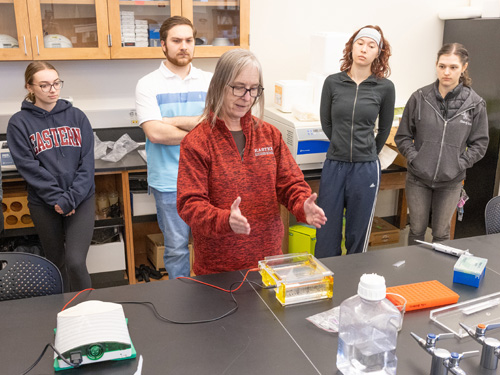 Aiming to provide hands-on research experience to undergraduate STEM students, this program will task participants with the discovery of the microbiome (the collection of bacteria) found within either oysters sampled from the local region, scorpion samples from the western US, or other unusual organisms, depending upon sample availability and student preference. This research is important since the microbiome has been found in all organisms, and in humans it has been shown to affect numerous aspects of health and disease, including cardiovascular, diabetes, obesity, and even mental health. This research institute will offer students experience in cutting-edge molecular and bioinformatic techniques; foster students’ scientific literacy; expose them to experimental design data analysis, and interpretation; and develop students’ scientific communication skills. These experiences aim to empower students to explore local and novel ecosystems, contribute to a broader understanding of microbial life, promote creativity regarding the diverse applications of innovative technologies, and in the numerous ways to communicate their findings.