
- Apply
- Visit
- Request Info
- Give



Written by Ed Osborn
Published on June 08, 2026
Sexual misconduct is a sobering reality on today’s U.S. college campuses. In response, prevention programs and victim support services continue to be implemented and expanded to promote campus safety and positive interpersonal relationships.
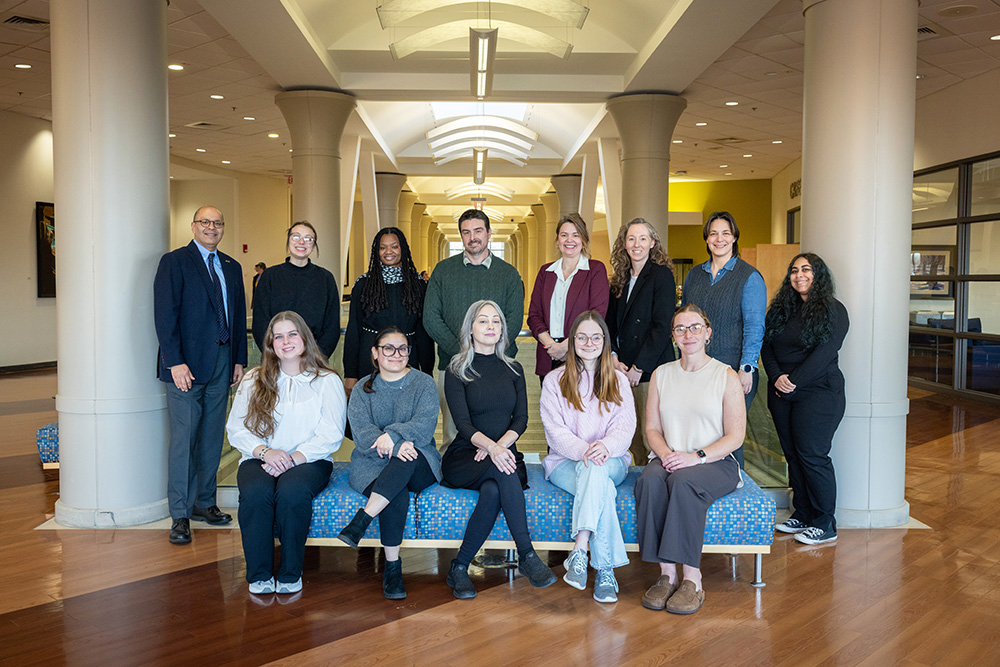
At Eastern Connecticut State University, a formal structure has been created — the President’s Advisory Board on Interpersonal Violence and Campus Climate — to lead the University’s efforts in supporting healthy relationships while deepening the campus’s culture of inclusion, personal responsibility, and positive life choices.
Appointed in 2025 by President Karim Ismaili, the advisory board is charged with assessing data from campus climate surveys, making recommendations for improvement, and encouraging a campus-wide commitment to healthy interpersonal relationships and a safe campus.
“The health and safety of our campus community — students, faculty, staff, and visitors — is my first priority,” said Ismaili. “Among the safety issues facing a college campus is sexual misconduct, and Eastern has a zero-tolerance policy where such misconduct is concerned.
“I appointed the President’s Advisory Board to improve our systems for reporting and responding to incidents of sexual assault, dating violence, stalking, and other forms of sexual misconduct and interpersonal violence, and I am pleased with the board’s first year of work,” continued Ismaili. “I look forward to supporting their recommendations to improve campus climate and enhance our Title IX reporting and response systems. By raising campus awareness and understanding, we can help ensure healthy interpersonal relationships and a culture of personal respect.”
The President’s Advisory Board on Interpersonal Violence and Campus Climate is co-chaired by social work Professor Sarah Nightingale, who has more than 10 years of practice experience in survivor advocacy, violence prevention and Title IX in the college context.
Other board members include sociology/criminology Professor Racheal Pesta as co-chair, Title IX Coordinator Sara Judge, Women’s Center Coordinator Starsheemar Byrum, lacrosse Coach Devyne Doran, English Professor Christine Garcia, Pride Center Coordinator Nicole Potestivo, Associate Director of Institutional Advancement Ryan Rose, Community Engagement Coordinator Lexie Mastroianni, community partners Maria Busineau and Lianne Marsella of the Sexual Assault Crisis Center of Eastern Connecticut, and three student representatives.
Campus Climate Surveys lay the foundation

Campus Climate Surveys in 2022 and 2024 ordered by then President Elsa Nunez and spearheaded by Nightingale provided a baseline of data for the advisory board to construct an institutional response. The 2022 Campus Climate Survey — self-administered anonymously by 790 students — found that 82% of respondents felt valued on campus and 73% felt safe.
In addition, 95% of respondents had taken the mandatory Title IX training program. However, only half of the respondents felt that Eastern would respond fairly to a Title IX complaint. And only 26% of those who had experienced sexual misconduct had reported it to a staff or faculty member. The overall tone of the survey was expressed succinctly by one respondent: “Believe victims. Take them seriously.”
In 2024, the biannual Campus Climate Survey was readministered, following passage of PA21-28 in 2022 mandating that Connecticut higher education institutions conduct biannual campus climate surveys. Some data points were stable or had improved: 93% of students had completed the mandatory Title IX training; 66% of students felt safe on campus; respondents who believed Eastern’s Title IX response system was fair improved from approximately 50% to 62%; and 69% of respondents said they knew about the University’s complaint reporting and victim support systems.
However, only 40% of students felt the mandatory online training program was useful, 47% of students felt the reporting system could be improved, and less than a quarter of students knew about off-campus resources available for victims. Also of concern, disabled and LBGTQ students felt less safe than their heterosexual counterparts.
Year one of the advisory board
In its first year, the Board developed a collective understanding of the data generated by the 2022 and 2024 climate surveys; brought in guest speakers and gained shared knowledge of sexual misconduct by reading the book, “Sexual Citizens,” a major study of campus sexual misconduct by authors Jennifer Hirsch and Shamus Khan. Their study of Columbia University students explored the social and environmental aspects of student conduct, moving beyond individual behaviors to advocate for transformational change of a college campus and its culture.
“Reading ‘Sexual Citizens’ opened my eyes to the many factors that are at play when sexual assault occurs,” said Karielis Rojas ’26. “Some factors were alcohol, the nuances of consent, and even the space people inhabit or find themselves in. But the thing that stuck with me the most is the lack of education people receive on safe sex. Parents are not having these important conversations with their kids, and when they do, much of it is rooted in fear instead of something that is normal and fun.”
Another student representative is Olivia Wettemann ’26, a social work major with a minor in criminology. “As an Eastern student, I brought a unique perspective by drawing from both my own experiences and the experiences of my peers, which are often invisible to administration. Through this process, I learned that Eastern is a university willing to engage in difficult conversations about improving how it addresses sexual violence and capable of recognizing where its systems may fall short. Eastern is motivated to make meaningful changes that better support students while strengthening campus safety and trust.”
Year two priorities
In 2026-27, the advisory board will support a number of pilot projects aimed at having immediate impact on Eastern’s campus culture. The first priority is to pilot meaningful Title IX training for students. The 2022 and 2024 climate surveys found that while more than 90% of students took the online Title IX training program, the majority did not find the training to be helpful in understanding issues surrounding sexual misconduct.
The training that will be piloted in 2026–27 will take place in the University’s coursework for incoming students, specifically in five or six sections of LAC 101, with face-to-face discussions about realistic scenarios. Control groups will also be used to evaluate and improve the piloted course for future implementation across the student body.
“I always believe in-person is best,” said Nightingale in explaining the rationale behind the LAC 101 pilot. In addition to LAC 101 sections, pilot training will also be provided for athletic teams and clubs in summer 2026, and three programs will be offered in the summer for residential life staff.
Another project will be the development of a responder’s “tool kit,” which will provide resident assistants, faculty, and other employees with valuable resources they can use in reporting sexual misconduct complaints. The 2022 Campus Climate Survey showed that 20% of students disclosed an incident of interpersonal violence to a member of the faculty or staff.
“Teaching faculty need support for the disclosure process,” said Nightingale. “Students who have been victims of sexual misconduct are still taking classes. They may be experiencing academic trauma.” In 2026–27, training needs for faculty and staff reporters will be refined and additional tools developed for new faculty and staff.
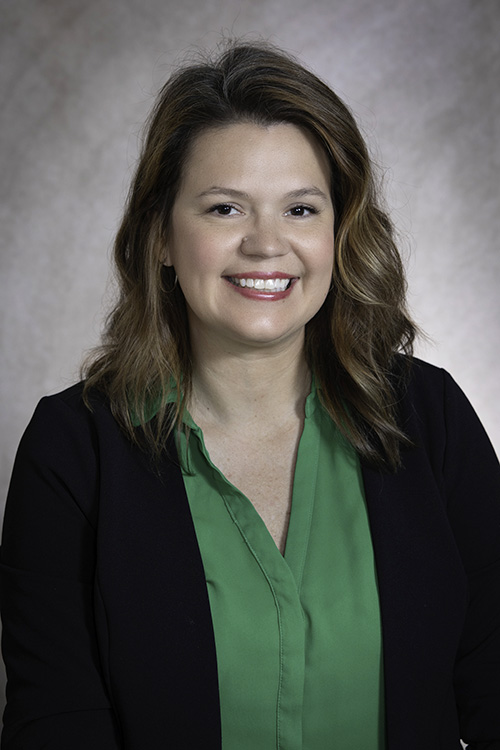
Board Co-Chair Racheal Pesta describes the advisory board’s discussions about improving faculty and staff training and providing more resources and tools to potential reporters. “How can we make faculty and staff more comfortable hearing stories (of misconduct), and how they can report incidents?” One strategy being developed is a “tool kit” for faculty and staff — “an accessible list of things to do” when hearing from victims. “We think we can add this to the onboarding process for new faculty and staff.”
A third priority of the advisory board is to create some form of training for parents and guardians. The 2022 Campus Climate Survey indicated 44% of students had told a parent or guardian about an incident of intimate partner violence. Even so, the board’s work revealed that students are not having important conversations about healthy relationships and safe sex with their parents. A short training program for parents and guardians will be developed and tested in 2026–27 and when and where training is best conducted will be evaluated.
A fourth board recommendation that will begin in 2026–27 is repairing relationships with alumni. Anecdotal evidence suggests that past weaknesses in Eastern’s sexual misconduct response systems have created ill feelings among some alumni. A first step in repairing trust will be to engage the University’ Alumni Council to determine how best to establish dialog with alumni on the topic of Title IX responsiveness, Options include focus groups and alumni surveys.
A fifth recommendation by the President’s Advisory Board is to create an office where services, research, and education around the issue of sexual misconduct can be centralized, staffed, and supported. Models exist at other colleges and universities, including Ramapo College in New Jersey, the University of New Hampshire, and Tulane University.
In 2026–27, how best to staff such a center at Eastern will be discussed, and external grant funding will be sought. Having a full-time victim advocate is central to this goal. Only 23% of respondents in 2024 Campus Climate Survey were aware of the role of the campus’s current victim advocate Starsheemar Byrum, who serves as the full-time director of the Women’s Center.
“The confidential role of the victim advocate is to support students who experience interpersonal violence, sexual violence, stalking, or other forms of harm by providing resources, emotional support, advocacy, and guidance through and beyond reporting and support processes,” said Byrum. “An important part of this work is ensuring students are aware of available resources, feel safe accessing them, and are supported in navigating the impact victimization can have on their wellbeing, academic experience, and sense of safety.”
A final work priority for the advisory board in 2026–27 is to review results from the 2026 Campus Climate Survey, which was recently completed in April 2026. While the data will be analyzed and evaluated over the summer, Nightingale already notes that the response rate is significantly higher than the two prior surveys, and that campus-wide support for the survey process has been evident from President Ismaili down and across the organization.
Progress
Nightingale is encouraged by the work of the board to respond to the various survey findings with a meaningful set of recommendations, and the shared commitment she has seen across the campus to implementing those recommendations. “I really believe that Eastern is making an effort to go beyond compliance. I am proud of my colleagues on the Board and the campus community. We are creating a rigorous and thoughtful response to the issue of sexual misconduct.”
“Sexual misconduct is always under-reported,” added co-chair Racheal Pesta. “We need to encourage reporting and disclosure. Federal funding has been eliminated for these types of services. I am happy President Ismaili has taken this issue seriously and is providing resources.”
A key factor in the long-term success of the advisory board will be its ability to educate and involve men on campus in being active participants in the University’s campus climate initiatives. In that regard, Ryan Rose, associate director of institutional advancement, is a key member of the board.
“As a staff member who works to build relationships across the Eastern community, and as a parent with a daughter currently attending Eastern, this work feels both professional and deeply personal to me,” said Rose. “Creating a positive campus climate isn’t just about policies or compliance. It’s about building a culture where students feel respected, supported, and confident that if they come forward with concerns, they will be heard, taken seriously, and connected with the resources they need. As a man serving on the advisory board, one of the things I’ve come to appreciate is how important it is for men to be part of these conversations, not as the focus, but as active listeners, learners, and partners in creating safer communities.”
While Eastern has additional progress to make, Nightingale said, “As a member of the community, I believe our Title IX efforts show a lot of commitment” to campus safety and climate. “No campus in America can say, ‘We are done.’” Nightingale’s vision is that the President’s Advisory Board and its work will “cultivate a campus where people look out for each other. Where discussions take place about healthy interpersonal relationships. Students are often first responders; we want them to feel more prepared to support their friend.”