- Apply
- Visit
- Request Info
- Give



Written by Savannah Striano ‘25
Published on June 23, 2026
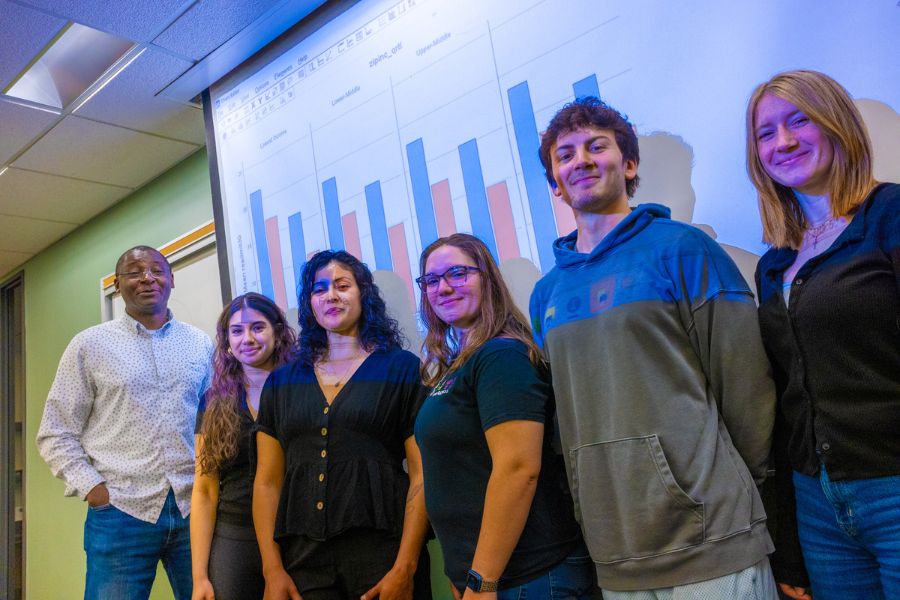
Students in the "Industry 4.0 and Big Data Analytics in Healthcare" institute pose with Professor Steve Muchiri.
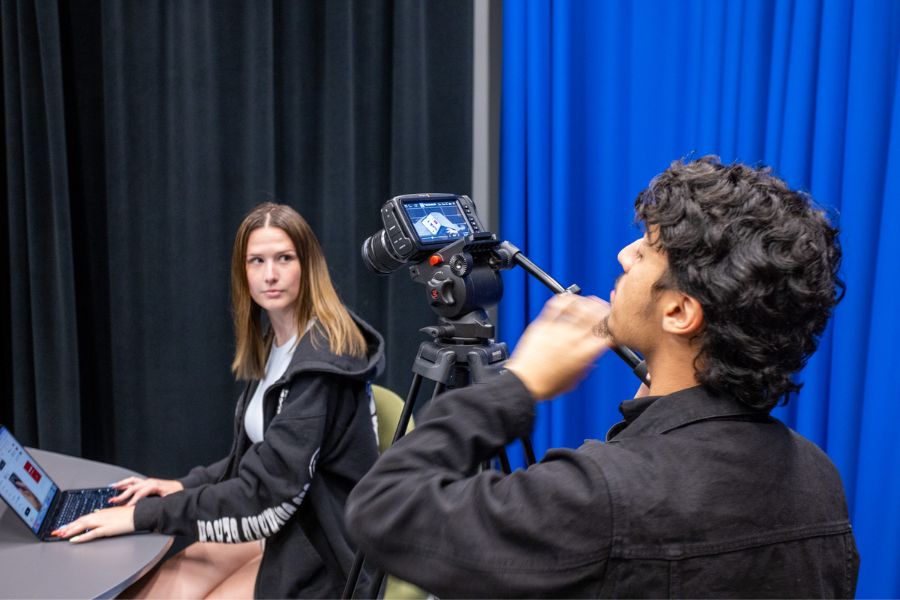
Students make films during the “Poetry Films” institute.
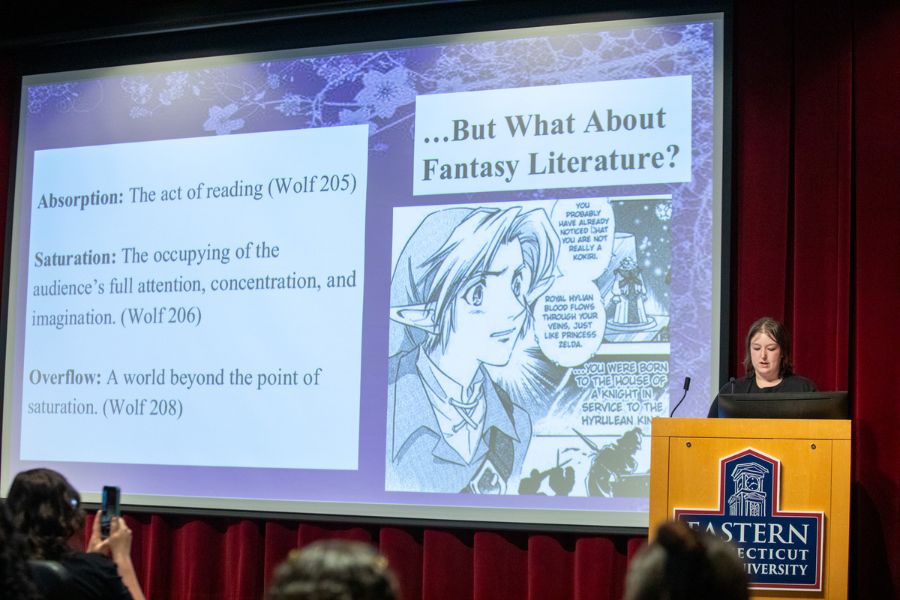
A student presents their research during final presentations of the “Finding Your Scholarly Voice” institute.
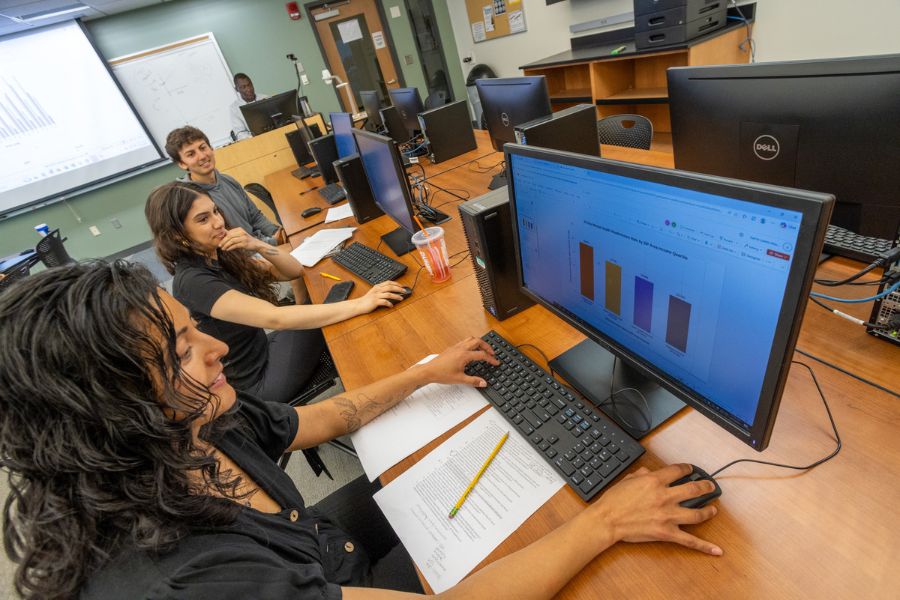
A student reads and researches analytics during the "Data Analytics-Oriented Undergraduate Research: Industry 4.0 and Big Data Analytics in Healthcare" institute.
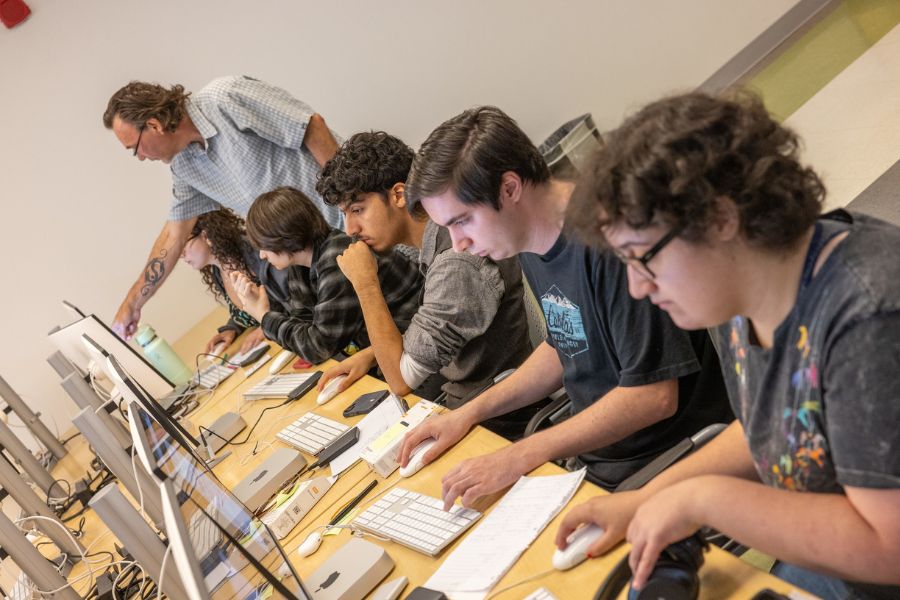
Students edit their short films during the “Poetry Films” institute.
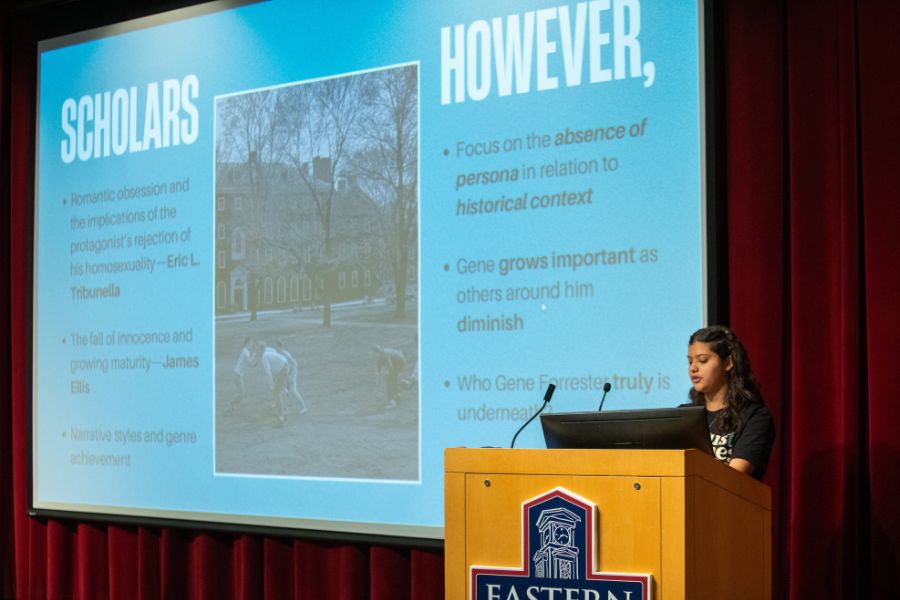
A student presents their research during final presentations of the “Finding Your Scholarly Voice” institute.
Nearly 70 Eastern students began their summer immersed in research. This June, the University expanded its Summer Research Institute (SRI) program from three to seven faculty-led institutes, providing opportunities for students to investigate a wide range of topics, from poetry and filmmaking to healthcare data analytics and molecular biology.
Held during two one-week sessions, students conducted research, developed creative projects, and explored new academic interests across a variety of disciplines. The institutes are designed to introduce research methods, strengthen critical thinking skills, and prepare students for future academic and professional opportunities.
Emily Todd, dean of the School of Arts and Sciences, said the SRIs provide students with valuable opportunities to engage in faculty-mentored research early in their academic careers.
"Summer research institutes are excellent opportunities for students to get early experience doing research with faculty," Todd said. "Students get to experiment with methods in their discipline, and learn different approaches to research and different ways of framing questions."
Building on the success of previous SRIs, the School of Arts and Sciences secured additional funding through a Strengthening Institutions Grant, awarded to Eastern in 2025 by the U.S. Department of Education. The grant aims to improve student success and retention through high-impact learning practices.
"It's a way of creating additional activity on campus," Todd said of the expansion from three to seven SRIs. "One of our goals was to think about summer activity, and these research institutes do that."
Week one
During the first week of the program, students participated in institutes focused on creative expression, literary scholarship, and healthcare research.
One of the institutes, "Poetry Films," was led by directing and film professor Brian Day and English professor Daniel Donaghy. The program brought together students from English and Communication, Film, and Theatre (CFT) to create short films inspired by original poetry. Throughout the week, students wrote poems, planned productions, and produced films while developing collaboration, communication, and storytelling skills.
The institute's collaborative nature was a major draw for many participants. Student Arianna Fitzsimmons said the opportunity to work alongside filmmaking students offered a new way to express creativity. "As a writer, I write with an image in my mind, and being able to bring that to life by working with film students is so unique," she said.
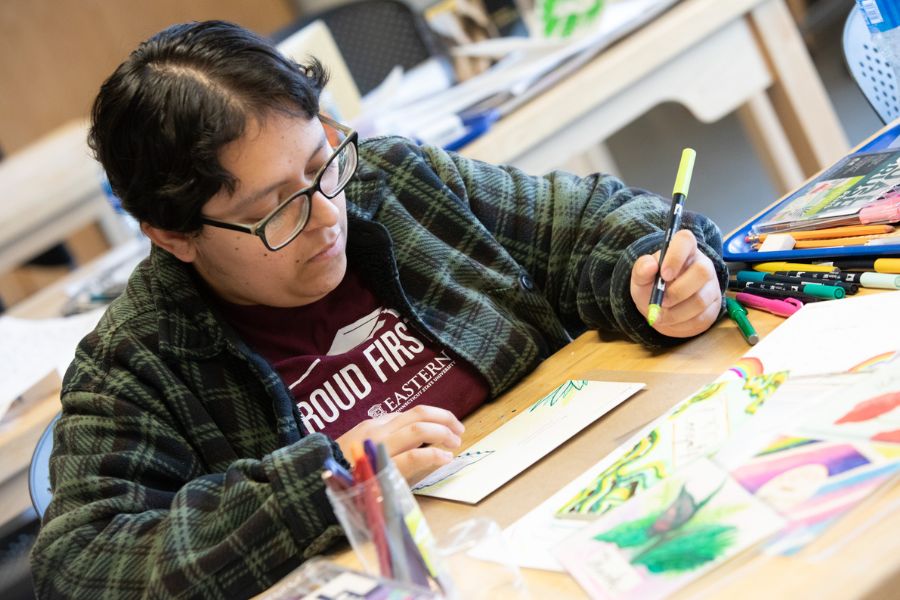
Students create artwork during the “Art of Hand Lettering” institute.
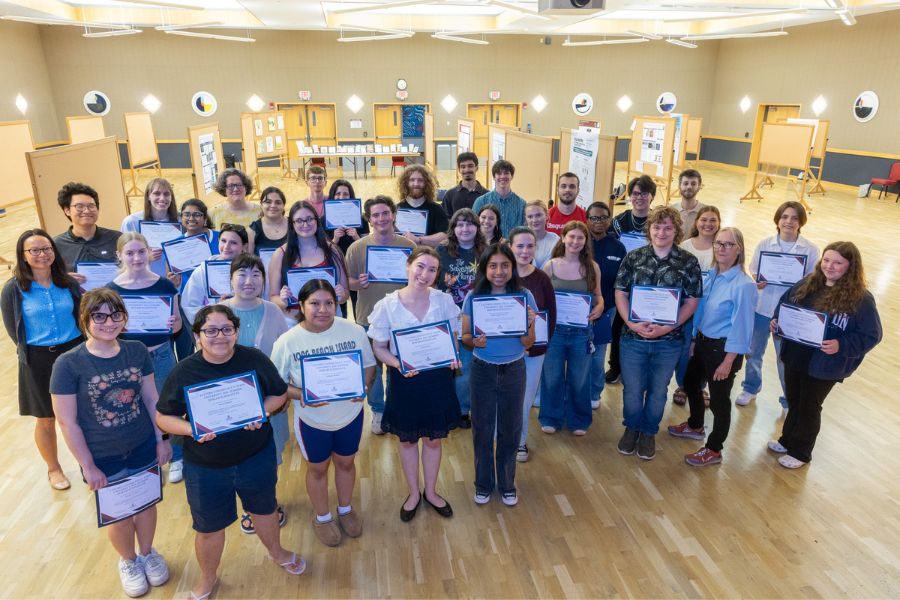
Students stand with psychological science professors Phyllis Lee and Caitlin Vasquez-O'Brien after receiving their certificates for completing the "Emotions: Inside (and) Out” institute.
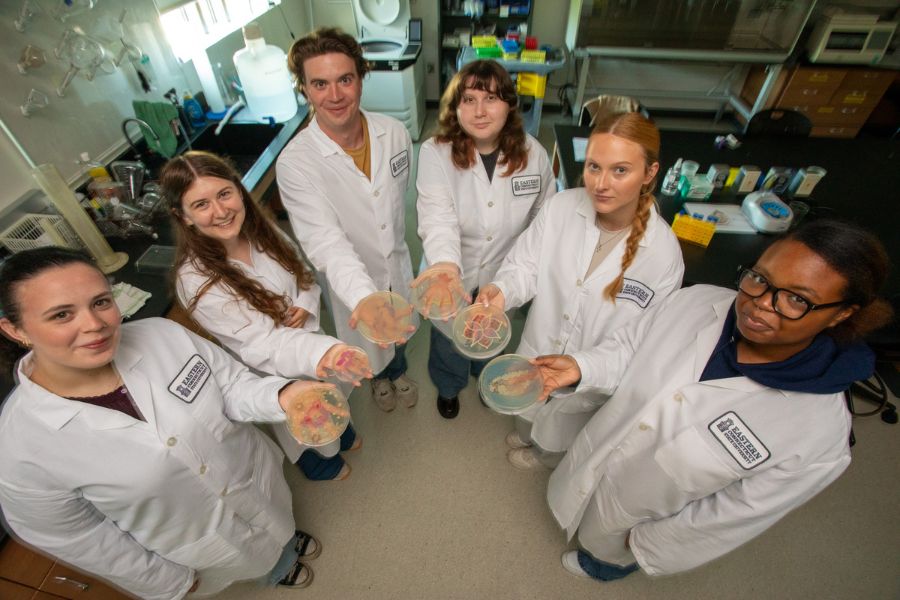
Students show their petri dish designs at the "Hands-on Undergraduate Research with Cutting-Edge Sequencing Technology: Transforming Abstract Concepts into Tangible Discoveries: Take Two” institute.
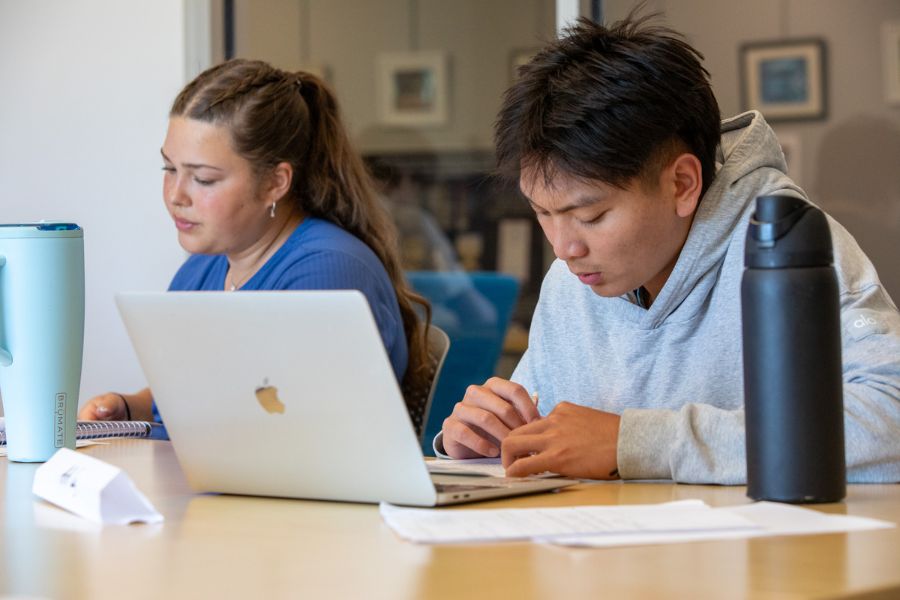
Students at the "Contemporary Socio-Political Analysis through Student Research” institute.
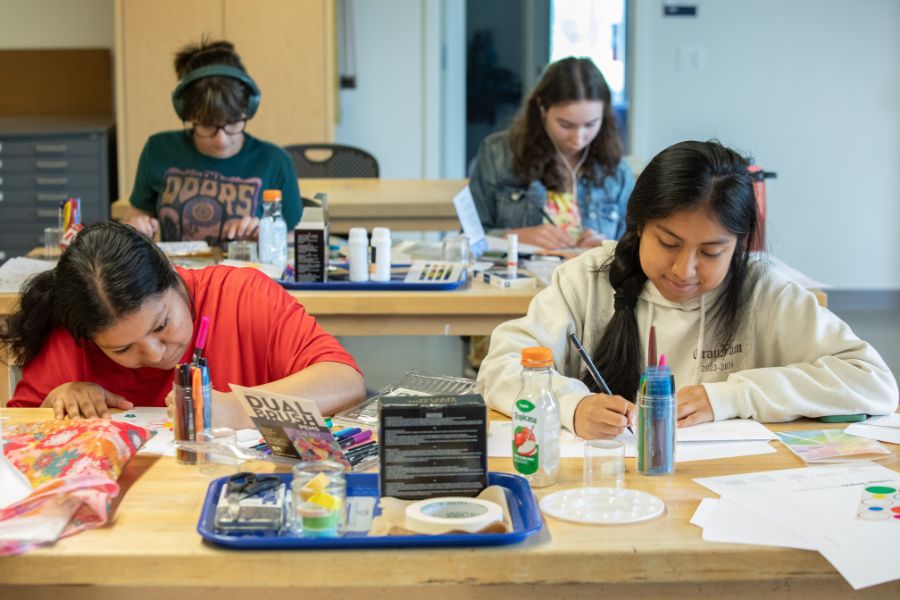
Students create artwork during the “Art of Hand Lettering” institute.
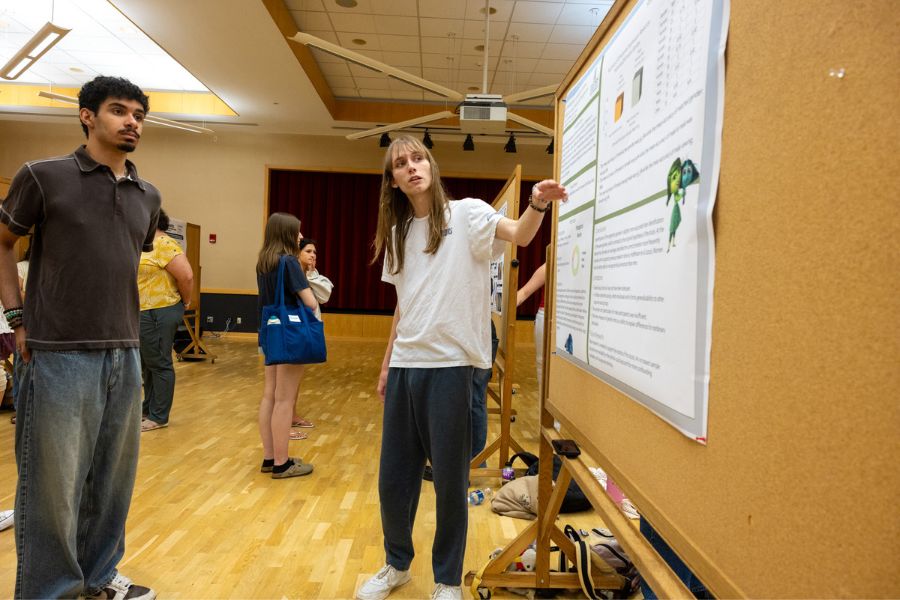
Students present their research during the final presentations of "Emotions: Inside (and) Out” institute.
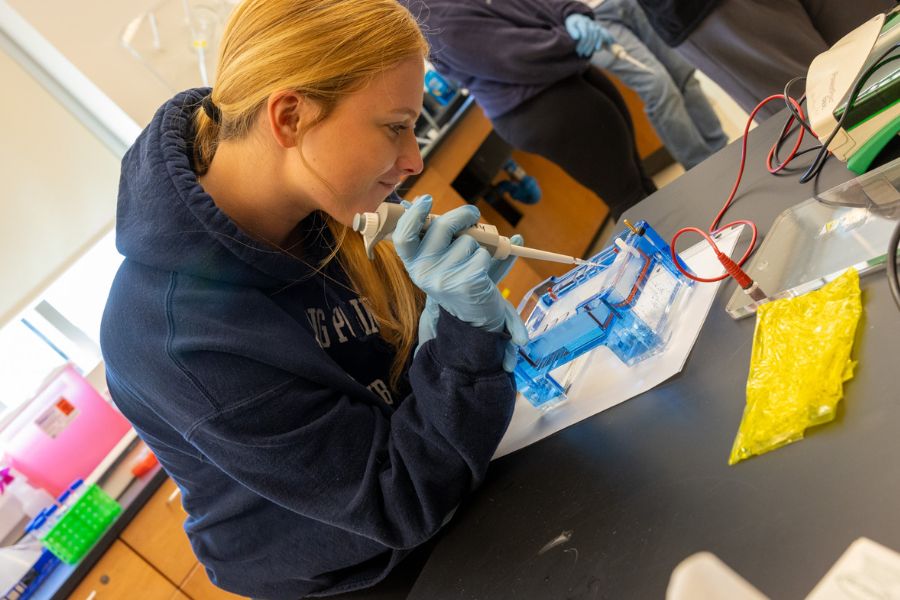
A student designs their petri dish design at the "Hands-on Undergraduate Research with Cutting-Edge Sequencing Technology: Transforming Abstract Concepts into Tangible Discoveries: Take Two” institute.
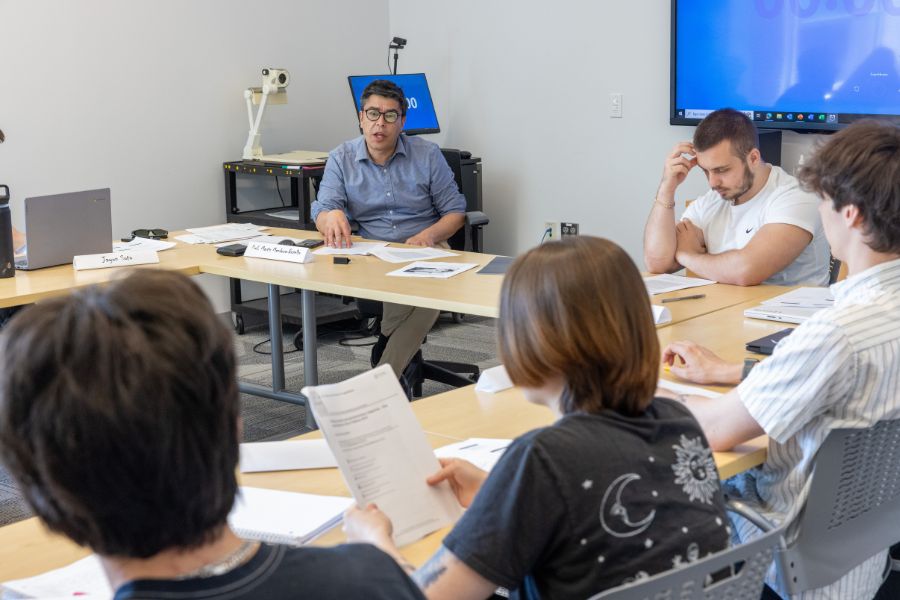
Students at the "Contemporary Socio-Political Analysis through Student Research” institute.
Students interested in literary scholarship participated in an institute titled "Finding Your Scholarly Voice" with English Professor Allison Speicher. Students explored texts of their choosing and developing original research questions. Through guided research, literature reviews, and conference-style abstracts, participants learned how to identify gaps in existing scholarship while building the foundation for future independent studies and capstone projects.
Speicher encouraged students to embrace the exploratory nature of research and refine their ideas throughout the week. "Good research is inefficient," she said. "I am especially proud of the fact that none of these students had precisely the same research question and working thesis statement at the end of the week that they did at the start."
Meanwhile, students in "Data Analytics-Oriented Undergraduate Research: Industry 4.0 and Big Data Analytics in Healthcare" worked with economics and finance Professor Steve Muchiri to examine healthcare management systems and the role of data analytics in decision-making. Working in specialized mini-labs, participants analyzed hospital readmission data and explored how healthcare organizations use data to improve patient outcomes and operational performance.
Week two
The program's second week featured institutes that blended artistic exploration, social science research, and scientific discovery.
"The Art of Hand Lettering," led by art and art history Professor Lora Lee, taught students to step away from digital tools to explore typography, illustration, and modern calligraphy through hands-on creative work. Using brushes, watercolors, gold leaf gilding, and other specialized materials, participants created original designs while developing skills in visual communication and artistic expression.
In "Contemporary Socio-Political Analysis through Student Research," led by political science professor Martin Mendoza-Botelho, students investigated contemporary political issues through data collection, statistical analysis, and collaborative research. Participants explored topics from environmental concerns and political polarization to reproductive rights and demographic influences on public opinion.
Elijah Boushee, a student participant in the program, expressed interest in developing professional skills in his field and earn a CITI (Collaborative Institutional Training Initiative) certification, which is a mandatory program on research ethics, compliance, and safety for people working in research, healthcare, and students. "I think the work being done here gives us a head start in cultivating research skills and encourages us to contribute to the academic community."

The psychology-focused institute, "Emotions: Inside (and) Out," psychological science professors Phyllis Lee and Caitlin Vasquez-O'Brien introduced students to scientific approaches for studying emotion. Drawing inspiration from Pixar films "Inside Out" and "Inside Out 2," participants used research tools such as eye-tracking equipment, heart rate variability technology and statistical software to develop and investigate their own research questions while gaining experience with ethical research practices.
Students interested in STEM research participated in "Hands-on Undergraduate Research with Cutting-Edge Sequencing Technology: Transforming Abstract Concepts into Tangible Discoveries: Take Two." Biology professor Barbara Murdoch provided experience in molecular biology and bioinformatics through the study of microbiomes found in organisms such as oysters, scorpions, and other species. Participants gained hands-on experience with experimental design, data analysis, and scientific communication while contributing to a broader understanding of microbial life.