
- Apply
- Visit
- Request Info
- Give



Written by Noel Teter '24
Published on May 04, 2026
Biology Professor Jonathan Hulvey recently involved his students in an event meant to educate students at Norwich Free Academy (NFA) about the growing problem of antibiotic resistance, as well as to pique high schoolers’ interest in science careers and student research at Eastern.
Eastern’s fourth collaborative “Tiny Earth Day” event with NFA took place April 21 in the Dr. David G. Carter Science Building and drew attention to a crowdsourcing effort, called the Tiny Earth Network, to fight antibiotic resistance. Hulvey coordinated the event in partnership with Jason Croteau ’97, an Eastern alumnus and AP Biology teacher at NFA.
Tiny Earth is a research-centered teaching platform for biology and comprises a global network of educators and students based at the University of Wisconsin-Madison.
The first installment of this year’s event was a series of lab demonstrations in SCI 331 by students in the “BIO 334: General Microbiology” course, which led two groups of NFA students through a series of lab stations, teaching them how to operate laboratory equipment and test for antibiotic-producing bacteria samples.
The group then attended presentations from four Eastern students and an Eastern alumnus in SCI 301. “The focus here is the students and their research,” said Hulvey in his opening remarks. He reemphasized that the purpose of Tiny Earth is to inspire and retain students in science while addressing the dwindling supply of and “desperate need” for new antibiotics.
According to Hulvey, antibiotic-resistant infections kill more than 35,000 Americans each year, underscoring the need for the type of research Tiny Earth fosters. “It’s not as profitable for pharmaceutical companies to develop new antibiotics” as it is for drugs for chronic illness, he said.
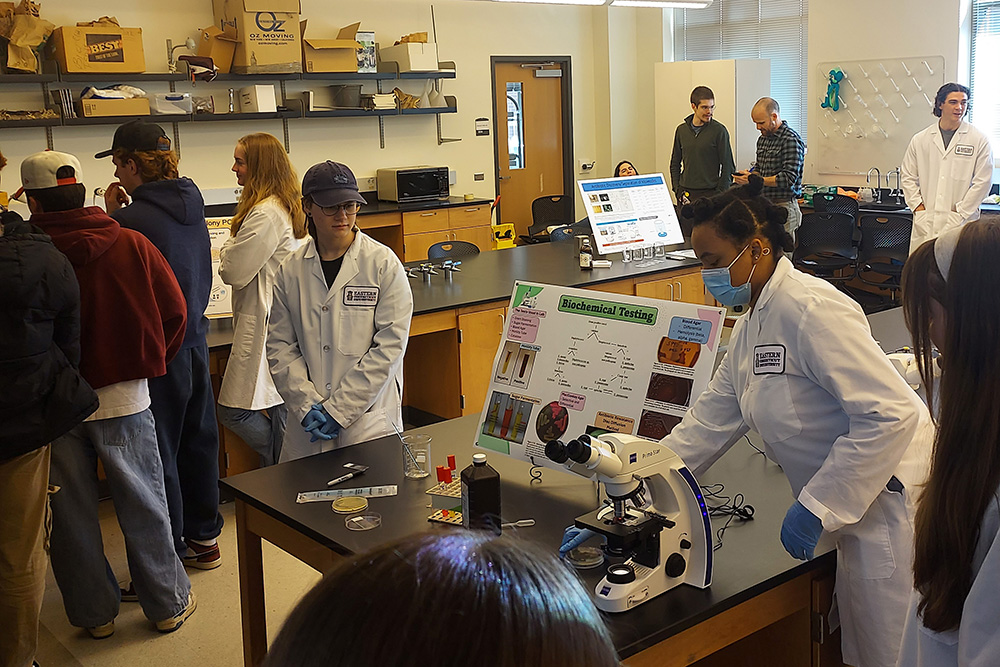
Hulvey's students lead a lab demonstration in SCI 331.
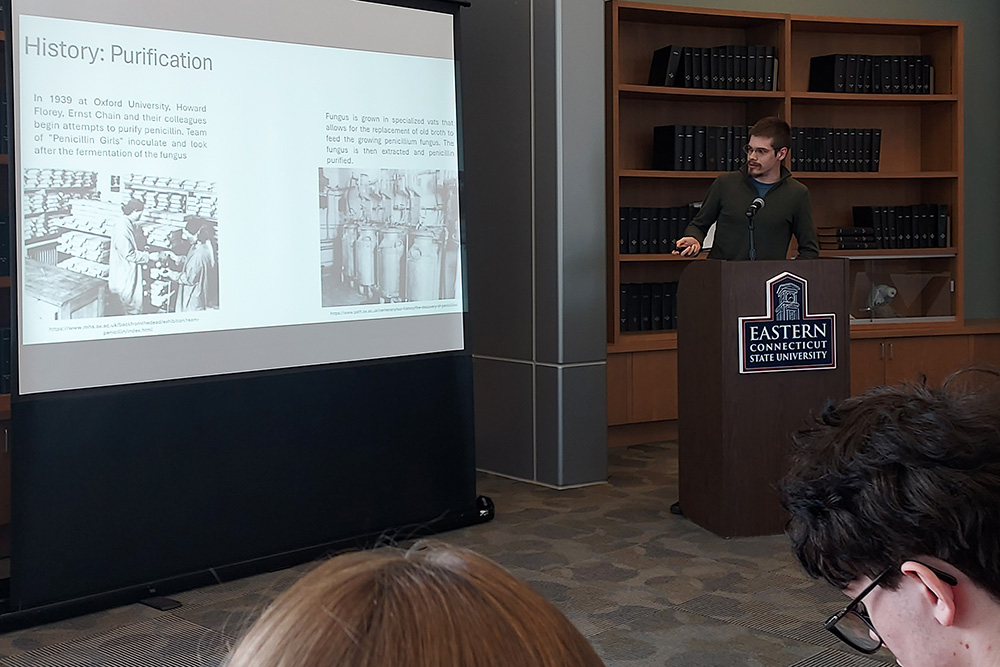
Student Ethan Campbell presents his research on a local parasitic mold.
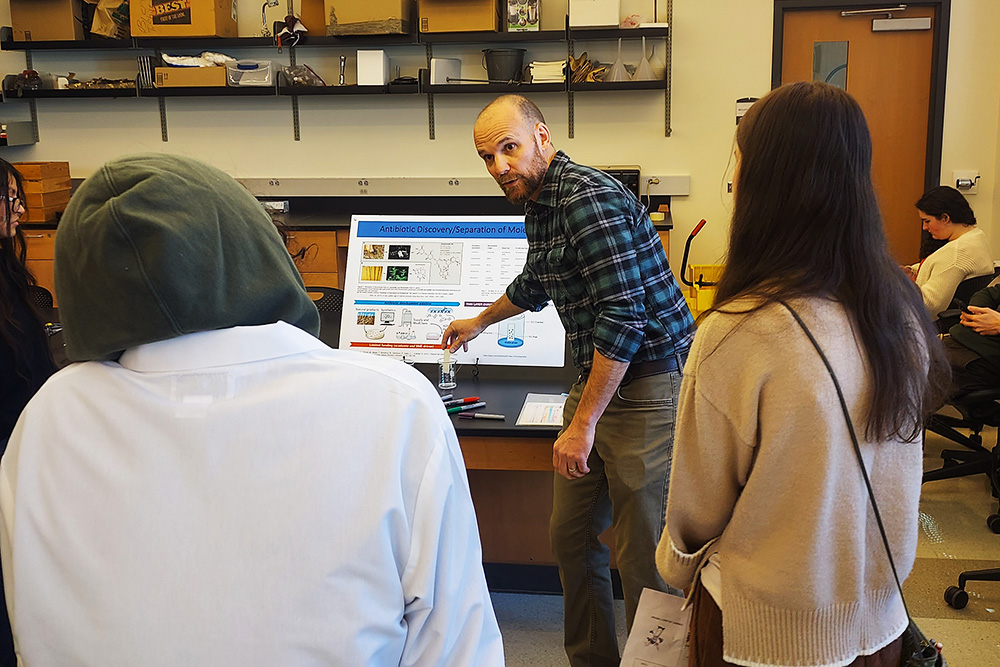
Hulvey leads a lab demonstration in SCI 331.
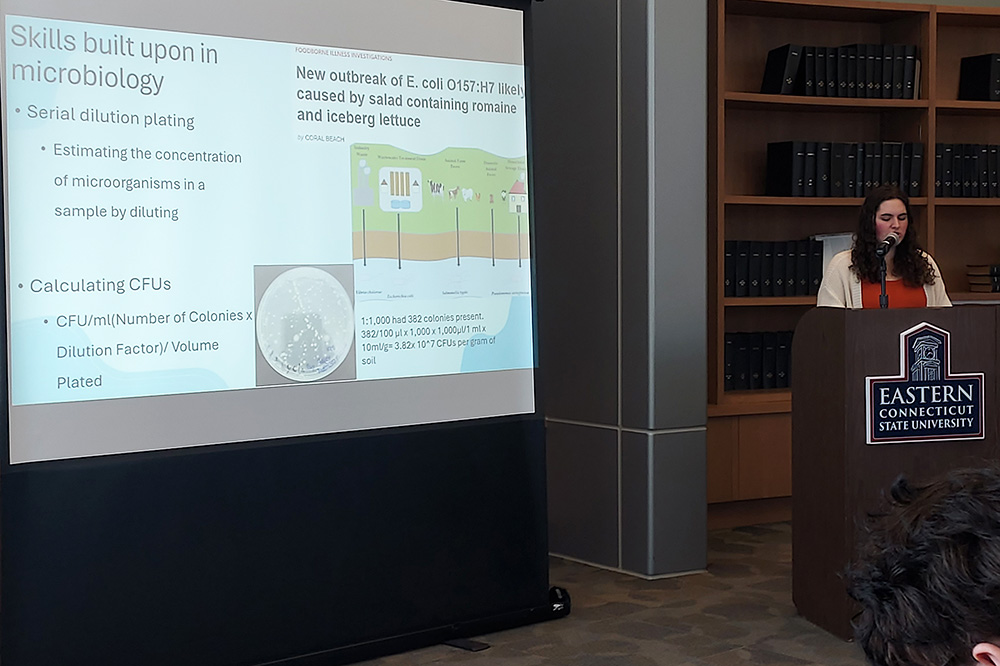
Madison Meagher leads a discussion on the importance of microbiology.
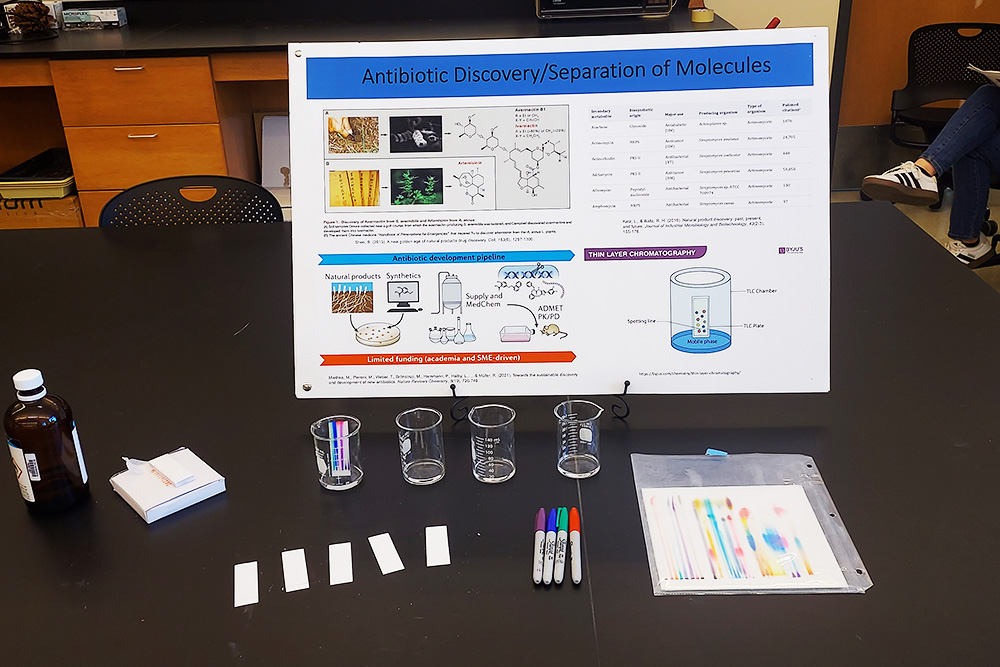
A lab demonstration station in SCI 331
Hulvey also thanked biology Professor Barbara Murdoch for familiarizing him with the initiative in 2019. Murdoch has used Tiny Earth research methodologies in her research with biology Professor Matt Graham to characterize bacteria found in the microbiome of scorpion venom.
Madison Meagher gave a presentation on the importance of microbiology, the scientific study of microorganisms. According to Meagher, microbiology is responsible for the development of new vaccines, drugs, and antibodies, which are in demand due to a decline in antibiotic discoveries in recent years.
Ethan Campbell’s presentation covered his research on antibiotics from a parasitic mold he cultured from mushrooms in Eastern’s arboretum in fall 2025. Emily Dunlea presented on her honors thesis research on the genetics of the zombie cicada fungus. Both students have been doing research with Hulvey over the last two semesters.
Isabelle McClelland discussed the presence and function of bacteria in the brain. She presented evidence for the presence of specific bacteria in the brain, which may be linked to healthy brain function.
The final presentation was from Stefanos Stravoravdis ’20, an Eastern alumnus and Ph.D. candidate in microbiology at the University of Massachusetts-Amherst. Stravoravdis, who conducted his honors thesis research with Hulvey, shared his path from undergraduate researcher to accomplished Ph.D. student.