- Apply
- Visit
- Request Info
- Give



Written by Katie Gaspar ‘28
Published on June 24, 2026
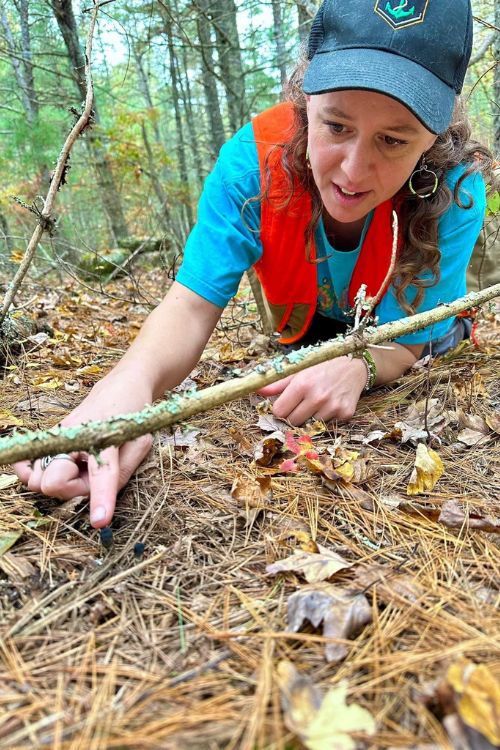
Thomas inspects Tolypocladium paradoxum, a fungal parasite of cicada nymphs.
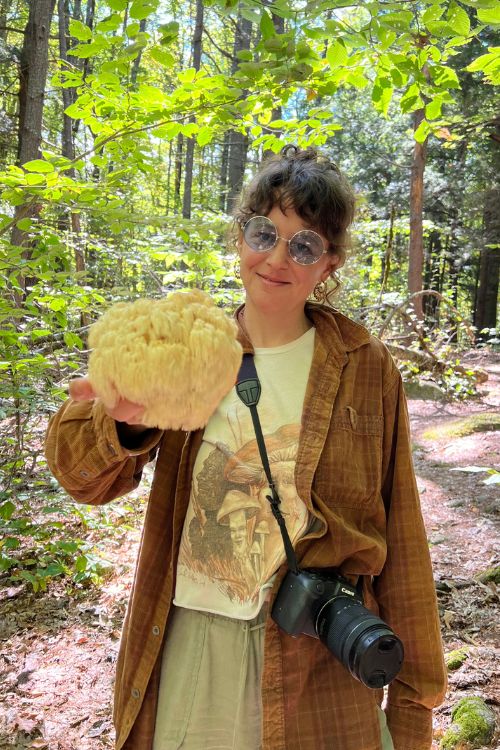
Thomas holds Hericium erinaceus, or lion's mane, at Church Farm.
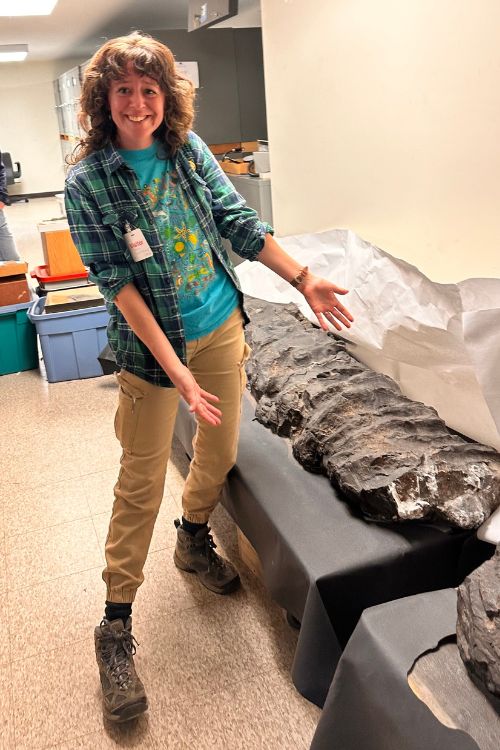
Thomas observes what is thought to be an ancient fungus, Prototaxites, at the New York State Museum.
When was the last time you saw a mushroom — not just noticed one, but really looked at it? Junior biology and history major Deana Tempest Thomas believes that fungi are often seen as the black sheep of the biosphere -- overlooked, underappreciated, and unfairly judged -- despite being a core part of the biological world.
As the fungi aficionado she is, Thomas aims to make a change. Thomas recently led a study on fungal diversity around campus. Beyond her studies at Eastern, Thomas also founded the Rhode Island Mycological Society, which educates people on fungi, connects enthusiasts, and advocates for fungal inclusion in ecological research and conservation efforts.
Last fall, Thomas headed a study on the fungal diversity at two sites owned by Eastern: the arboretum, located on campus, and Church Farm in Ashford, a property commonly used for research by Eastern students and faculty, particularly in the biological sciences. Aided by biology Professor Jonathan Hulvey and the Mycology Club, Thomas completed 42 surveys across both properties, collecting samples, taking photos, and identifying what they found.
Their findings showed vast fungal diversity. “Walking the same trails over and over, you find something new each time,” said Thomas. The group identified 80 types of fungi at the arboretum and 82 at Church Farm. One of the fungi found, known as a “rosy bonnet,” is particularly exciting: its species is not fully resolved, meaning it has been discovered, but hasn’t yet been assigned a scientific name.
For Thomas, this study is an exciting step toward bringing fungi closer to the public eye. Despite garnering a negative reputation for athlete’s foot, moldy bathrooms, and contaminating pizza, Thomas describes fungi as “what makes life possible.”
“Fungi are often thought of as rot and decay, but they are really a wide spectrum of both recyclers and facilitators of life,” said Thomas. “They break down organic matter and return nutrients to the soil, building the foundation for healthy ecosystems, and providing food and habitat.”
According to Thomas, fungi are also used by birds to build their nests, partner with plants to trade water and nutrients for sugars made by the plants, and are used by people to make bread, beer, and wine. In the natural world, fungi do more than just sit there – they’re a jack-of-all-trades that keep the ecosystem running.
Through her work, Thomas aims to spread her passion like spores on the wind. Her core message is this: if we exclude fungi from our conversations, we’re missing a crucial piece of the puzzle. Without fungi, our conservation and research efforts will never be truly complete.
Thomas aims to continue her efforts at Eastern and beyond, working to make fungi more visible, understandable, and recognized in both professional and public spheres. She hopes to continue her survey at Eastern and her work with the Rhode Island Mycological Society. She also encourages everyone around her to take a second look at mushrooms: "They’re much more lovable than they seem at first glance."
Efforts like Thomas’s are essential to developing our understanding of this “vast and not fully explored kingdom of fungi” and to help establish its rightful place as one of biology’s “big three:” flora, fauna, and funga.
Next time you see a mushroom, take a closer look. Let the excitement infect you, and you’ll find that they really are "fun guys" after all.