
- Apply
- Visit
- Request Info
- Give



Written by Kyle Berson '26
Published on April 28, 2026
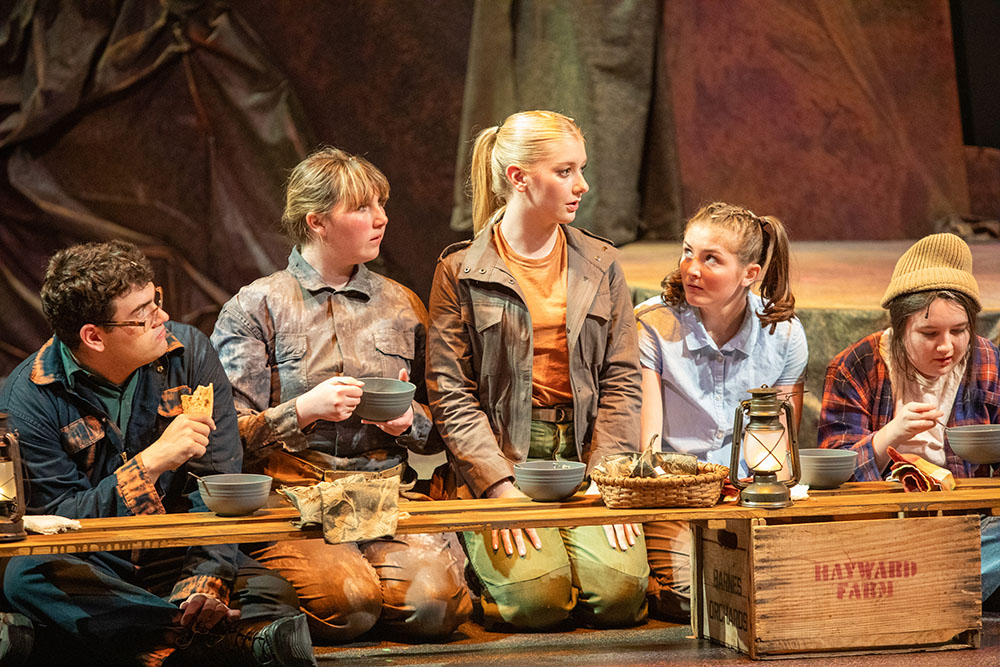
During the performance, characters gather for a group meeting.
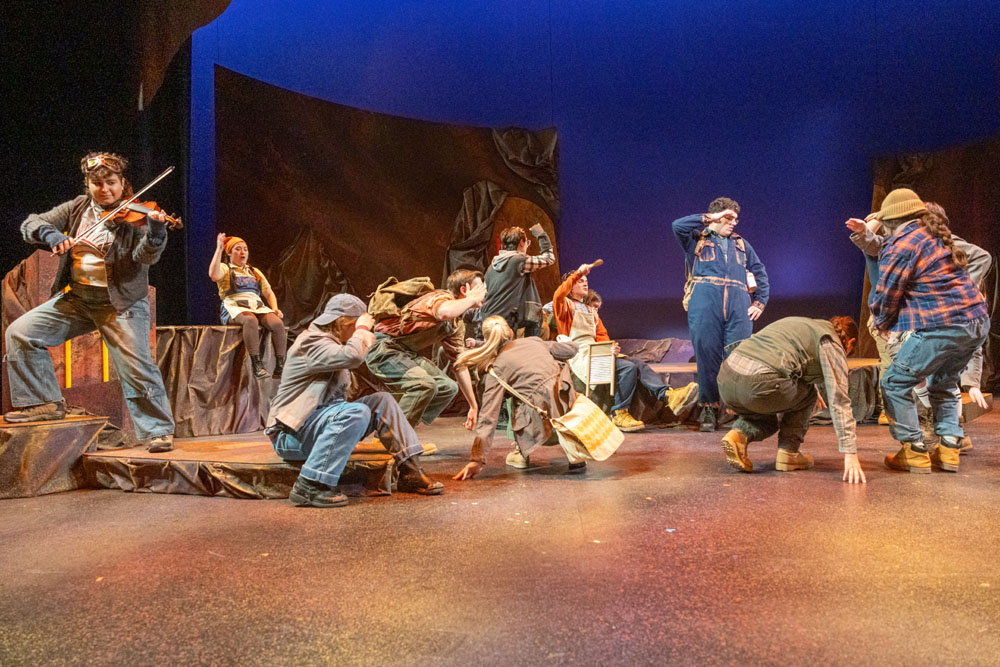
Cast members perform "Roll Call," written by Melanie Guerin.
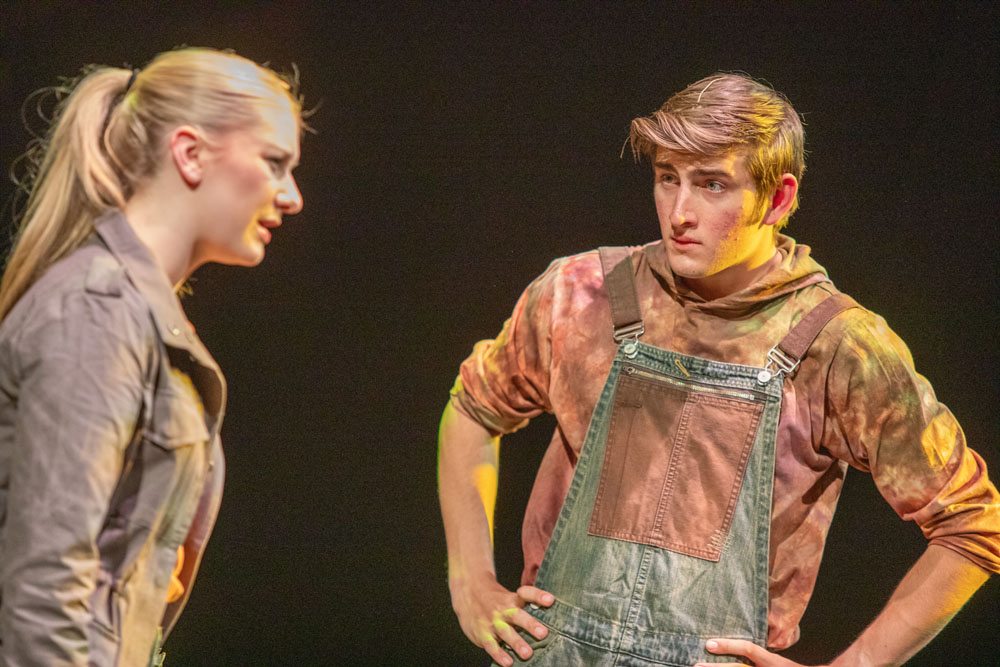
Zoe Calhoun as Older (left) and Colin Gilligan as Jester (right)
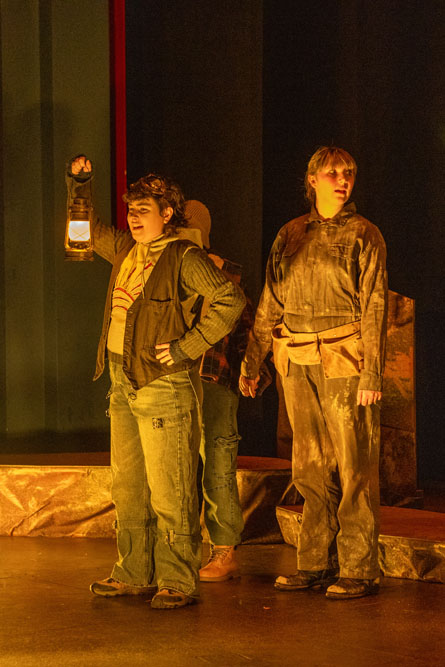
Rae Schenker as Scout (left) and McKayla Halscheid as Rust (right)
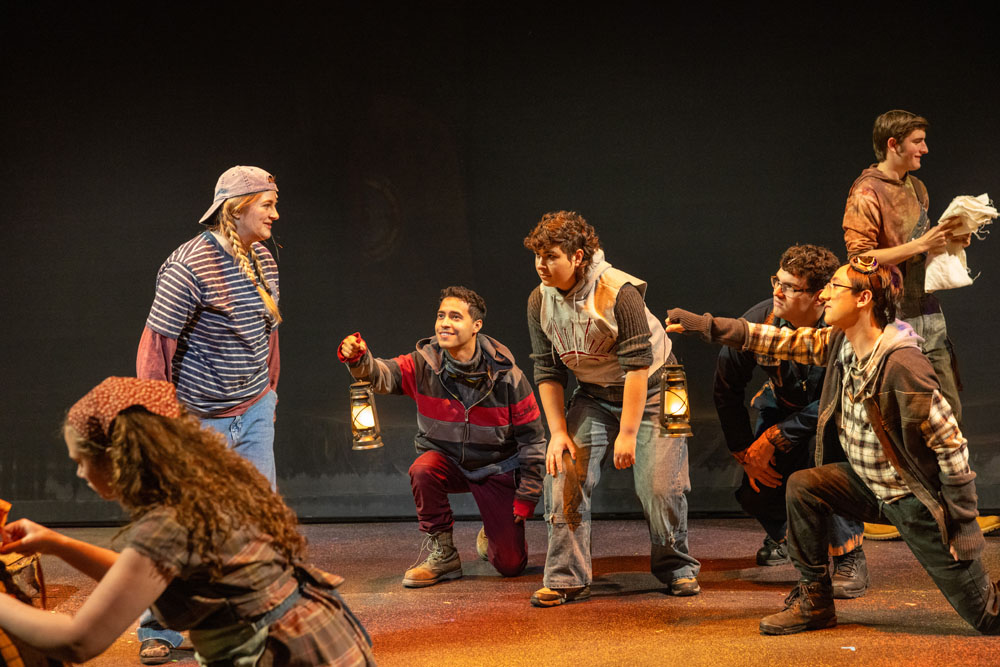
Cast members performing a scene of "The Burrow."
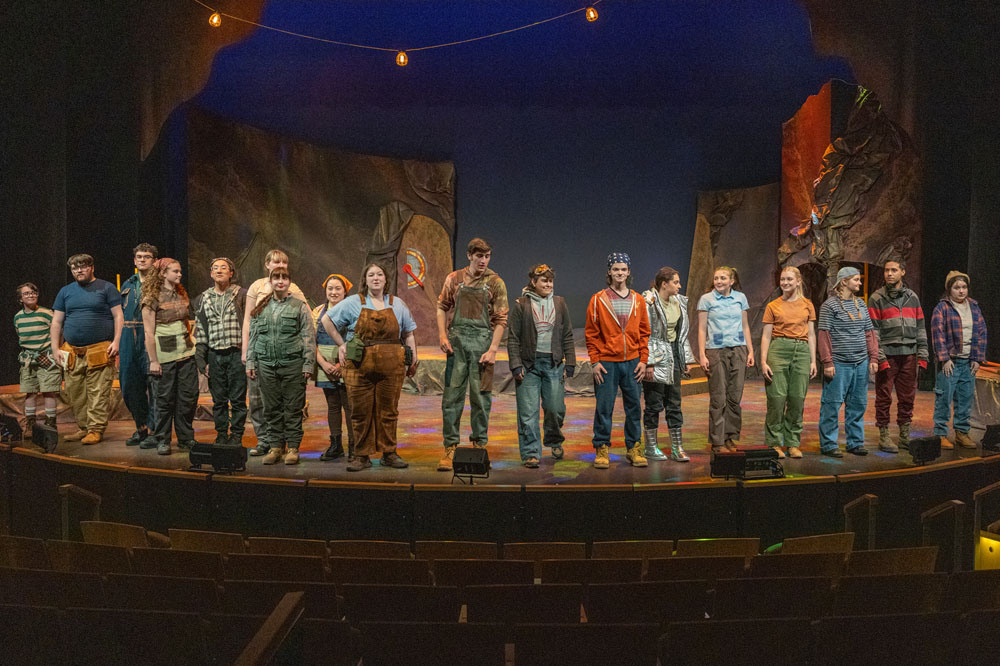
The full cast of "The Burrow"
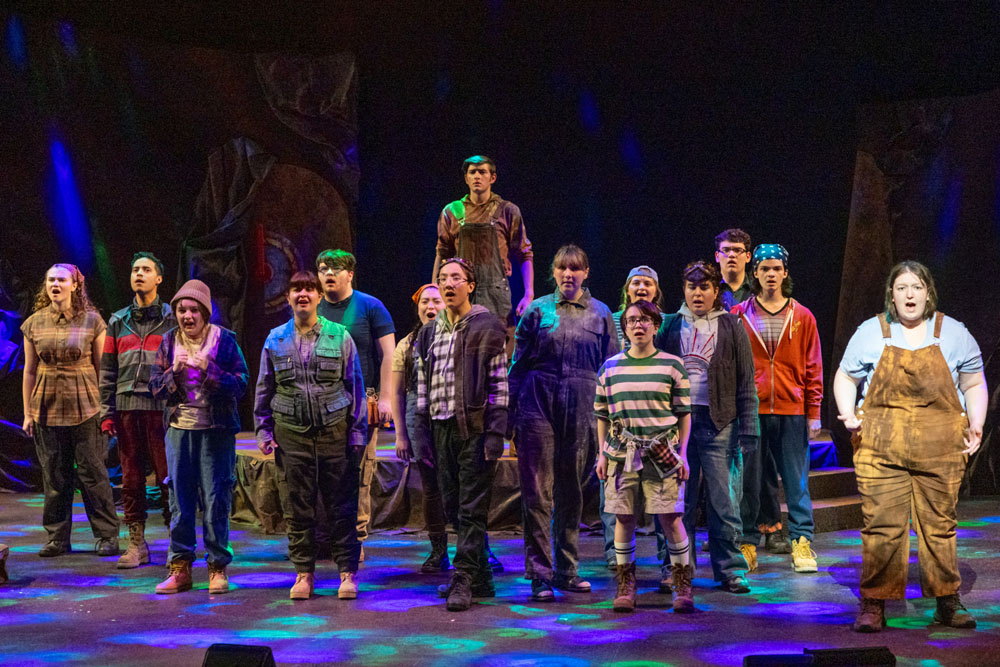
Cast members singing during a musical number
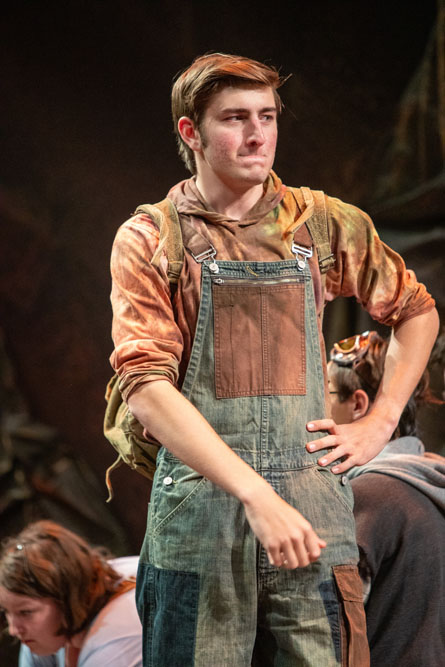
Colin Gilligan as Jester
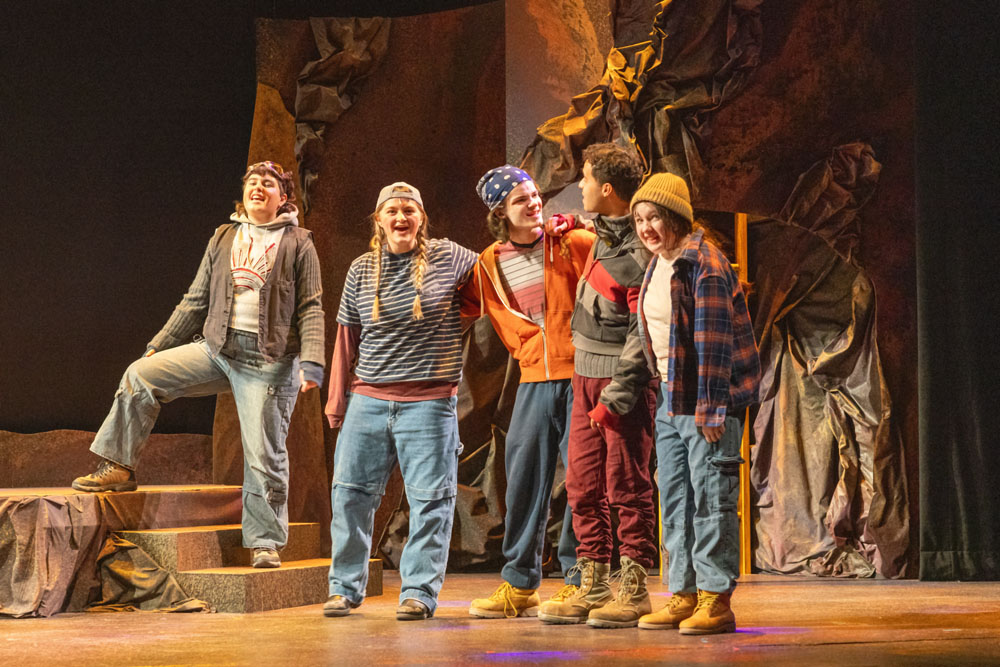
Cast members perform during "The Burrow"
When dozens of children grow up deep underground, isolated from adults, how do they develop community, order, and a sense of safety? “The Burrow,” written and directed by communication, film, and theatre (CFT) Lecturer Melanie Guerin, is a gripping coming-of-age musical exploring power, struggle, and perseverance. The play held five performances in the Fine Arts Instructional Center’s Proscenium Theater from April 22 through April 26.
When the children’s “Guardians” left and never returned, the group was forced to continue life with only the guidance of a rule book the Guardians left behind. The musical follows the children as they face radical change within their enclave as well as forces from the outside world, challenging everything they thought they knew.
“While the circumstances may be strange to us, the questions that the characters in ‘The Burrow’ grapple with are universal,” wrote Guerin in her director’s statement. “What does it mean to be a good person? That we’re doing the right thing? How do we decide what to believe? ... There are no villains – just people doing the best they can.”
Older, played by senior CFT major Zoe Calhoun, was tasked with leading the group through radical change, crisis, and riveting plot twists. “While Older genuinely cares about the people in the ‘Burrow,’ she expresses care through structure and control rather than warmth."
Younger, played by junior pre-early childhood education major Nicole Gallacher, is Older’s conveniently named younger sister. “We got close throughout the [production] process," said Gallacher of Calhoun. "She now feels like a big sister I can look up to in real life too.”
First-year business administration and CFT major Colin Gilligan described his character, Jester, as a mix of Peter Parker and an "older cousin archetype."
Gilligan also touched on the importance of providing creative opportunities to students. "They can help people find their voice, their family, and even find themselves," he wrote. "I think that's a gift."
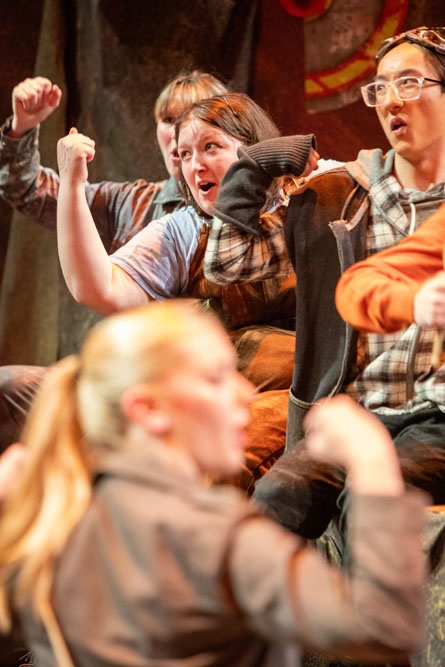
Another important element of the story is its music, also written by Guerin. Calhoun touched on the importance of song in the performance.
“Songs carry so much of the storytelling,” she explained. “The dialogue builds foundation, but the music is where characters fully express their emotions, motivations, and turning points.”
Calhoun’s favorite numbers were “Roll Call,” which introduced the main characters and included instruments on stage, and “Climbing a Tree,” in which Jester and Ember, played by first-year CFT major Neave Hinckley, reflect on personal growth.
In “Roll Call,” First-year CFT major Austin Coporale, who played Rocket, appreciated how Guerin included characters using everyday items and tools as instruments. “Using the tools as instruments was a really fun and creative way to show the dynamic between the people in the burrow,” he wrote.
Guerin also explained how her music enhanced the play. “To me, the best art involves taking some kind of risk,” she said. “My favorite moments have been when an actor takes a brave step and does something they didn’t know they were capable of, like belting out a high note or having a really vulnerable acting moment.”
Gilligan added that "the most challenging aspect of the entire process was singing itself. I don't consider myself a strong singer, but over the course of 2 months, I slowly grew more comfortable with it. I definitely consider it my greatest triumph."
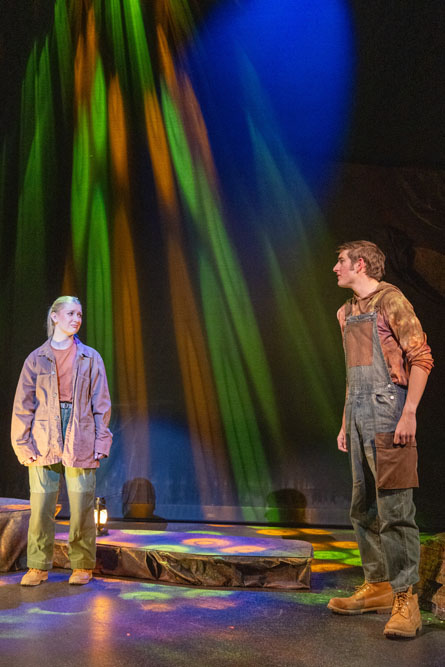
Adding to the immersion within the underground realm of “The Burrow” was its set design. Lighting technology specialist and CFT Lecturer Tim Golebiewski, the play’s set designer, started work on the set before casting began. He explained that the process had many moving parts and played a critical role logistically.
“The biggest challenge was bringing a cave environment to life on our stage while being mindful of budgetary and labor requirements,” he explained. “To do this, I created a design that included many upcycled elements from previous productions.”
To create a visually appealing set that actors could interact with, Golebiewski’s responsibilities included analyzing the script for set needs, sketching, virtual renderings, and coordinating student teams to bring the set to life.
Costumes also played an important role in the play’s production. In addition to Gallacher’s onstage role as Younger, she also worked as a costume construction crew member.
“I got to work on my own costume, which was really cool. I hemmed the shirt and pants I wore as Younger and I got to work on a lot of my friends' costumes,” she wrote. “That made the show even more special to me.”
Calhoun returned to acting after several directorial projects. During the fall 2025 semester, she directed and reimagined Jean-Paul Sartre’s timeless classic “No Exit,” followed by a co-directing project on Annie Ernaux’s “Happening.” She also served as assistant director of “Eurydice” in fall 2024, being mentored by Golebiewski.
“It’s been really refreshing to return to acting,” Calhoun said, explaining how her experiences directing changed her approach to acting. “I started as a performer, so being back on stage, especially working with a large ensemble, has reminded me why I fell in love with theatre in the first place.”
Gallacher has had extensive acting experience throughout middle school and high school, but Younger was her first lead role.
“’The Burrow’ was also fun because it was pretty much new to everyone,” she wrote. “When we performed it, most people didn't know the plot, so it was a privilege to help tell a story no one knew.”
“The study of acting is the study of yourself,” Guerin explained. “You can’t be a good actor until you really know who you are. I think all art gives us a way to connect with each other, and musical theater in particular is such a complex art form.”