- Apply
- Visit
- Request Info
- Give



Written by Savannah Striano '26
Published on April 07, 2026
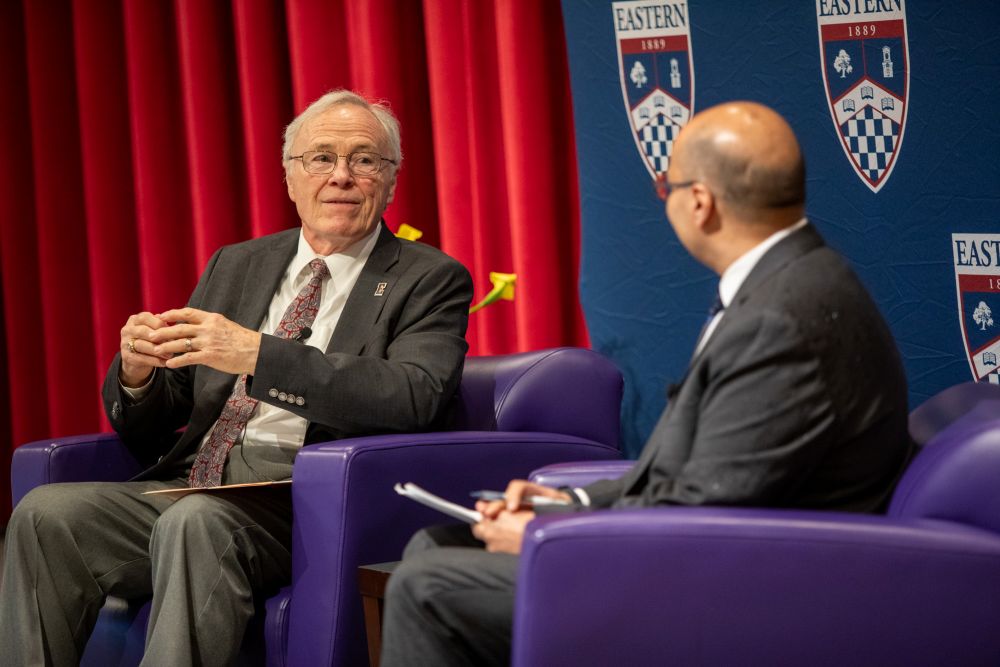
Is the purpose of the liberal arts in higher education to prepare students for their first job, or to shape them into thoughtful, productive citizens in the long term? This question is central to the work of Richard Detweiler, author of “The Evidence Liberal Arts Needs: Lives of Consequence, Inquiry, and Accomplishment,” who visited campus for a special presentation on April 1.
A public liberal arts institution, Eastern hosted Detweiler for a University Hour talk moderated by President Karim Ismaili, titled “The Future of the Liberal Arts,” which discussed the real-world impacts of a liberal arts degree.
Detweiler is president emeritus of both Hartwick College and the Great Lakes Colleges Association. He is also the founder and managing director of HigherEd Impact, a nonprofit organization that helps colleges and universities strengthen their educational missions through evidence-based practices.
After attending and building his career at liberal arts institutions, he continued his scholarship in retirement, focusing on how colleges can better understand and measure the long-term outcomes of a liberal arts education — not simply through jobs or starting salaries, but through the ways graduates lead meaningful and impactful lives.
Detweiler began the conversation by outlining the purpose behind his research. Although the liberal arts have existed for centuries, their value is often questioned in a world focused on “earning a maximum salary as quickly as possible,” he said.
The Dual Structure of a Liberal Arts Education
In his research, Detweiler emphasizes that a liberal arts education cannot be reduced to a single definition or to coursework alone. Instead, it is shaped by two key elements: academic breadth and the “context of education.”
He further noted that this approach includes engaging with complex and challenging issues, highlighting that the academic component of a liberal arts education is intentionally broad and designed to push students to think critically and deeply.
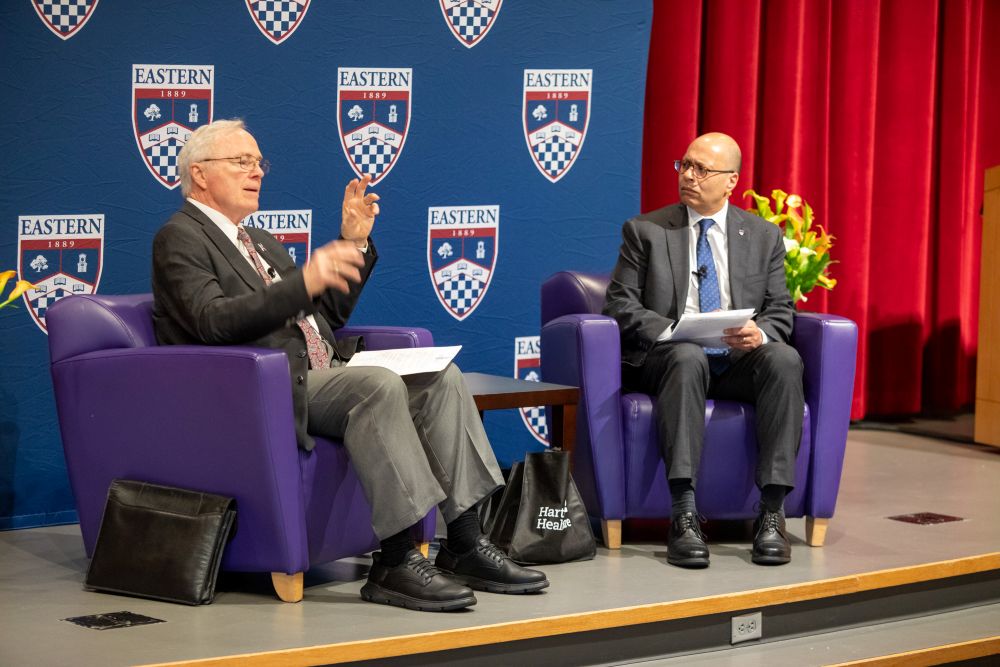
Richard Detweiler (left) speaks with President Karim Ismaili during the University Hour event.
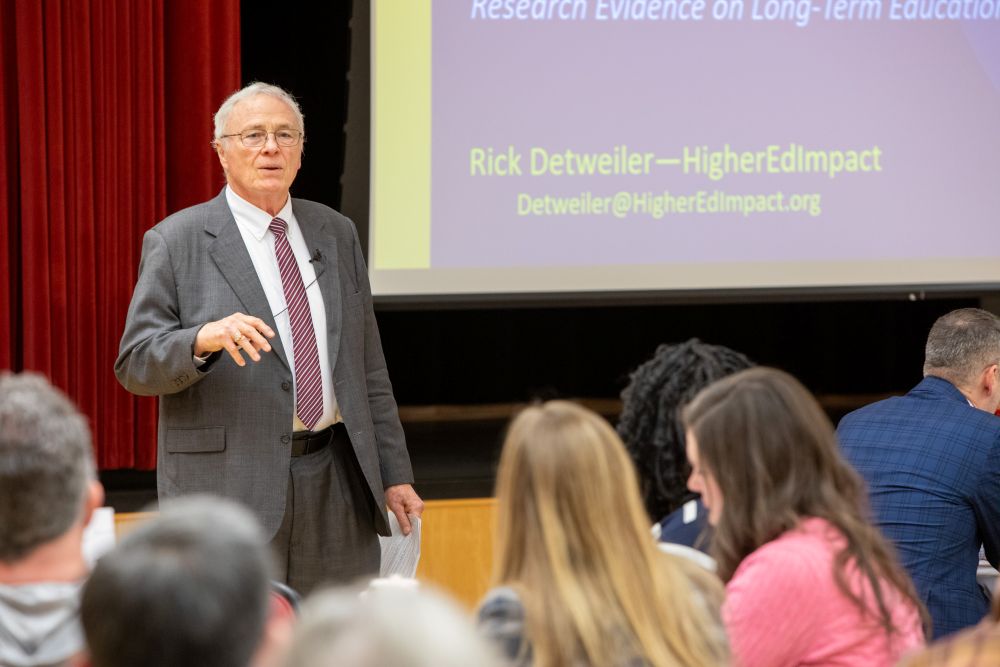
Richard Detweiler meets with faculty to discuss the long-term impact of a liberal arts education.
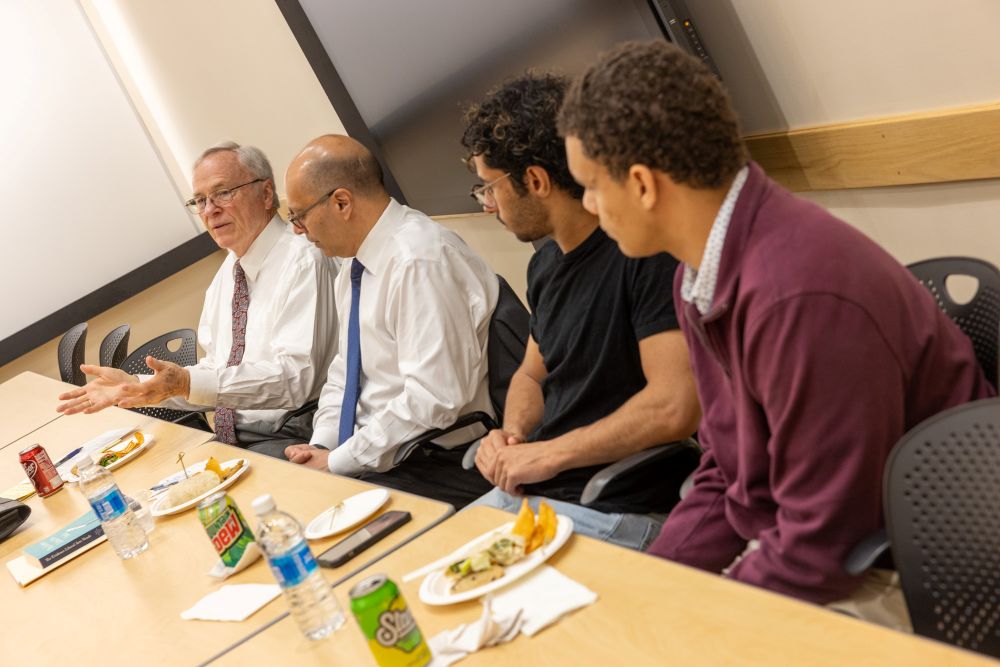
Richard Detweiler (left) meets with Eastern students.
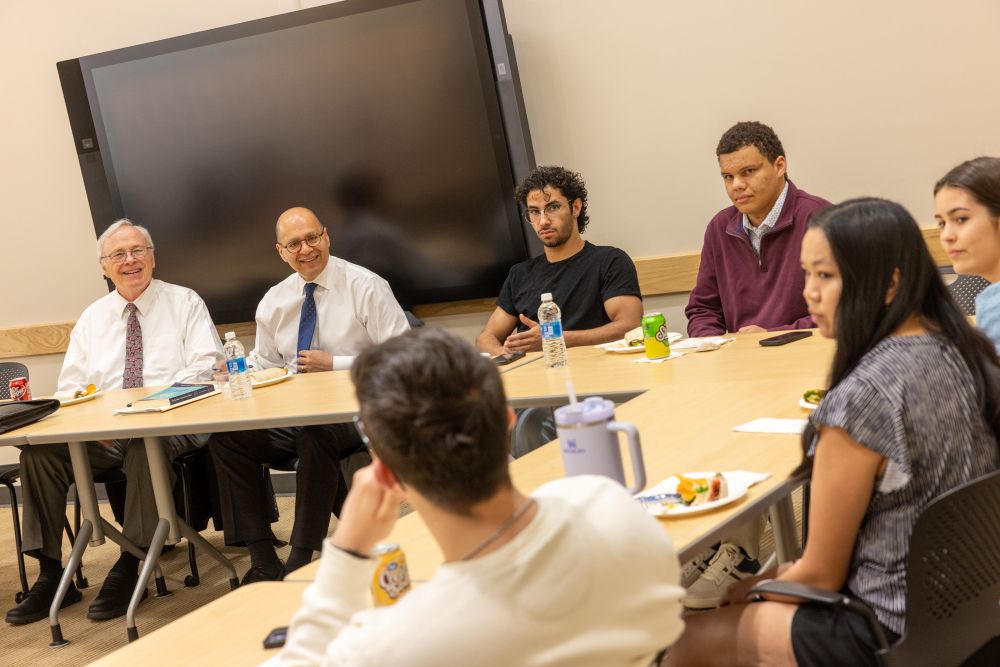
Richard Detweiler (left) and President Karim Ismaili meet with Eastern students.
Academic breadth is the requirement for students to take courses outside their major. “There are things you need to learn before you specialize,” said Detweiler. “Regardless of the work or field you pursue, you should be educated broadly across the span of human knowledge.”
Equally important is what Detweiler calls the “context of education,” the relationships and experiences that happen outside the classroom. “Student engagement extends beyond academics,” he said, noting that interactions with professors during office hours, mentorship from staff, and connections with peers all help shape this broader educational experience.
To better understand this, Detweiler interviewed graduates and surveyed adults ages 25 to 65, examining factors such as civic involvement, leadership, and overall life fulfillment. His findings showed that the integration of academic and social experiences is a strong predictor of positive long-term outcomes.
He also noted that while students at large universities can seek out these experiences, they are more naturally fostered at institutions like Eastern Connecticut State University, where smaller classes and a close-knit community more easily support deeper connections.
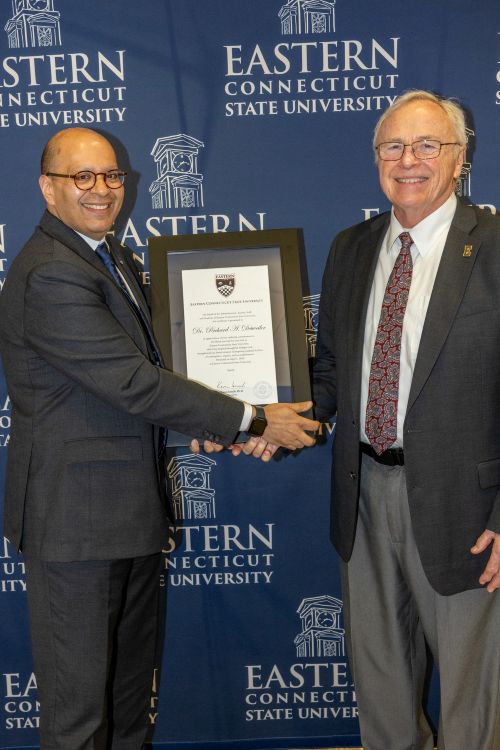
Detweiler argues that a liberal arts education may not guarantee the perfect first job, but it equips students for meaningful, engaged lives while also benefiting from internships and hands-on experiences that support workforce readiness.
He emphasized that the impact of a liberal arts education is especially significant for students from lower income backgrounds. Rather than being a luxury, he said, the liberal arts can be most transformative for those coming from fewer resources.
Limiting access to liberal arts education, he said, risks reducing long-term social mobility for the broader population.
Debunking ‘political’ misconception
Contrary to popular misconception, Detweiler emphasized that there is nothing political about the liberal arts.
Instead of focusing on the label, he said, "We should focus on the practices that create a liberal arts experience.”
He then added that the value of a liberal arts education depends on the audience. To prospective students, the focus is on personal growth and realizing potential; to lawmakers, the emphasis may be on civic engagement and long-term contributions to society.
Hope for the future
According to Detweiler, national research shows that today’s college students prioritize a meaningful life over personal gain. “Money and personal benefits are way down on the list,” he said. “What they’re looking for is a life that allows them to contribute to their community and live fully.”
He added that conversations with Eastern students confirmed this trend. While securing a job is important, students aspire to be engaged, contributing citizens and to lead lives filled with purpose and cultural involvement, according to his observations.
“My optimism comes from the fact that this rising generation will help bring positive change to our society,” Detweiler said, “in a way that my generation has clearly struggled to do.”