- Apply
- Visit
- Request Info
- Give


Written by Noel Teter '24
Published on March 18, 2026
Nicolas Simon, professor of sociology at Eastern Connecticut State University, has spent the better part of the last decade championing open educational resources (OERs) on and off campus. These learning materials are free for students to use and are easily accessible, residing in the public domain or under open licenses.
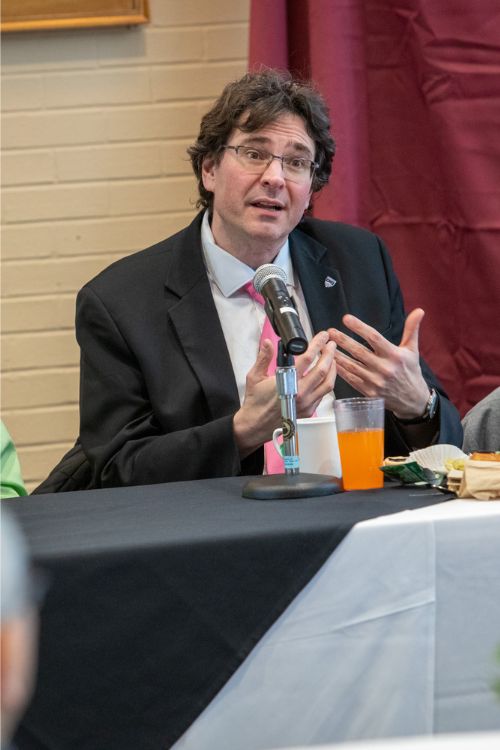
From March 2 to 6, faculty and students showcased the University’s progress in advancing OERs during “OEWeek,” a weeklong, international celebration of open education. Eastern’s itinerary for the week included student presentations, guest lectures, conversations with global students, and more.
OERs at Eastern: Simon follows Walker’s lead
Simon’s rationale for championing OERs is rooted in compassion for his students. “In my life as an educator, I have had many students who had concerns about the price of course material, such as textbooks,” he said.
His work in open education began in 2018 when Angela Walker, reference and instruction librarian at the J. Eugene Smith Library, informed him of these resources. Realizing his opportunity to make his course materials more affordable, Simon abandoned traditional textbooks in his classes, instead assigning them digitally based open textbooks.
“It is extremely important to recognize that Eastern faculty care deeply about our students,” Simon said of his colleagues, many of whom utilize OERs for their coursework. “They are committed to finding innovative ways to reduce the financial burden (on students) associated with accessing course materials.”
Simon continued: “If we look at institutional data from spring 2024, fall 2024, and spring 2025, we see that approximately 70% of courses did not require students to purchase or rent course materials. This statistic reflects the strong dedication of Eastern faculty and how much they care about student success and affordability.”
Simon also highlighted the utility of OERs as vehicles for developing best practices in research. Using the online open textbook platform OpenStax as an example, Simon described the process by which students can transform the content within these resources, attribute their sources, and publish new, open educational content with updated information.
“We give the possibility to our students to not be consumers of knowledge, but to be producers of knowledge,” he said, referring to the production of knowledge as “civic engagement.”
Students join the effort
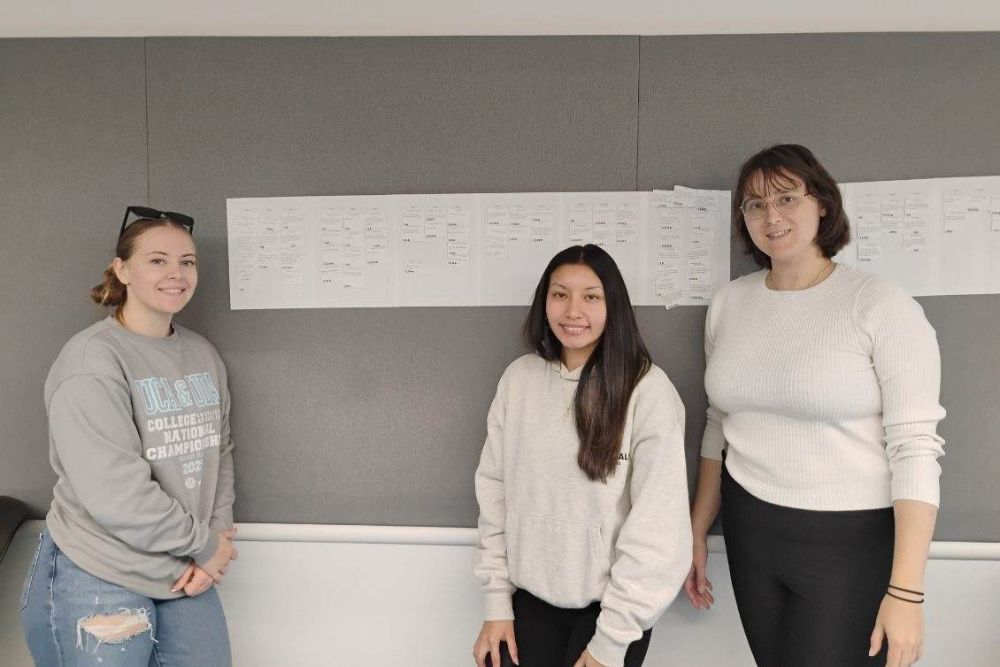
In 2019, Simon began working with his students to create openly licensed educational resources. Several, including Jennifer Croughwell ’25, have become part of collaborative initiatives to spread awareness of available resources.
“From a student perspective, open educational resources are incredibly important because they remove one of the biggest barriers students face: the cost of course materials,” said Croughwell. “Beyond cost, open pedagogy also allows students to actively participate in creating knowledge, which can make learning more collaborative and meaningful.”
Driven by this multifold inspiration, Croughwell has presented her perspective on OERs, open pedagogy, and textbook affordability at six conferences, including two presentations at last year’s Cal (California) OER Conference.
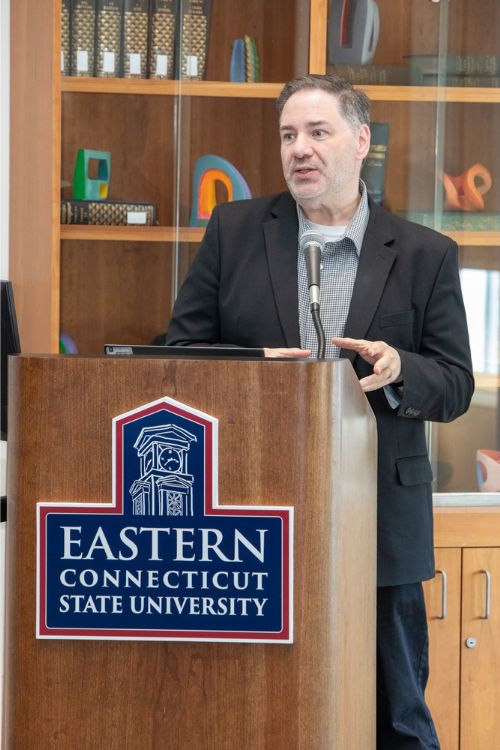
OEWeek itinerary
Simon’s collaborative journey with students led eventually to the development of a hallmark of Eastern’s “OEWeek:” the “Student OER Action Plan,” created by Simon’s students in fall 2025 and presented throughout the week.
More than 200 total students took part in a series of eight presentations of the “Student OER Action Plan” on March 2, 3, and 6. Students completed these “action plans” in breakaway groups, each presenting actions they planned to take toward promoting OERs and advancing open education at Eastern.
This March’s OEWeek events also included a keynote address from Kevin Corcoran, assistant vice provost of the Center for Distributed Learning at the University of Central Florida, on March 4. Corcoran discussed the changing higher education landscape in the digital age and how the industry can use open education and artificial intelligence to meet the needs of the next generation of students.
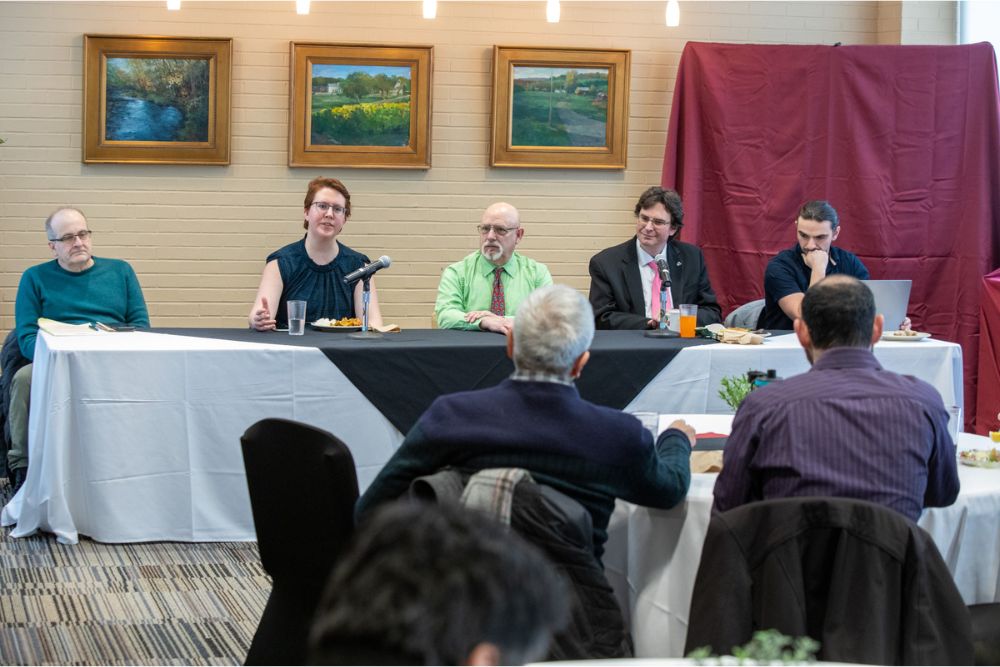
A “Lunch and Learn” session on March 5, organized by the Center for Teaching, Learning, and Assessment, featured a panel discussion by faculty members to promote open pedagogy on campus.
On-campus resources
Additionally, during OEWeek, the J. Eugene Smith Library displayed a curated selection of openly licensed materials used by Eastern faculty members for the duration of OEWeek. Angela Walker detailed the readily available resources through the J. Eugene Smith Library:
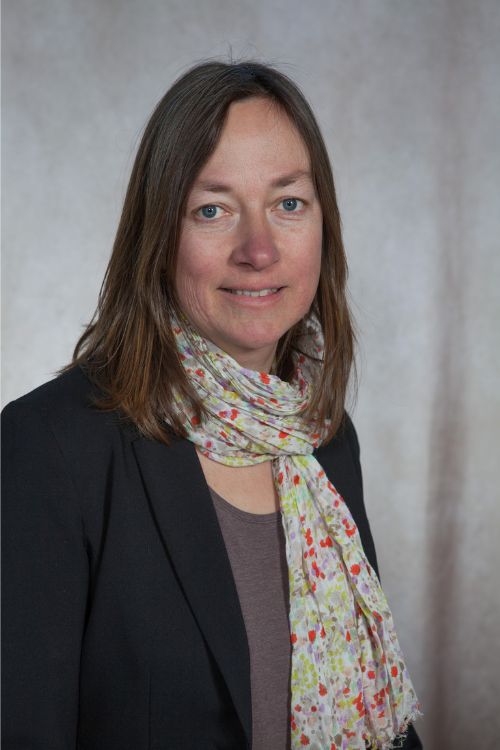
“A library catalog search for ‘open educational resources’ provides informational resources. This library catalog search also displays my library guides at the top of the results list about open licenses and the basics about OER. My ‘OER Finding Guide’ lists resources by subject.”
Walker listed several OpenStax textbooks available through the library in a variety of subjects (Anatomy & Physiology, Biology, Principles of Economics, Introductory Statistics) that the library purchased primarily to familiarize faculty members with the format.
Walker also emphasized that students who are concerned about textbook affordability may access this online “OER Student Advocate Toolkit” to prepare themselves for necessary conversations about acquiring materials they are able to access.