
- Apply
- Visit
- Request Info
- Give



Written by Elisabeth Craig '26
Published on February 26, 2026
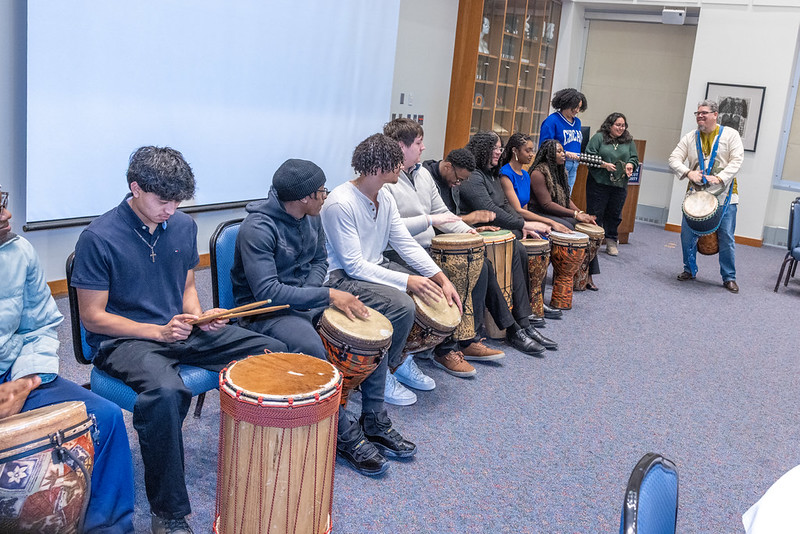
Leonard Epps leads the audience in a drum circle.
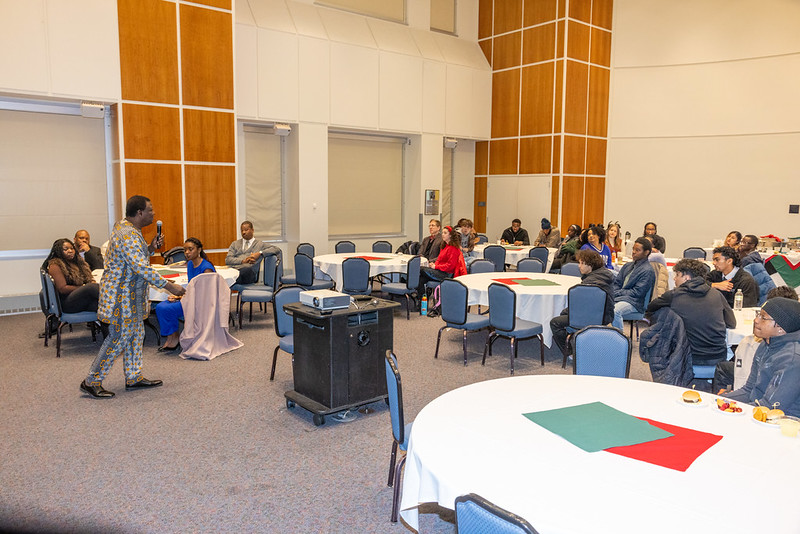
Professor Raouf Mama recites poetry to the audience.
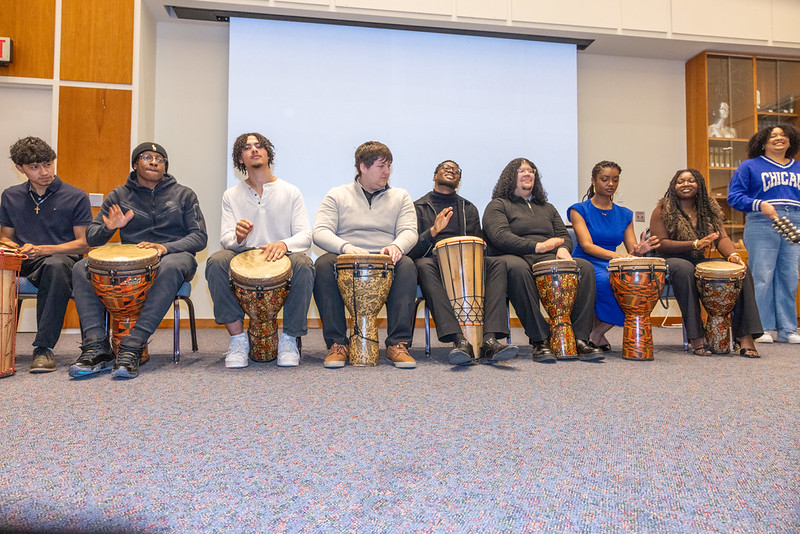
Participants have a blast on the drums.
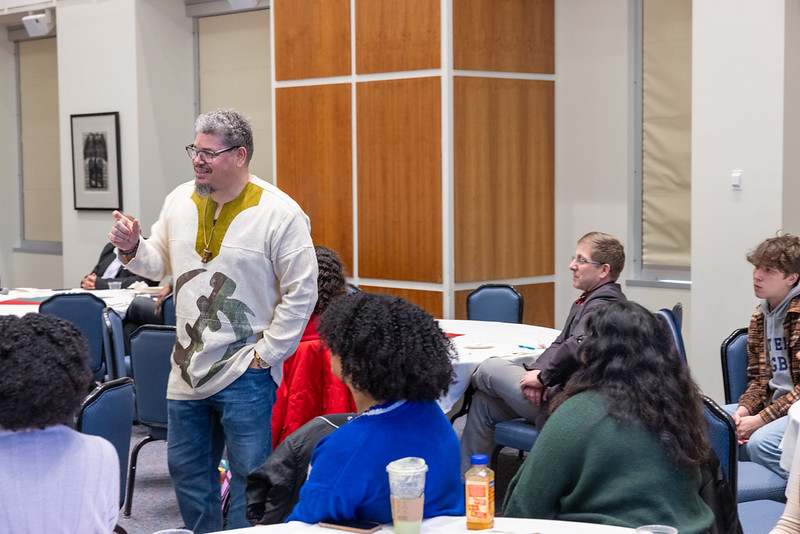
Epps addresses the attendees on personal values.
Eastern Connecticut State University celebrated the 100th anniversary of Black History Month on Feb. 25 with a celebration in the Paul E. Johnson, Sr. Community Conference Room in the J. Eugene Smith Library. The event was organized by the Office of Equity and Diversity in collaboration with Eastern’s Black Student Union and the Intercultural Center.
“African American history is not separate from American history — it is American history,” said Cliff Marrett, director of diversity and inclusion affairs.
Following a performance by the United Voices of Praise, English Professor Raouf Mama delivered a short series of poems culminating in leading the attendees in a singing of “Amazing Grace.”
Keynote Speaker: Leonard Epps
Leonard Epps is an acclaimed educator and drummer who currently serves as the President of the Brother Carl Institute for Violence Prevention and Community Engagement. His decorations include being an inductee of Connecticut's “100 Men of Color” and being a recipient of the Dr. Martin Luther King Jr. Holiday Commission Award from the Connecticut Commission on Human Rights and Opportunities.
Epps began his speech with a pulse-pounding performance on a traditional African drum, prompting the audience to clap along, and explained that it was his form of greeting.
“Playing the drum is a form of conversation, and its rhythm is a form of communication,” said Epps. “The first sound every human being has heard since the beginning of time is their mother’s heart beating like a drum, so that’s why you were all able to understand my greeting.”
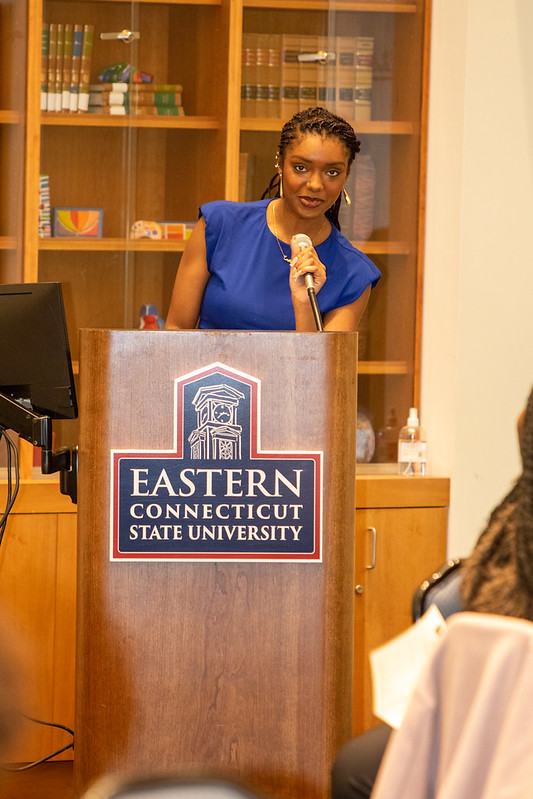
Emile Jones '27 facilitates the celebration.
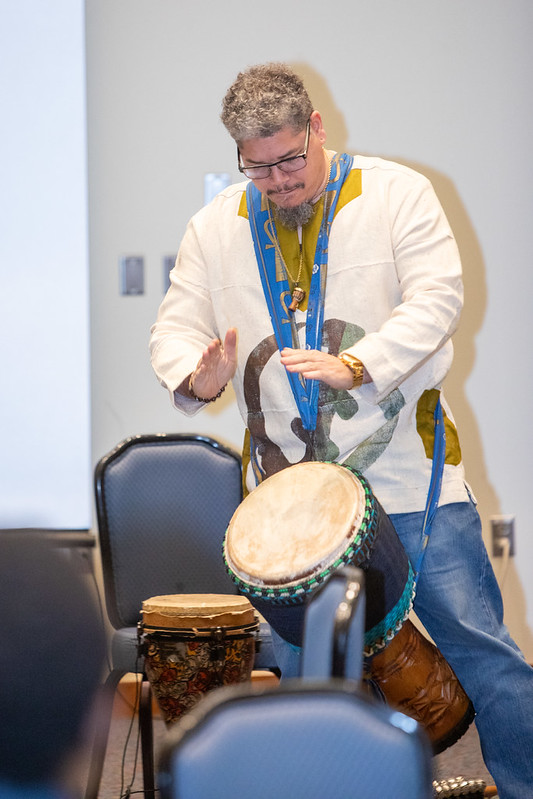
Epps greets the audience with a drum solo.
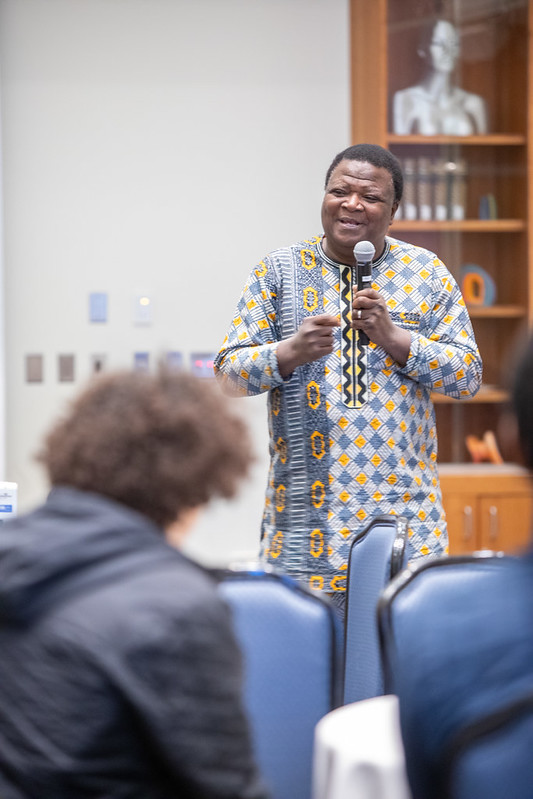
Raouf Mama entrances the audience with poetry.
Concerning Black History Month, Epps detailed how the month originally started as a week of celebrations of Black history in 1926.
“No one gave us Black History Week; we chose it,” said Epps. “We have Black History Month in February because of the birth of Abraham Lincoln, and because (abolitionist) Frederick Douglass chose Feb. 14 as a birthday for himself.”
Epps urged the audience to champion values that figures like Douglass and Dr. Martin Luther King, Jr. possessed. Beginning with discipline, Epps encouraged audience participation to define what it means to hold oneself accountable.
“Discipline is doing what you hate to make it look like you love it,” he said. “If you master discipline, it will impact how you move in the future.”
Epps defined respect by its etymological roots: “When you put those two words together —‘re’ and ‘spect’ — it means to look again.”
He continued: “If you don’t respect who you are, can you properly respect and connect with somebody else? When you study your own history and culture, you know who you are — and that allows you to unite and respect one another.”
Epps concluded the ceremony by inviting audience members to step up and play on various African drums and percussion instruments together as a community.
“The drum is about expression. It’s about taking a chance and being heard,” he said. “When you play by yourself, it means nothing. When you practice together, it becomes something.”