
- Apply
- Visit
- Request Info
- Give



Written by Elisabeth Craig '26
Published on February 10, 2026
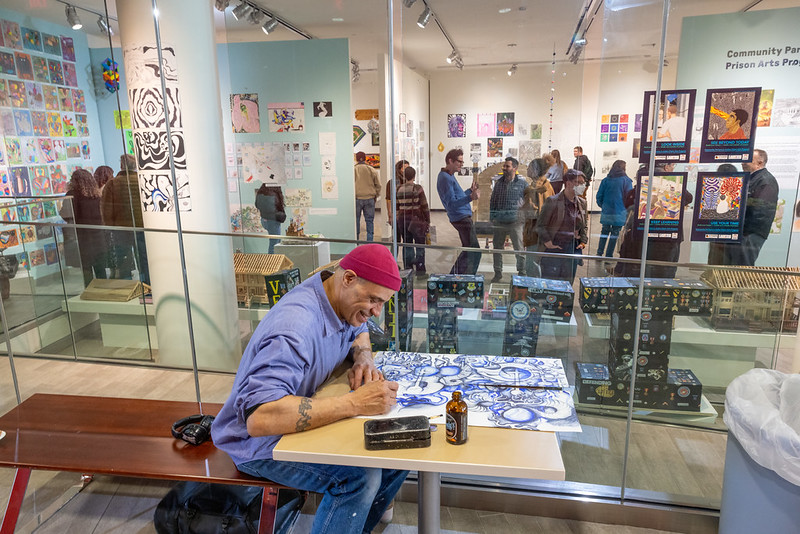
Danny Killion displays his artistic talent at gallery reception.
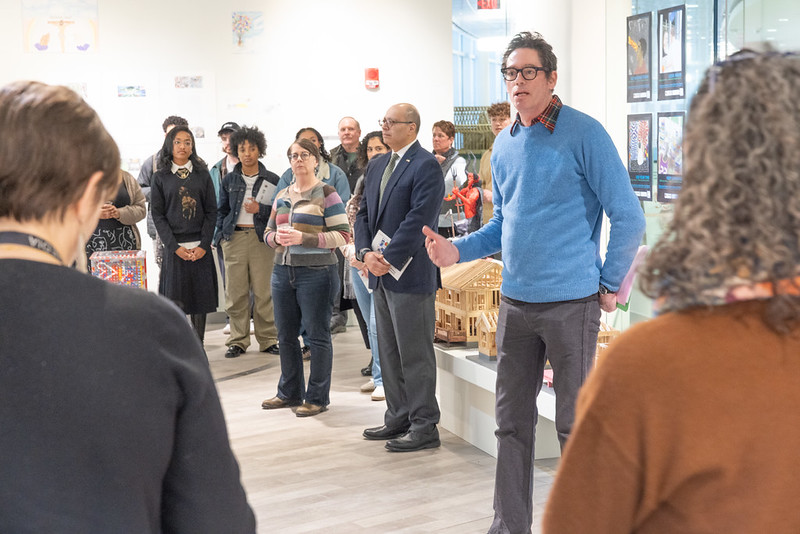
Prison Arts Program Manager Jeffrey Greene delivers remarks at the gallery reception.
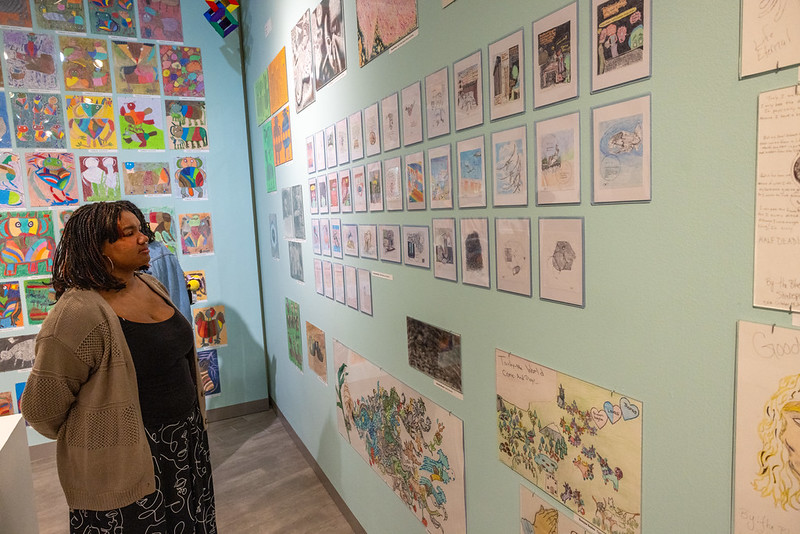
A gallery attendee admires prison-made artwork.
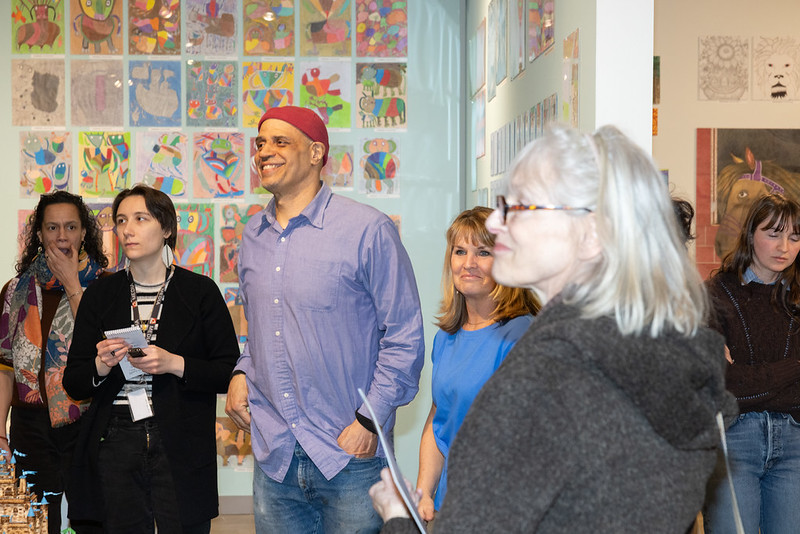
Former inmate Danny Killion at the reception
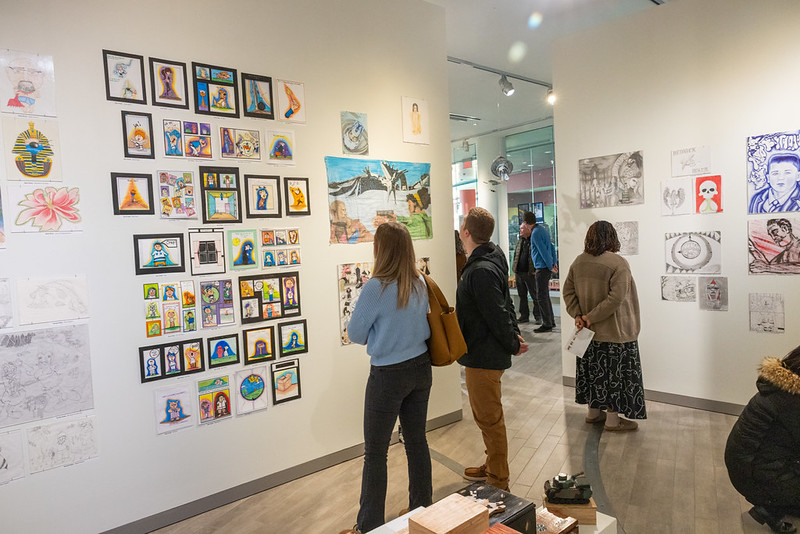
Art gallery attendees admire creativity expressed from behind bars.
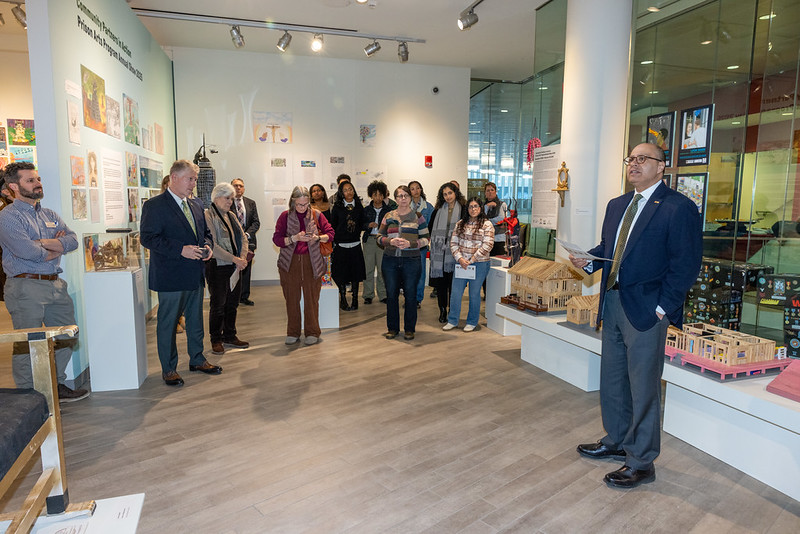
President Karim Ismaili delivers opening remarks at the shows's Feb. 5 reception.
The Art Gallery's latest exhibition, featuring the Prison Arts Program's annual show, was a robust display of mixed works highlighting the talents of incarcerated artists. Closing on Feb. 28 and organized by Community Partners in Action (CPA), the show featured more than 600 pieces by 160 artists from nine Connecticut correctional facilities.
Founded in Connecticut in 1875, CPA is one of the nation’s oldest criminal justice organizations focused on supporting formerly incarcerated individuals' re-entrance into society.
According to Prison Arts Program Manager Jeffrey Greene, the introspective artworks were created as an antithesis to the harsh environment in which they were made.
“These works are documents of a struggle in an insane environment,” said Greene. “Prison is a terrible reality, but the ability to create art changes that environment.”
He continued: “I expect greatness from everyone who participates in this program. ... All of this art comes from people simply trying to feel like human beings.”
Artist and Prison Arts Program alum Danny Killion, whose artwork has been previously featured in the annual show, emphasized the need for prison arts programs to show that imprisoned individuals need a creative avenue to heal.
“Art can help you heal from some of the traumas that caused you to commit a crime,” he said. “An incarcerated artist is still an artist.”
Killion continued: “When you get involved in any kind of creative endeavor, it forces you to be introspective. You have to look inside yourself and think about what you’re up to.”
Bryan Moore, a recently released artist, described how his love for portraiture served as a form of escapism from his surroundings.
“I started doing portraits to send love to my family and making art for guys who hadn't seen their kids in 30 years,” said Moore. “Every hour we spend creating is an hour we’re not re-offending.
“Every selfless action replaces a selfish one. Art won’t undo what we did, but it replaces antisocial behavior with prosocial behavior.”
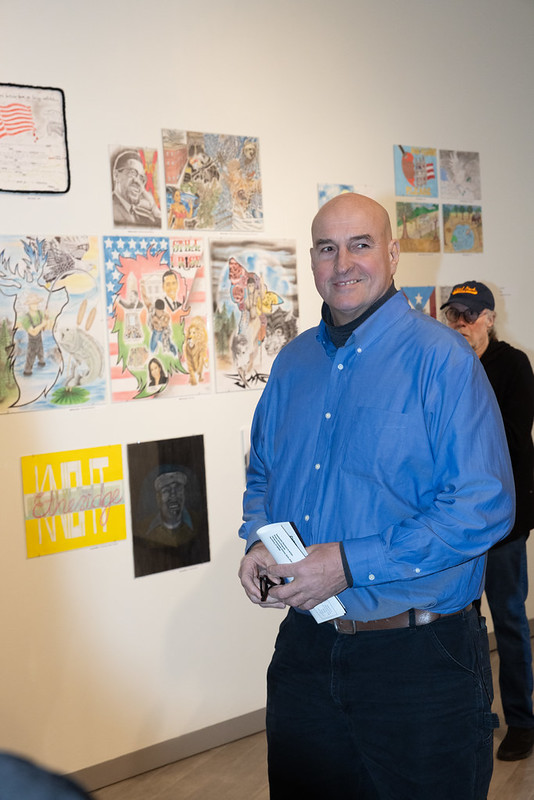
A gallery attendee enjoys the reception.
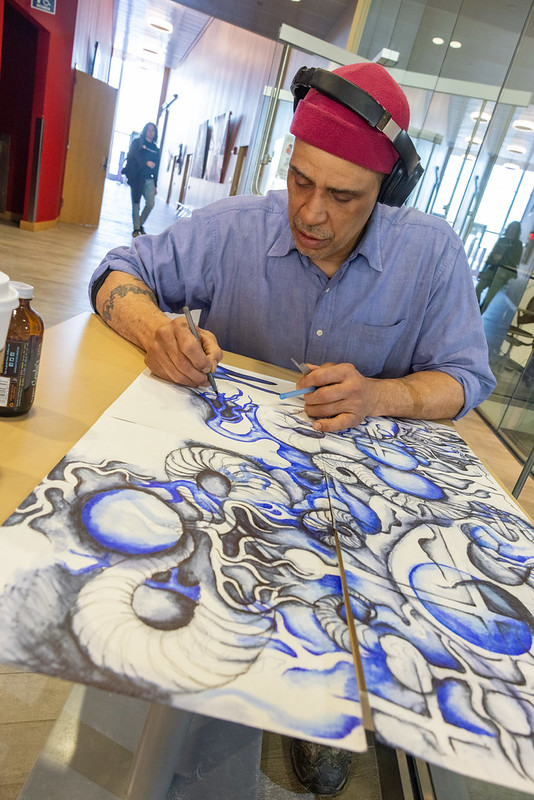
Danny Killion shows an attendee his free-range pen and ink drawing.
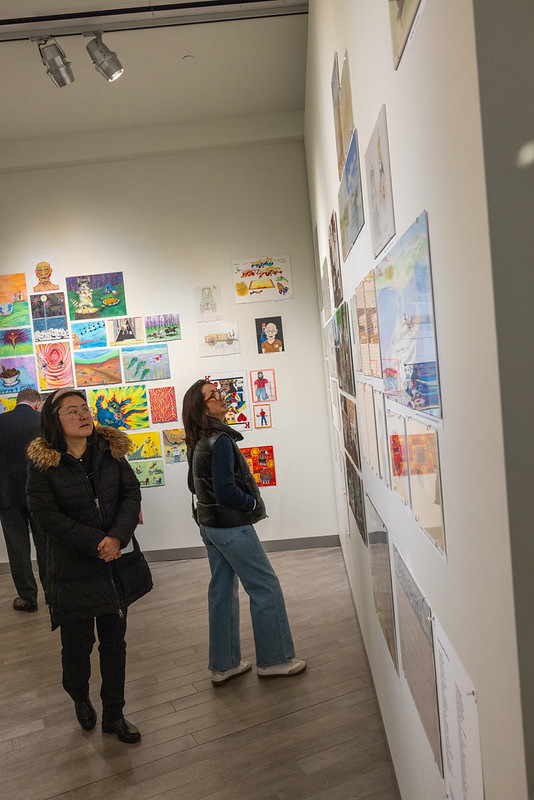
A gallery attendee enjoys the reception.
Eastern President Karim Ismaili offered reflections during one of the show's two receptions.
“This artwork, created in very difficult circumstances and often with limited materials, speaks clearly to imagination, persistence, and humanity,” said Ismaili. “It invites us to look more closely, reflect more carefully, and consider what is possible when people are given space to change. ... People are not defined by a single moment of interaction with the justice system.”
He continued: “These shows help people recognize that some of those (artists) may have harmed us, but they’re still healing; they’re human.”