- Apply
- Visit
- Request Info
- Give



Written by Elisabeth Craig '26
Published on February 02, 2026
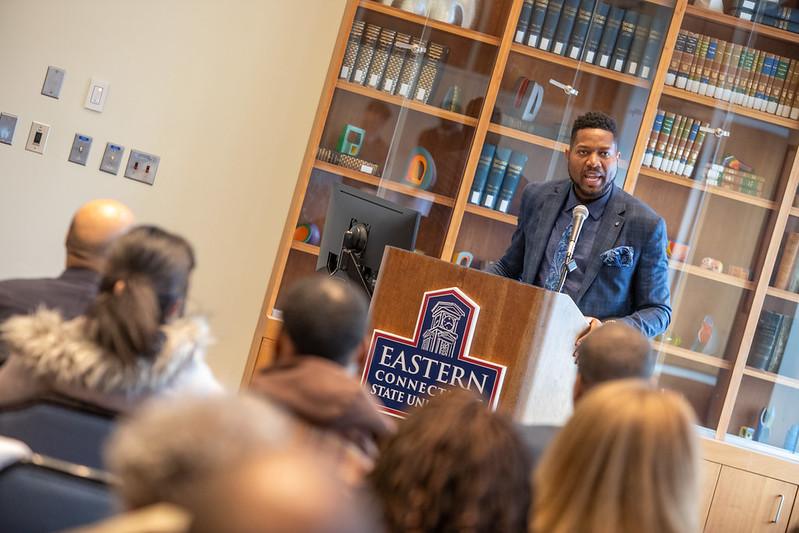
Connecticut State Senator Herron Keyon Gaston gives his keynote address.
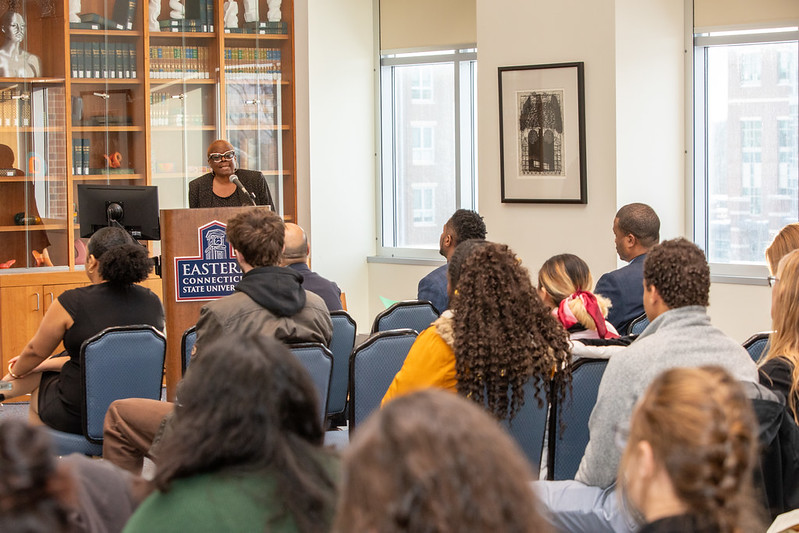
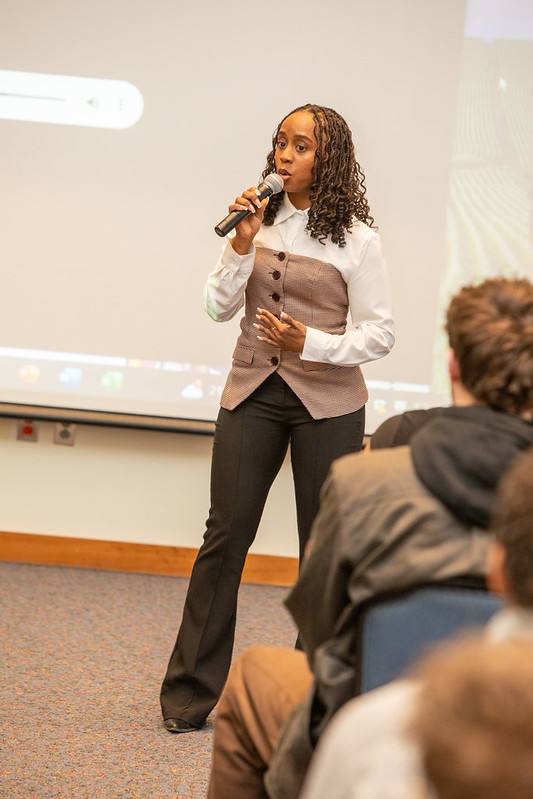
Windham/Willimantic NAACP President Leah Rall gives remarks.
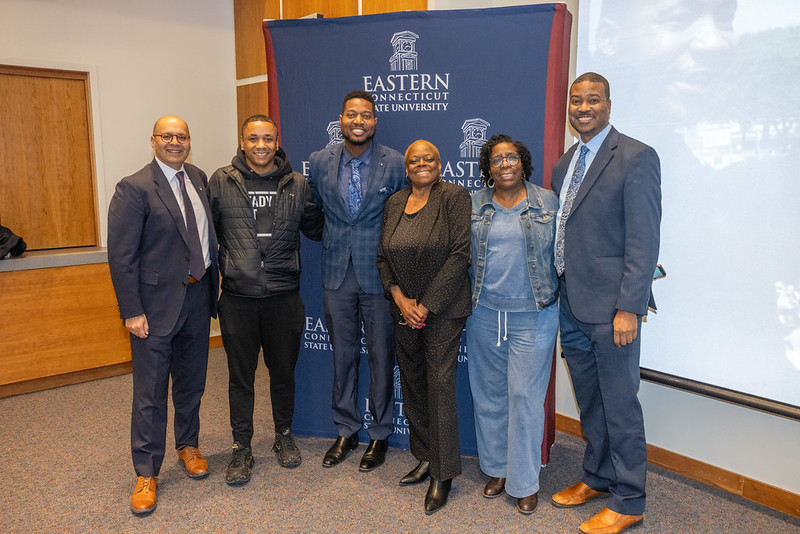
Karim Ismaili (left), Senator Herron Keyon Gaston (middle), Leah Rall (middle right), and Vice President LaMar Coleman (right)
Spellbinding speeches and riveting musical and poetic tributes filled the Johnson Room in the J. Eugene Smith Library during Eastern’s annual Dr. Martin Luther King Jr. Celebration on Jan. 28.
The Office of Equity and Diversity hosted the celebration in collaboration with the Windham/Willimantic NAACP, Eastern’s NAACP student chapter, Men Achieving Leadership, Excellence and Success (M.A.L.E.S.), and the Center for Community Engagement.
The celebration featured a keynote address from Connecticut State Senator Herron Keyon Gaston and was emceed by Nyla Graham, student ambassador for the Intercultural Center. Both credited King’s legacy and dedication to social justice for helping them achieve their own “dreams” academically.
Graham’s opening remarks touched on King’s dream of a world where access to education and knowledge was not limited by race.
“Dr. King dreamed of a world where our minds were nurtured just as much as our bodies were exploited for labor,” she said. “That dream, along with sacrifices of generations before me who refuse to accept oppression as our destiny, is the reason I am here today.”
Keynote address: “From jail to Yale”
Sen. Gaston’s keynote remarks began with a powerful testimony of his impoverished upbringing, a wrongful conviction in his early adulthood, and, despite it all, personal and professional redemption. He emphasized how his Christian faith and tenacity carried him from social ostracization to multiple Ivy League degrees at just 31 years old.
Gaston shared his once-unlikely educational journey to advocate for a system intended to unlock the potential of all students, rather than pigeonhole them based on perceived or recorded credentials.
“My story is from jail to Yale,” he said. “After poverty, false accusations, homelessness, and suspension, I return not just as a person who survived, but I reached out to become the best that I could become to make a difference in this world.” said Gaston.
“Through perseverance and faith, I've earned seven academic degrees — three of which are from Yale University, the very place that sent me a letter of dismissal before I had a day in court.”
Gaston referenced his underprivileged upbringing as proof that the cards a person is dealt with early in life are not indicative of their potential.
“I share these milestones, not as a resume, but a rebuttal to the idea that poverty defines potential and to systems that discard people instead of restoring them,” he said. “Today, as a public servant, I carry these experiences with me not as trauma to be exploited, but as insight to be honored.”
Gaston punctuated his call for academic accountability by echoing King’s belief in the role of universities as moral incubators for society, demanding that universities exemplify the inclusive American values they claim to uphold and not be subject to “bullies who hide behind suits.
King understood that education was not simply about credentials, but about waking the consciousness of the American spirit and the human soul,” said Gaston. “I know firsthand what it's like to write a letter from a jail cell, just like Dr. King wrote the ‘Letter from Birmingham Jail.’”
Gaston concluded his speech by urging the audience to live out King’s legacy, noting his tireless and biblical dedication to fighting for justice.
“If we truly honor Dr. Martin Luther King Jr., we will not just applaud his words. We will fight for more inclusive democracy,” said Gaston. “The dream is yet to be fulfilled, and we must carry the work forward."
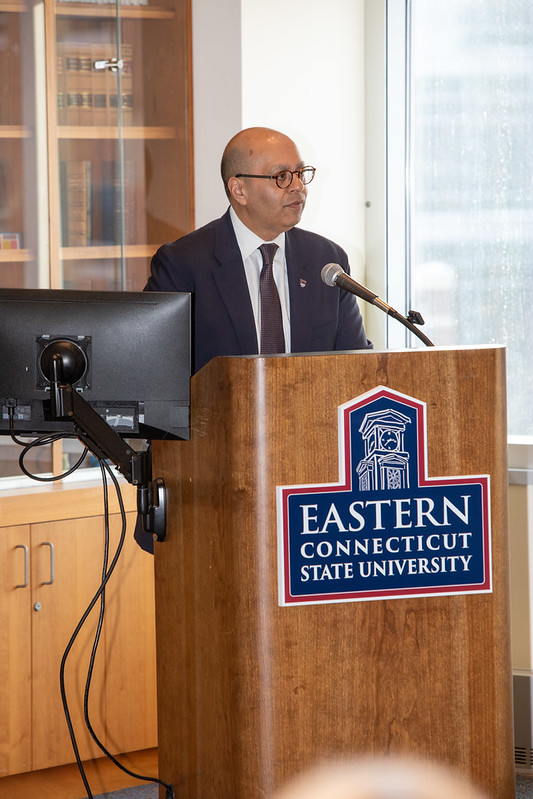
Eastern President Karim Ismaili gives his remarks.
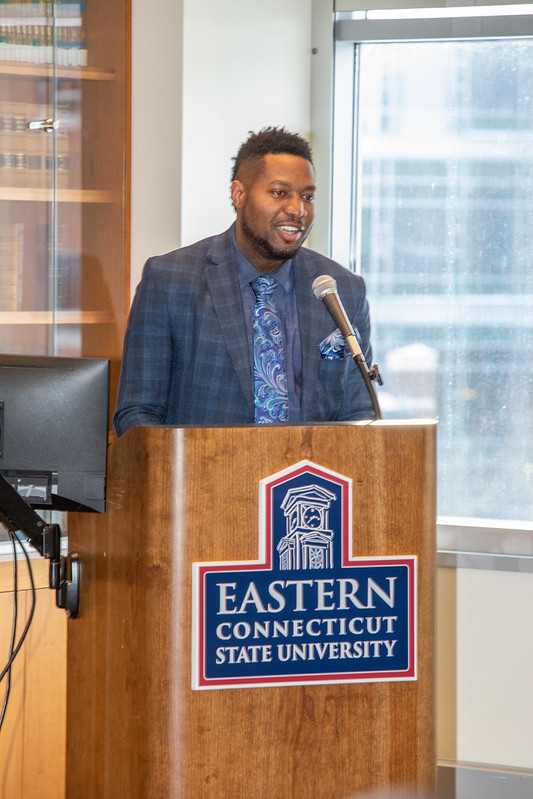
Gaston gives his keynote address.
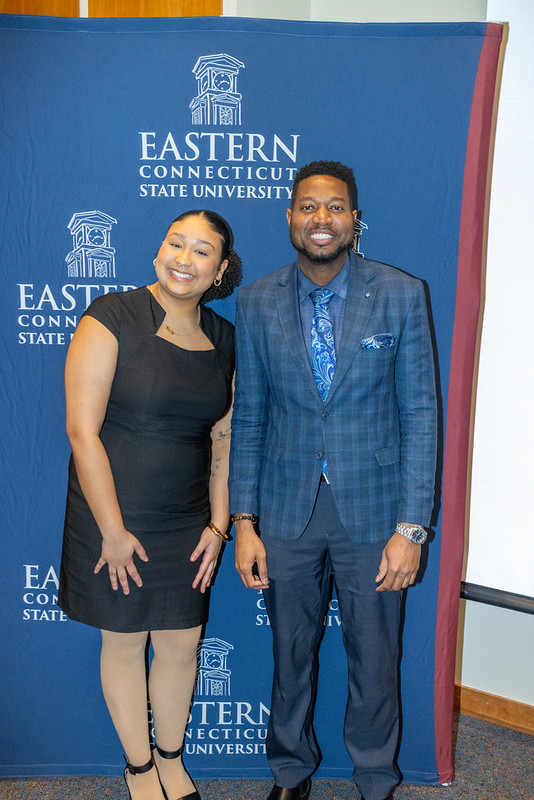
Intercultural Center Student Ambassador Nyla Graham (left) and Senator Herron Keyon Gaston (right).
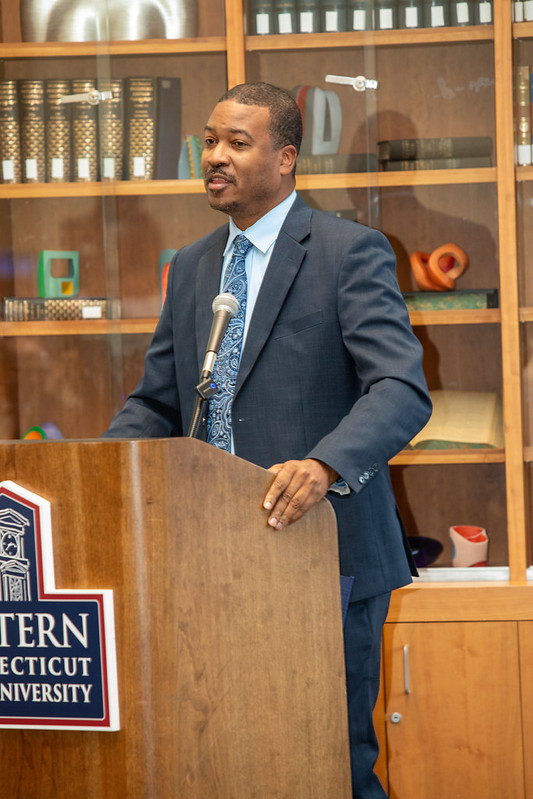
Equity and Diversity Vice President LaMar Coleman gives his remarks.
Ashlee Bowman
Reflections continue
President Karim Ismaili emphasized King’s pacifist ideals by reminding the audience that one could be peaceful and act assertively at the same time.
“As we honor Dr. King, a steadfast advocate of nonviolence, we are reminded that his commitment was not passive,” said Ismaili. “It required courage, discipline, and an unwavering belief in the dignity of every person, even in times of fear and uncertainty.”
Leah Rall, president of the Windham/Willimantic NAACP, referenced her chapter’s initiative to carry on King’s legacy with activism. According to her, each year’s activities in her chapter is given a theme, which in 2026 is “Mission: Possible.”
"This mission is dedicated to building community and a nation in a non-violent way,” she said. “We are invested in building this community to respond to adversity and injustices.”
She continued: “We will not lose faith in ourselves, our community, or God, as we follow King’s example by striving for peace.”