- Apply
- Visit
- Request Info
- Give



Written by Elisabeth Craig
Published on September 29, 2025
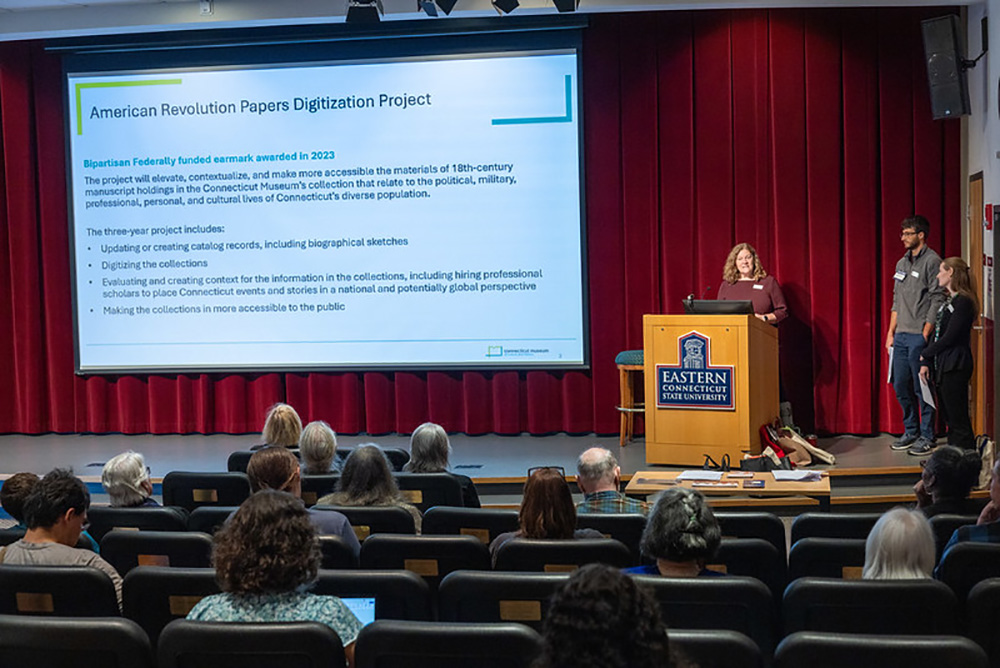
Presenters from the Connecticut Museum of Culture and History speak on historical digitization.
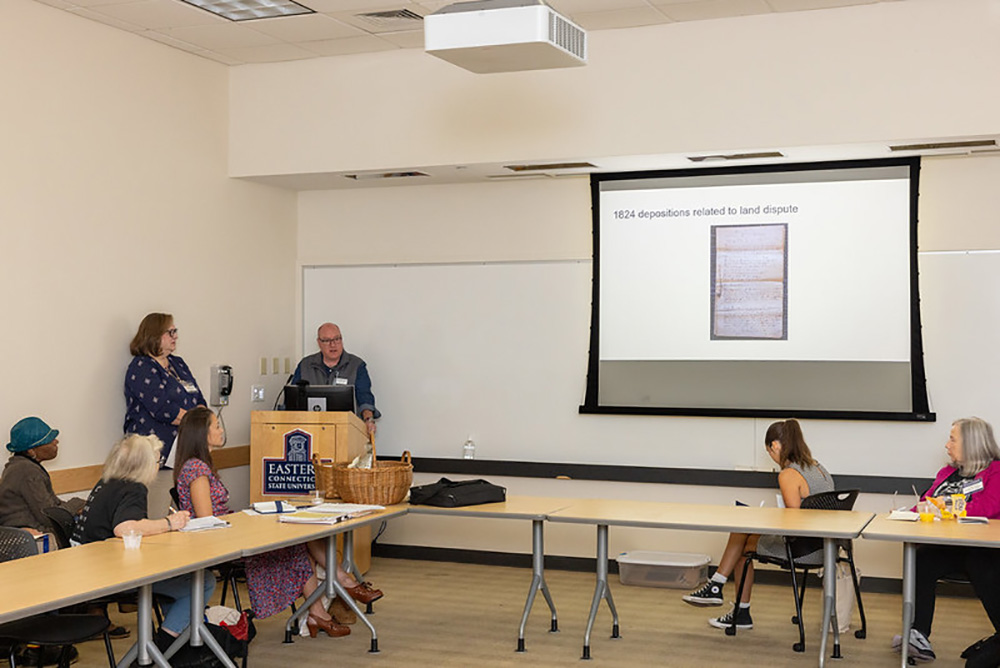
Greenwich Historical Society presents on African American genaeologies
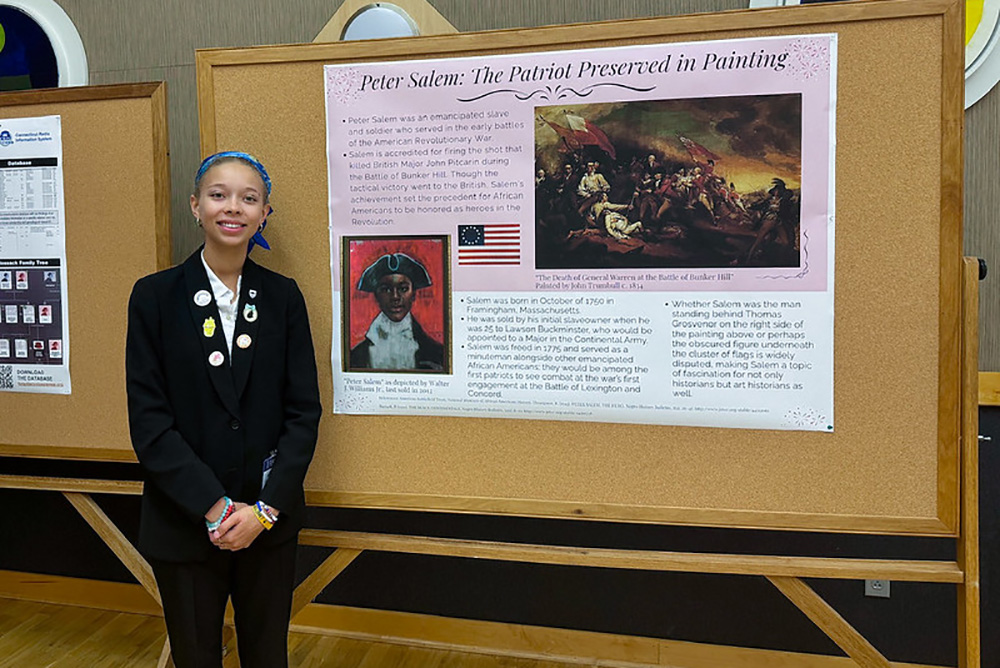
Eastern student Lissie Craig presents her research on Peter Salem.
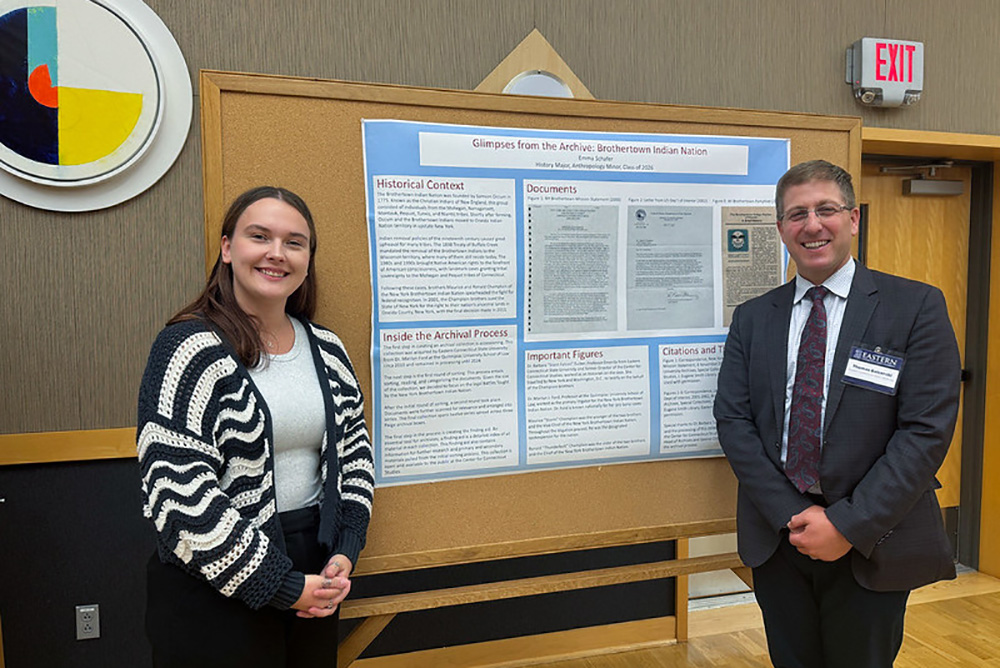
History student Emma Schafer and Prof. Balcerski by Schafer's presentation poster
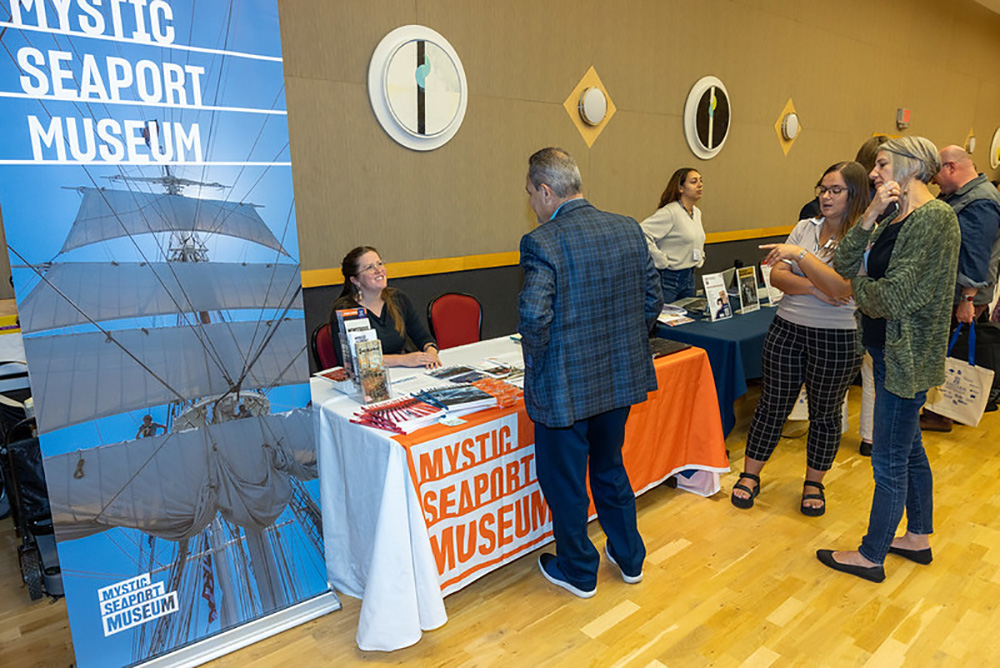
The Mystic Seaport Museum was among the conference sponsors.
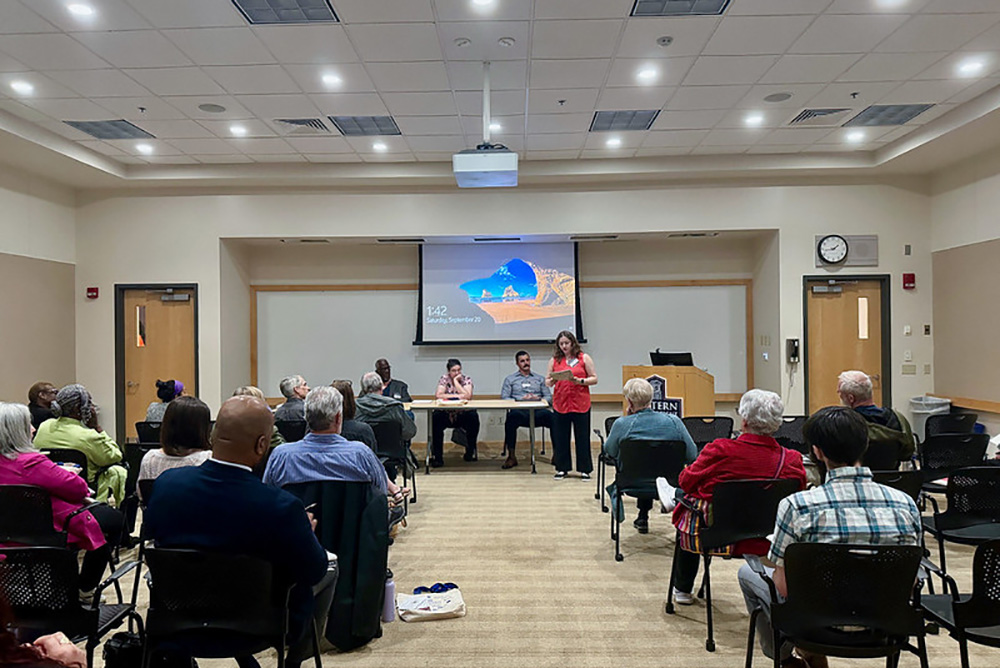
UConn Ph.D. student Brigitte Lewis presents on African American history.
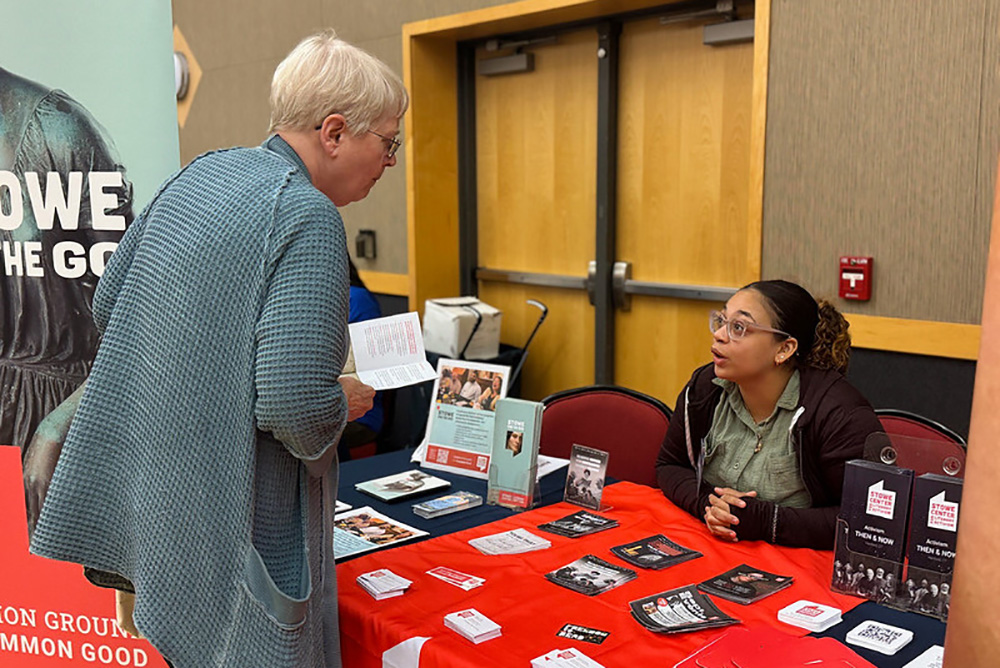
Mariangie Pena of the Stowe Center for Literary Activism hosted a vendor table at the conference.
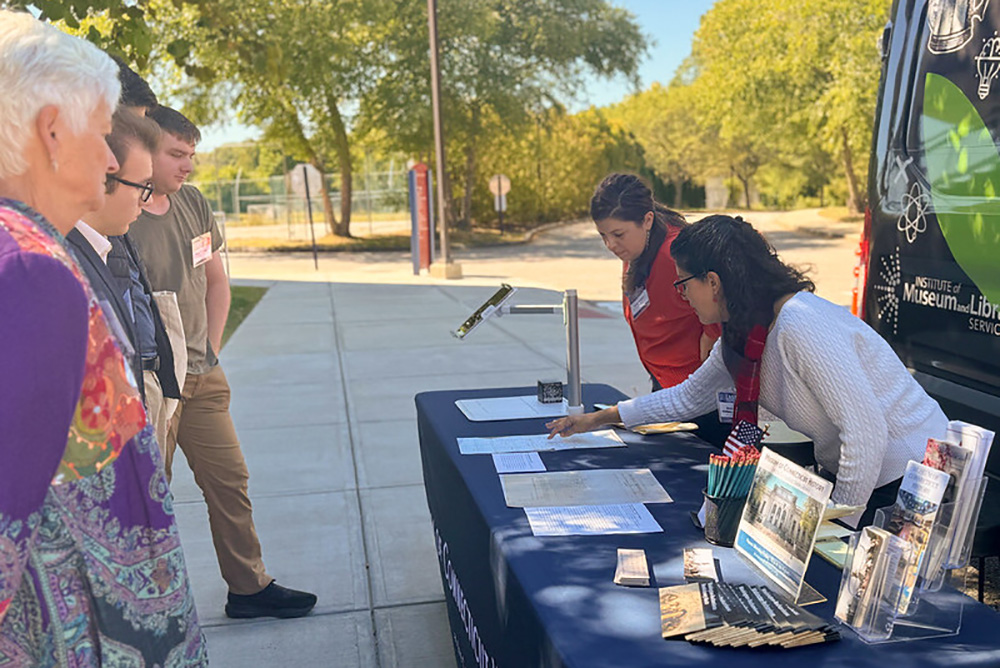
The Connecticut Museum brought its outreach van outside of the student center
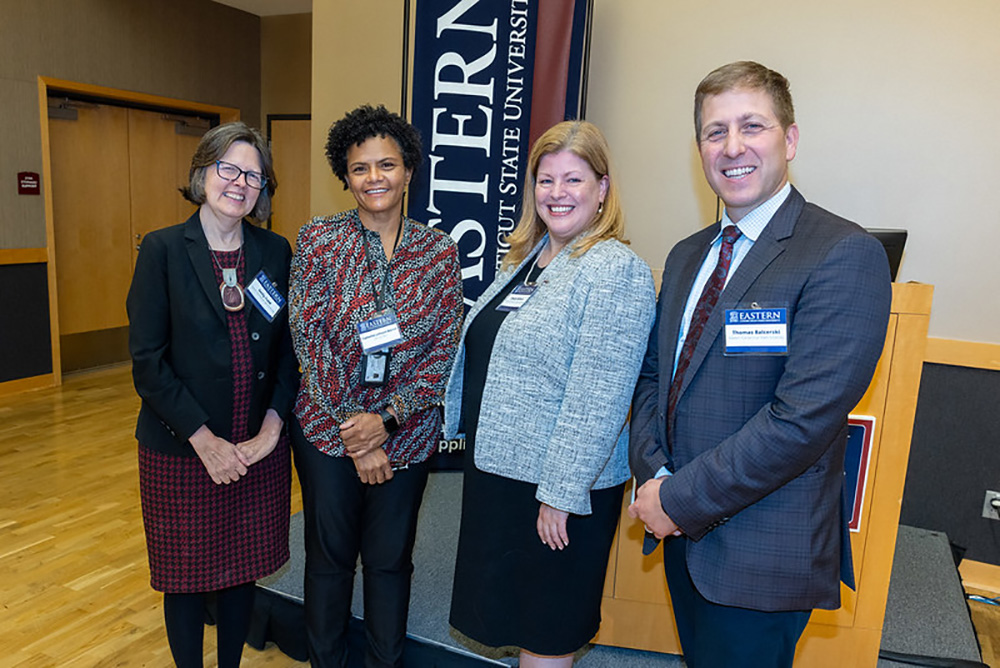
From left to right: Dean Emily Todd, Catherine Johnson Adams, Provost Cheryl Wilson, Professor Thomas Balcerski
More than 150 historians, graduate, and undergraduate students from across Connecticut filled the Student Center on Sept. 20 for a conference highlighting the forgotten histories of ethnic minorities in New England’s colonial era. “Present from the Start: People of Color in the Revolutionary Era” hosted a myriad of panels and presentations covering more than 200 years of legacy.
Panel topics included African American military service, genealogy of colonial-era slaves, and laws surrounding African Americans in the 1800s.
The conference was a collaboration between Eastern’s Department of History, the Center for Connecticut Studies, and Connecticut Explored Magazine, with sponsors including Charter Oak Credit Union, the Association for the Study of Connecticut History, the Society of the Cincinnati, Central Connecticut State University’s M.A. Program in Public History, and the Mystic Seaport Museum.
Professor Kathy Hermes, publisher and executive director of Connecticut Explored, Inc., and History Professor Thomas Balcerski, Director of the Center for Connecticut Studies, served as the primary coordinators of the conference. In his opening remarks, he compared the significance of spotlighting people of color in the upcoming 250th anniversary of the United States.
“We have titled our conference today ‘Present from the Start’ with good reason. It is a phrase that demands a place for people of color in Connecticut since its beginning,” said Balcerski. “Looking ahead to America’s 250th (anniversary), we have all been given a very valuable, special present: a rich, diverse, and proud revolutionary past.”
He continued: “The challenge for historians — and by extension, those of us assembled here today — is to recognize traces left behind for future generations.”
The conference's keynote address featured Catherine Johnson Adams, history professor at the State University at New York Geneseo.
She addressed how her studies in various facets of African American history have taught her how seemingly small legacies blend into a larger narrative. “We look at small stories individually as little things that come together," said Adams. "We need to see these small pieces and put them together to tell a larger story."
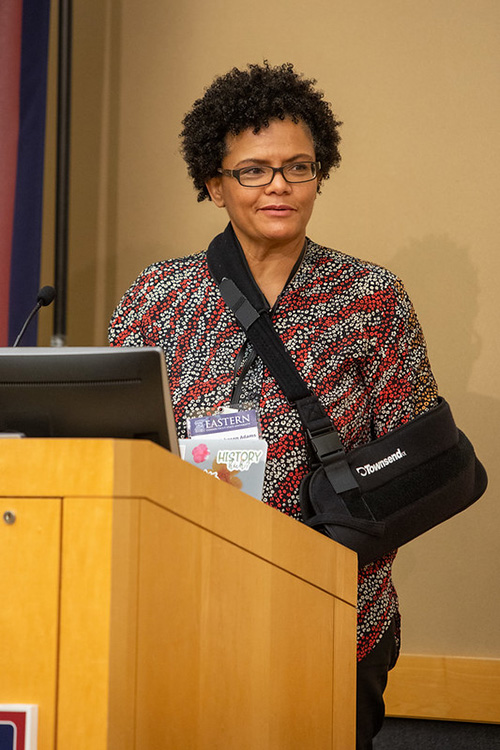
Professor Catherine Johnson Adams delivers the keynote address
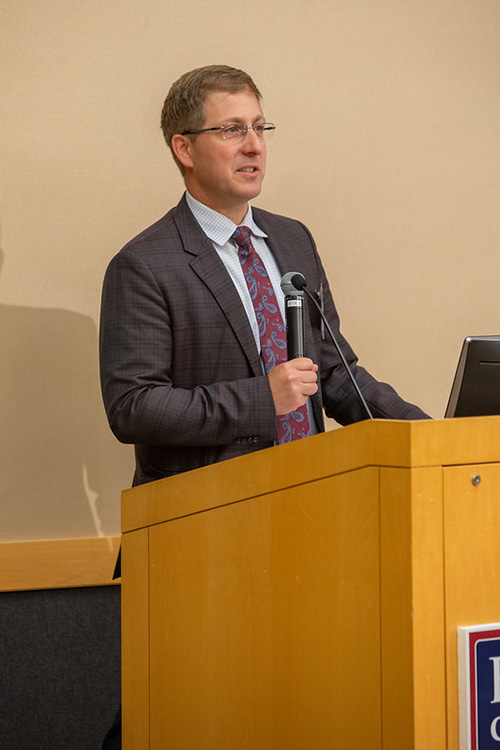
Professor Thomas Balcerski delivers opening remarks
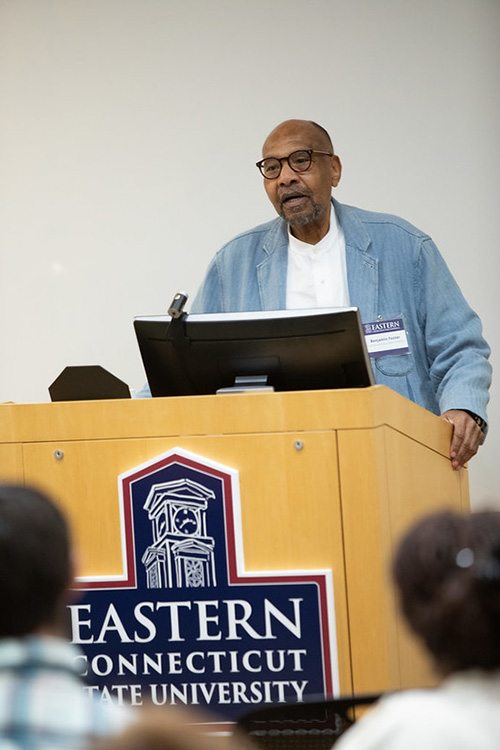
Professor Ben Foster of Central Connecticut State University addresses conference attendees
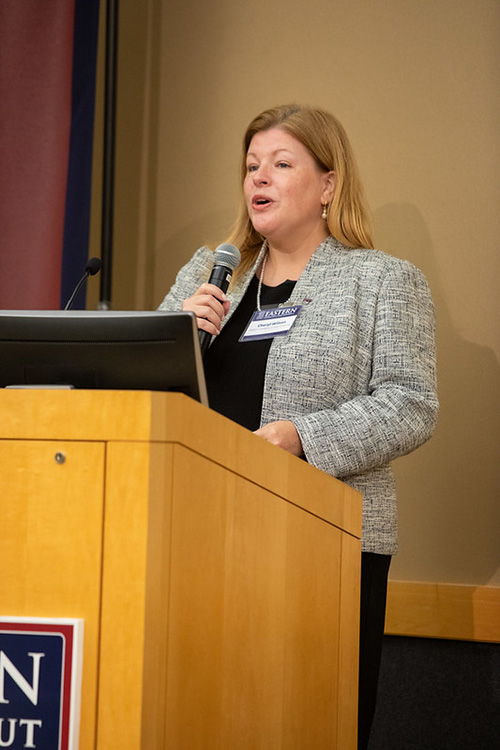
Provost Cheryl Wilson introduces the keynote speaker
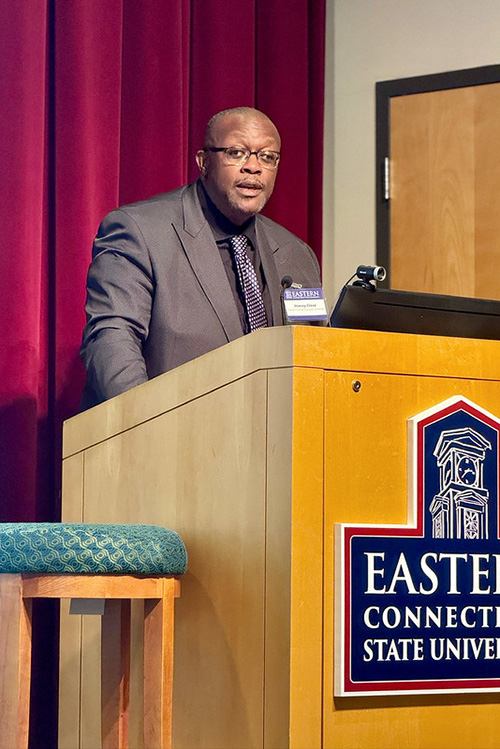
Professor Stacey Close gives closing remarks
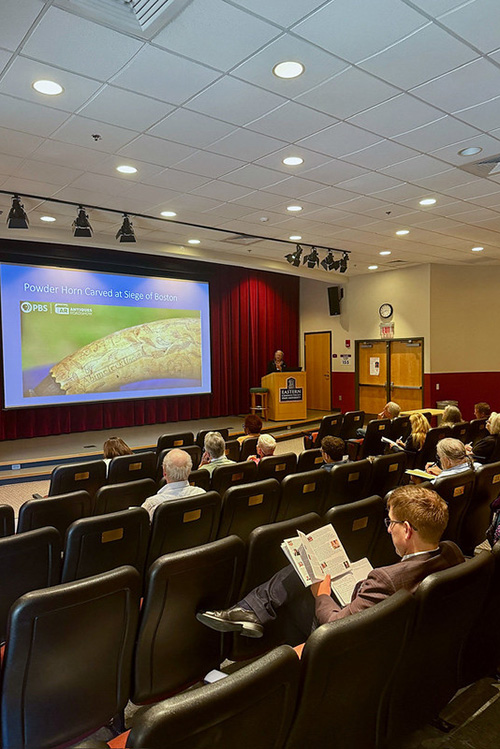
Vicki Welch of Seven Generations Research presents her research into Native American history at the Student Center Theatre
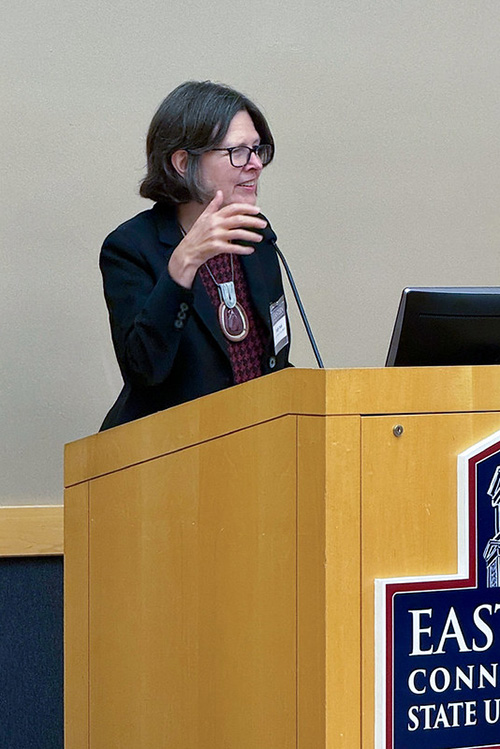
Dean Emily Todd addresses the audience
Adams also explained how larger conferences serve as an avenue to make these narratives accessible to the public so their legacies can live on.
“Conferences like this are important because public institutions have the responsibility to serve the public and provide resources that make it easier for people to access hidden history,” she said. “It’s particularly important for organizations like this to highlight the stories of people who traditionally get blacked out of narratives.”
Following the keynotes, the conference spread into breakout sessions, panels, and presentations delving into Native American and African American history. Among the three students presenting posters was senior history major Emma Schafer, whose research was drawn from her discoveries in the University Archives: her poster was centered around the Brothertown Indian Nation of New York and its fight for tribal sovereignty and federal recognition from 2001-2011.
“Most of my presentation was highlighting the archival work I’ve done at Eastern, as around the first year and a half of working here I was processing the Brothertown Collection,” said Schafer. “Regarding the conference, I think it went amazingly well. The turnout was amazing, and the response to the speakers and panels was overwhelmingly positive.”
Dean of Arts and Sciences Emily Todd elaborated on the range of people who attended the conference, including local sponsors such as Connecticut Explored, and the varying levels of academic experience among the participants.
“What impressed me most was that the conference participants included not only faculty and students but so many others who care about Connecticut's history — people who work at museums, public history organizations, state agencies, local historical societies, and scholarly publications,” she said.
“All these people came together to learn, share ideas, and show their commitment to diversity and inclusion in telling the history of Connecticut, which is such an essential effort as we prepare as a nation to celebrate our founding.”
She continued: “It was a great honor to host such an important conference at Eastern in the lead up to the 250th celebration of the signing of the Declaration of Independence. The conference organizers did an amazing job of putting together a program that featured such a wide diversity of presentations showcasing scholarship of people of color in Connecticut during the Revolutionary Era.”
History Professor Stacey Close closed the event by speaking of one final, post-Revolutionary legacy: Lorenzo Greene, a Black educator and Colonial historian who trailblazed the study of African American genealogies in Missouri and taught history at the historically Black Lincoln University.
“Dr. Lorenzo Greene leaves for us an important legacy; not only for the study of Black history, but an understanding that it is a question not just of history, but of our story,” said Close.
Close continued with a personal note: “One of the things that led me to the study of African American history was a wonderful family growing up in Georgia who were truly dedicated and loved history. When I was 25 and came to Eastern, it was the students who won me over to teaching history here. The students continue to win me over — even in my 8 a.m. class.”