
- Apply
- Visit
- Request Info
- Give



Written by Darlene Orozco B. '28
Published on September 16, 2025
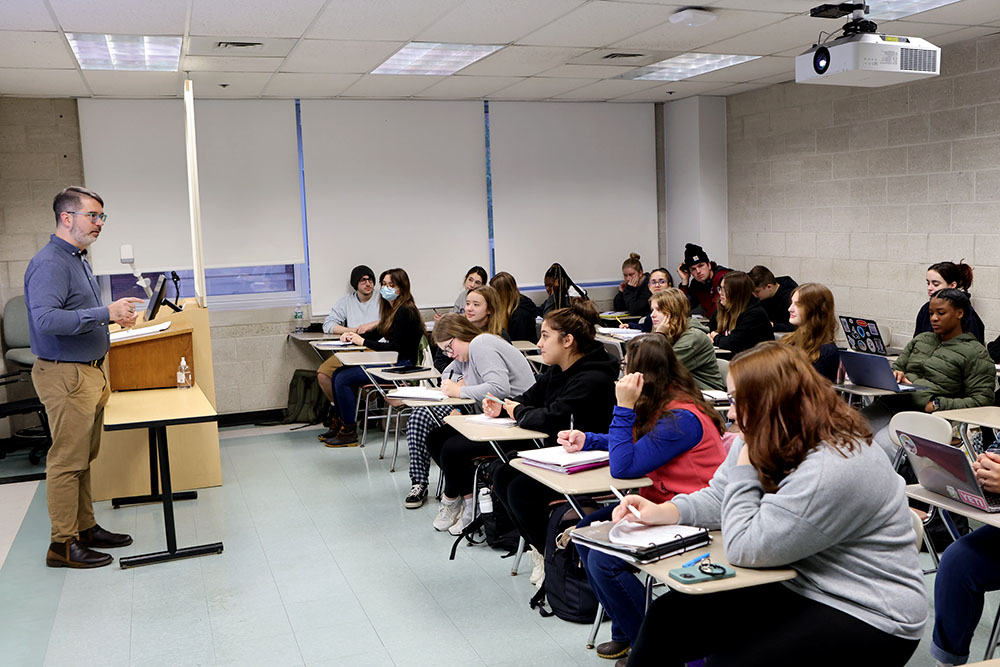
Eastern's Center for Teaching, Learning, and Assessment (CTLA) hosted a workshop for faculty on Sept. 10 concerning the roles of equity and rigor when designing a course. Part of the CTLA's ongoing Faculty Learning Communities (FLC) series, the workshop took place in the President’s Dining Room at Hurley Hall.
FLCs are small groups of faculty who explore different pedagogical topics throughout the academic year. FLCs meet once every three weeks, each covering a different topic. FLCs for the 2025-26 academic year include Best Practices for Teaching and Supporting Neurodivergent Students, Social Justice Pedagogy Incubator, and Sustainability Across the Curriculum.
The series “gives faculty an opportunity to build relationships with other faculty outside of their discipline and department and talk about teaching challenges, innovations, and strategies,” said Julia DeLapp, director of the CTLA.
The workshop on equity and rigor explored “inclusive teaching,” which refers to meeting the needs of a culturally and neurologically diverse student population while also meeting rigorous standards. Instructors discussed how equity and rigor relate to each other, how each affects their teaching approach, and how to keep standards high with inclusive teaching practices.
Faculty members shared what rigor looks like in their courses. A rigorous course requires students “to dig deeply into the topic we are covering,” said one faculty participant. “Each student should be going as far as they can with the complexity of each topic.”
To better understand the perspective of Eastern students on inclusive teaching practices, members of the inclusive teaching FLC conducted a survey during spring 2025.
The results of the study suggested that when instructors implement inclusive teaching practices such as creating a welcoming environment by getting to know their students, assigning materials that were personally relevant, and starting judgment-free discussions, students reported higher levels of engagement.
The survey also suggested that teaching practices such as exclusively lecturing, limited interactive activities, and responding negatively to students did not create an inclusive environment and decreased student engagement.
Members of this FLC shared how helpful the discussions were, and how they plan to address equity and rigor in future teaching. “I found it so edifying to engage in thoughtful, sustained conversations all last year,” said Cara Bergstrom-Lynch, professor of sociology. “I'm carrying forward the insights into my teaching and service work this year.”
“Faculty at Eastern have an obligation to ensure that our classrooms create the kind of environments where every student feels welcome and valued while also being held to a high standard of success,” said Nicole Krassas, professor of political science.
“Participating in this workshop did a lot to demonstrate the ways in which I could do more to ensure all of those obligations are met. As someone who teaches about politics, the workshop forced me to confront certain realities and alter my own practices.”
For more information on this year's Faculty Learning Communities, visit the CTLA website.