
- Apply
- Visit
- Request Info
- Give



Written by Darlene Orozco B. '28
Published on September 26, 2025
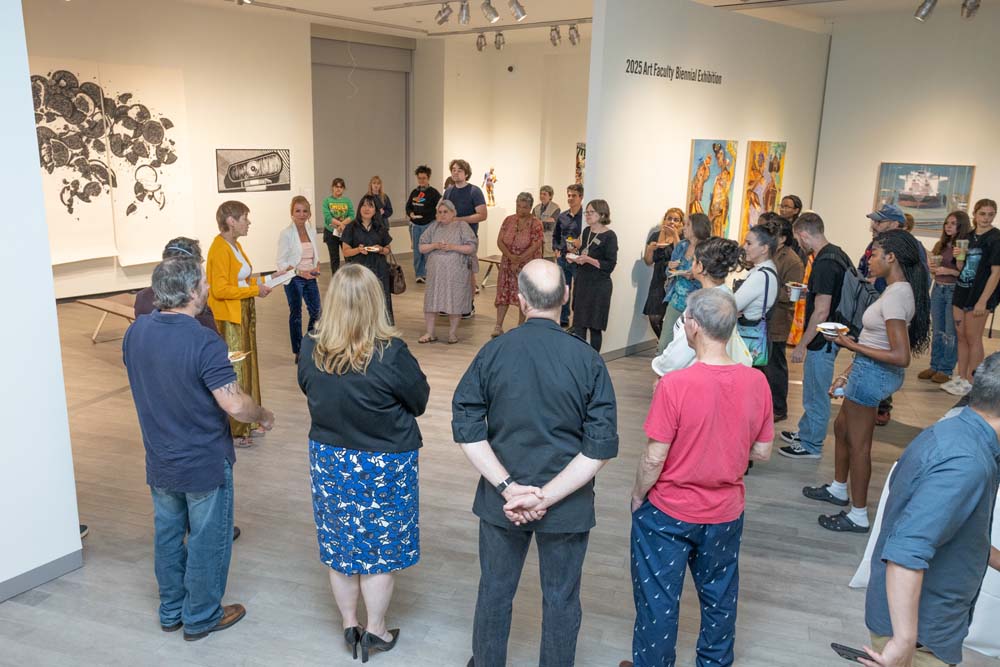
Eastern students and community members attended the biennial art and design faculty exhibition.
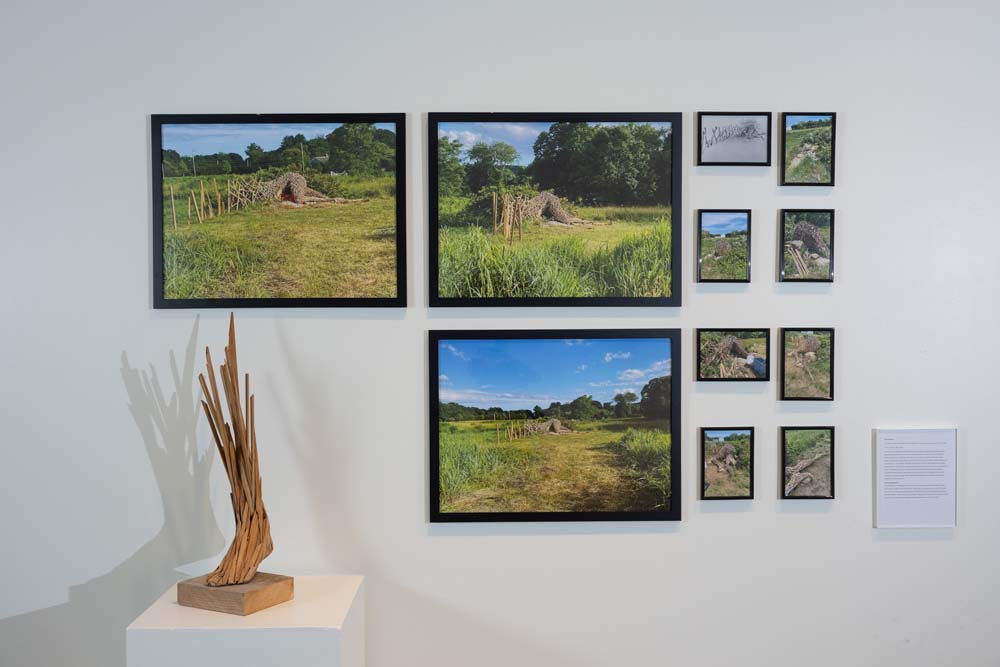
Art and Art History Professor Robert Greene's process when making his wooden sculpture "The Return"
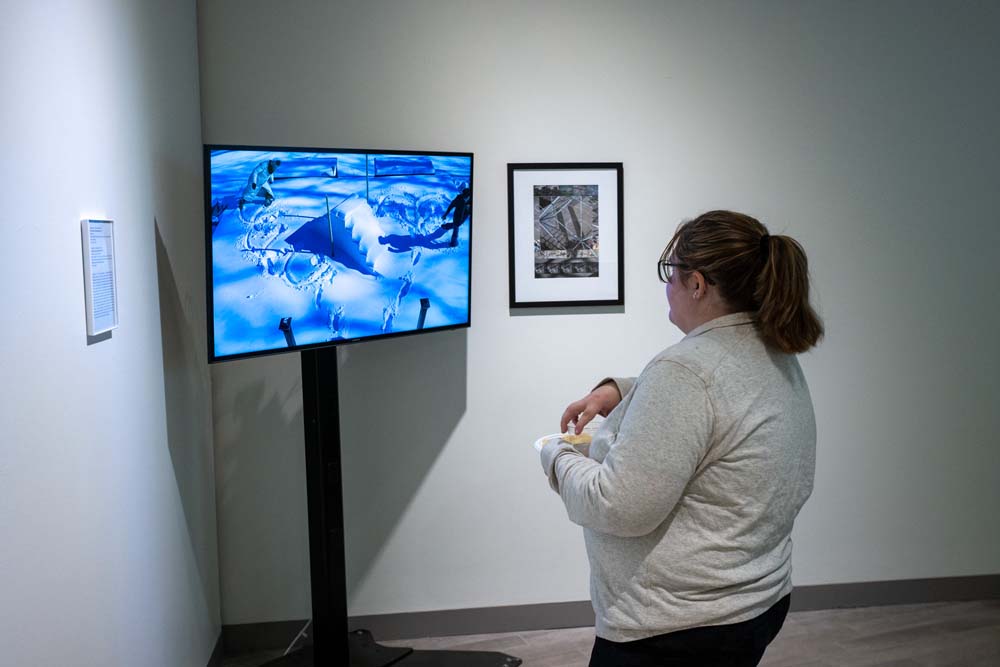
Art and Art History Lecturer James Holland and Associate Professor Alycia Bright Holland's "Ambitography: A Collaborative Spatial Overlay"
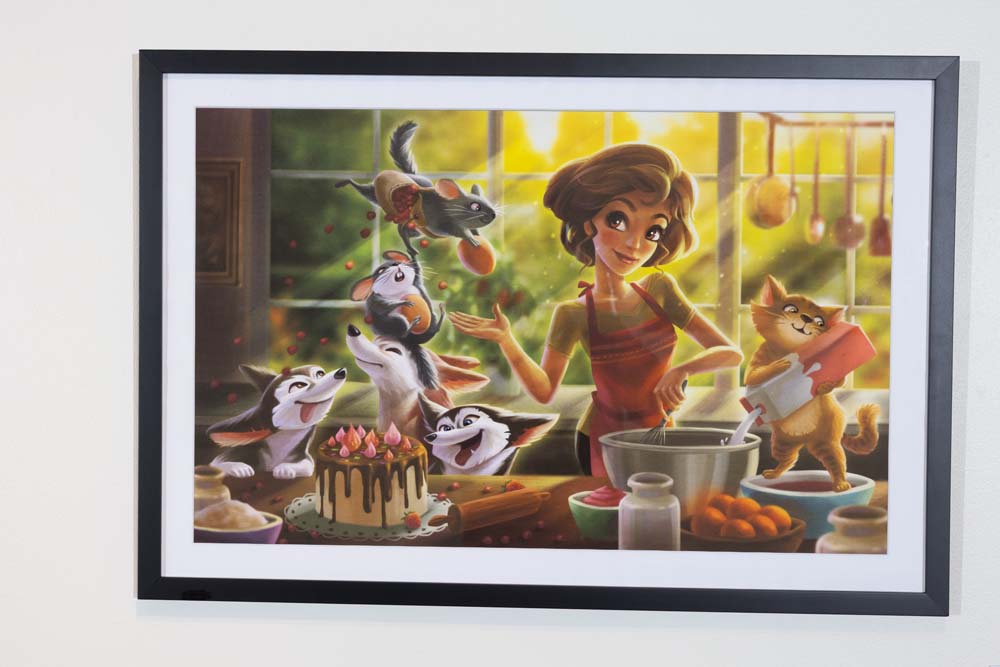
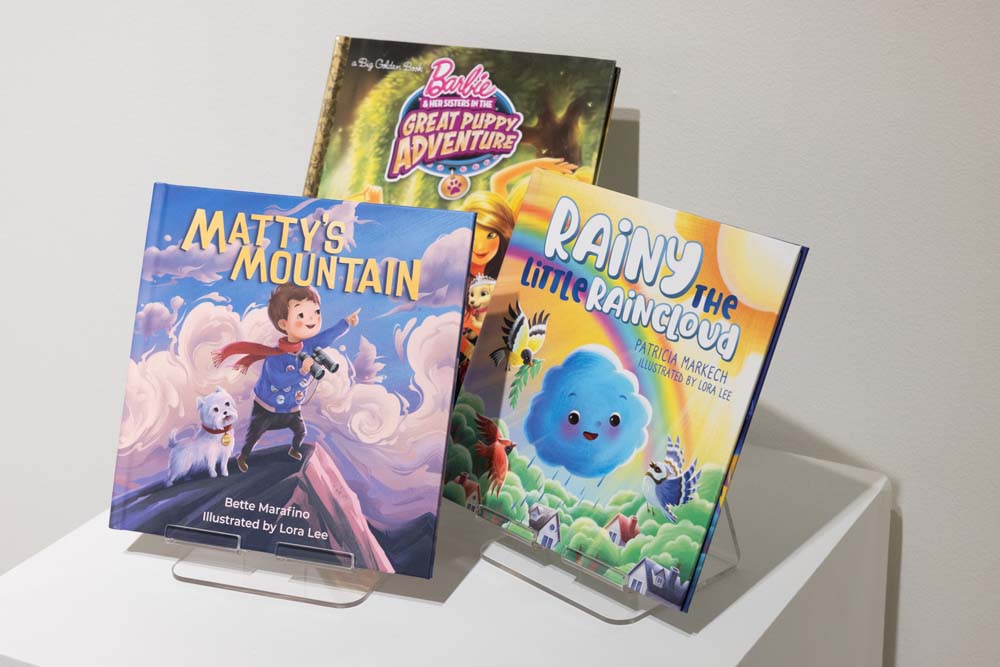
Art and Art History Professor Lora Lee's illustration
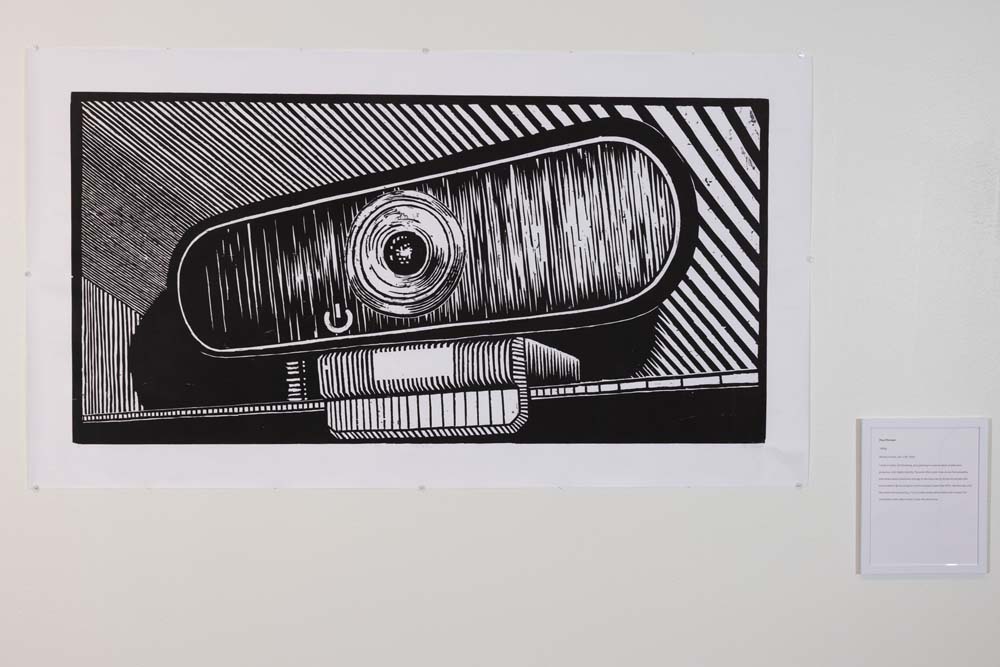
Art and Art History Lecturer Paul Michael's "1080p"
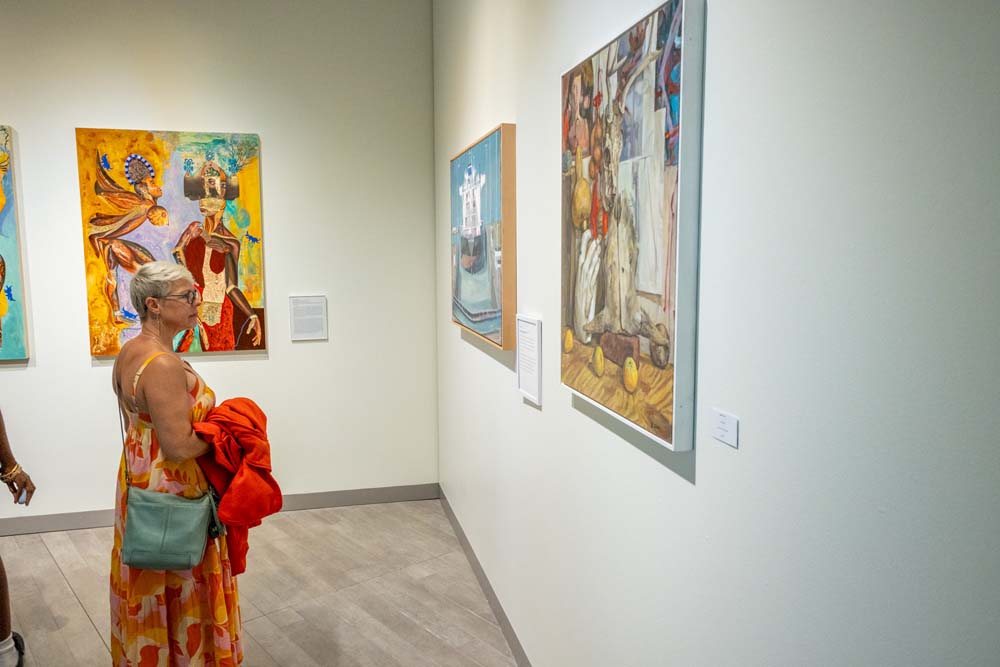
Art and Art History Professor Qimin Liu's "Untitled"
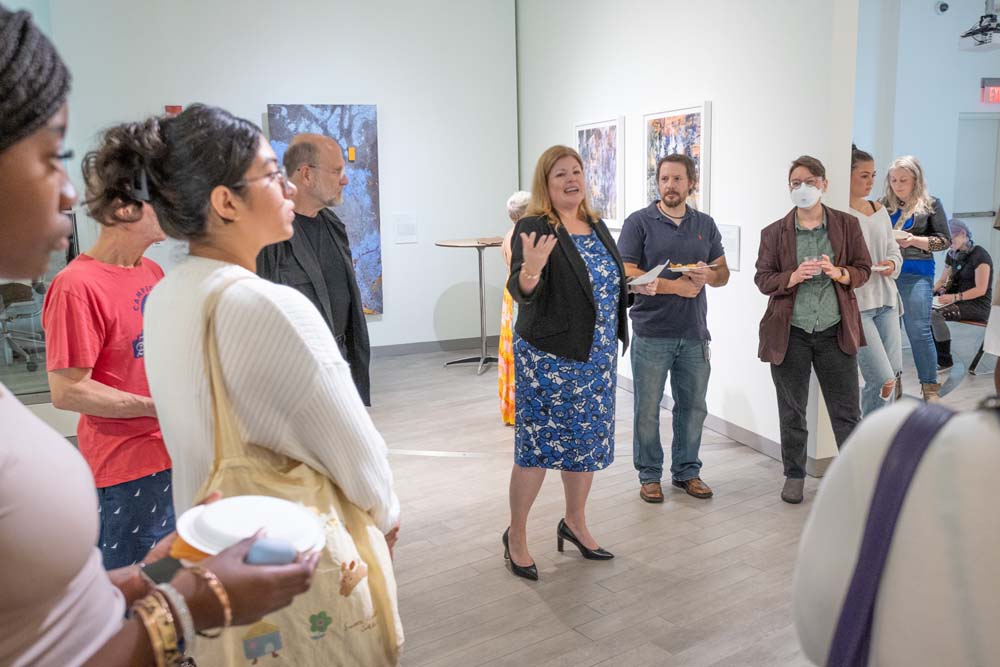
Provost Cheryl Wilson welcomes students and community members
Eastern Connecticut State University celebrated the opening of its biennial art and design faculty exhibition, titled “Local Ground, Global Circuits,” with a reception on Sept. 18 in the Fine Arts Instructional Center Art Gallery. The exhibition, which runs through Oct. 3, features 17 faculty from the Art and Art History Department whose works span continents, cultures, and media, exploring identity, migration, memory, and the environment.
“This exhibition brings together faculty whose practices are rooted in New England while speaking fluently to global art histories and current debates,” said Art Gallery Director Julia Wintner. “Their work connects the immediate textures of our region with transnational conversations about identity, migration, environment, and the future of art itself.”
Provost Cheryl Wilson highlighted the importance of faculty exhibitions. “It’s important for our students to see their faculty not only as educators but also professionals working in this space,” she said. Wilson noted that the faculty’s interdisciplinary contributions to the exhibition help Eastern provide a more “robust culture of arts.”
“As an institution, as a gallery, and as a community, it’s important to not only impart knowledge but to create knowledge,” she continued.
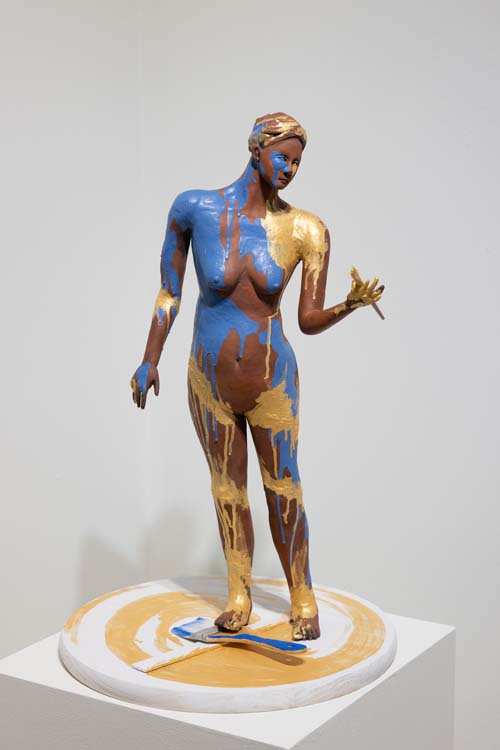
Art and Art History Professor Allison Elia's "Monday"
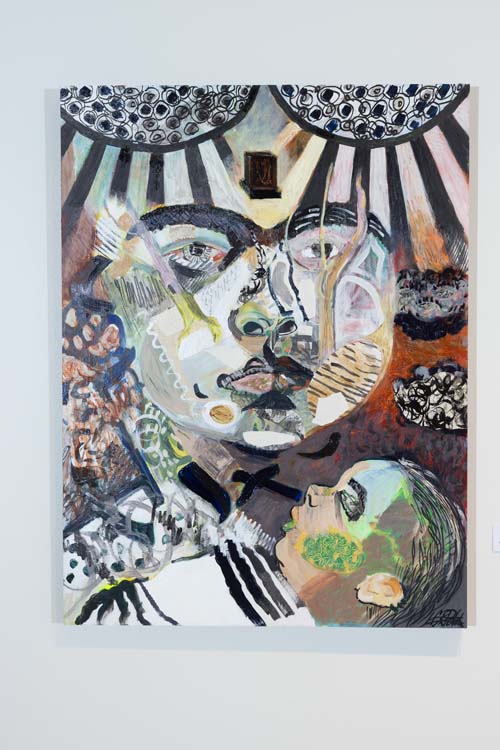
Art and Art History Lecturer Hannah Petrikovsky's "Ima Shalom"
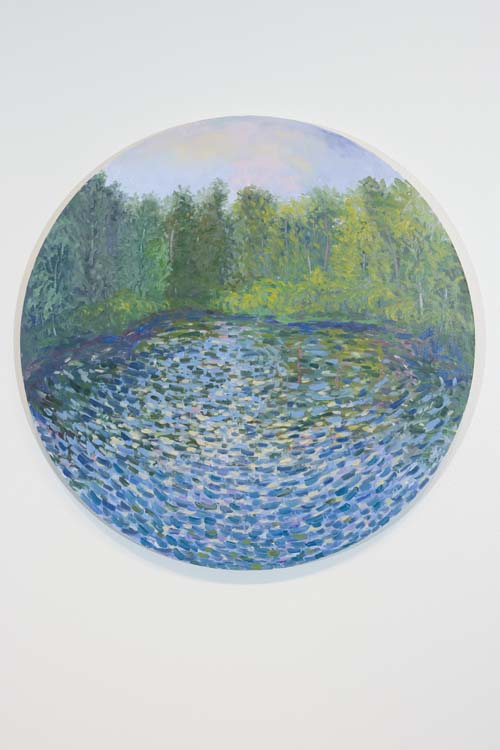
Art and Art History Lecturer Karen Bartone's "Ice Cold Light and Pondering Mohegan Ice Pond"
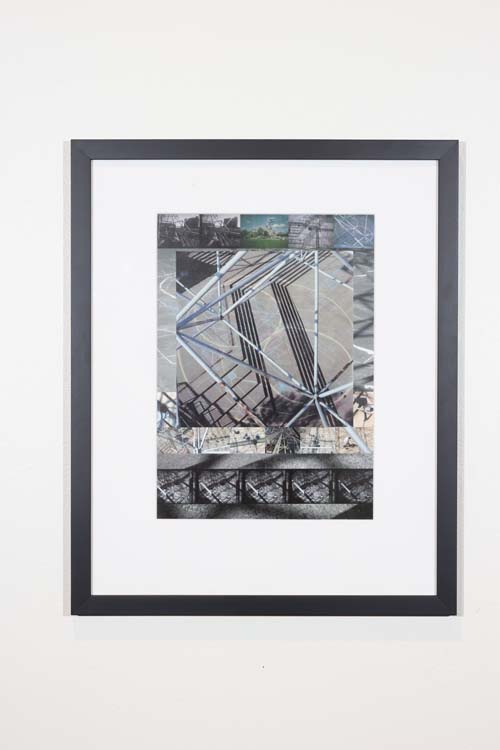
Art and Art History Lecturer James Holland and Associate Professor Alycia Bright Holland's "Shadography: A Collaborative Spatial Overlay"
The works in the exhibition blur the boundaries between local experience and global influence. One of the exhibition’s pieces, “Cracked Oreo N 176” by Soojin Kim, draws on the artist’s family history and the legacy of the Korean War. The drawing is made of conte crayons, a drawing medium made from a blend of pigment, clay, and a binder, and it pays homage to the American sweets given to her father by soldiers during wartime hardship.
“This endeavor is my contemporary interpretation of the Confucian ritual known as ‘Jesa,’ a traditional ceremony where descendants prepare and offer food to honor the spirits of their ancestors,” Kim said. “It is an effort to remember and honor my father's smile, which shone brightest in those fleeting moments of sweetness, and to reflect on the broader narrative of cultural change that has shaped modern Korea.”
Afarin Rahmanifar’s diptych -- an artwork composed of two separate panels that are designed to be viewed together as a single piece -- “She Who Carries All Stories #1 and #2” is part of her “Echoes Within: Voices of the Unseen” series. Her mixed media works channel Persian miniature traditions and mythological storytelling to voice the pain and strength of women shaped by exile and resistance.
“The women of the Shahnameh (an epic poem which chronicles the mythical and historical past of Persia) are not distant figures," she said. "I see myself in them. ... My work reclaims power through visual storytelling, where the personal and political are inseparable.”
The exhibition also highlights how teaching and studio practices intersect. Art and Art History Professor Robert Greene, who specializes in sculpture, shared how his classroom lessons are reflected in his wooden sculptures presented at the exhibition. “I hope students take away some of the concepts I preach in class: how to incorporate the environment into the art and make the environment itself part of the piece,” Greene said.
Greene shared how, during his creative process, he could hear his own words, forcing himself to "be a participant in [the art piece],” and he explained the importance of practicing what is preached during lectures. “I think to myself, ‘Are you pushing yourself like you push your students?’ It keeps me in check.”