- Apply
- Visit
- Request Info
- Give



Written by Michael Rouleau
Published on October 27, 2025
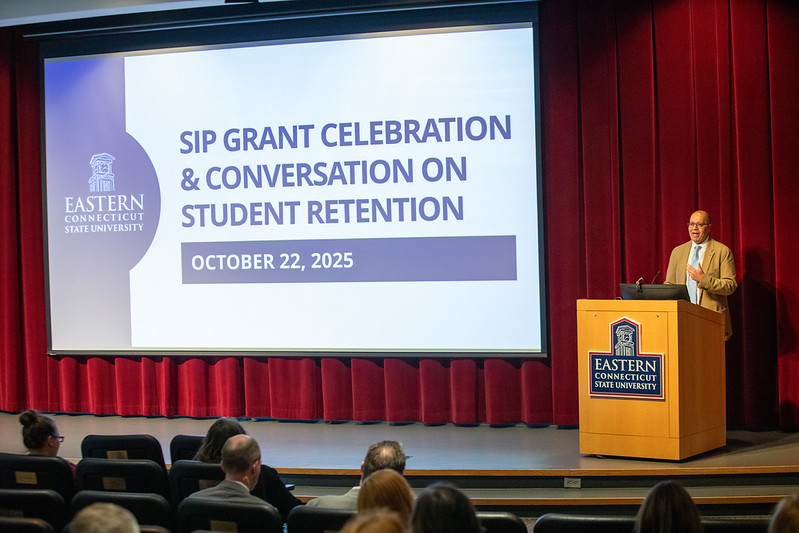
Eastern Connecticut State University held a special meeting on Oct. 22 to discuss a newly awarded multi-million-dollar grant from the U.S. Department of Education and to hear updates on the University’s student-retention initiatives.
Eastern was recently awarded a $2.25 million, five-year Strengthening Institutions Program (SIP) grant titled “Modeling Student Success – Supporting Our Students and Strengthening Our Institution.” Funded through the U.S. Department of Education, the grant aims to enhance Eastern’s capacity to support student achievement through predictive analytics, holistic advising, and the establishment of an endowed equity fund.
A Historic Grant for Eastern
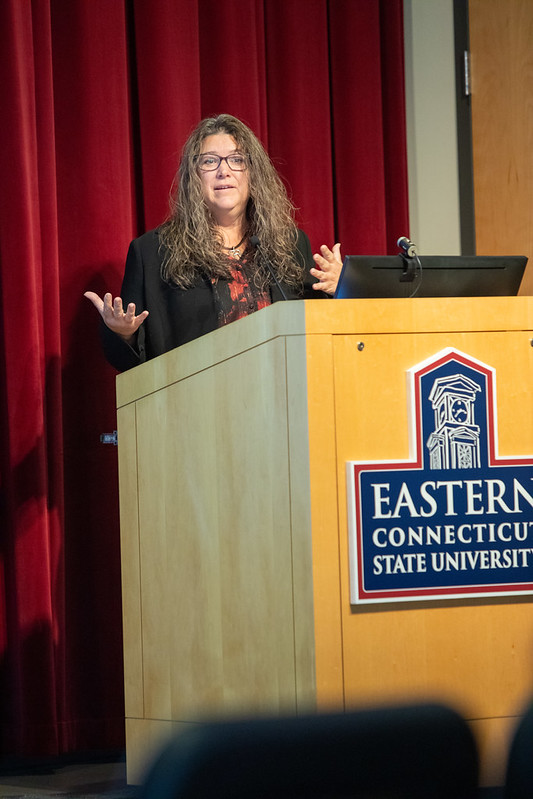
President Karim Ismaili noted that this award is among the largest grants in Eastern’s history, and despite the ongoing federal government shutdown, the funding has already been allocated.
“This grant allows us to build on what we already do well — to create new opportunities for mentoring, academic success, belonging, and persistence,” said Ismaili.
Eastern will receive $450,000 annually over five years, with an additional $169,000 supplemental award in 2025–26.
Grants Officer Christine Jeffers, who submitted the proposal more than two years ago, explained that the SIP program supports resource-limited colleges and universities serving large populations of low-income students. Funds must be used to strengthen academic programs, student services, and/or institutional endowments.
Project Goals
Eastern’s “Modeling Student Success” project will focus on six key areas:
Retention and Student Success Initiatives
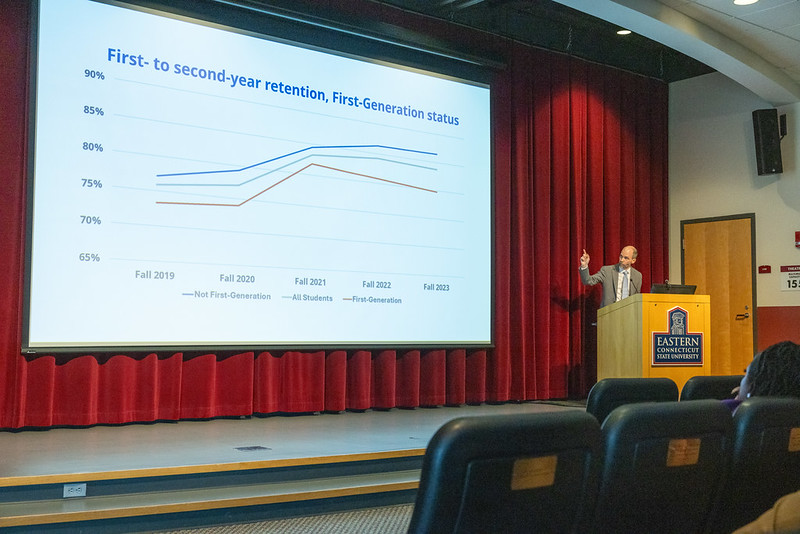
Ben Pauley, interim vice president for student success and enrollment, presented updates on student retention. Increasing retention and graduation rates across all student populations is a key institutional priority — and one of the primary motivations for the recently created Division of Student Success and Enrollment.
“This grant comes at a great time and dovetails with initiatives we already have underway,” said Pauley.
He reported that Eastern’s first-to-second-year retention rate has steadily improved, rising from 75% in 2004 to 80% in 2024. However, disparities remain. White students are retained at higher rates than the overall average, while Black, Hispanic, and first-generation students are retained at lower rates. Similar gaps appear in Eastern’s four-year graduation rates.
Pauley noted that Eastern has an obligation to support students from all backgrounds and an enrollment imperative to retain as many students as possible.
Retention Think Tank
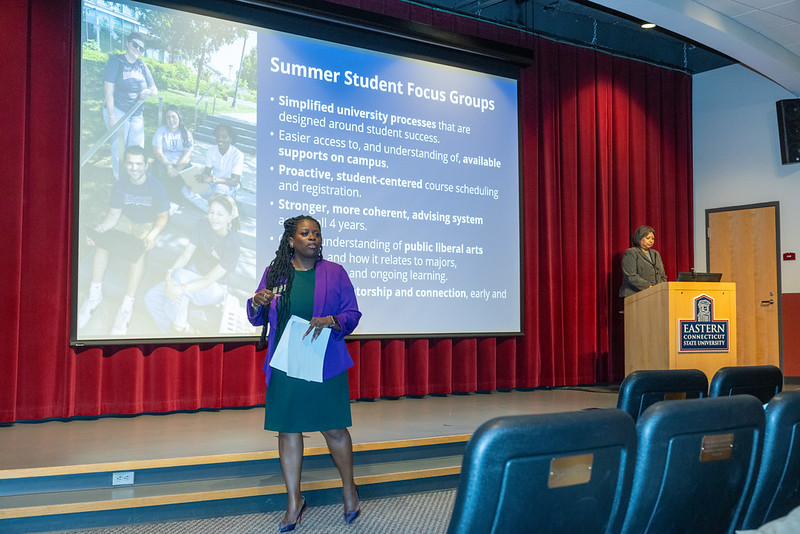
To address these disparities, Dean of Students Kemesha Wilmot and Dean of Education and Professional Studies Niti Pandey co-lead the University’s new Retention Think Tank, established this past summer.
Among its initial activities, the think tank convened a student focus group whose members expressed a desire for:
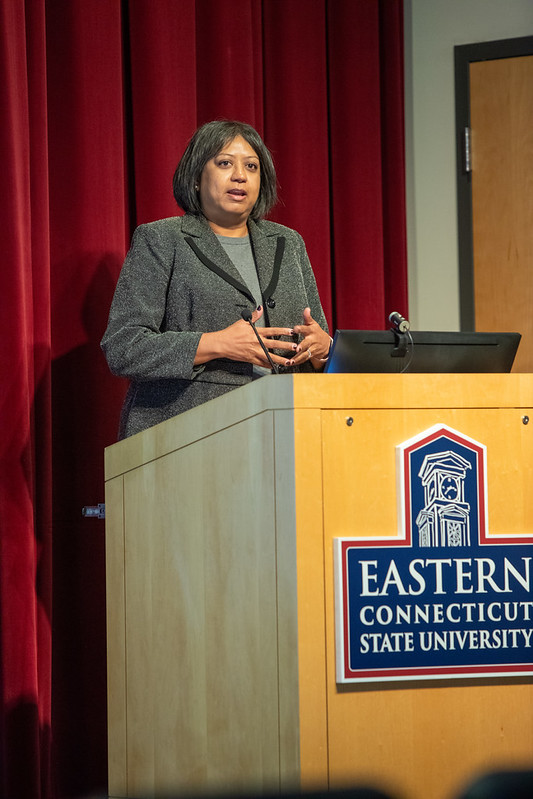
Wilmot and Pandey explained that the think tank is organized around three priorities:
While Eastern already offers a variety of support programs, think tank members found many are “siloed” and operate independently. “By bringing together cross-functional teams,” said Pandey, “we’re identifying common effectiveness indicators. We’re all working toward the same goals.”
Moving Forward
President Ismaili reflected on the timely alignment of Eastern’s ongoing initiatives and the new SIP grant.
“Things are aligning at Eastern,” he said, referencing the University’s deep dives into retention data, the creation of a division dedicated to student success, and the establishment of the Retention Think Tank.
With the arrival of the SIP grant, “All of these efforts are coming together.”