- Apply
- Visit
- Request Info
- Give



Written by Elisabeth Craig
Published on July 25, 2025
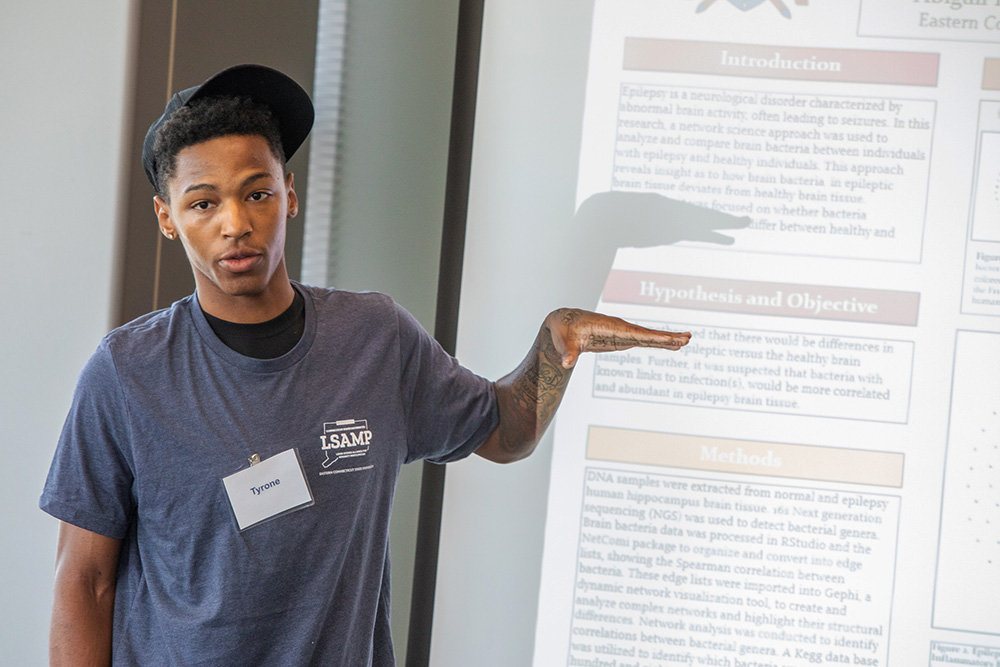
STEM scholar Tyrone Boyd presents his research at the closing ceremony.
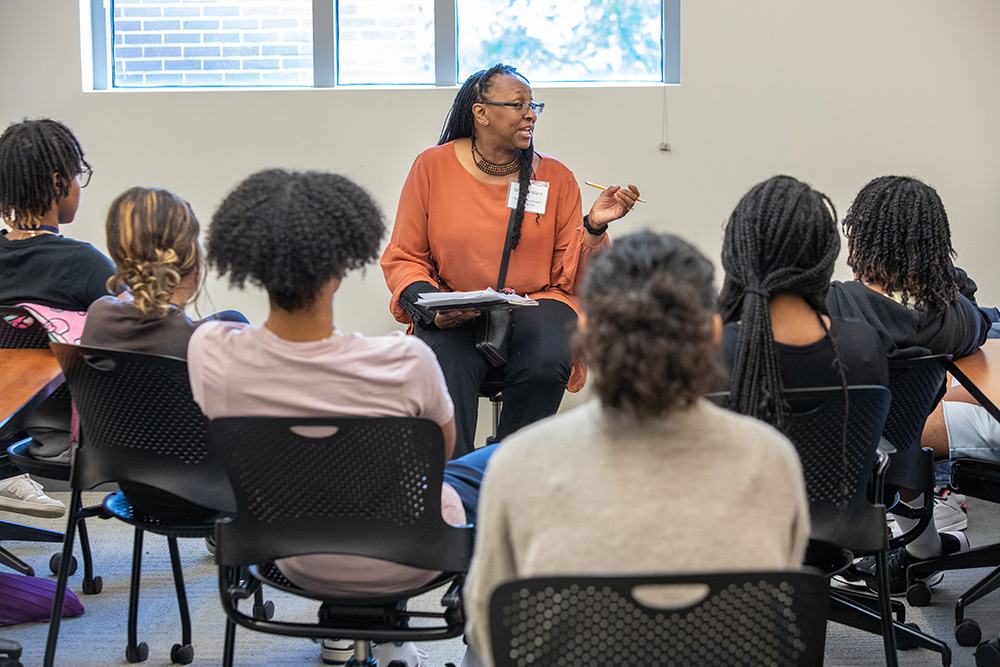
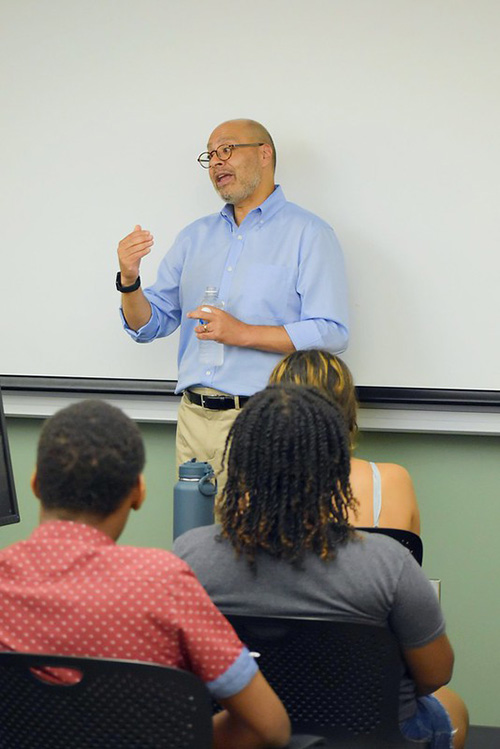
Mathematical science Professor Kim Ward instructs students.
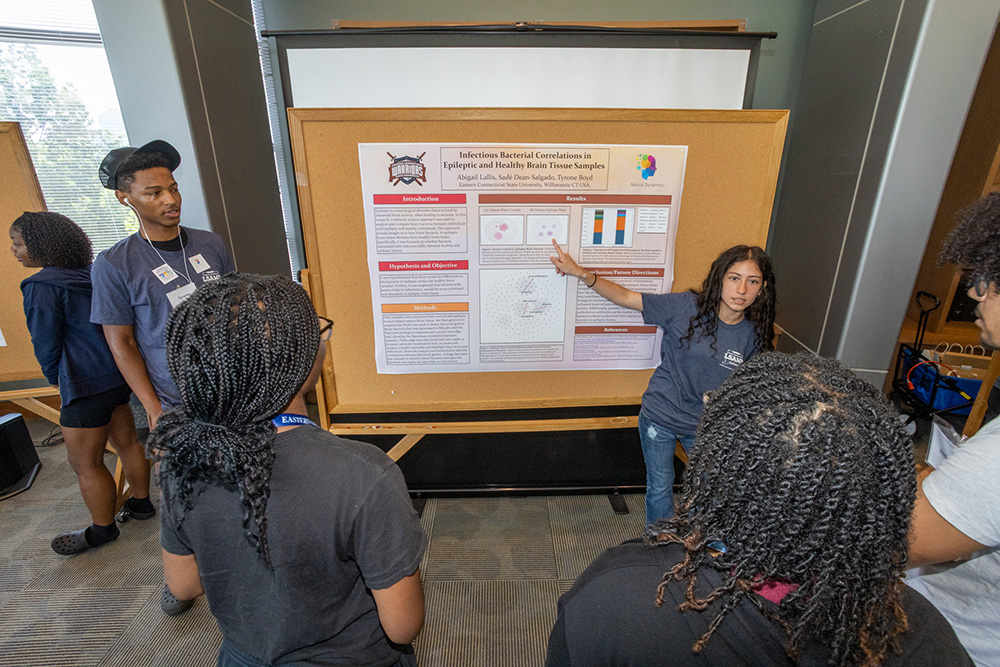
Students Tyrone Boyd (left) and Abigail Lallis present their research at the summer program's closing ceremony.
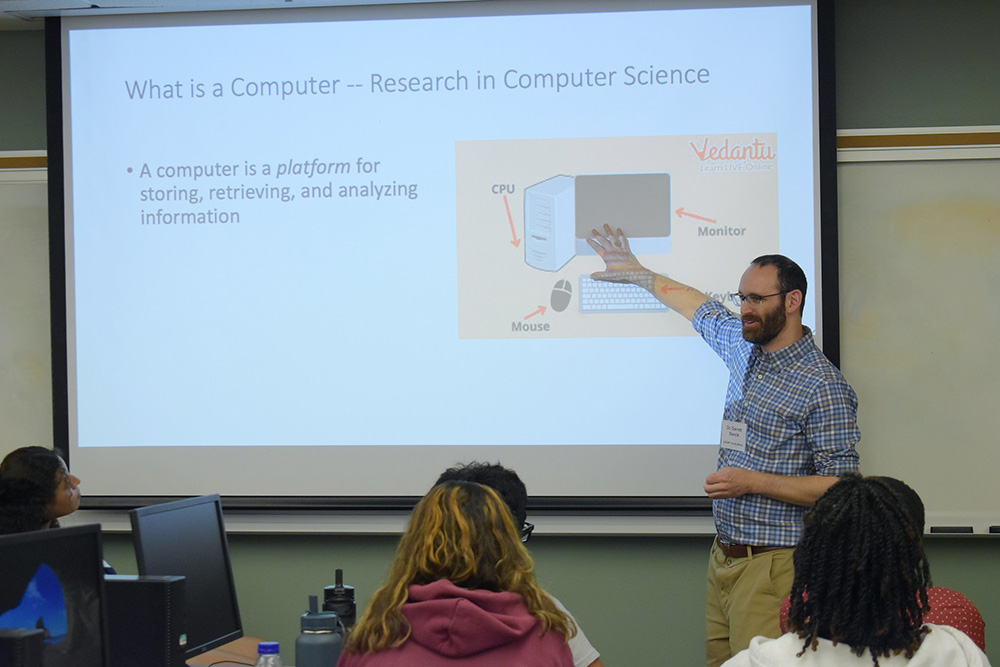
Computer science Professor Garrett Dancik speaks to STEM scholars.
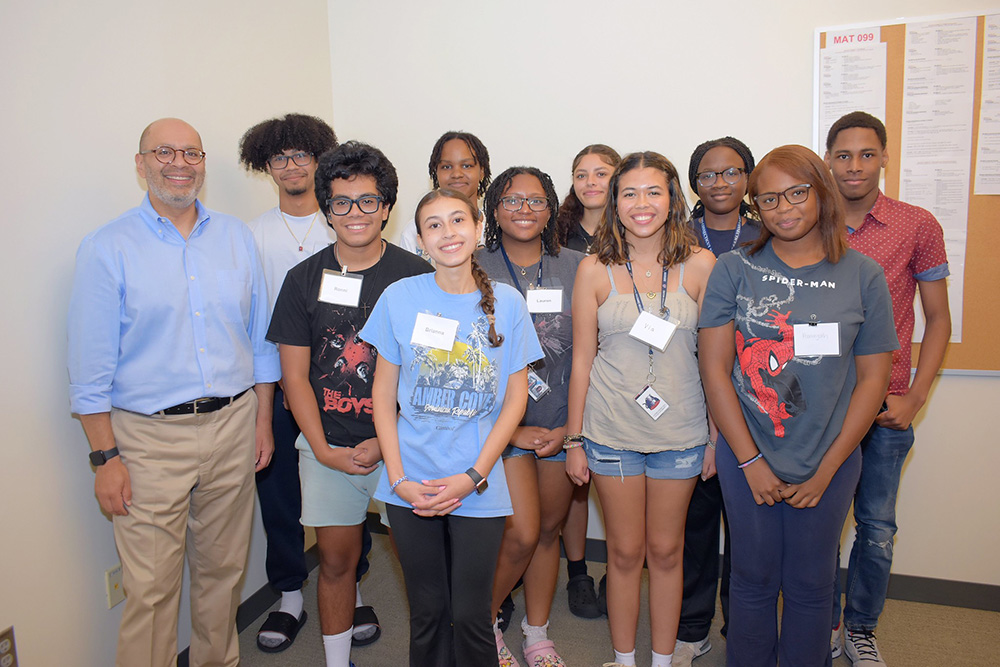
President Ismaili meets with STEM students.
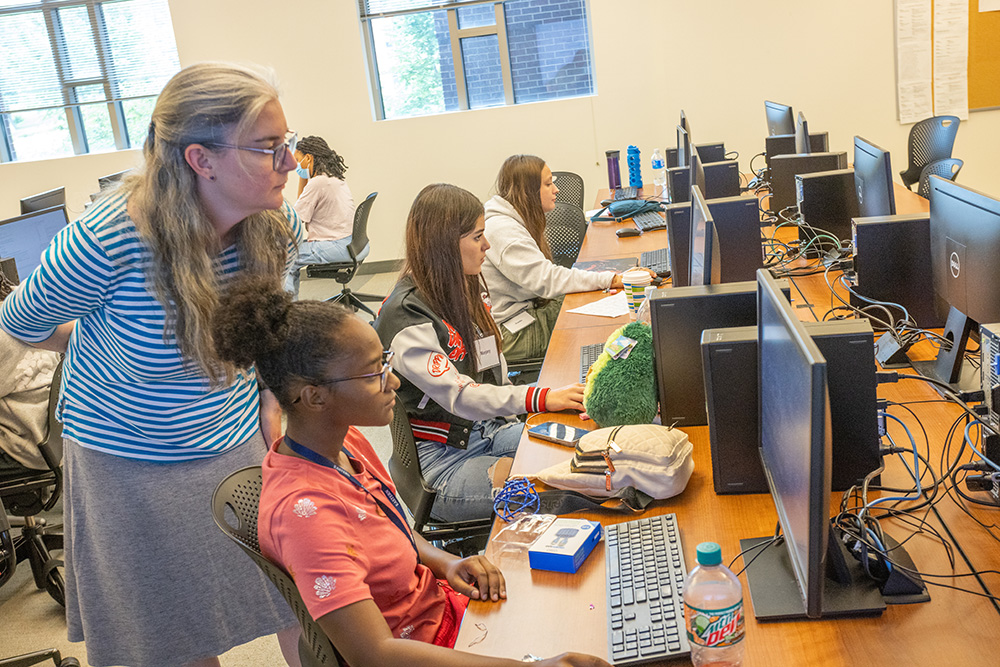
Mathematical science Professor Megan Heenehan (left) assists student researchers in a computer lab.
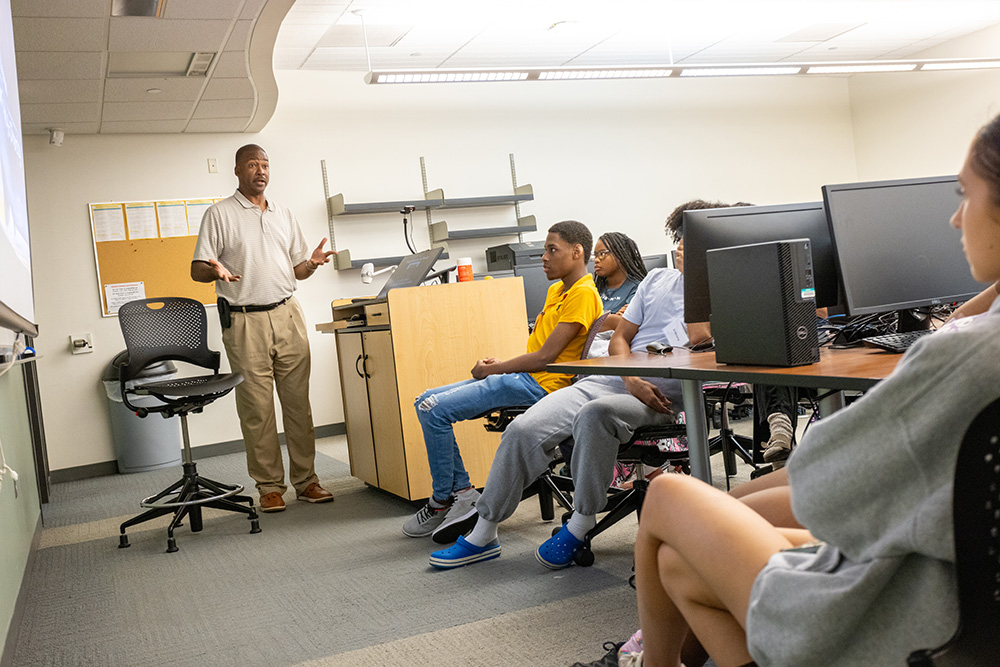
Vice President for Equity and Diversity LaMar Coleman addresses STEM students.
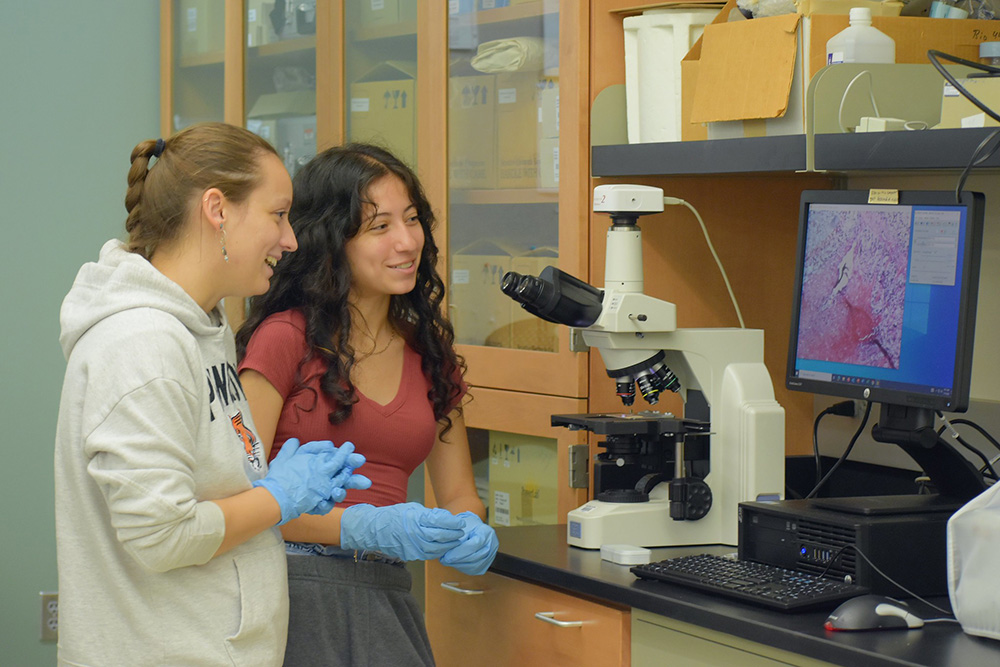
STEM students experiment with a microscope.
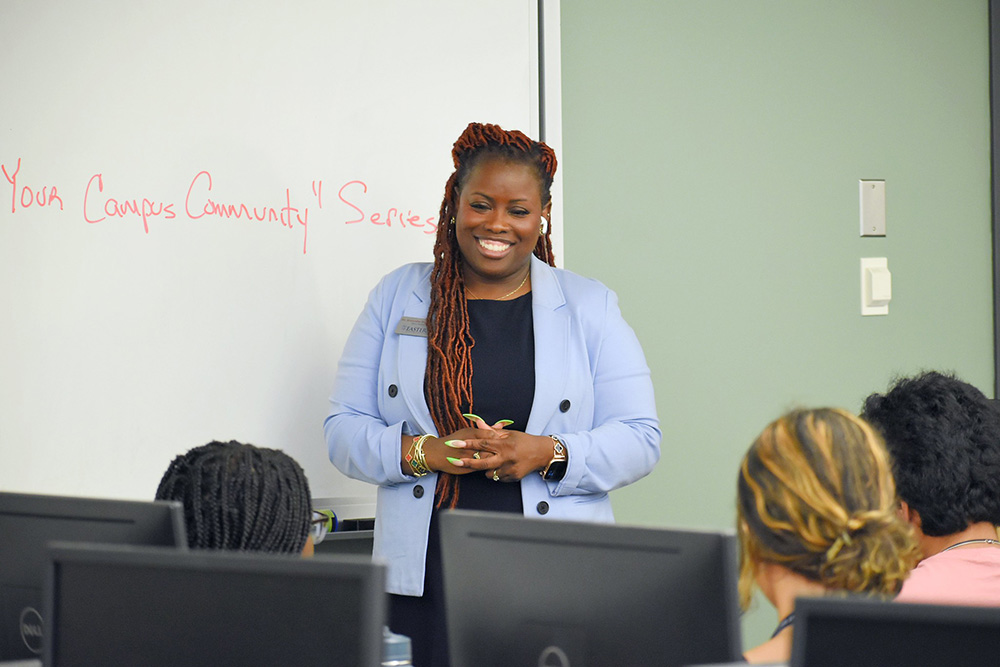
Dean of Students Kemesha Wilmot instructs STEM scholars.
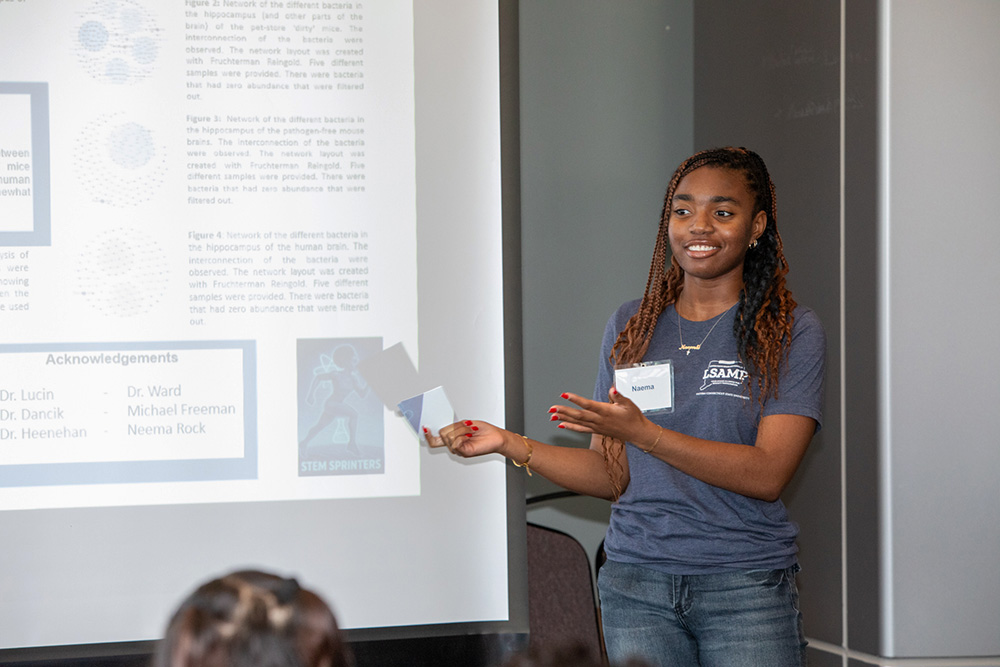
Sophomore biochemistry major Naema Charles presents her research at the closing ceremony.
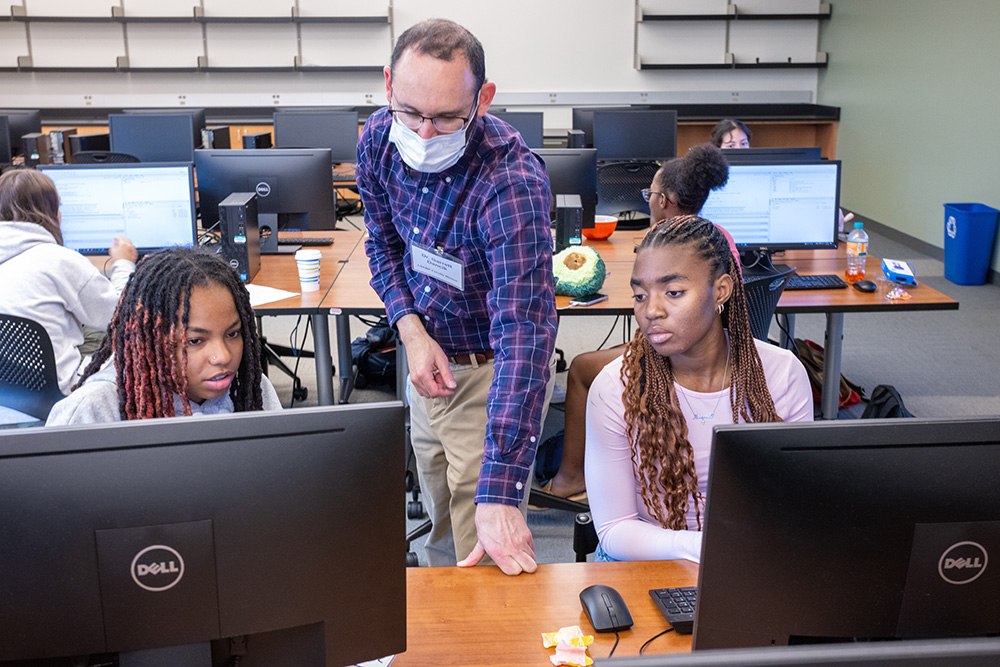
Professor Garrett Dancik works with a duo of research students.
Eighteen first- and second-year students majoring in STEM fields participated in a residential program this July meant to support historically underrepresented students in the sciences. Modeled after the National Science Foundation’s Louis Stokes Alliances for Minority Participation (LSAMP) program, the two-week Eastern-funded initiative included a transitional “bridge” program for incoming first-year students and a research institute for sophomores.
Like LSAMP — of which Eastern is a former grantee — Eastern’s program is dedicated to fostering STEM participation among students from historically marginalized/minority backgrounds through intensive research and orientation activities.
“(The program) isn’t just about academics, it's about the whole person,” said Dr. Kim Ward, mathematics professor and program coordinator. “In the case of our summer bridge (cohort), they’re incoming first-year students connecting with coordinators here at Eastern and getting a deep dive into the services available. … Additionally, they’re working on their math skills to better prepare them for the fall semester.”
She continued: “They are also getting a holistic approach (to student development) because they partake in activities such as yoga and meditation. The program addresses not only their academics, but their mental and physical health as well.”
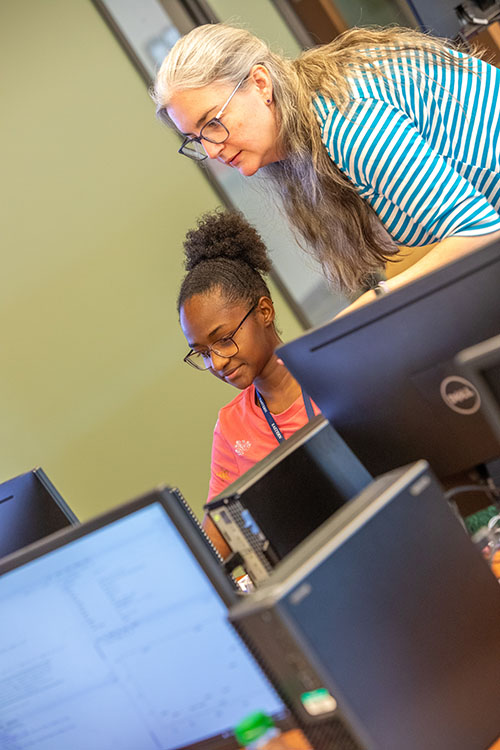
Mathematical science Professor Megan Heenehan (right) assists a STEM scholar in research.
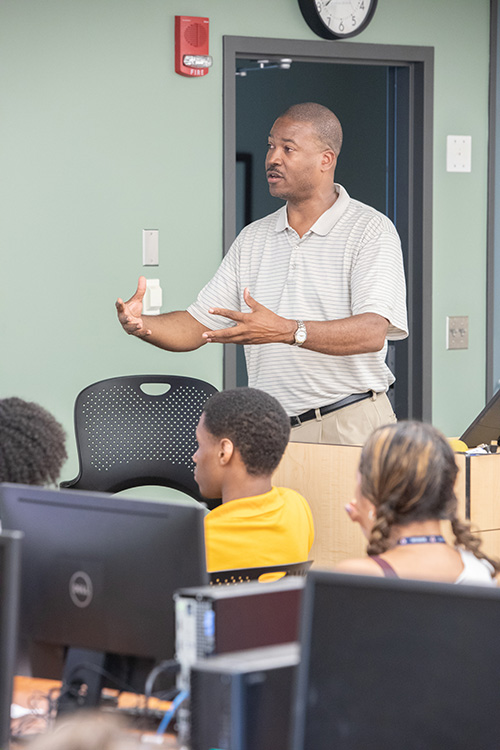
Vice President for Equity and Diversity LaMar Coleman addresses STEM scholars.
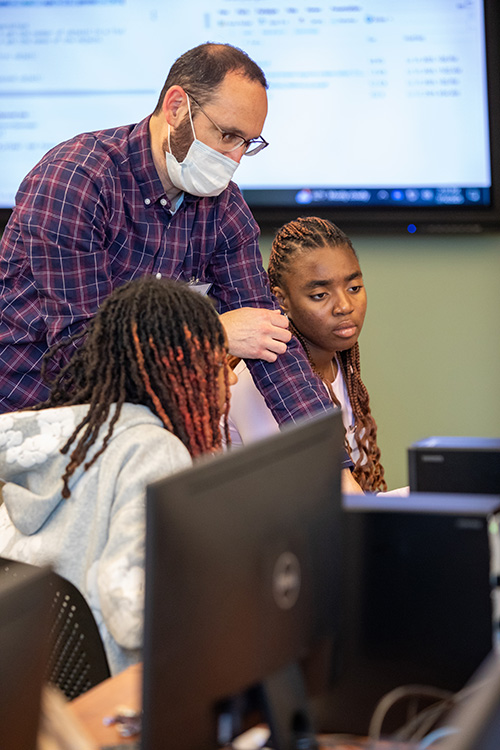
Computer science Professor Garrett Dancik (left) assists a STEM scholar in research.
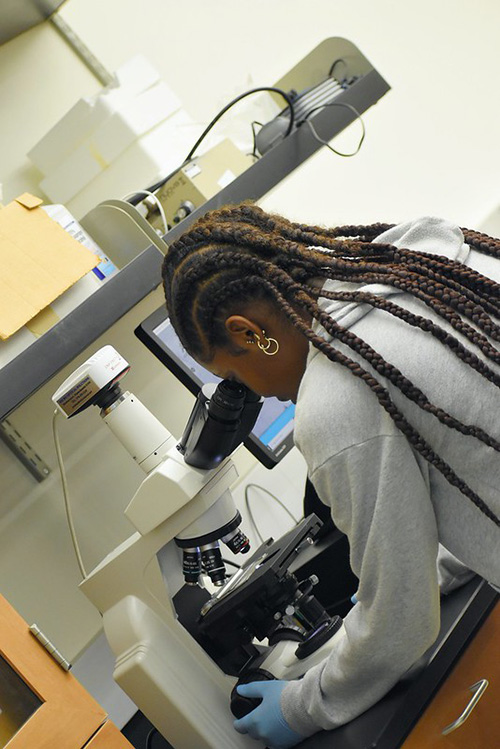
A STEM scholar looks through a microscope.
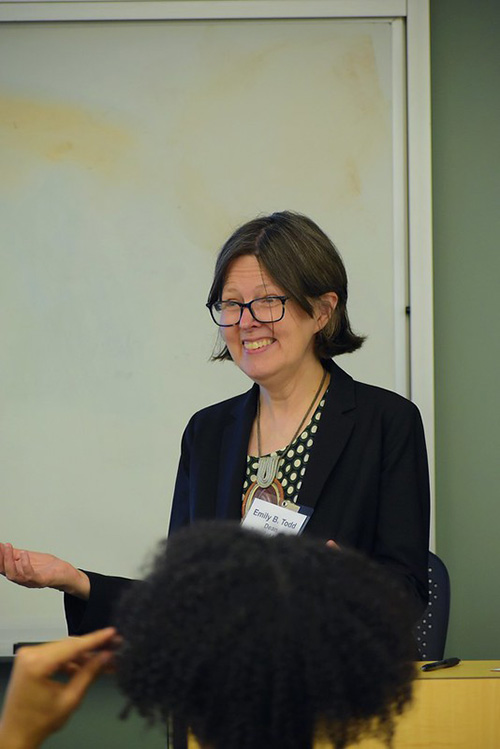
Dean of Arts and Sciences Emily Todd addresses STEM scholars.
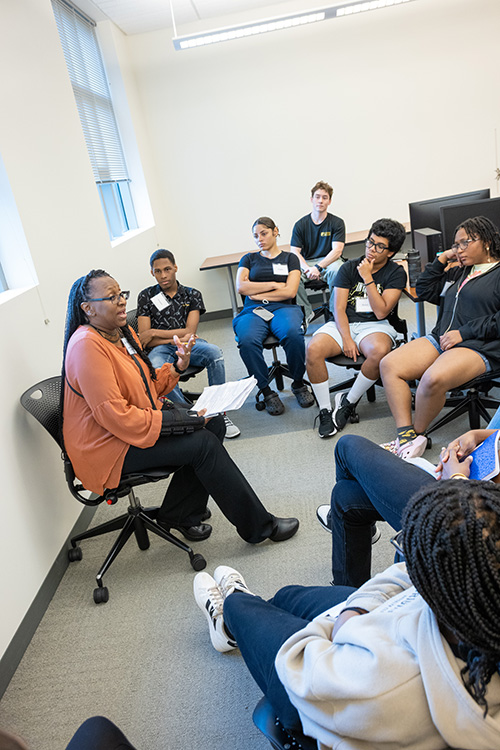
Mathematical science Professor Kim Ward bonds with students.
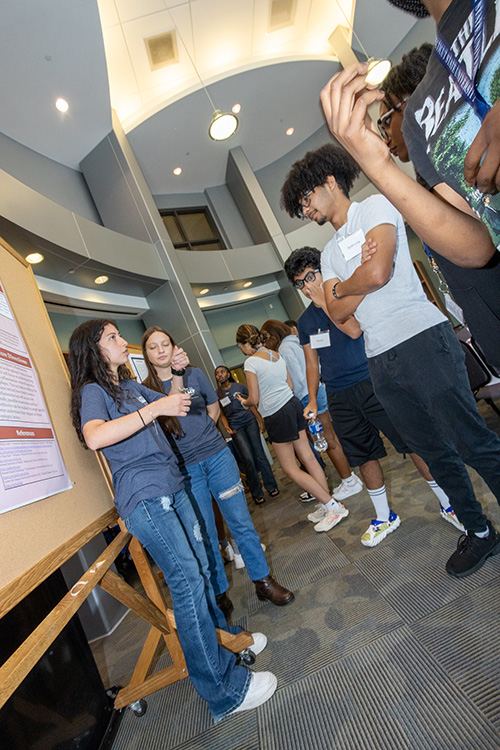
STEM scholars Abigail Lallis (left) and Sadé Dean-Salgado present at the closing ceremony.
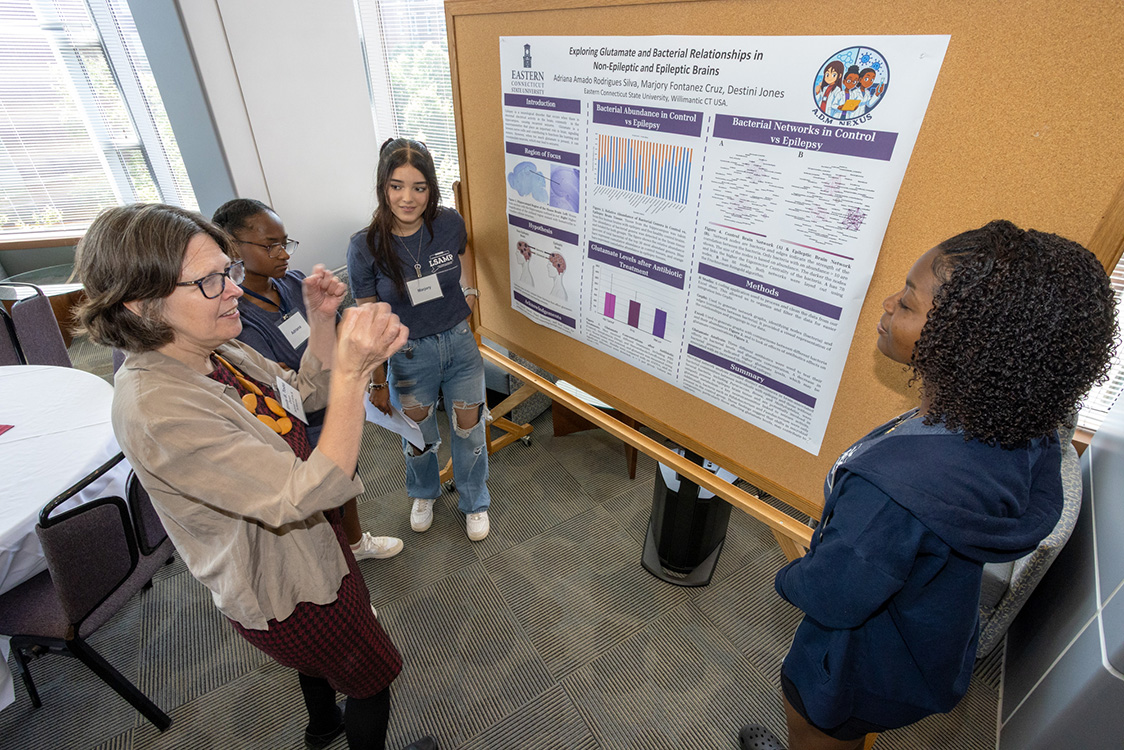
Dean of Arts and Sciences Emily Todd (left) engages with STEM scholars at the closing ceremony.
President Ismaili addresses STEM students.
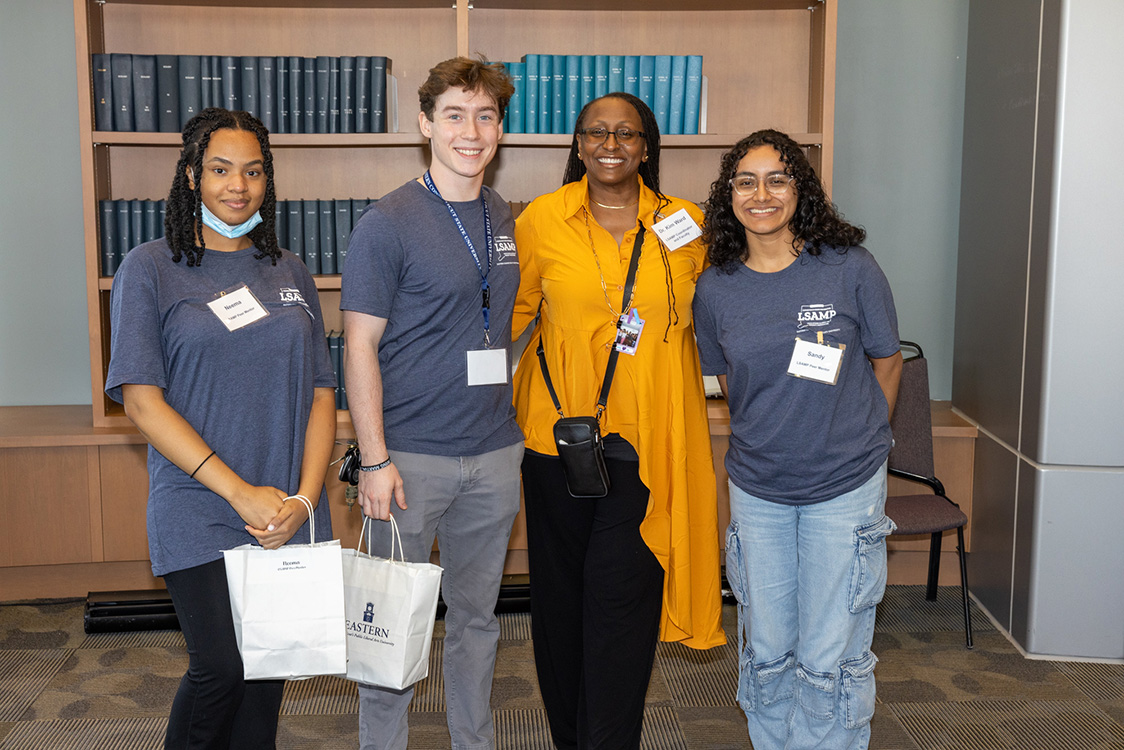
Mathematical science Professor Kim Ward (second from right) celebrates with scholars at the closing ceremony.
In the summer research institute for sophomores, Professors Garrett Dancik of computer science, Megan Heenehan of mathematics, and Kurt Lucin of biology directed an interdisciplinary project. The primary research topic was analyzing microbiome data from mouse and human brain samples. Students conducted a network analysis of the data.
Projects explored differences in the microbiome of a healthy human brain and in a human brain with epilepsy, and whether pet store mice or lab-bred mice brains are more like human brains.
Sophomore biochemistry major Gigi Perry explained that the research helped her expand upon her preexisting interest in the human brain. “The brain really fascinates me; I want to learn about how certain things affect the way your brain reacts and processes things,” said Perry.
“We’ve been working on creating networks and looking at how certain bacteria connect with each other and how the microbiome interacts. We’re even looking at actual mouse brains.”
She continued: “When I first learned about this program for minority students, I figured it would be something good to put on my resume. It gives us an opportunity to explore career paths or experience different things to help us figure out what we want to do.”
Sophomore biochemistry major Naema Charles explained that she initially signed up for the program to get a step ahead in academic work, but also ended up creating meaningful friendships among her peers.
“This is my second year doing this program, and I’ve stuck with some of the people I met (last summer) through my entire first year at Easten,” said Charles. “They’re some of the closest people I have in college.
“You get to do all this different stuff, and you get a head start on the school year.”