
- Apply
- Visit
- Request Info
- Give



Written by Noel Teter '24
Published on July 17, 2025
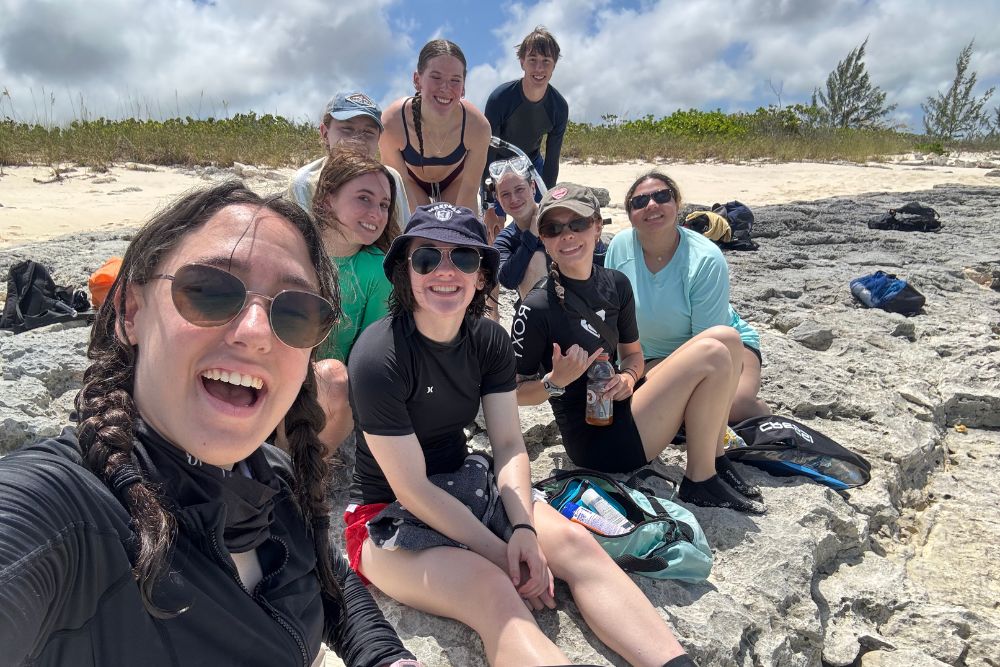
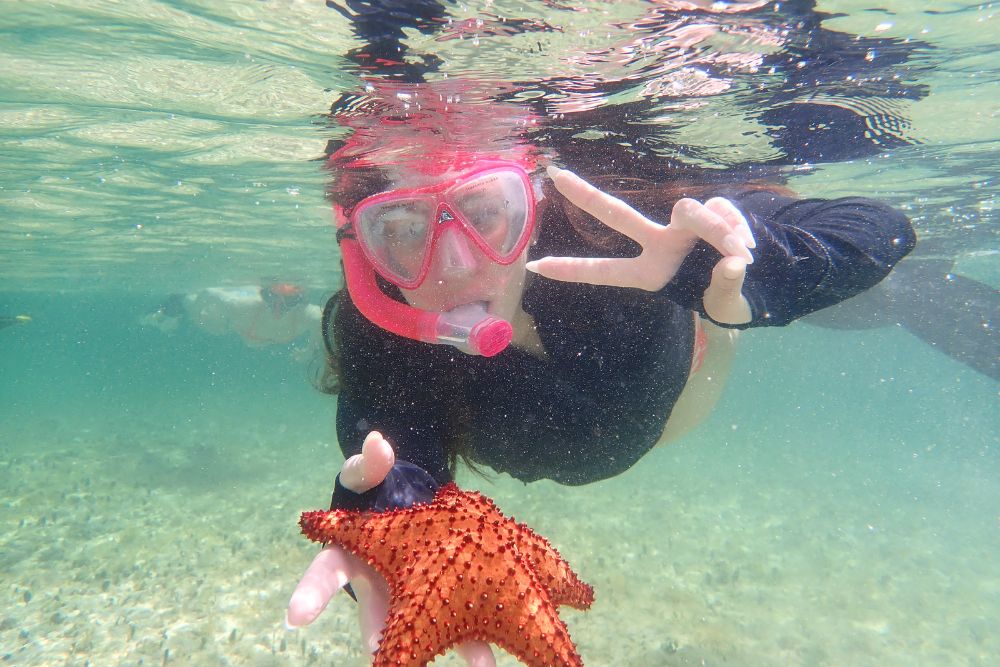
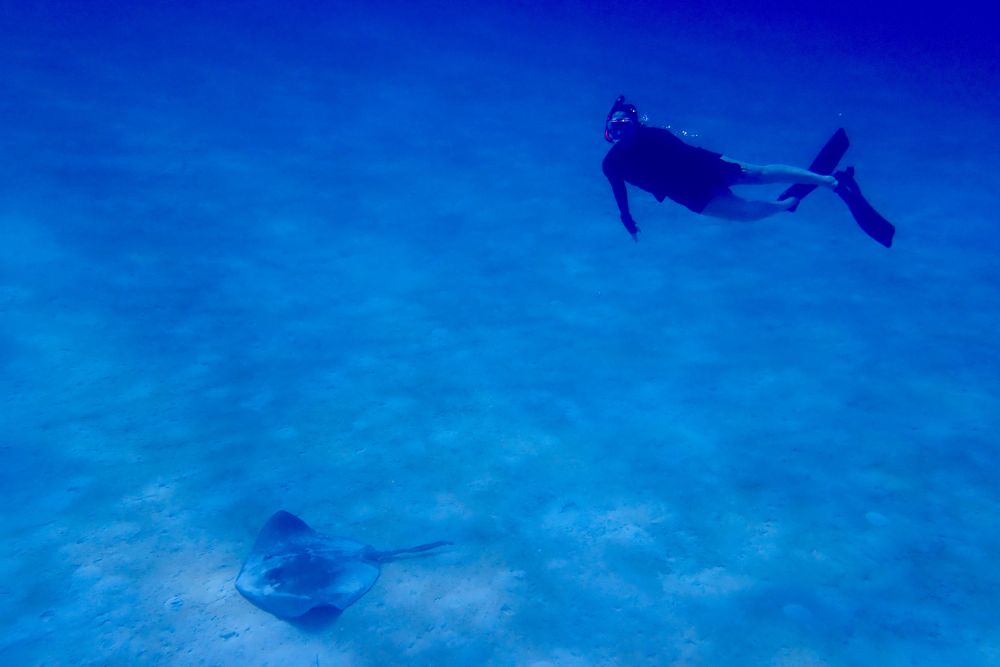
Isabella Symington-St. John '25 snorkels with a starfish in the Bahamas.
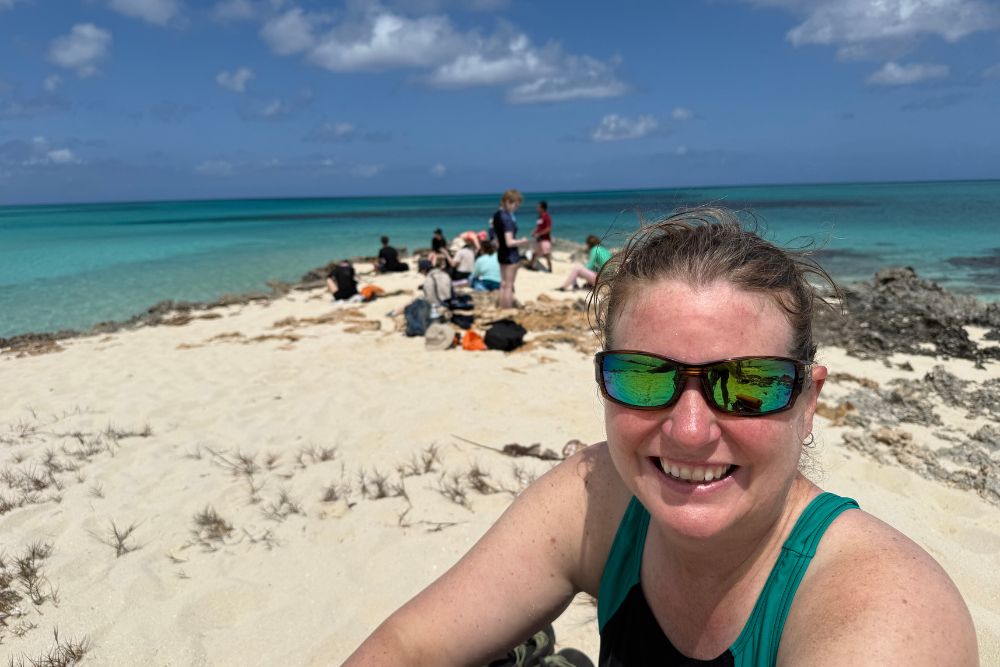
Biology Professor Kristen Epp
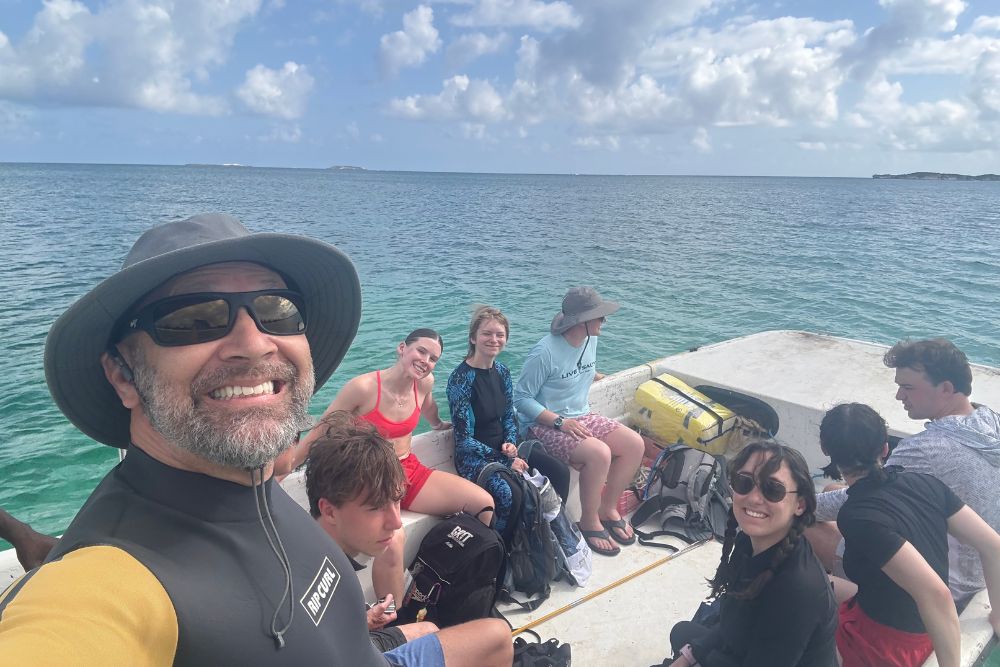
Biology Professor Josh Idjadi (left) leads a study session from a boat in the Bahamas.
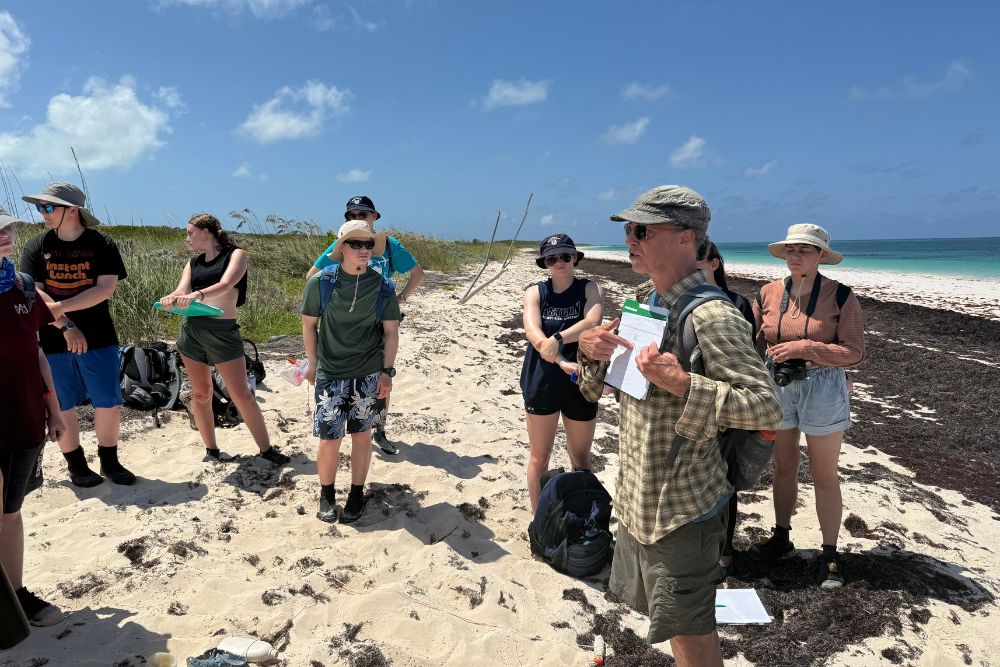
Biology Professor Brett Mattingly (second from right) leads a study session on a beach in the Bahamas.
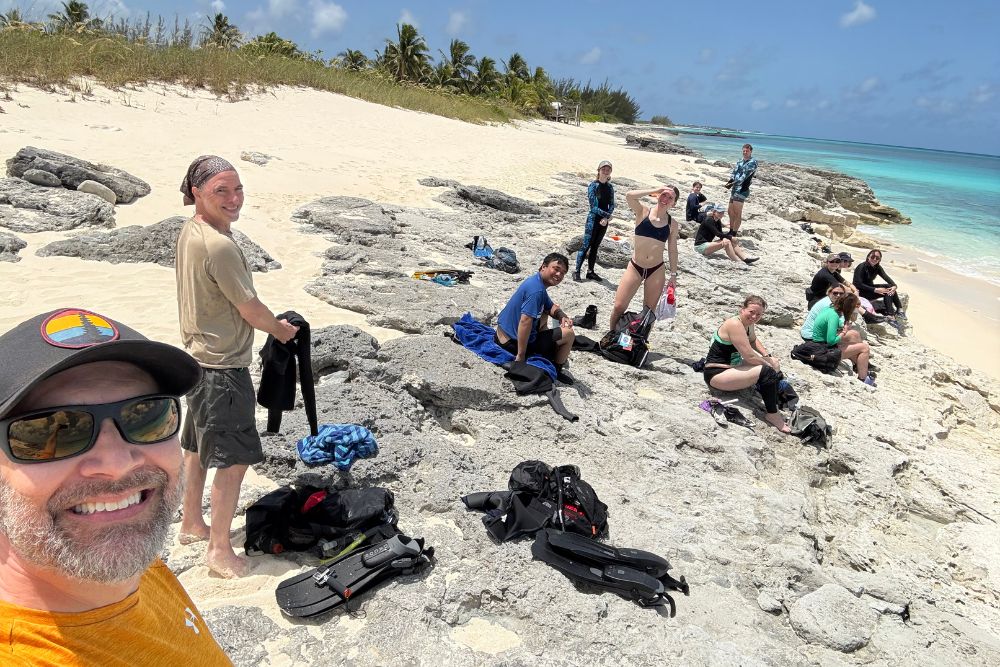
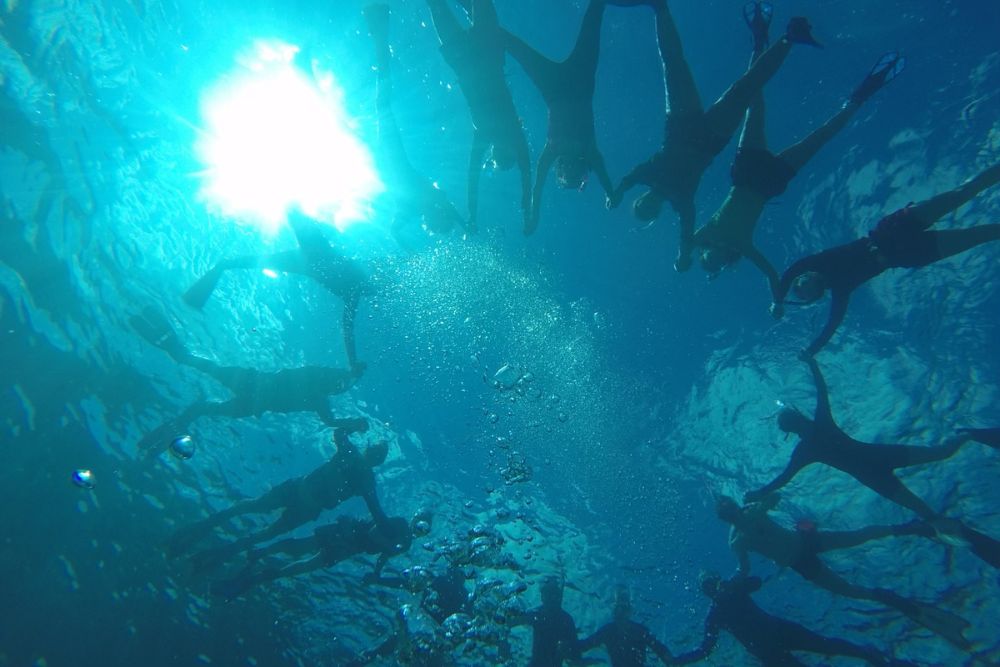
Thirteen biology students at Eastern submerged themselves in research on oceanic ecosystems as part of two global field courses (GFCs) on San Salvador Island in the Bahamas this past May 2025. The courses, titled “Oceanic Island Ecology” (BIO 319) and “Tropical Biology” (BIO 320), were taught collaboratively by biology Professors Kristen Epp, Brett Mattingly, and Joshua Idjadi.
BIO 319 focuses on the ecology and biogeography of aquatic and land animals on oceanic islands and surrounding waters. Its corequisite, BIO 320, covers the biology of terrestrial and marine ecosystems of tropical islands and includes a 10-day field excursion to the Bahamian island of San Salvador.
The courses aim to deepen students’ understanding of how tropical species interact with living and non-living components of their environment, how the conditions of these environments have changed over time, and the human-caused factors that threaten tropical ecosystems. Students studied at sites such as beaches, coral reefs, mangroves, caves, sand dunes, and mud flats.
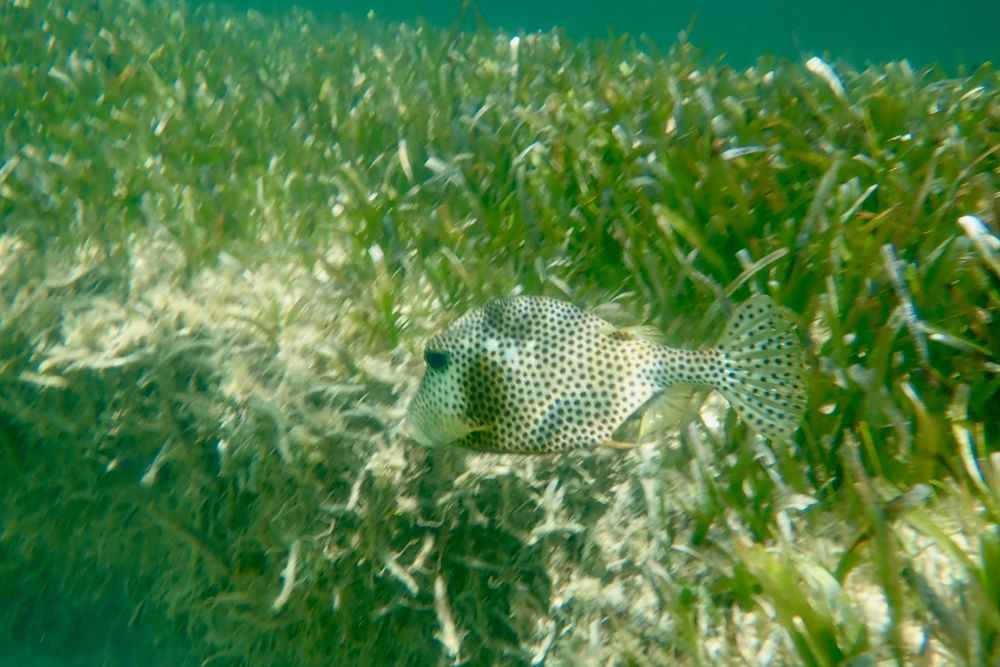
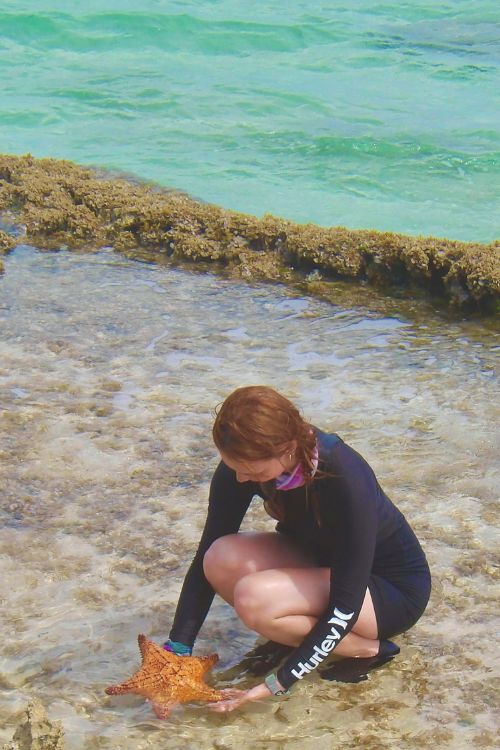 Wildlife sightings were abundant. “We saw various reef fish, including sharks, rays, eel, and parrotfish,” said Epp. “We also saw massive spiny lobsters and a couple of students even got a glimpse of a Caribbean manta ray, which is a first for our group.”
Epp was struck by the inspired attitude of the students. “Their work ethic and attitudes made for an excellent group dynamic and made everything as fun as it could be, even on a couple occasions when field conditions were challenging,” she said.
Isabella Symington-St. John ’25, who took the course and the trip, will attend the University of the Virgin Islands beginning in the fall to pursue a graduate degree in marine and environmental science. “Academically, this trip was exactly what I needed to get my gears turning about future research projects,” she said.
“The field sites provided me with knowledge that I will use in my future research with mangroves and during my graduate research diving class.”
She found serendipity in the course being her last at Eastern, taking a holistic view of its role in her education. “Looking back on my time at Eastern and all the upper-level classes I have taken, I realize that this course has helped me appreciate the value of all the courses I have taken,” she said.
Symington-St. John also connected with her family’s history through both her travel and her research. “My biological mother is Bahamian, and my uncle lived and worked in (the Bahamian island of) Eleuthera as a biologist for almost a decade,” she said. “Both of those factors made me feel quite connected to San Salvador in a way I never could have imagined.”