
- Apply
- Visit
- Request Info
- Give



Written by Noel Teter '24
Published on December 15, 2025
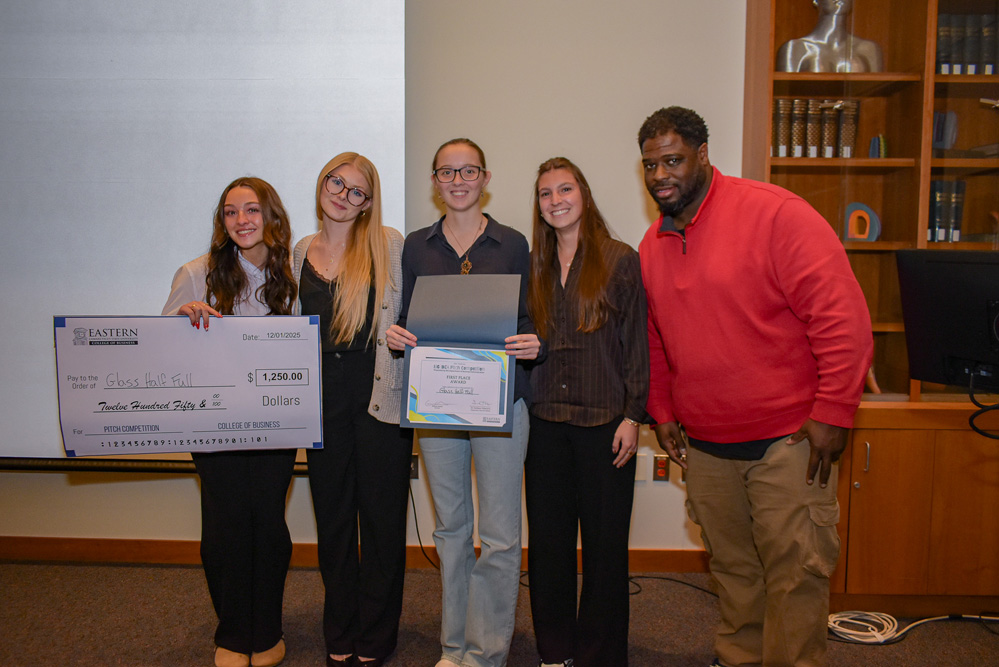
The "Glass Half Full" team celebrates its first-place recognition at the third annual Big Idea Pitch Competition.
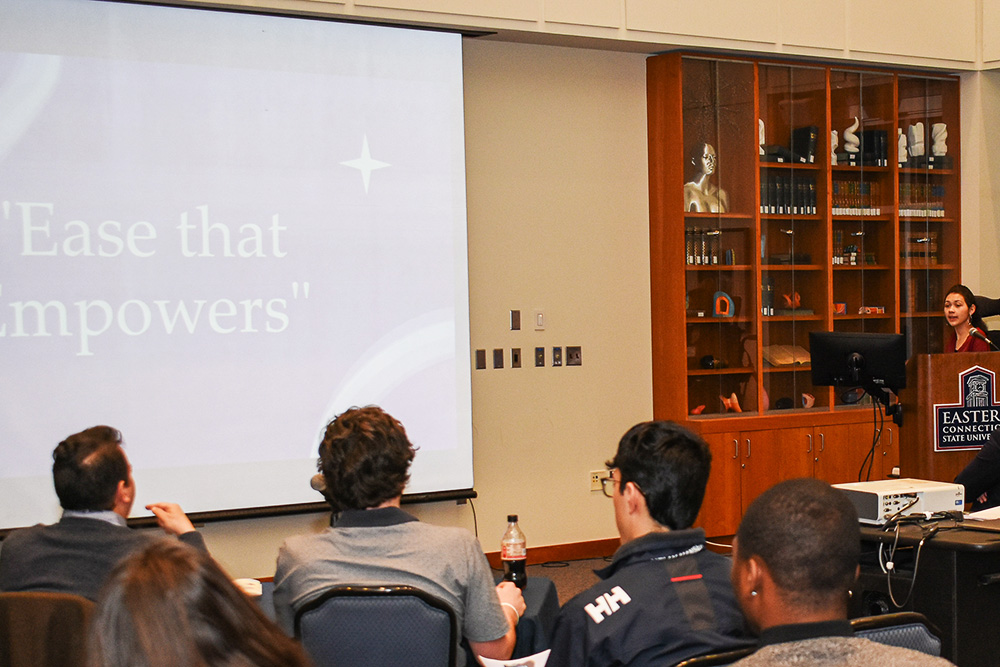
Abby Dreyer presents her business, "Adapt Attire."
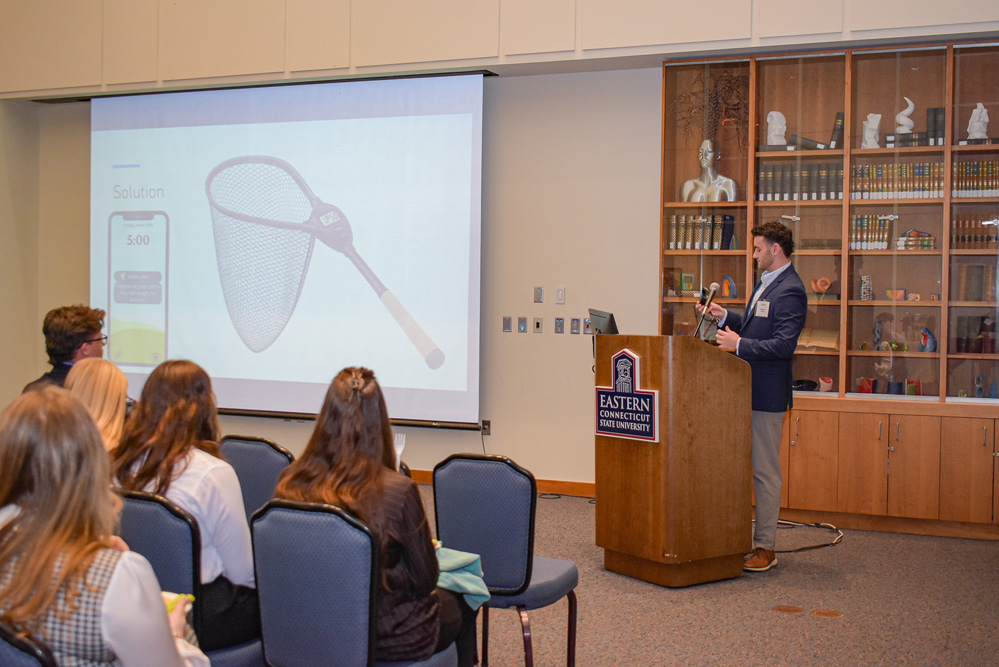
Matthew McManus presents his business, "Safety Net."
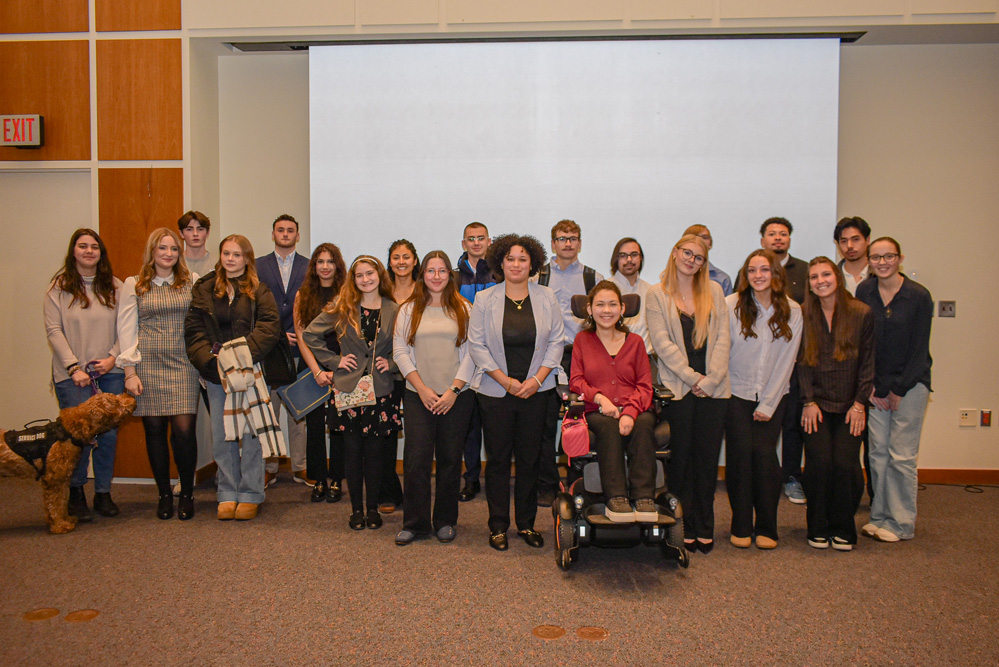
Participants in the third annual Big Idea Pitch Competition pose for a group photo.
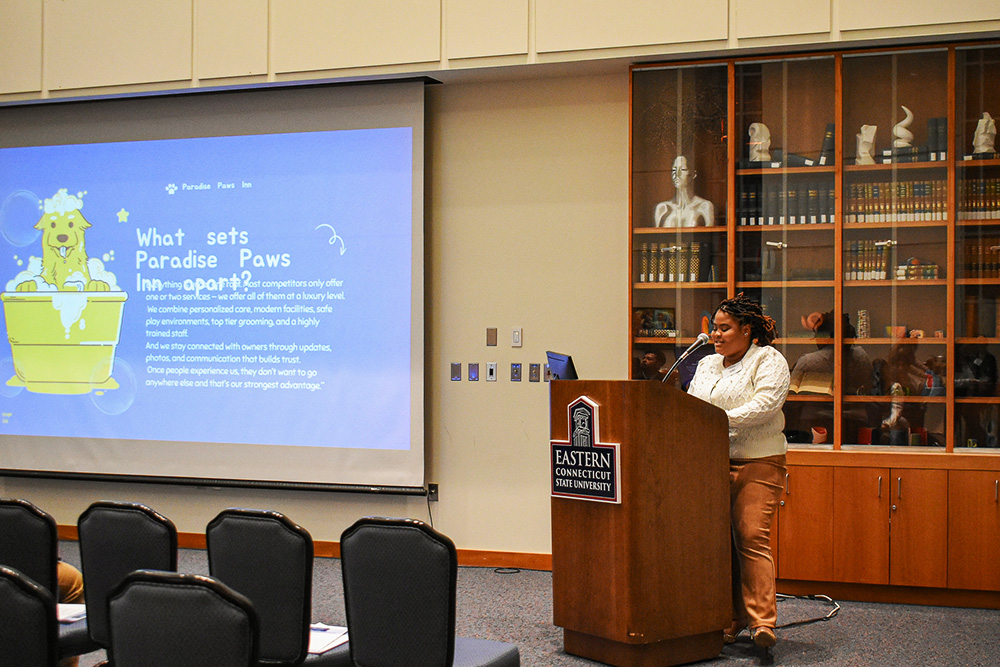
Kaliya Dawkins presents her business, "Paradise Paws Inn."
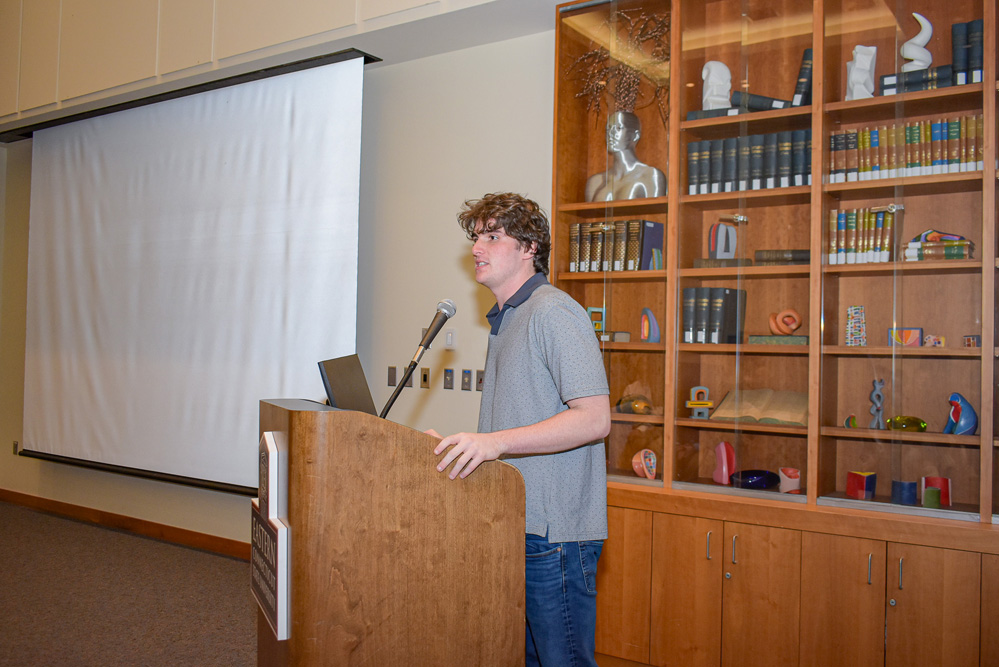
Ray LaPointe '25, panelist and founder of last year's third-place winner, "Spark Social," speaks at the contest.
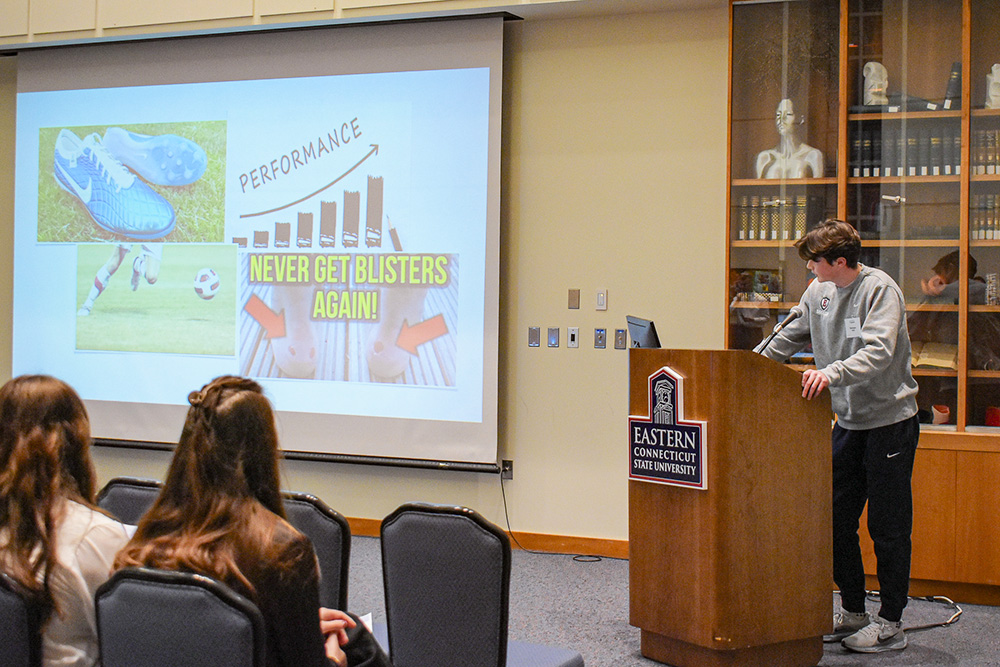
Remington Walsh presents his business, "Archeon: Lockdown Pro."
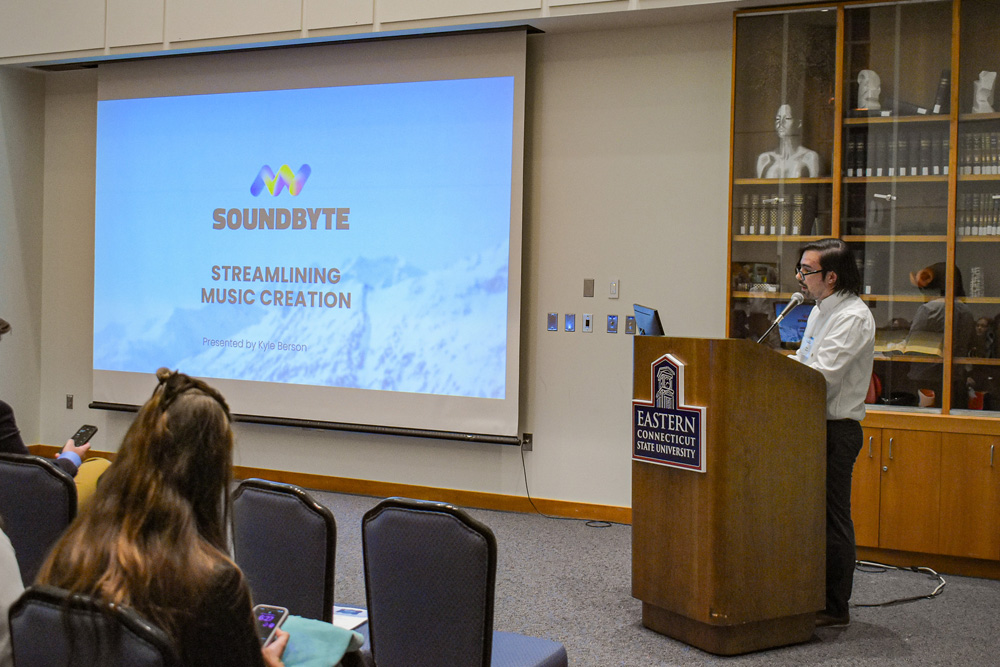
Kyle Berson presents his business, "SoundByte."
Eastern students showcased their entrepreneurial skills at the College of Business’s third annual Big Idea Pitch Competition on Dec. 1 at the J. Eugene Smith Library. The “Shark Tank”-style contest featured 20 original business ideas, presented by Eastern students to a panel of faculty and staff members.
Businesses showcased at the event included a hotel for pets, anti-blister soccer cleats, a social networking service for musicians, a dressing aid for individuals with disabilities, and more.
To enter the competition, students were required to write a one-page summary of their business idea. Pitches consisted of a three-minute presentation followed by five minutes of questions from the judges. Presentations were scored on originality, the nature of the problem, and the feasibility of the solution.
Judges included business administration Professor and Department Chair Emiliano Villanueva and Lecturer William Moylan, Center for Sustainability Studies Executive Director Patricia Szczys, Chartwells General Manager Carolyn Hetrick, and Raymond LaPointe ‘25, who won third place at last year’s competition for his social networking app “Social Spark.”
First place: ‘Glass Half Full’
The first-place winner was “Glass Half Full,” a clothing brand by Rachel Popiel, Sydney Goyette, Jillian Miller, Addison Soleau, Karissa Slosek, and Bella Romero that promotes optimism. The team was awarded $1,250 to jump-start the business.
“We all collectively chose to come together for this project because in troubling times we want to make a positive difference and promote optimism,” wrote Popiel on behalf of the Glass Half Full team.
A challenge for the team has been to balance marketing with creating its products. “It’s one thing to have the vision of starting the brand and finding graphics,” wrote Popiel, “but it’s a whole other project to do manufacturing and budgeting.”
The Glass Half Full team credits business administration Lecturer Ashon Avent, who owns a custom merchandise business called “T-Shirt World,” for supporting their brand. “He encourages students and forces us to be confident in our work,” said Popiel. “Without him, Glass Half Full would never have happened.”
The team also praised its fellow student entrepreneurs for boldly presenting their business ideas before experienced professionals. “While watching the pitch competition, we all loved seeing other brave entrepreneurs share their ideas and motivations,” wrote Popiel.
“Although they were our ‘competition,’ we were happy to see students get the recognition they deserve.”
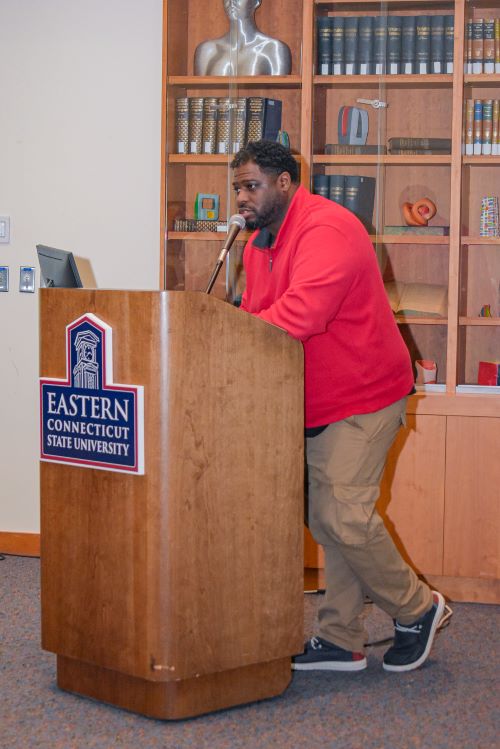
Business administration Lecturer Ashon Avent speaks at the competition.
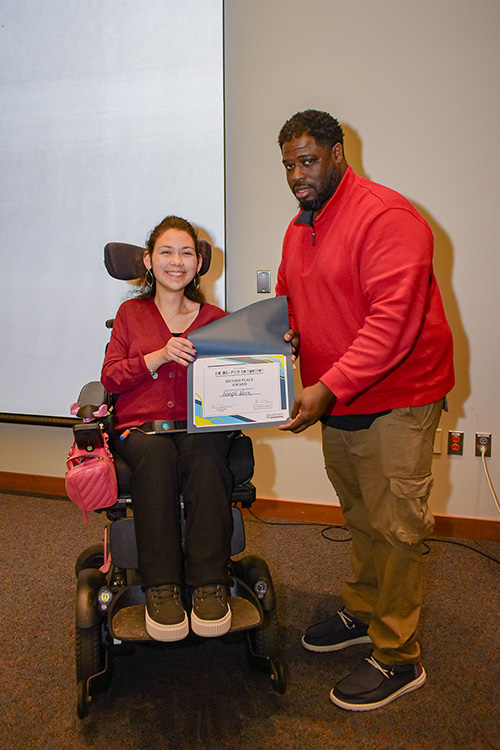
Abby Dreyer (left) and Ashon Avent celebrate Dreyer's second-place recognition.
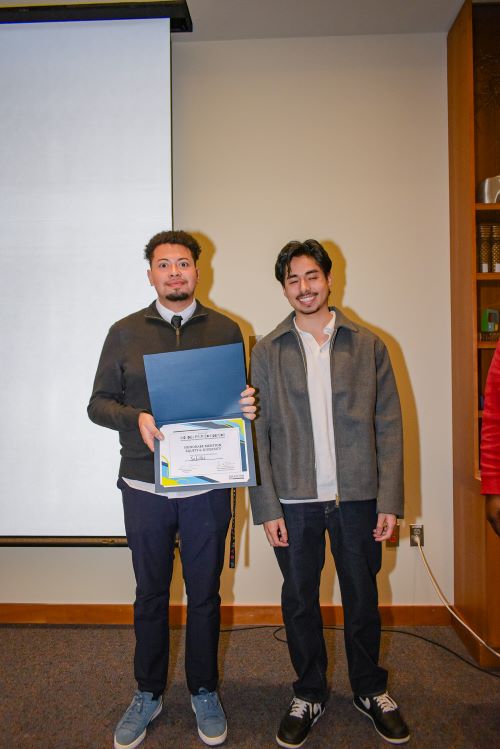
Eduardo Caceres-Zuniga and Abraham Flores accept an honorable mention in equity and diversity for "SaluNet."
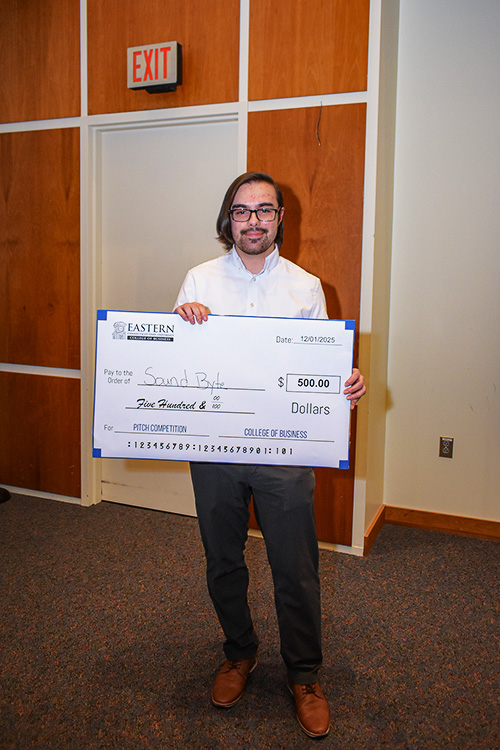
Kyle Berson collects his $500 check for finishing third.
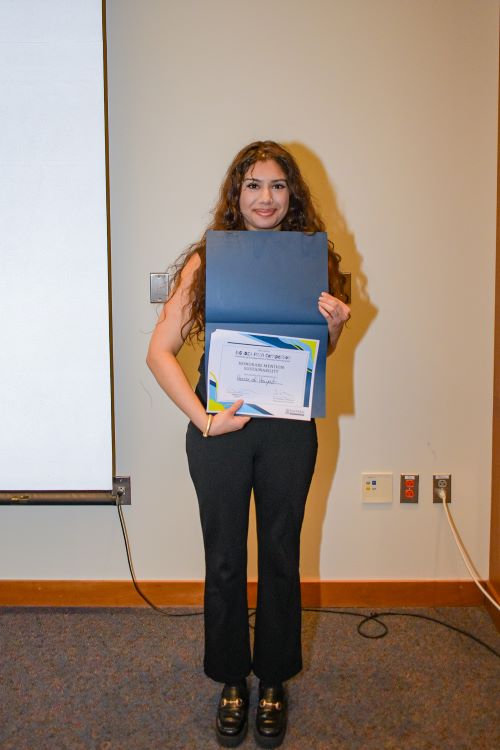
Priyana Kale earns an honorable mention in sustainability for "House of Hayat."
Runner-up: ‘Adapt Attire’
Abby Dreyer’s “Adapt Attire,” which aims to supply devices to make dressing easier for people with limited mobility, won second place and a $750 prize. Adapt Attire’s main product is a device used to put on and remove waist-down clothing items.
“Creating the main product, there were definitely some bumps in the road,” wrote Dreyer. “It took a good amount of prototyping and trial and error to figure out a system that would function feasibly.”
Dreyer, like Glass Half Full, praised Avent for the supportive environment he creates in his classes. “Professor Avent is someone who wholeheartedly cares about his students and their success,” she wrote. “He convinced me to do the competition last year, and it didn't take nearly as much convincing to get me to come back.”
Dreyer is in the early stages of business creation and feels Adapt Attire is marketable but has a long way to go. “I have a functional product and a feasible business plan,” she wrote. “It could be a cool idea to bring to the market, but I would first want to refine my prototype, test it with more users, and make it the best and most accessible it can be.”
Second runner-up: ‘SoundByte’
Placing third was Kyle Berson’s “SoundByte,” a networking and marketplace platform for musical artists unsigned to record labels, intended to improve their access to local music scenes and production professionals. Berson won $500 to advance his efforts.
“Independent artists have unequal access to audio engineers, producers, instrumentalists, etc.,” wrote Berson. “SoundByte aims to make those resources accessible to as many musicians as possible.”
Describing SoundByte as “Fiverr for music,” Berson outlined the platform’s two main services: a proximity-based social media network intended to help musicians familiarize with their local scenes and a two-sided marketplace where musicians can connect with industry professionals and resources.
Berson was pleasantly taken aback by the interest in SoundByte at the competition — “I had multiple students and staff ask about the concept,” he wrote. “Those interactions inspired me to explore the idea further over the winter session.”
Berson saw the competition as a beneficial exchange of knowledge and information. “From Adapt Attire's device that helps individuals with disabilities get dressed in the morning, to a self-cleaning hairbrush, to a fish weight that reduces injuries and fatalities in catches, Eastern's practical and creative thinking never fails to amaze me,” he wrote.
Two honorable mentions were also awarded. Eduardo Caceres-Zuniga and Abraham Flores earned an honorable mention in diversity and equity for “Salunet,” and Priyana Kale won an honorable mention in sustainability for “House of Hayat.”