
- Apply
- Visit
- Request Info
- Give



Written by Darlene Orozco B. '28
Published on December 10, 2025
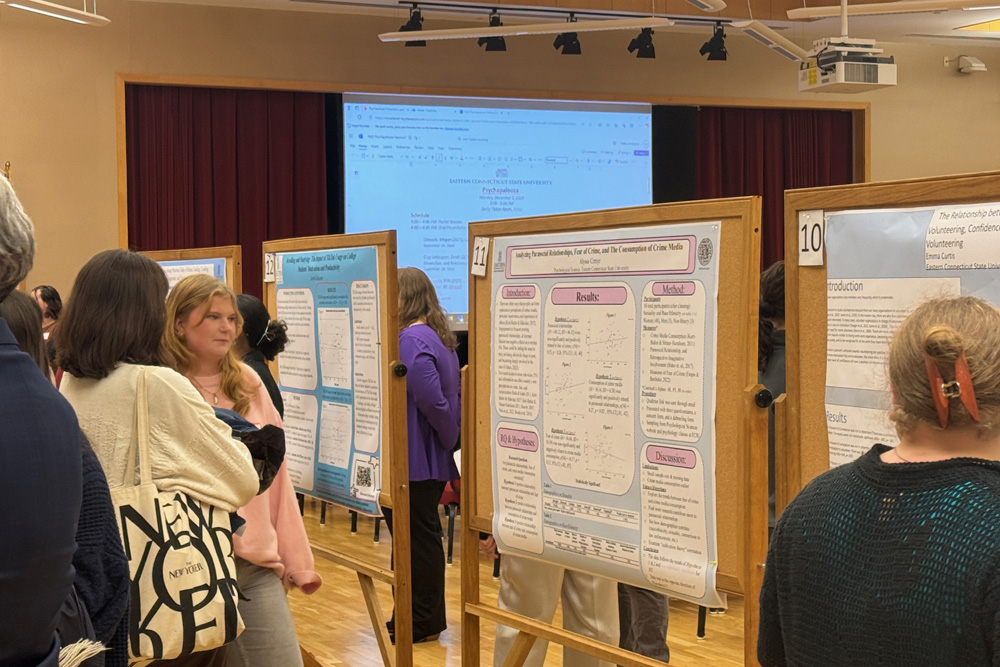
Psychology students present their research findings during fall 2025 Psychapalooza.
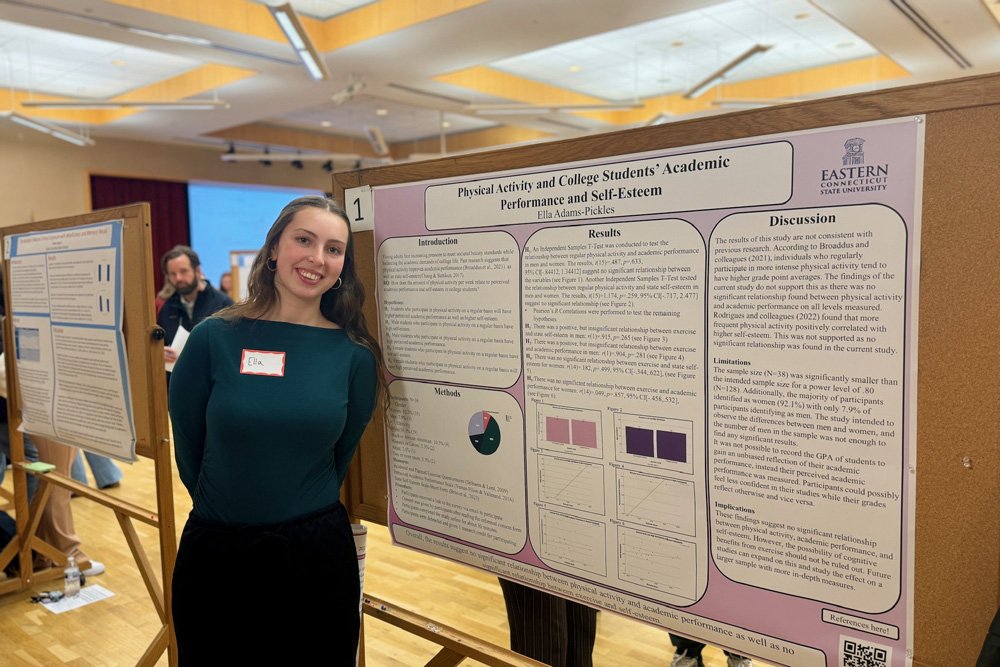
Psychology students present their research findings during fall 2025 Psychapalooza.
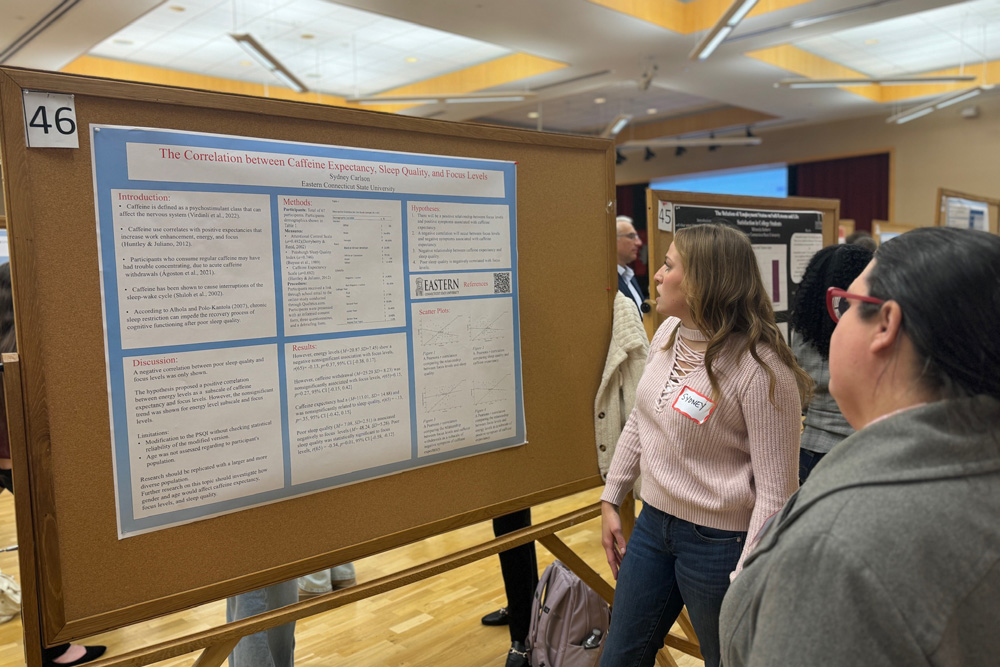
Psychology students present their research findings during fall 2025 Psychapalooza.
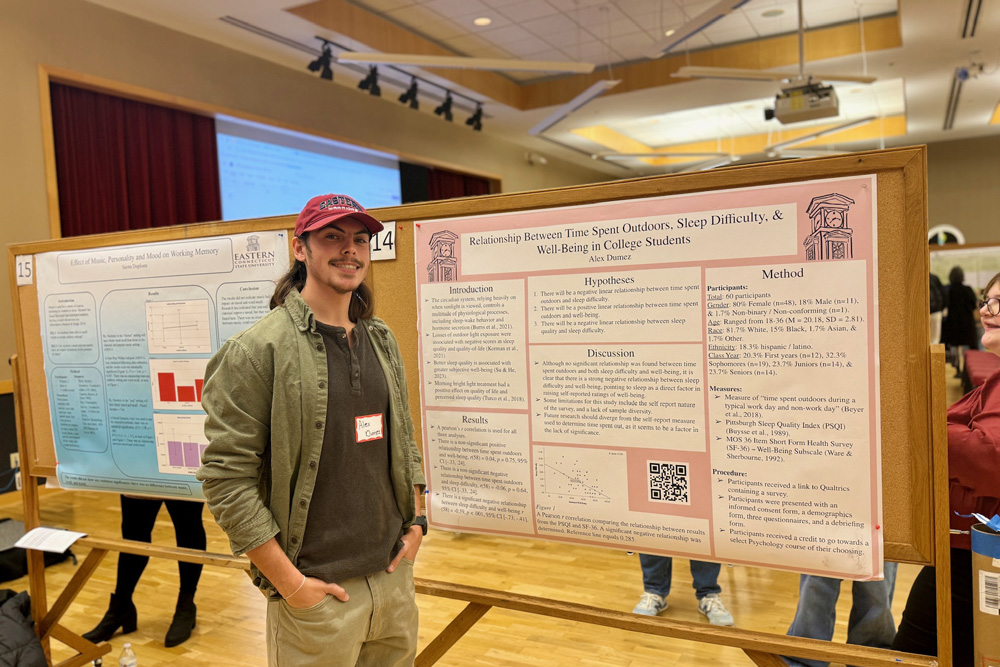
Psychology students present their research findings during fall 2025 Psychapalooza.
Psychology students present their research findings during fall 2025 Psychapalooza.
Psychology students present their research findings during fall 2025 Psychapalooza.
Psychology students present their research findings during fall 2025 Psychapalooza.
Psychology students present their research findings during fall 2025 Psychapalooza.
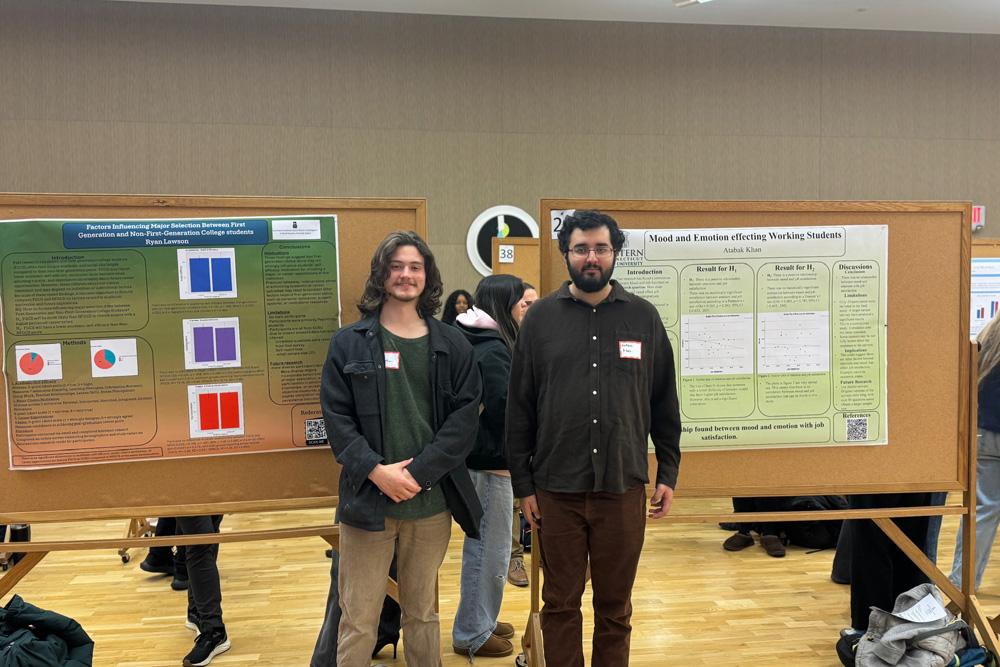
Psychology students present their research findings during fall 2025 Psychapalooza.
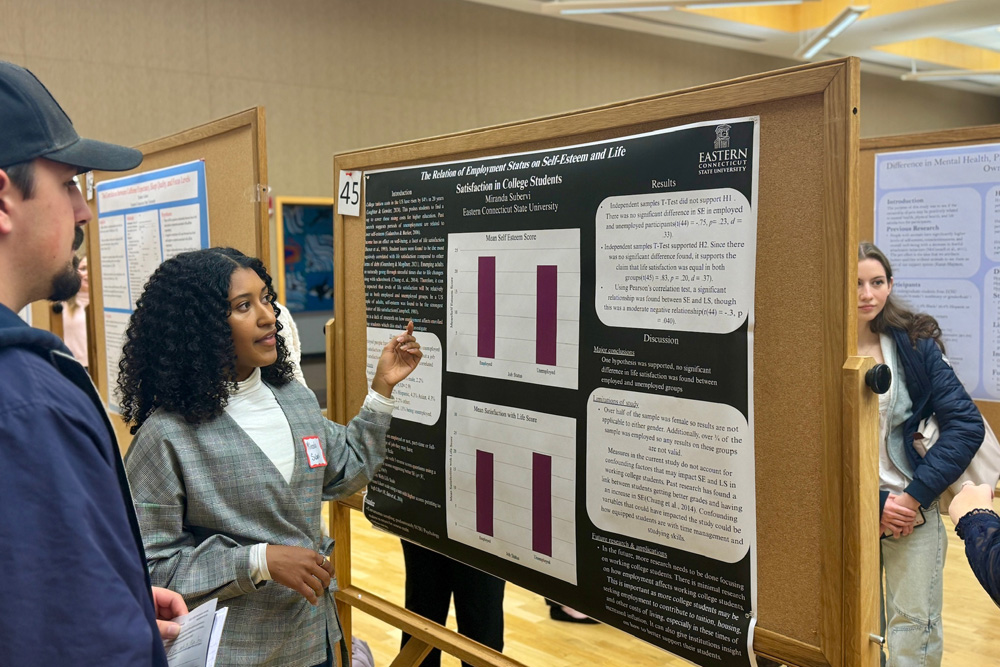
Psychology students present their research findings during fall 2025 Psychapalooza.
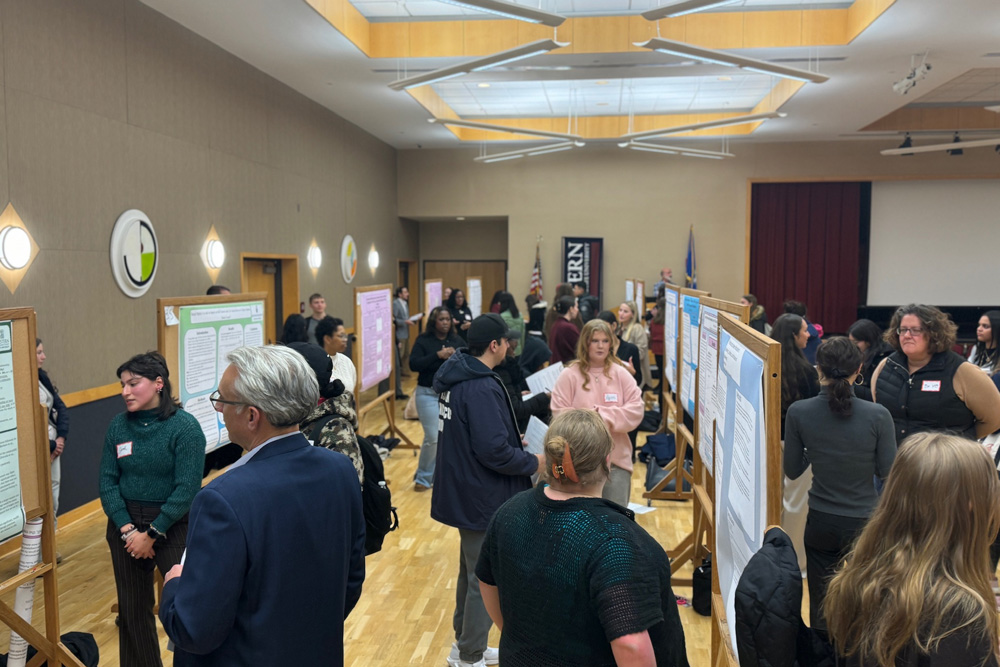
Psychology students present their research findings during fall 2025 Psychapalooza.
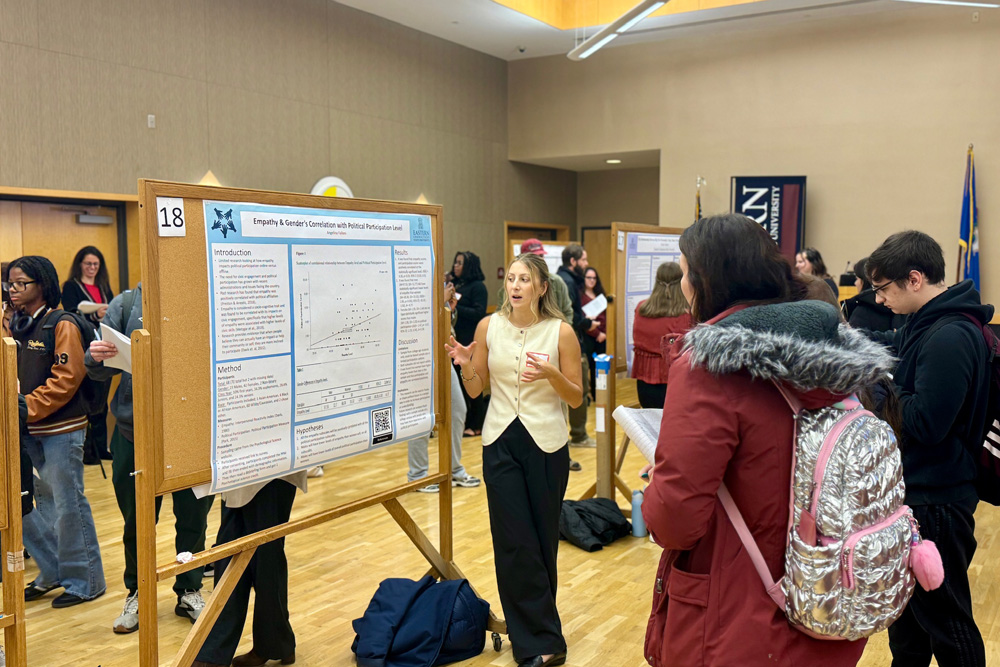
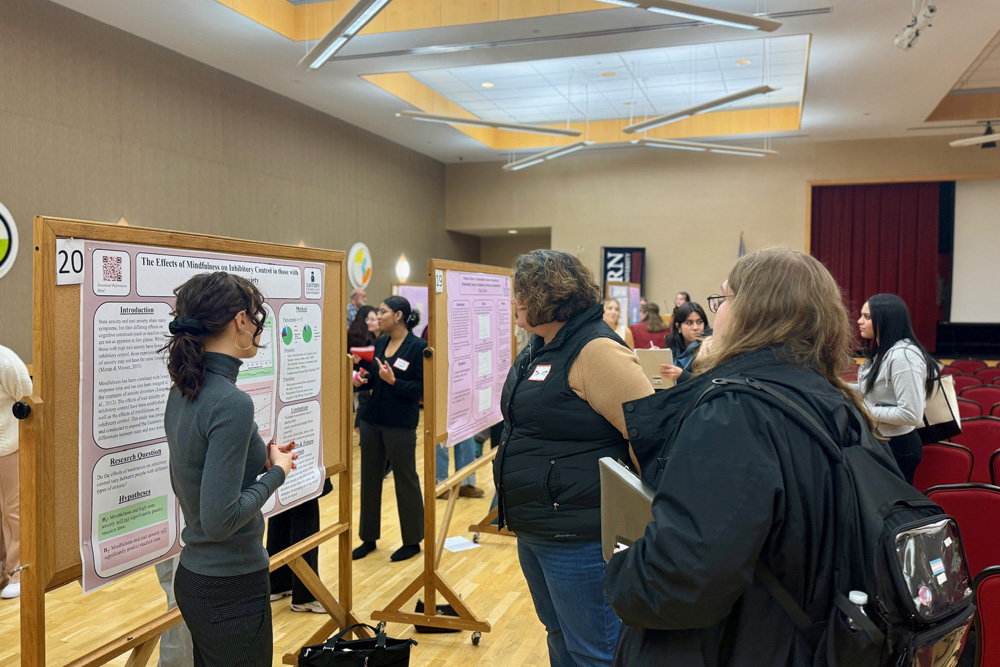
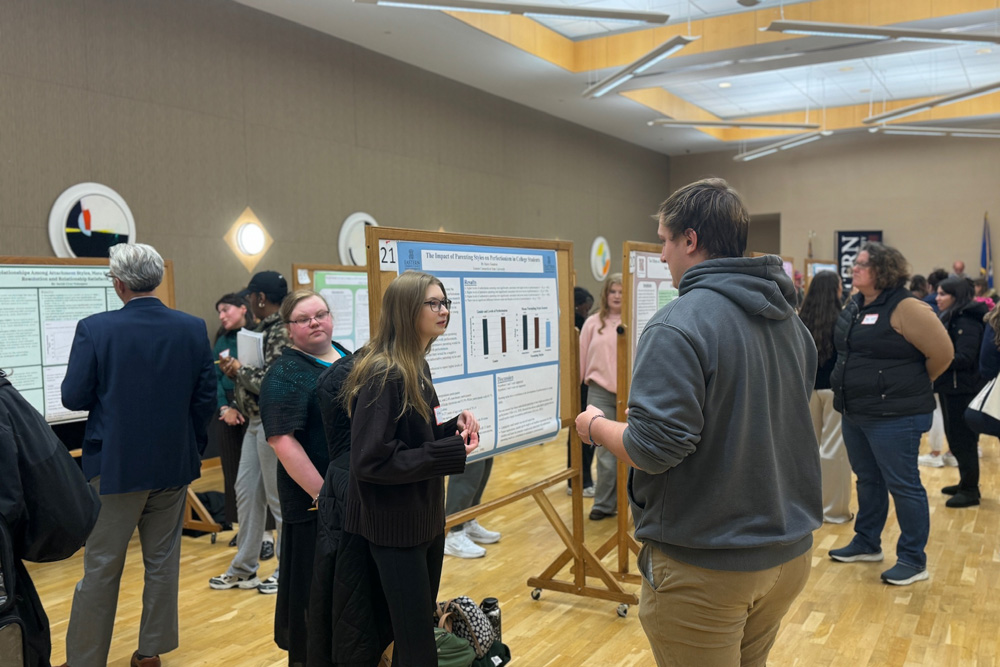
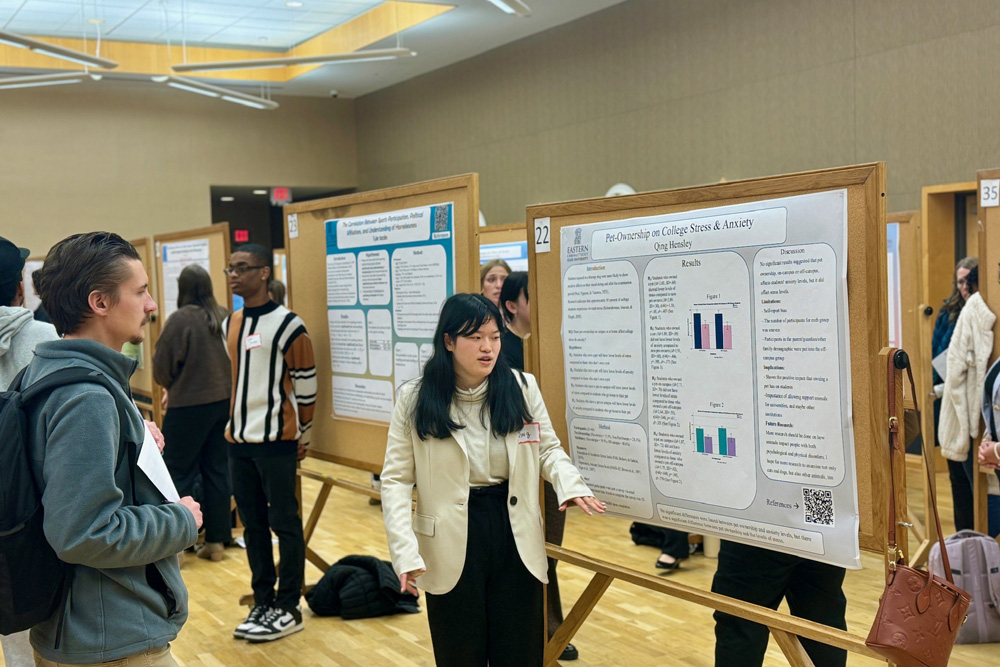
Eastern’s Department of Psychological Science hosted its semesterly research showcase, “Psychapalooza,” on Dec. 1 in the Student Center's Betty R. Tipton Room. A culmination of semester-long projects for students enrolled in “Research Methods II," the event featured more than 50 poster presentations and three student speakers.
Students began their projects during the previous semester’s “Research Methods I” course, in which they proposed original hypotheses, designed their studies, and gathered previous literature. After passing this course, they move on to "Research Methods II," conducting their research, analyzing data, and communicating their findings.
According to psychology Professor Peter Bachiochi, students get to see “how an extensive research process works ... and [Professors] get to show off the significant work that our students do.”
Among the students was Payton Keefe, who presented her findings on the role of neuroticism in the relationship between social media, romantic relationship satisfaction, and social comparison.
Neuroticism, a tendency toward negative emotions, is associated with social media use and social comparison, according to Keefe. “I’ve always been interested in how social media affects us,” she said. “[My] findings align with previous studies, showing that passive browsing and neuroticism increase social comparison within romantic relationships.”
MaryGrace Dufault studied the associations between cooking engagement, nutritional beliefs, and perceived value of home cooking. “Results could help guide healthy eating initiatives by focusing on home cooking as a strategy for healthy eating,” she wrote.
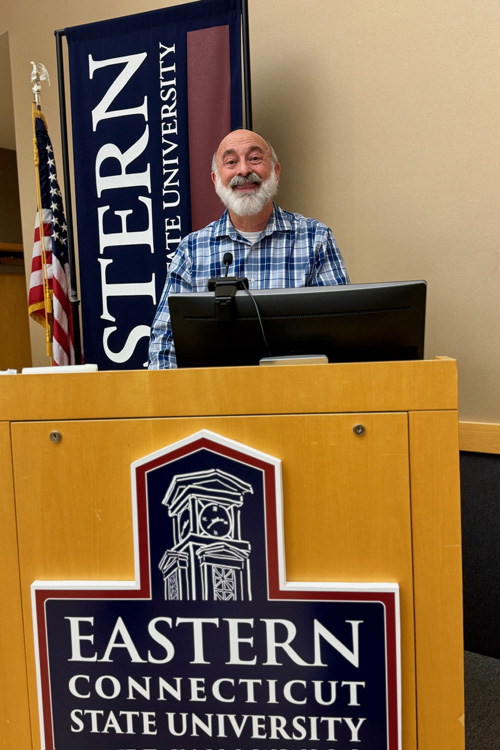
Psychology professor Peter Bachiochi gives welcoming remarks.
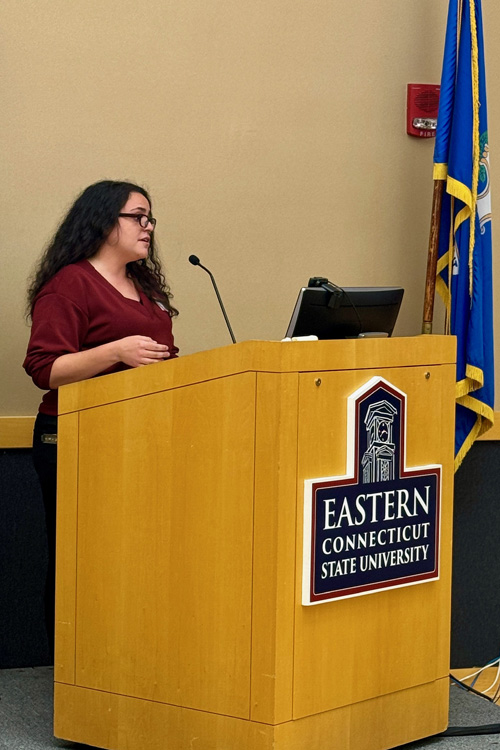
Megan Cassada presents research on college students' perspective on AI.
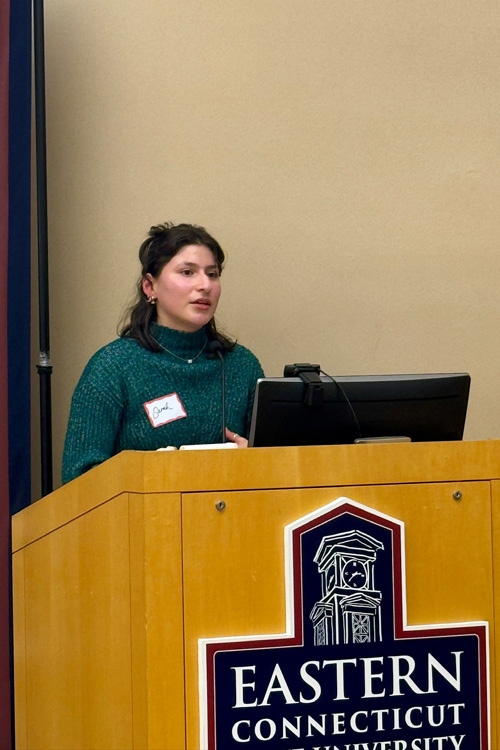
Sarah Cruz Velasquez presents research on the relationship among attachment styles, mate retention , conflict resolution, and relationship satisfaction.
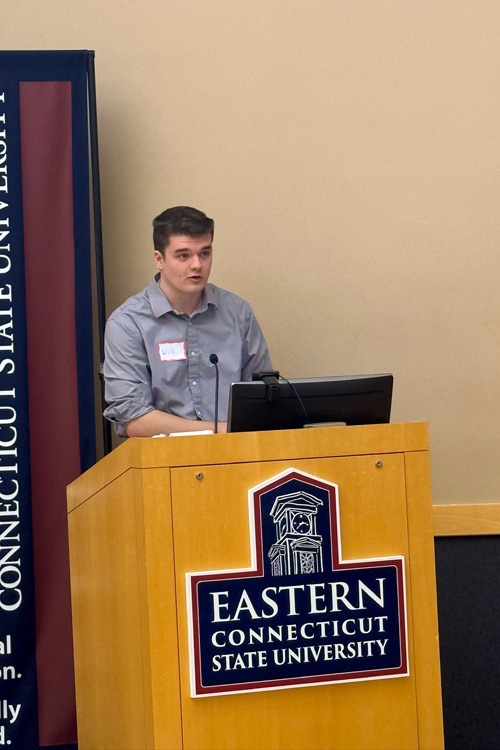
Will Warkentin presents research on the effects of listening to music while studying.
Alyssa Clarke examined the relationship among academic self-confidence, perceptions of success, and gender traits among university students. She found a positive correlation between perceived success and self-confidence.
“These findings support implementing more achievement-based experiences for students to participate in so that they feel more content with their academic self-confidence,” wrote Clarke.
Many students had limitations in their studies, including missing data and self-reported bias. The most prevalent was the lack of diversity in their samples.
“One limitation is a small and non-diverse sample size, which makes it difficult to recruit a representative group and limits generality,” said Jacelyn Forbes, who studied the effects of mindfulness on inhibitory control in those with different types of anxiety.
ORAL PRESENTATIONS
Following the poster presentations, three students held oral presentations of their findings.
Megan Cassada explored Eastern students’ perspectives on artificial intelligence (AI), ranging from attitudes, literacy, and existential anxiety.
“The purpose of this study is to explore how students feel about AI, how much they think they understand it, and whether or not it brings them existential anxiety,” said Cassada.
Sarah Cruz Velasquez presented her research on the relationships between attachment styles, mate retention, conflict resolution, and relationship satisfaction.
Cruz Velasquez found that avoidant attachment scores were significantly and positively related to relationship satisfaction scores.
William Warkentin presented his findings on listening to background music while studying, and whether it is actually beneficial for students.
“Concurrent with previous research, background music neither helps nor hurts learning, and the factor of familiarity of the music is also not a factor,” Warkentin said.