
- Apply
- Visit
- Request Info
- Give



Written by Elisabeth Craig '26
Published on December 08, 2025
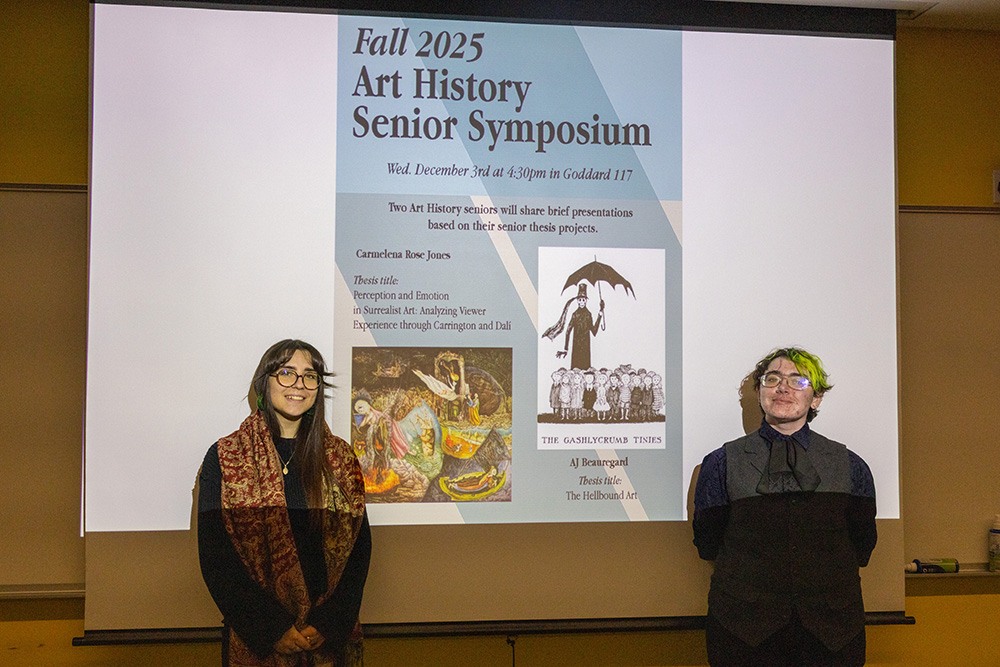
Two students in Eastern’s Department of Art and Art History recently showcased their research exploring surrealist and gothic art. Seniors Carmelena Jones and AJ Beauregard presented their senior theses in a symposium on Dec. 3 in Goddard Hall, focusing on artists who specialized in the abnormal.
Carmelena Jones
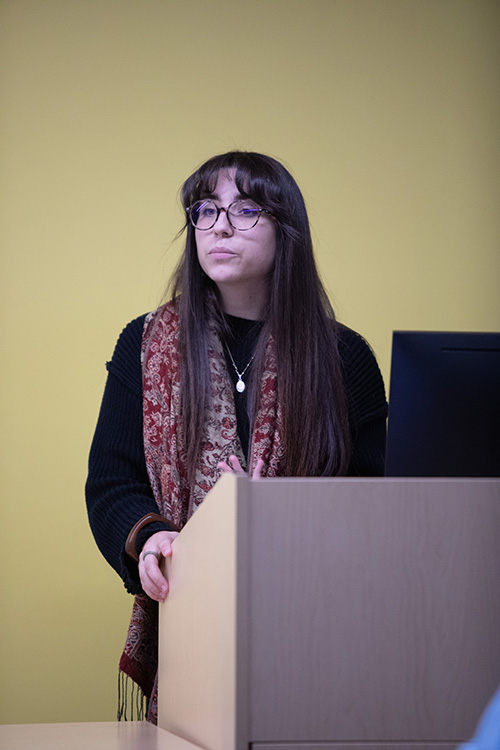
Jones’s thesis, titled “Perception and Emotion in Surrealist Art: Analyzing Viewer Experience through Carrington and Dali,” drew from the works of 20th-century surrealists Salvador Dali and Leonora Carrington and the otherworldly effects their paintings have on the viewer.
“Art taps into the subconscious and dreamlike scenescapes, alluring the viewer to reflect upon their innermost curiosities and desires,” said Jones. “Emotions elicited through surrealist art cannot be reduced to a simple explanation; we are drawn not only to comfort, but to the odd, uncertain, and disturbing.”
Jones compared Dali's eerie painting “Metamorphosis of Narcissus” to Carrington’s “Sidhe, the White people of Tuatha dé Danaan,” noting the comfort that Carrington’s painting inspires versus the displacement that Dali's work gives its observers.
“Carrington’s painting evokes nostalgia, warmth, and a sense of communal harmony, yet introduces a subtle unease, blending comfort with the uncanny,” said Jones. “Dali’s distorted, agonized dreamscapes come from a place of deep turmoil. ... His work makes you appreciate human feelings of shame, guilt, and disgust.”
AJ Beauregard
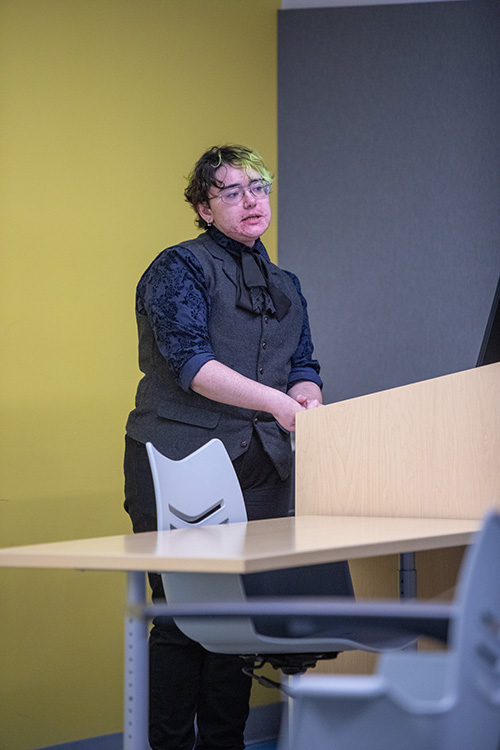
Beauregard's thesis, titled “The Hellbound Art,” was an exploration of gender and sexuality through art inspired by Gothic literature.
“The Victorian era was a time when gender and sexuality were being solidified as heteronormative, but Gothic literature became a safe space to explore what was considered taboo,” said Beauregard.
“Archives and Gothic spaces offer a way to understand how art and literature provided comfort and community for those living under oppressive norms.”
Beauregard referenced the works of Aubrey Beardsley, a Victorian illustrator whose work satirized his society’s perspectives on sexuality through a blunt two-tone color palette and an explicit, deliberately gruesome detailing on then-controversial subject matter.
“Beardsley’s black-and-white style evokes dread and disgust … his line work is beautiful yet grotesque, creating a cat that looks more demon than animal,” said Beauregard.
“Monstrosity was a way of hiding queer themes in plain sight — coded language allowed writers to speak to queer audiences while appearing acceptable to society.”