- Apply
- Visit
- Request Info
- Give



Written by Noel Teter '24
Published on August 12, 2025
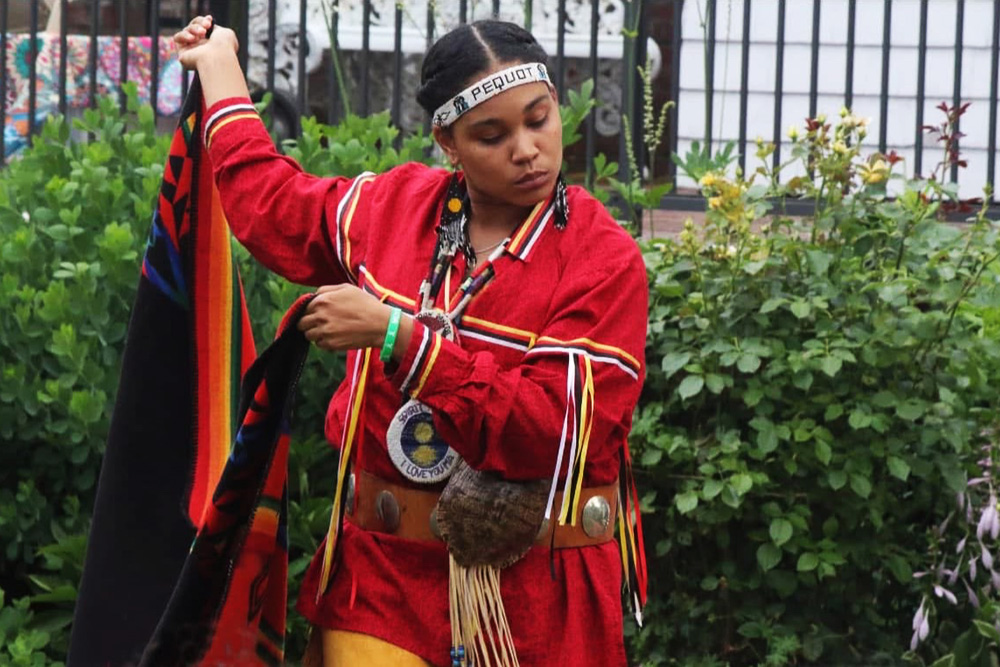
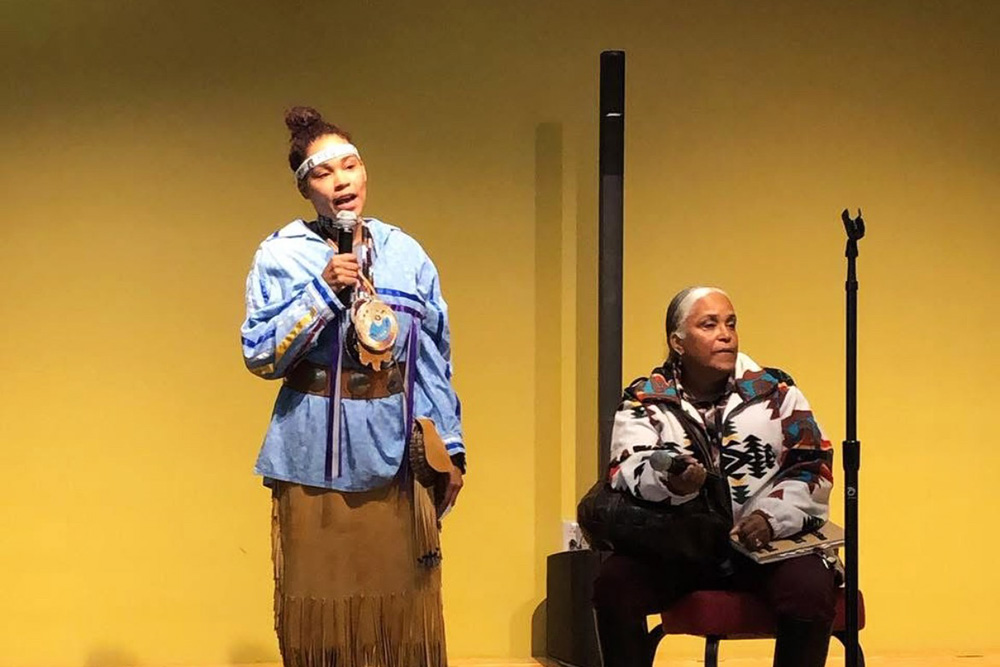
Gambrell and her mother, Valerie Gambrell '77, speak at Eastern in November 2018.
Natasha Gambrell ’15 recalls the date — Oct. 12, 2005 — when United States federal recognition of her nation, the Eastern Pequots, was revoked by the United States Department of the Interior.
“I was 13,” Gambrell said. “Tribes have to go through the federal recognition process. We're one of the only tribes to go through that process, get it, and then get it taken away.”
While she then felt the pain and anger of her entire tribal nation, Gambrell, now an English teacher at the Saint Bernard School in Montville, has dedicated her life to bringing this message to reality: “We remain, we exist.”
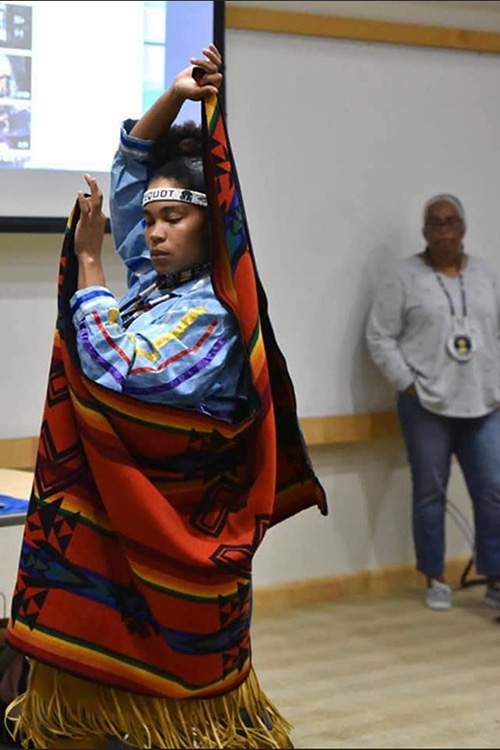 To this end, Gambrell performs traditional Eastern Pequot dances in various educational settings across Connecticut. She also writes and recites poetry; both are key in continuing to tell the story of the Eastern Pequots.
“That’s how we keep those stories alive,” said Gambrell. “There’s survival, there’s strength, there’s growth; there’s pride in who we are.”
In addition, Gambrell has served her nation’s government as a tribal councilor since being elected in 2017. She represents her tribe during its annual powwow, a tribal celebration.
Gambrell was crowned Miss Eastern Pequot in 2008 and participates in archaeology field schools in collaboration with the University of Massachusetts Boston. At these field schools, she digs up and studies tribal artifacts, which she describes as “reclaiming the land.”
Eastern: providing opportunities to stay connected
Gambrell has prioritized remaining connected with her tribe through each subsequent stage of her life. Her decision to attend Eastern, where she earned a bachelor’s degree in English, stemmed from the need to remain connected with her nation.
“I knew I wanted to do something for my people, so I knew I had to stay home,” she said. “That’s the first reason I went to Eastern. It was in our own backyard. I could still communicate with my tribe.”
At Eastern, she made a life-changing connection with English Professor Emerita Meredith James. Of Native heritage herself, James also taught courses on cultural studies and led by example in a way that resonated deeply with Gambrell.
“It was the first time I saw a Native woman doing the things that I wanted to do,” said Gambrell. “If it weren’t for her, I wouldn’t be where I am today.”
Collectivism and giving back
Gambrell does not see herself as a sole entity; rather, she exists in the spirit of her nation. This dedication to her people drives her service and was a key value emphasized by James during difficult stretches balancing academic and tribal responsibilities.
“You're not just doing it for you,” Gambrell recalls James telling her. “‘You're doing it for people who look like us.’ I knew when I left Eastern that I had to continue that mission and inspire other Native individuals.”
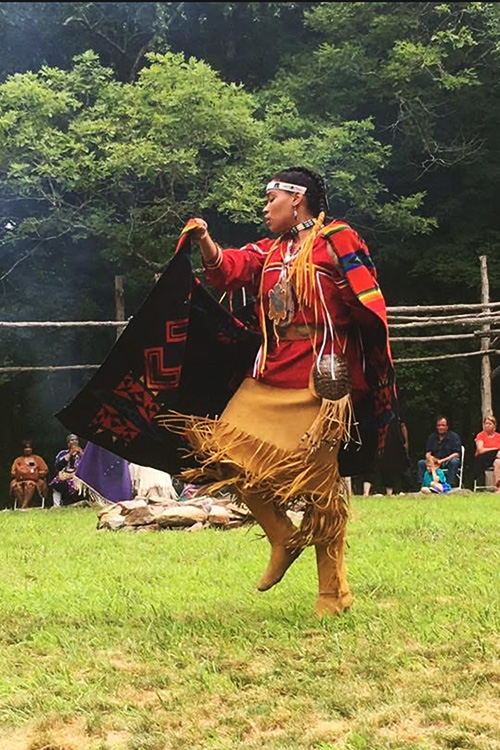 As an educator, Gambrell gives back to her students the same way James gave back to her and encouraged her to do. The Saint Bernard School is on Mohegan land, according to Gambrell, and many of her students share in her heritage.
“I teach kids that I would consider my cousins from sister tribes,” she said. Gambrell has also taken part in a statewide initiative integrating Native cultural studies into high school education.
“We've been working with the state of Connecticut on the curriculum,” she said. “The five recognized tribes in Connecticut have come together to cultivate a curriculum. … I've been able to take pieces of that and incorporate them into my classroom.”
Gambrell has also given back to Eastern. On several occasions, she has performed traditional dances and spoken in favor of Native visibility on campus and beyond.
“My purpose for coming back was because I didn't see visibility when I was there,” she said. “I knew other Native students there probably weren't feeling heard.”
She continued: “What I've experienced in going back is that they have made some changes. I have seen positive things; I've seen more visibility for Native students, so I am grateful.”
Whatever the endeavor, Gambrell is driven by her nation’s altruism. “A big thing for my culture and me is we’re all about giving back,” she said.
Fighting for recognition
Nearly 20 years after the Eastern Pequots lost their federal recognition, the nation is still fighting to get it back. Gambrell encourages anyone reading this article to join the tribe’s efforts.
“Reach out to your local politicians and tell them we’re still fighting,” she said. For more information and to help the Eastern Pequots regain federal recognition, Gambrell can be reached at gambrelln@outlook.com.