
- Apply
- Visit
- Request Info
- Give



Written by Noel Teter '24
Published on August 26, 2025
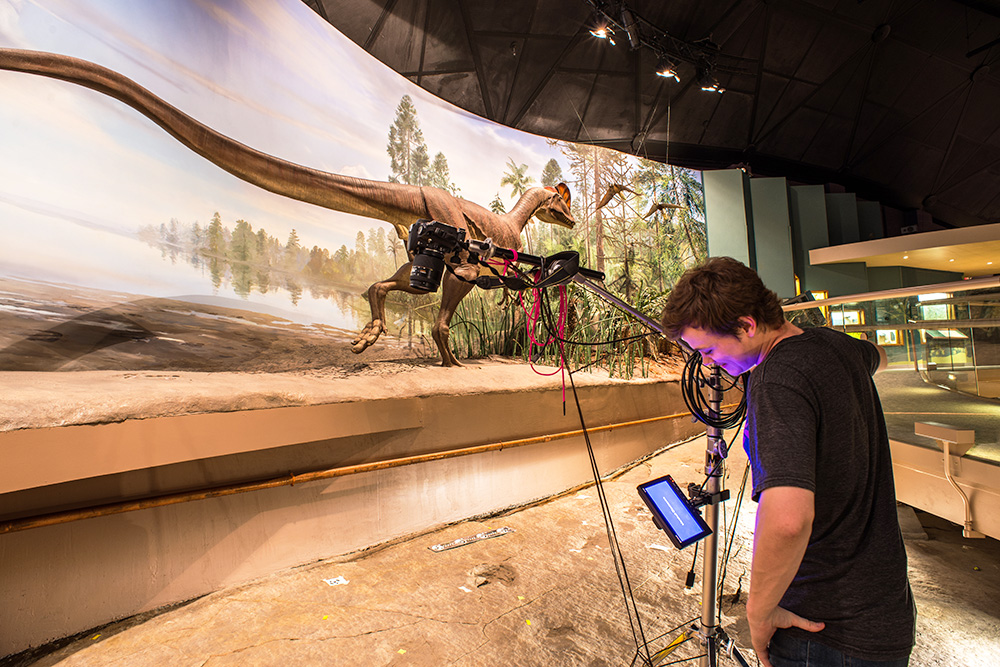
A student conducts research at Dinosaur State Park in Rocky Hill.
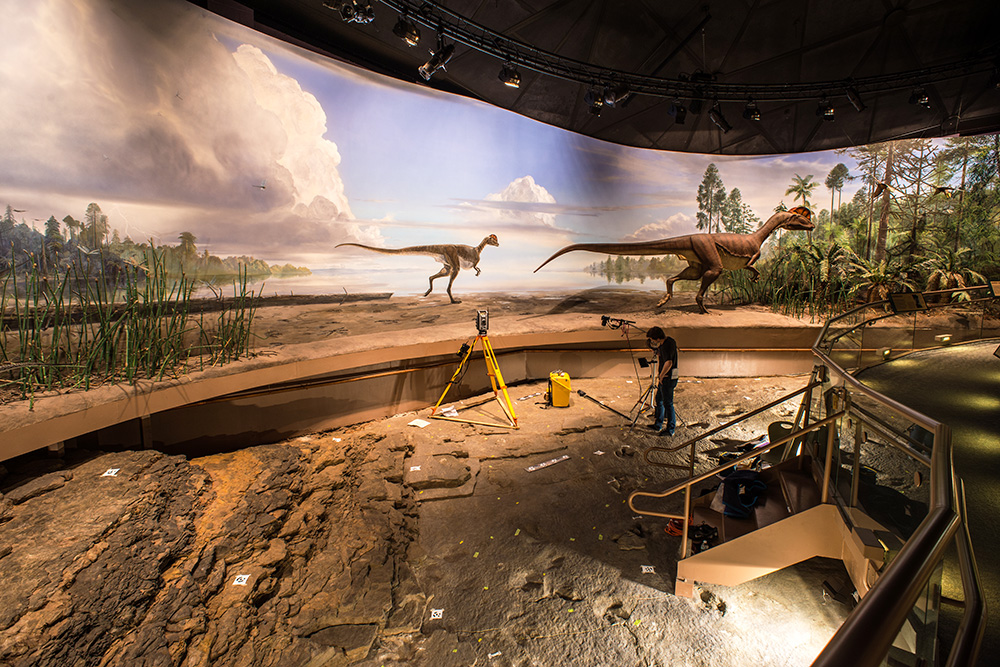
A student conducts research at Dinosaur State Park in Rocky Hill, CT.
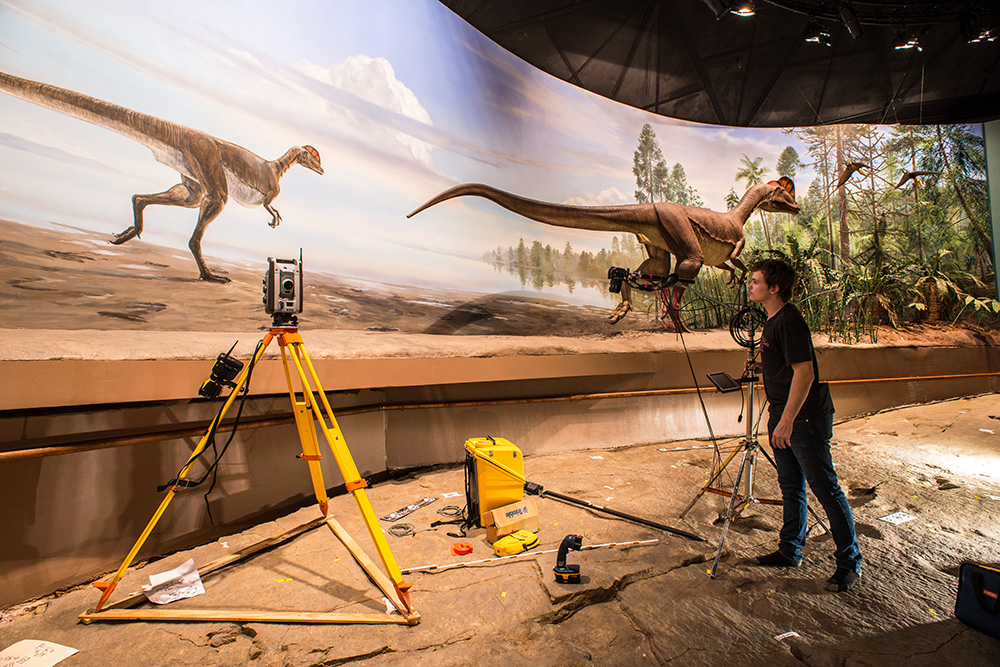
A student conducts research at Dinosaur State Park in Rocky Hill, CT.
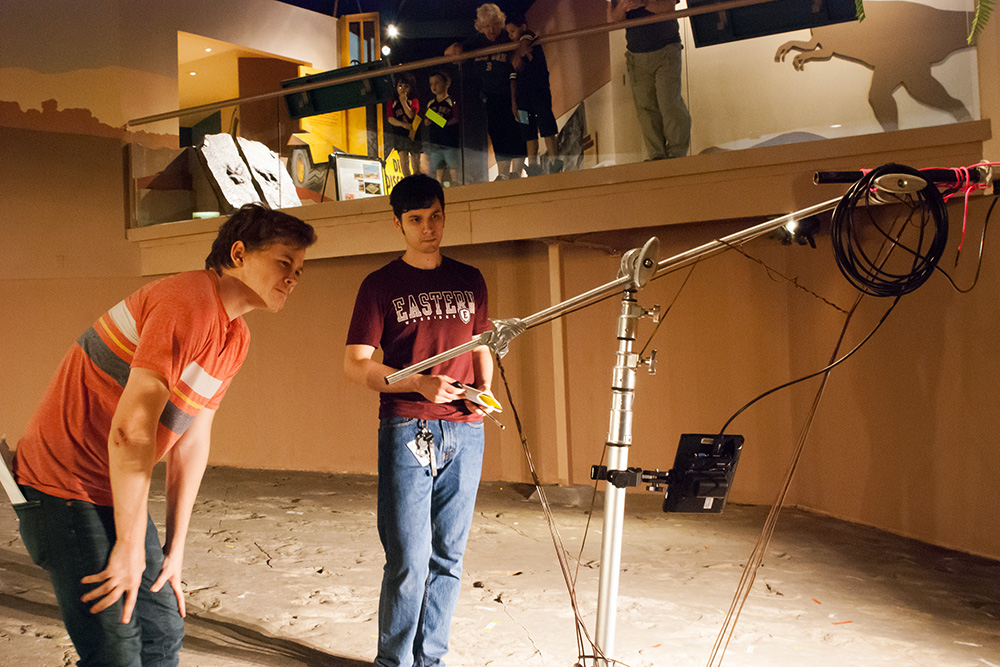
Students conduct research at Dinosaur State Park in Rocky Hill, CT.
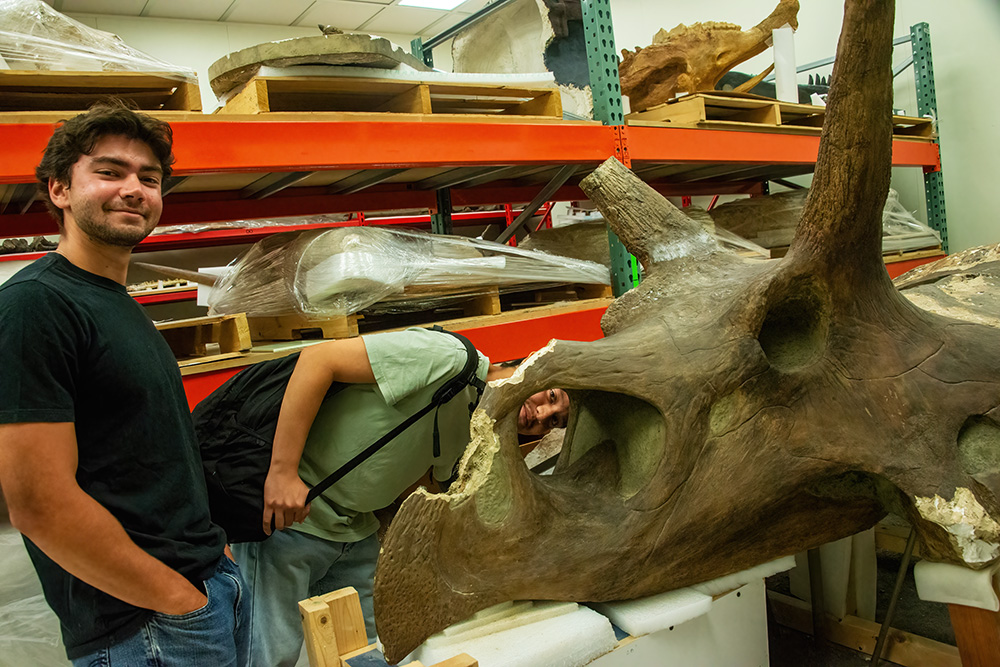
Two students pose with a dinosaur skull.
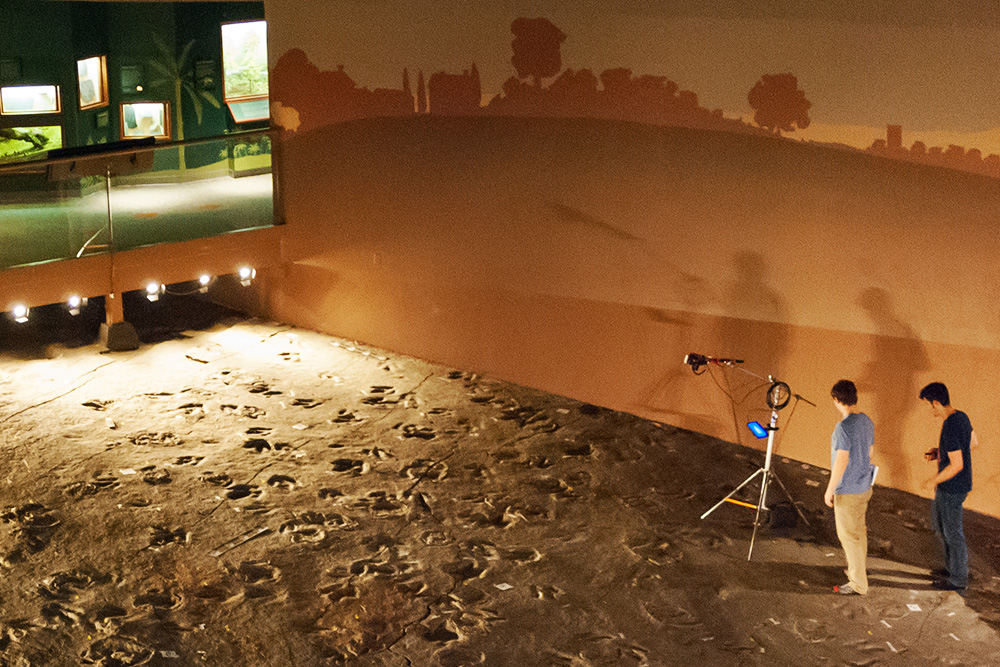
Students conduct research at Dinosaur State Park in Rocky Hill, CT.
Eastern environmental earth science Professors Drew Hyatt and Peter Drzewiecki published several works in volume 66, issue 1, of the “Bulletin of the Yale University Peabody Museum of Natural History” this spring, detailing their decades of work at Dinosaur State Park.
Hyatt co-authored five articles in the issue; Drzewiecki co-authored two. Their work examines the history of the research relationship between the park and the museum, different models for documenting dinosaur footprints at track sites within the park, and the processes of distinguishing between different types of tracks.

Hyatt, whose research primarily involves mapping modern environments, began conducting research at Dinosaur State Park in 2015 when learning how to use his new laser scanner.
“I was looking for a place to learn how to use it, and it’s nice to not get rained on when you’re doing that,” he said of the park’s indoor exhibit.
During his research at the park, he met paleontologist James Farlow, with whom he went on to co-author articles in the journal issue. “I was using photogrammetry to make a detailed map, and he came out to see if anyone (else) was mapping,” said Hyatt. “One thing led to another.”
Hyatt’s research published in the issue centered largely on archival evidence of long-standing professional and academic relationships between the park and Yale Peabody Museum. According to an article abstract, this relationship began 59 years ago in August 1966. Hyatt’s research also involved documenting footprints for track sites and distinguishing between types of dinosaur tracks.
In conducting his research, Hyatt brought several students to the Yale Peabody Museum in summer 2024, an enriching experience for all parties involved. The museum’s paleontology lab had been donated 2,000 pounds of samples from the original discovery of the park, leading to the research that would be synthesized into the volume.
“We were contacted by Yale Peabody; they had this big sample and didn’t know how to make the detailed maps,” said Hyatt, who brought his students and expertise in photogrammetry to the lab.
“The students got to see behind the scenes of the Yale Peabody (paleontology) lab, where they would go in, open drawers, and there were dinosaur fossils,” said Hyatt.
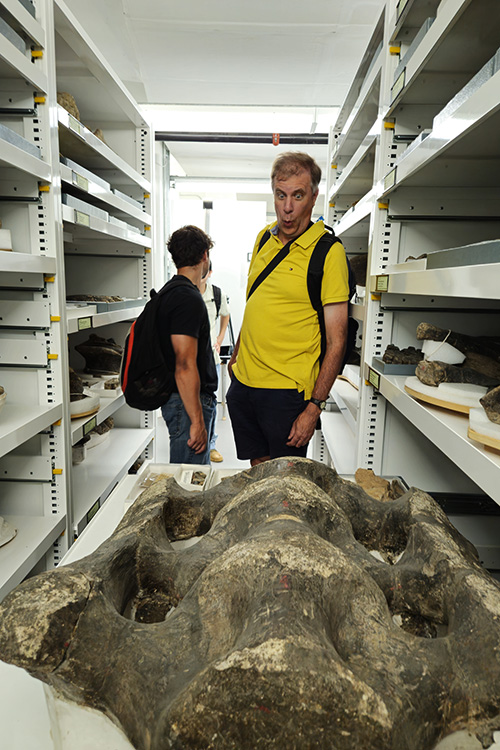
Drzewiecki, meanwhile, specializes in paleoecology, or the study of ancient environments through enduring rock formations, particularly those in which dinosaur tracks are preserved. In doing so, he has traveled with students to study at the park for roughly two decades.
“I've taken students there to look at the rocks that the tracks are in to figure out what the environment was that these dinosaurs were walking in,” he said. “I continue to try to update our understanding of the rocks that were here in Connecticut.”
Culminating in one of his published articles in the issue, Drzewiecki and his students heavily researched a track preservation called the Lower Jurassic East Berlin formation, named after its native East Berlin, CT.
“It's a great place for our students to understand and see the relationship between features preserved in the rock, what the environment was, and then, of course, to (visualize) these dinosaurs walking around,” he said.
Hyatt and Drzewiecki acknowledged Dinosaur State Park’s Eastern roots. The late Henry Roos, professor of biology at the then-Willimantic State College, was the first scientist on site after receiving a call informing him that bulldozer operator Edward McCarthy had discovered dinosaur tracks in Rocky Hill, according to a Sept. 1966 article in the Hartford Courant. Shortly thereafter, the track site was designated as Dinosaur State Park.