
- Apply
- Visit
- Request Info
- Give



Written by Ed Osborn
Published on September 01, 2025
 Since the early 1980s, Eastern Connecticut State University’s Summer Transition to Eastern Program/Contract Admissions Program (STEP/CAP) has been helping students make a smooth and confident start to their college careers. Over the decades, more than 2,000 students have participated, with more than 900 earning bachelor’s degrees from Eastern.
STEP/CAP provides a residential summer “bridge” experience for incoming first-year students from underrepresented backgrounds. Through mentorship, academic support, and access to campus resources, the program fosters confidence and equips students with the tools needed to thrive in college. Upon successfully completing the program, participants matriculate as full-time Eastern students, ready to begin their academic journey with a strong foundation.
A MODEL PROGRAM
“‘You are going to be successful’ was our mantra,” explained Floyd Bagwell, the program’s original director and chief architect. He and Associate Director Margaret Hebert sought high school students with potential and perseverance who might develop into better students with the support that Eastern could provide.
Through collaborating with high school guidance counselors, Bagwell and Hebert interviewed students and shared notes with STEP/CAP faculty and admissions staff. In the beginning, the cohorts were small, but as retention grew and the program’s success became evident, they negotiated for more participants — upwards of 60 each summer.
Describing Hebert as the “good cop” and himself as the “bad cop,” Bagwell recounted that the program was challenging and expectations were high. “The [students] were highly motivated and understood we were a serious program. If someone acted out, I had no problem putting them in my car and taking them home.”
Looking back on the program’s four decades of success, Bagwell said, “I am extremely elated that more than 900 STEP/CAP students have graduated from Eastern. They are a real credit to their families and to the University.”
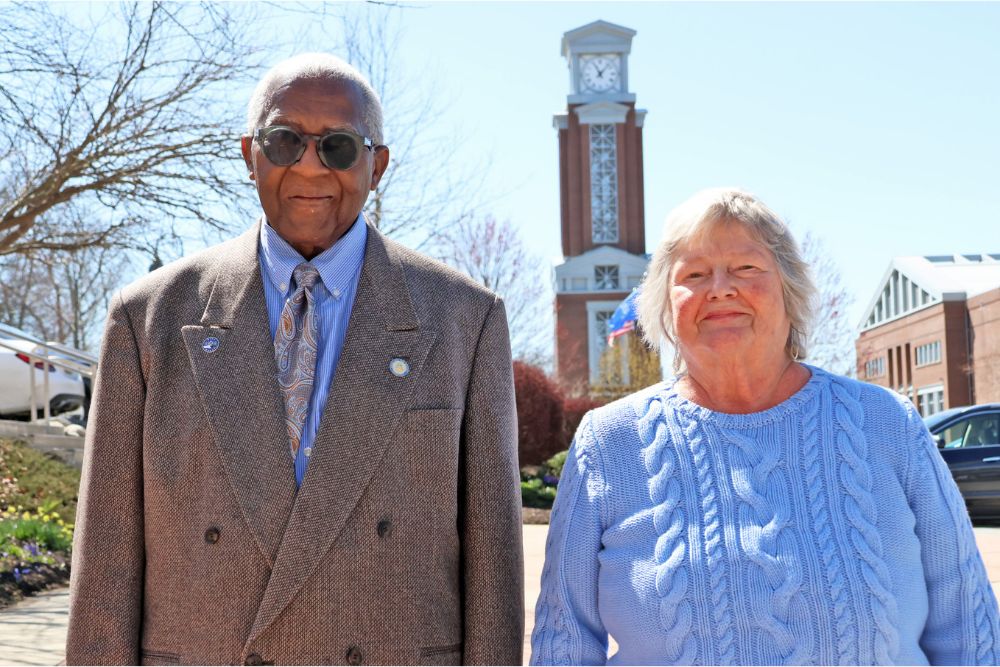
If Bagwell was the architect, Hebert was the foreman, closely supervising the program for nearly 30 years. Central to STEP/CAP’s summer operations, Hebert oversaw each year’s cohort as they joined Eastern’s student body in the fall. In addition to frequent check-ins with Hebert or another staff member, STEP/CAP students watched out for each other, keeping tabs on their friends and sharing notes with the staff.
“It was my heart; I loved my work,” said Hebert, who retired in 2012 after serving Eastern students for 31 years. “I loved my work. I loved the kids. It was a blessing. The students worked hard each summer to prepare for the college experience at Eastern. Motivation is such a key to retention. I saw students from the same backgrounds — some made it, some didn’t. But with encouragement from us and commitment from them, they were able to succeed.”
The program has always been rigorous, with students taking a full day of courses, five days a week, including credit-bearing courses in mathematics and English. The students also participate in workshops on study skills, time management, test taking, financial management, and public speaking. A GPA of 2.5 in the credit-bearing classes is necessary for students to qualify to enroll at Eastern in the fall — more than 90% have historically met that threshold each summer.
I loved my work. I loved the kids. It was a blessing.
Margaret Hebert
Student support during the academic year has also been critical for student retention and graduation. In addition to cohort-specific services — including academic advising, tutoring, and financial assistance — STEP/CAP students have access to the University’s general support services, such as the Academic Success Center, which offers support in career preparation, math, writing, and more.
As a result of this commitment to student persistence, first year to sophomore retention for STEP/CAP has frequently been equal to or higher than the University’s overall average, which often hovers around 85%.
Peer advisors — upper-level students at Eastern — also help STEP/CAP students as they learn to transition to college. Kevin Ruiz ’22, a computer science major from New London, was a peer advisor in 2022. “During the summer, STEP/CAP puts students in a rhythm, from waking up and going to classes, to eating, working out, and doing other activities throughout the day. This makes it easier for them to adjust to the regular semester. When more homework is given to them, they have the ability to adjust to more.”
ALUMNI SUCCESS

Examining the accomplishments of STEP/CAP graduates over the years is perhaps the best way to judge the quality and success of the program. One inspirational STEP/CAP story is that of Thomas Gibson ’96, who successfully transitioned from STEP/CAP to graduating in 1996.
Today, Gibson is the chancellor of the University of Wisconsin-Milwaukee, after previously leading the UW system’s campus at Stevens Point since 2021. A native of New Haven, Gibson received his doctorate from Johnson & Wales University before embarking on a higher education career that has taken him to City University of New York, Ball State University, and Bowling Green University, before his chancellorships at the University of Wisconsin.
STEP/CAP provided the confidence I desperately needed to achieve my educational and personal goals.
Thomas Gibson '96
Gibson recalled his time in STEP/CAP fondly. “The STEP/CAP program was invaluable to me, especially as I struggled with imposter syndrome during my first year of college,” he said. “In high school, I did not receive much encouragement for my college aspirations. STEP/CAP provided the confidence I desperately needed to achieve my educational and personal goals.”
Like so many STEP/CAP students, Gibson credits the support provided by Margaret Hebert. “Dr. Hebert was my advisor and supported me through both challenging times and successes. She never judged me, but carefully guided me toward my goal of earning a college degree. Several years later, Dr. Hebert would serve on my doctoral dissertation committee.”

Some experiences bring a smile to Gibson’s face. “I recall a job interview during my senior year when I didn’t own a blazer or sports coat. Will Hare, an instructor in the program, brought in three of his sports coats for me to try on. The STEP/CAP office in Winthrop Hall suddenly turned into a fashion show, with staff giving thumbs up or down as I modeled the jackets. This moment reminded me of the care provided by the program staff. These experiences inspired me to pursue a career in higher education. I want to help more students succeed, just as the program helped me.”
Another STEP/CAP student who has made achievements on the national stage is Walner Homere ’95. A native of Haiti, Homere did not have the SAT scores needed to be admitted to college. It was Eastern’s “academic military boot camp,” as he describes STEP/CAP, that helped launch his success in college, and resulted in earning his degree in sociology in 1995. “I am who I am to a large degree due to my experiences in STEP/CAP.”
In November 2024, Homere was honored for his work at a recognition event at the White House. After receiving his graduate degree in engineering at Ohio State University, Homere held jobs at Ernst & Young LLP, Deloitte and Touche LLP, and Dell Technologies. He is now an IT forensics specialist for the U.S. Securities and Exchange Commission’s Enforcement Division.
I am who I am to a large degree due to my experiences in STEP/CAP.
Walner Homere '95
He also works to help young people achieve their dreams. “For the past eight years, I’ve been running a mentoring program for underprivileged communities where I teach financial empowerment and career selection,” said Homere. “I motivate them because with a story like mine, I can relate.”
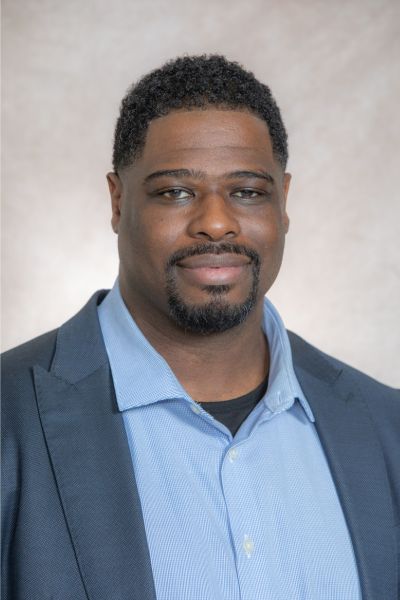
Ashon Avent ’08 teaches as an adjunct in Eastern’s business administration program, in addition to running his own clothing apparel business and studying for his doctorate in business administration at Southern Connecticut State University. “I was a teenage father, carrying responsibilities that most of my peers didn’t have to think about. The thought of leaving Hartford, even temporarily, felt like stepping into the unknown.
“Then came STEP/CAP. The program wasn’t just an introduction to college — it was a lifeline. It forced me to sharpen my study skills, manage my time like never before, and learn the importance of discipline. More than that, it taught me how to interact with peers who came from different backgrounds, to take notes that actually made sense when I read them later, and to navigate campus life before the pressure of the semester kicked in. It was in those weeks that I realized college wasn’t just about showing up — it’s about showing up prepared.”
In addition to these exceptional leaders, STEP/CAP graduates can be found at such employers as Electric Boat, the University of South Florida, Lawrence + Memorial Hospital, Comcast, and Aetna, and in positions ranging from graphic designer and town clerk to tax auditor, cardiology technician, parole officer, CIO, associate professor of sociology, second-grade teacher, chief financial officer, and biomedical scientist.
MENTORS WHO INSPIRE
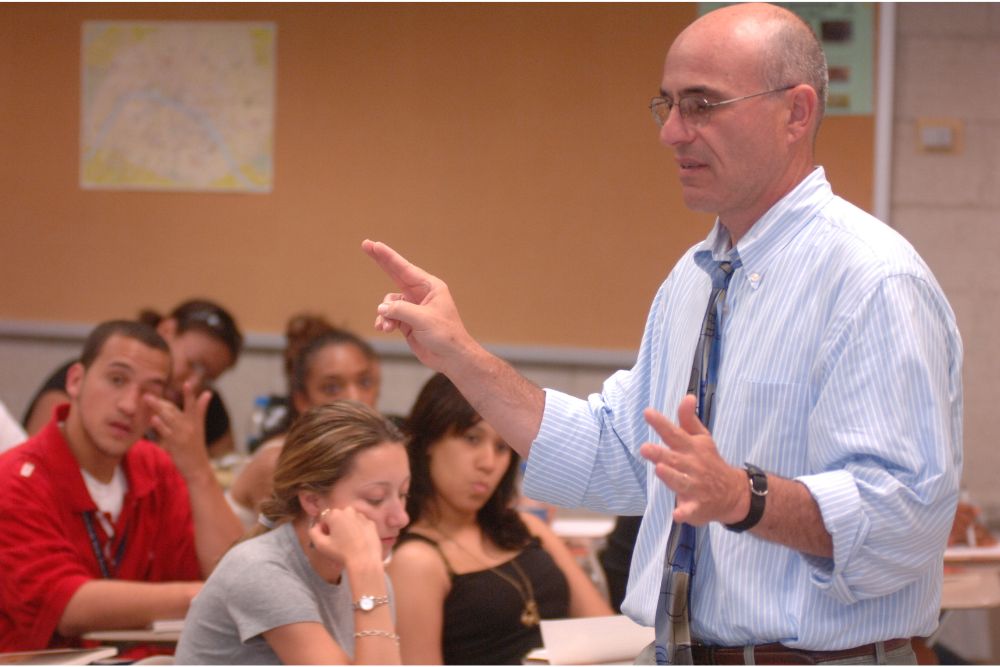
Another person frequently mentioned by STEP/CAP graduates is Rick Hornung, who advised STEP/CAP students from 1998 to 2018 and now continues his work as a student development specialist in the Academic Success Center.
Hornung credits others for the program’s success. “Floyd Bagwell and Margaret Hebert built this program with the support of Stanley Battle (academic affairs) and President David Carter.
“As a result, hundreds of people have graduated from college who may not have had the opportunity to achieve their dream of a college education.”
Hornung described STEP/CAP’s simple but effective formula: “If you give students a place where they can practice math, it will come. Give them opportunities to practice writing and their writing will improve. We gave them a safe place to do it and offered them the understanding that they belonged and were welcomed here. We gave them the guides, the mentors, the navigators who could help assist them to meet their potential.”

Rachel (Sawyer) Walker ’16 warmly recalls Hornung’s support from her summer experience in 2012 when he directed the STEP/CAP program. “Dr. Hornung led from a place of care and support for us students regardless of our identities. He created a safe space for us to learn. A lot of us did not have that level of support in our high school experiences, and I will forever be grateful for him!
“Additionally, the program built a sense of community for the students in STEP/CAP. We all went through a bonded experience, from academic coursework to adjusting to a new environment. It was not easy, but we did that together and supported each other — staying up late at night working on papers and getting to know each other.”
Walker has used her experiences at Eastern to build a career in higher education administration. Following stops at St. Bonaventure University and Ramapo College, she now works at the New Jersey Institute of Technology in its Office of Inclusive Excellence. “STEP/CAP allowed for me to have a smooth transition into collegiate life. At the time, I didn’t realize it was preparing me for my career in higher education. I would’ve never thought about having a career that supports historically excluded students had it not been for my experience at Eastern in the STEP/CAP program.”
While motivated students are fundamental to the success of a summer bridge program such as STEP/CAP, the commitment to those students shown by Eastern faculty is another cornerstone of the program. Teachers tend to come back year after year to make a difference in the lives of the dozens of students they encounter each summer. Theatre Professor Kristen Morgan taught in the program from 2018-23.
“Teaching in STEP/CAP was one of the most rewarding experiences I’ve had at Eastern,” she said. “I loved helping students develop the skills they need to be successful at Eastern, and I really enjoyed seeing how many students flourished here, entering into leadership roles and being inducted into honors societies in their majors.”

Mathematics Professor Kim Ward taught math to STEP/CAP students for 17 years. “I, too, began my academic journey in higher education by successfully completing an alternative path program for college admissions,” Ward said. “My connection with the participants was strengthened by my recollection and sharing of my own academic preparedness and growth mindset prior to the start of college, as well as the work required to succeed.

“As a first-generation college student, I recognize the power that teaching and mentoring has on one’s life and their progeny. I have a strong affinity for working with college preparatory programs and teaching first-year and sophomore courses. So, serving as a math instructor for STEP/CAP was a full-circle event for me.”
As a first-generation college student, I recognize the power that teaching and mentoring has on one’s life and their progeny.
Kim Ward
Now, STEP/CAP is headed by Christina Irizarry, director of Opportunity Programs. “I am incredibly proud of the students who embark on the STEP/CAP journey at Eastern,” she said. “As an alumna of [assistance programs for underrepresented students] myself and a first-generation student who understands the struggle of attending college, I know the commitment it takes to be away from your family and the sacrifices we experience trying to balance academics, working multiple jobs, and being a ‘normal’ college student. It is not easy!
Irizarry continued: “Our STEP/CAP students’ commitment to this program is a testament to their resilience, determination, and willingness to push beyond their comfort zones in pursuit of higher education. Their success is not just their own — it’s a victory for their families, their communities, and the next generation of students who will be inspired by their achievements.”