
- Apply
- Visit
- Request Info
- Give


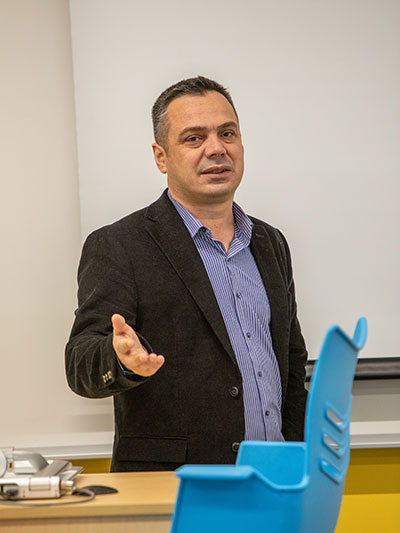
“I’m drawn to Eastern because its liberal arts approach offers the chance to explore society and human experience from multiple perspectives. I’m especially interested in the work of the Sociology, Anthropology, Criminology, and Social Work department and how its interdisciplinary focus can help me better understand people, communities, and the challenges they face.
Eastern’s smaller class sizes are appealing because they can make learning more personal and create opportunities to engage closely with professors and classmates. I’m also excited by the strength of the department’s faculty and the possibility of learning from them beyond the classroom—whether through research, projects, or other collaborations. I see Eastern as a place where I can build a broad foundation, deepen my interests, and take an active role in my education.”
“My favorite classes to teach are Terrorism and Homeland Security and Introduction to Criminology. I’m passionate about understanding human behavior, including the social, psychological, and environmental factors that shape people’s choices. These courses give students the opportunity to explore why crime and political violence occur, how individuals and communities are affected, and how society responds. I especially enjoy helping students approach these complex issues with curiosity, critical thinking, and an open mind.”
“My research focuses on terrorism, radicalization processes and routes, organized crime groups, and policing. I am interested in how individuals and groups become involved in violence and crime, how these pathways develop over time, and how institutions respond.”
“What I find most rewarding about teaching at Eastern is the students’ passion for learning. Their curiosity and enthusiasm make teaching meaningful and inspire me in the classroom. I also value the supportive environment within my department and across the university. That sense of community makes Eastern a rewarding place to teach, collaborate, and grow alongside students and colleagues.”
I encourage [students] to explore different paths, gain experience, and choose a direction that reflects their passions and the kind of contribution they hope to make.

“My teaching philosophy is to help students examine social issues from multiple perspectives and think critically about the forces that shape them. Social life and human behavior are complex, so I encourage students to look beyond simple explanations, ask thoughtful questions, and consider the broader context of people’s experiences. I also hope to foster empathy and openness. By approaching unfamiliar situations with curiosity rather than judgment, students can deepen their understanding of others and engage more thoughtfully with the world around them.”
“Some of my most memorable moments at Eastern come from the everyday interactions I have with students both inside and outside the classroom. I especially value the “lightbulb” moments during class discussions, when students connect complex theoretical concepts about human behavior, crime, or society to real-world events and their own lives.
Equally rewarding are the conversations during office hours, where students stop by not just to discuss coursework, but to share their intellectual interests, ask questions about future careers, or debate challenging social issues from fresh perspectives. Seeing them grow in confidence, engage with genuine curiosity, and develop a more nuanced understanding of the world is what makes my time with Eastern students so deeply fulfilling and memorable.”
“My advice is to pursue work you genuinely care about. Criminal justice and criminology offer a wide range of career opportunities, so students can find many ways to apply their interests and strengths. I encourage them to explore different paths, gain experience, and choose a direction that reflects their passions and the kind of contribution they hope to make.”
“My advice is to stay curious and remember that learning doesn’t end with college. Every interaction and experience can teach you something if you approach it with an open mind. Be eager to learn, ask questions, and reflect on what you encounter. That willingness to keep growing can help you navigate new challenges and opportunities throughout your life and career.”