
- Apply
- Visit
- Request Info
- Give


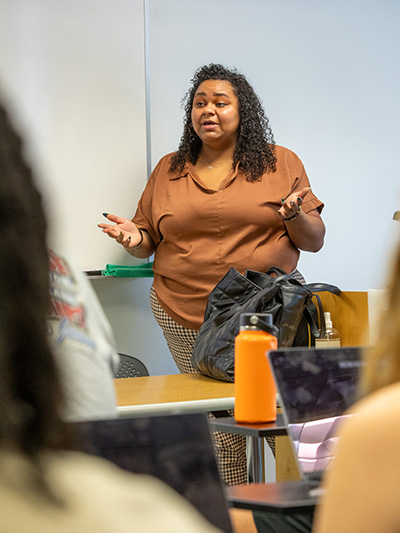 “As a Connecticut native, I was drawn to Eastern because it allows me to stay rooted in the community I care deeply about while contributing to the mission of a public liberal arts education. I believe strongly in the power of the liberal arts to cultivate critical thinking, creativity, and engaged citizenship, and Eastern embodies those values. I have especially appreciated the strength of the Sociology Department here — its commitment to rigorous scholarship, student mentorship, and fostering inclusive spaces for dialogue and discovery. Joining Eastern has been an opportunity for me to both give back locally and be part of an academic community that aligns with my values as an educator and scholar.”
“This semester I am teaching Urban Youth: Policing, Poverty, and Power and Introduction to Sociology. Whether my students are first-year students just beginning their college journey or more advanced in their plan of study, my goal is for them to leave my classes with a deeper passion and commitment to social justice. I want them to develop a critical lens through which they can better understand the world around them and feel empowered to imagine and work toward change.”
“My research sits at the intersection of social inequality, urban studies, intersectionality, and trauma. I am particularly interested in reframing traditional approaches to crime by centering the experiences of vulnerable populations — especially urban youth — who often face structural violence and inequality through systems of criminalization, policing, and mass incarceration. In terms of my creative endeavors, I am also an artist and enjoy painting and slam poetry.”
“My first impressions of the campus community have been that it is warm, welcoming, and inviting. I’ve seen firsthand how students, faculty, and staff collaborate with one another, and it’s clear that Eastern is a place where collective support and success are valued. I am excited to be part of a community that prioritizes both academic excellence and care for one another.”
You don’t have to have all the answers right away, but you do need the courage to keep asking meaningful questions.
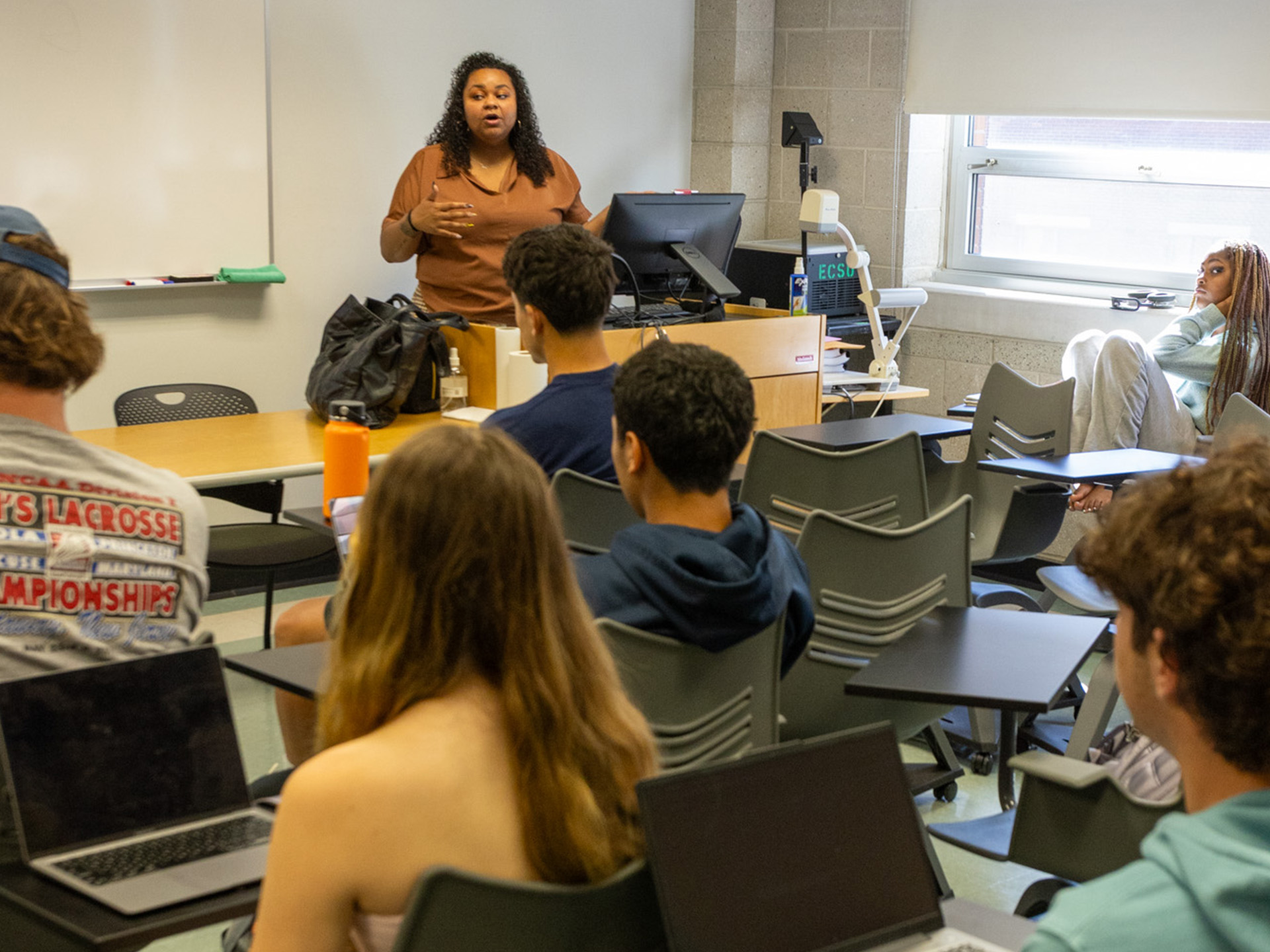
“My teaching philosophy is rooted in cultivating a classroom of caring where students feel safe to bring their full selves into the learning process. As a first-generation student of color, I know the barriers that can lead to detachment from education, and I work intentionally to create an inclusive space that fosters engagement, belonging, and growth.
I approach teaching from a feminist and intersectional perspective, striving not only to teach about inequality but to put these principles into practice. I encourage students to activate their sociological imagination, connecting their personal experiences to larger social structures, so that learning extends beyond the classroom and into their everyday lives.
My courses are learner-centered, emphasizing accessibility, creativity, and multiple modes of engagement. Whether through open dialogue, music, or collaborative projects, I seek to meet students where they are while challenging them to think critically about the world around them.
Ultimately, my goal is for students to leave my classes with a deeper passion for social justice, the tools to analyze structural inequality, and the confidence to apply their learning toward meaningful change.”
“My biggest advice for students interested in sociology is to stay curious and open-minded! Sociology is not just about studying society — it’s about questioning assumptions, examining power, and seeing connections between personal experiences and larger social structures. I encourage students to seek out opportunities for research, internships, and community engagement that connect classroom learning to real-world issues. Building strong writing, critical thinking, and communication skills will serve you well in any career path. Most importantly, let your passion for justice and equity guide you — you don’t have to have all the answers right away, but you do need the courage to keep asking meaningful questions.”
“I often tell students that life after college can feel a little like what Marx described — you’ll quickly see how much of the world is organized around work, capital, and survival. But here’s the twist: while Marx teaches us to critique the system, he also reminds us that people create change together. My advice is to carry that sociological lens with you — don’t just accept things as “the way they are.” We’re often told to chase work–life balance, but I like to invert that and call it life-work balance — because your life should always come first, and work should fit into it, not the other way around. Find work and communities that align with your values, and remember that meaning doesn’t come only from a paycheck but also from solidarity, relationships, and the causes you care about.”