- Apply
- Visit
- Request Info
- Give


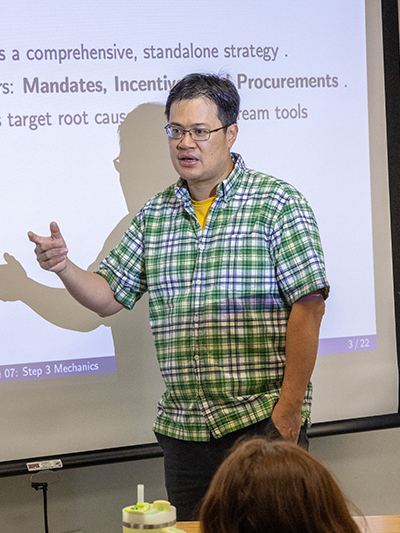
“My path to Eastern Connecticut State University grew out of my interest in both teaching and research. Throughout my academic career, I have been interested in understanding how people develop political attitudes and behaviors and how we can use quantitative methods to answer important questions about politics. At the same time, I have always enjoyed working closely with students and helping them develop the skills to think critically about political and policy issues.
What attracted me to Eastern was the opportunity to bring those two interests together in a close-knit academic environment. I was especially drawn to Eastern’s commitment to undergraduate education and the opportunity to work with students in relatively small classes, where I can get to know students and engage with them more directly.
I was also excited about being in Connecticut and becoming part of a university and community in New England. Eastern offers a wonderful combination of a strong undergraduate focus, an active academic community and an excellent location. Being in Connecticut provides students with access to the many cultural, educational and professional opportunities throughout New England, while also putting major cities such as Boston and New York City within easy reach.”
“My research focuses on political behavior, political psychology, public opinion, public policy and quantitative methods. I am particularly interested in understanding how people develop and change their political attitudes and behaviors over time and how these processes shape politics, public policy and democratic outcomes.
A major part of my work examines how psychological factors influence political attitudes and behavior, including how people form political beliefs, respond to political information and develop different orientations toward politics. I also study public policy questions and how policymakers make decisions in response to social and political problems. Across these areas, I use quantitative and statistical methods to analyze survey and other political data and to better understand the relationships between citizens, political institutions and public policy.
I enjoy research because it allows me to combine important questions about politics, psychology and public policy with the challenge of finding creative ways to answer them using data. I also bring my research interests into the classroom. I want students to see that political science is not just about learning what happened in the past — it is also about asking questions, evaluating evidence, analyzing data and understanding how political institutions and public policies affect people's lives.”
I want students to see that political science is not just about learning what happened in the past — it is also about asking questions, evaluating evidence, analyzing data and understanding how political institutions and public policies affect people's lives.
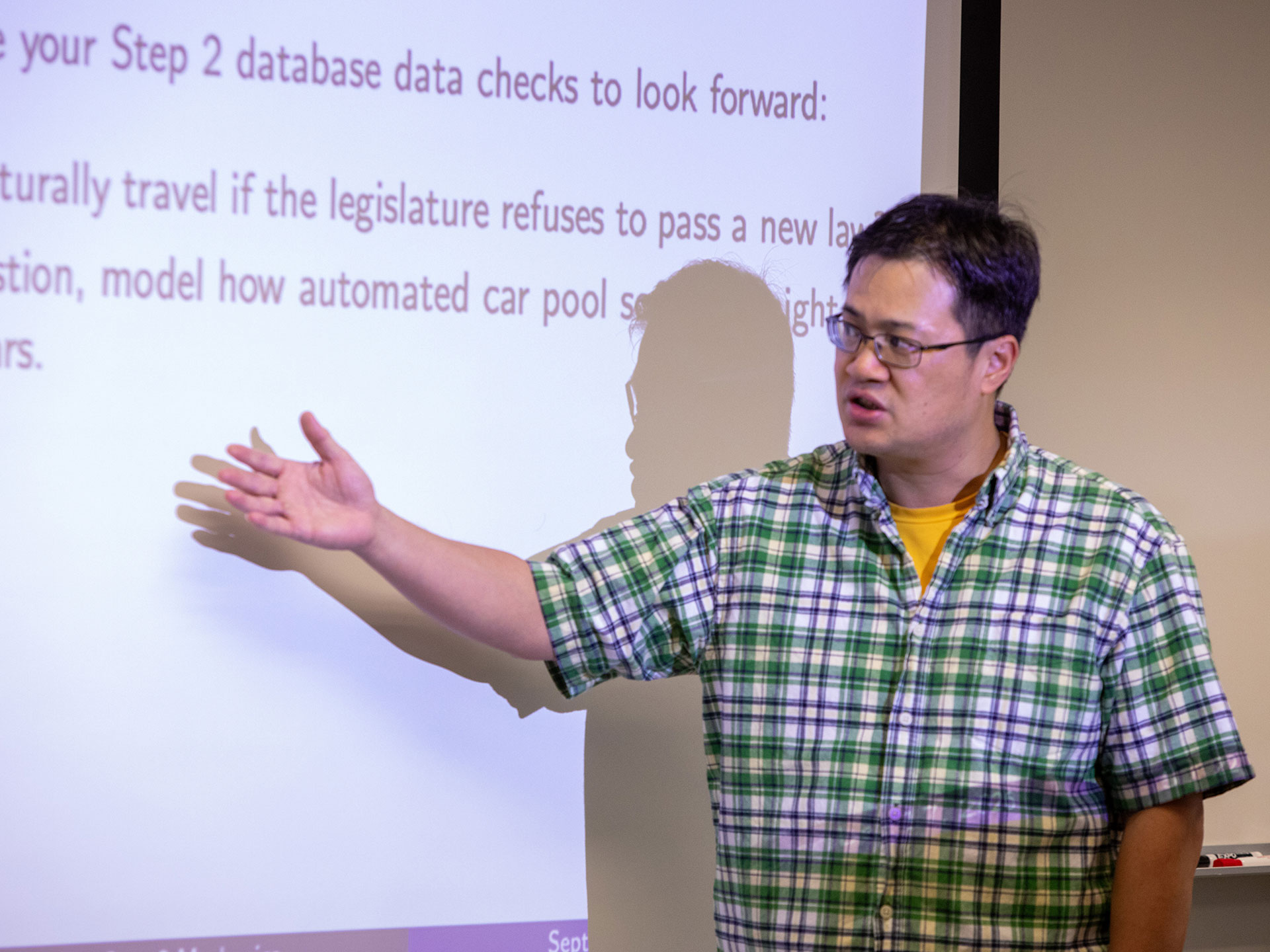
“Faculty and staff have been welcoming and generous with advice as I’ve settled in, and Eastern's students bring genuine curiosity and range to the classroom. The campus’s close-knit scale makes real, personal interaction between faculty and students possible.
Eastern's culture is friendly, collaborative and student-centered — a strong sense of community paired with real room to pursue your own academic interests. As someone who values both teaching and research, I appreciate being somewhere I can work closely with students while continuing to grow as a scholar. I’m looking forward to becoming part of that culture myself.”
“My teaching philosophy is centered on helping students become curious, critical and independent thinkers. I believe students learn best when they are encouraged not only to understand political concepts but also to ask questions, evaluate evidence and develop their own arguments.
I try to create a classroom environment where students feel comfortable participating, asking questions and expressing different perspectives. In political science, there is rarely only one way to look at an issue, so I want students to learn how to engage with ideas they may disagree with while supporting their own conclusions with evidence and thoughtful reasoning.”
“For students interested in political science, my biggest piece of advice is to develop skills that you can carry into many different careers. Political science can lead to careers in government, public policy, nonprofit organizations, research, education, law, communications and many other fields. Take advantage of opportunities to develop skills in writing, public speaking, research, data analysis and critical thinking.”
“My advice to students is to focus on building a life and career that are meaningful to them rather than trying to follow someone else’s definition of success. Be willing to explore, learn new skills and take opportunities that may lead you in unexpected directions.”