


Skip to Main Site Navigation Skip to Content Skip to Footer
Back To Top

Academic Innovation Project Grants

Seed funding for bold ideas that strengthen academic excellence and student success at Eastern.

Eastern Innovation Launchpad: Launching the future of academic excellence

professor leaning over desk to help students with classwork

Academic Excellence

Build on Eastern’s position as a leader in public liberal arts education
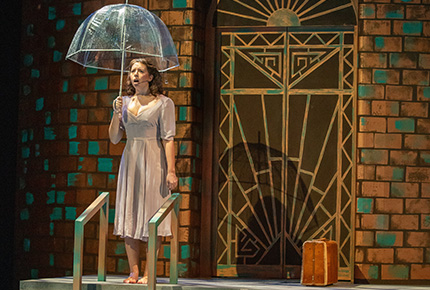
student actor on stage holding an umbrella in front of a backdrop of a building

Exceptional Student Experiences

Support high-impact learning, engagement, and mentorship
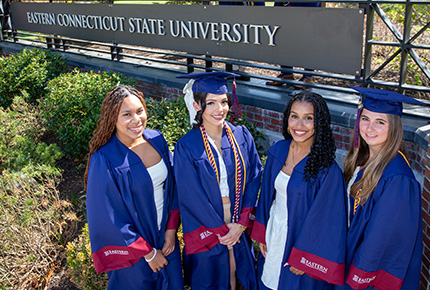
students in cap and gown in front of the Eastern Connecticut State University entrance sign

Progression, Completion & Career Prep

Improve retention, completion, and career-connected pathways

What Counts as Innovation?

Projects may involve pilot programs informed by research and best practice, curricular redesign, or expansion of existing academic approaches—particularly where the work can demonstrate student impact, scalability, and sustainability. Examples include (but are not limited to):

  • New models of teaching and learning
  • Applied or career-connected learning experiences
  • Course or program redesigns to improve progression or completion
  • Research, creative, or experiential learning initiatives
  • Advising, mentoring, or student engagement structures linked to academic success
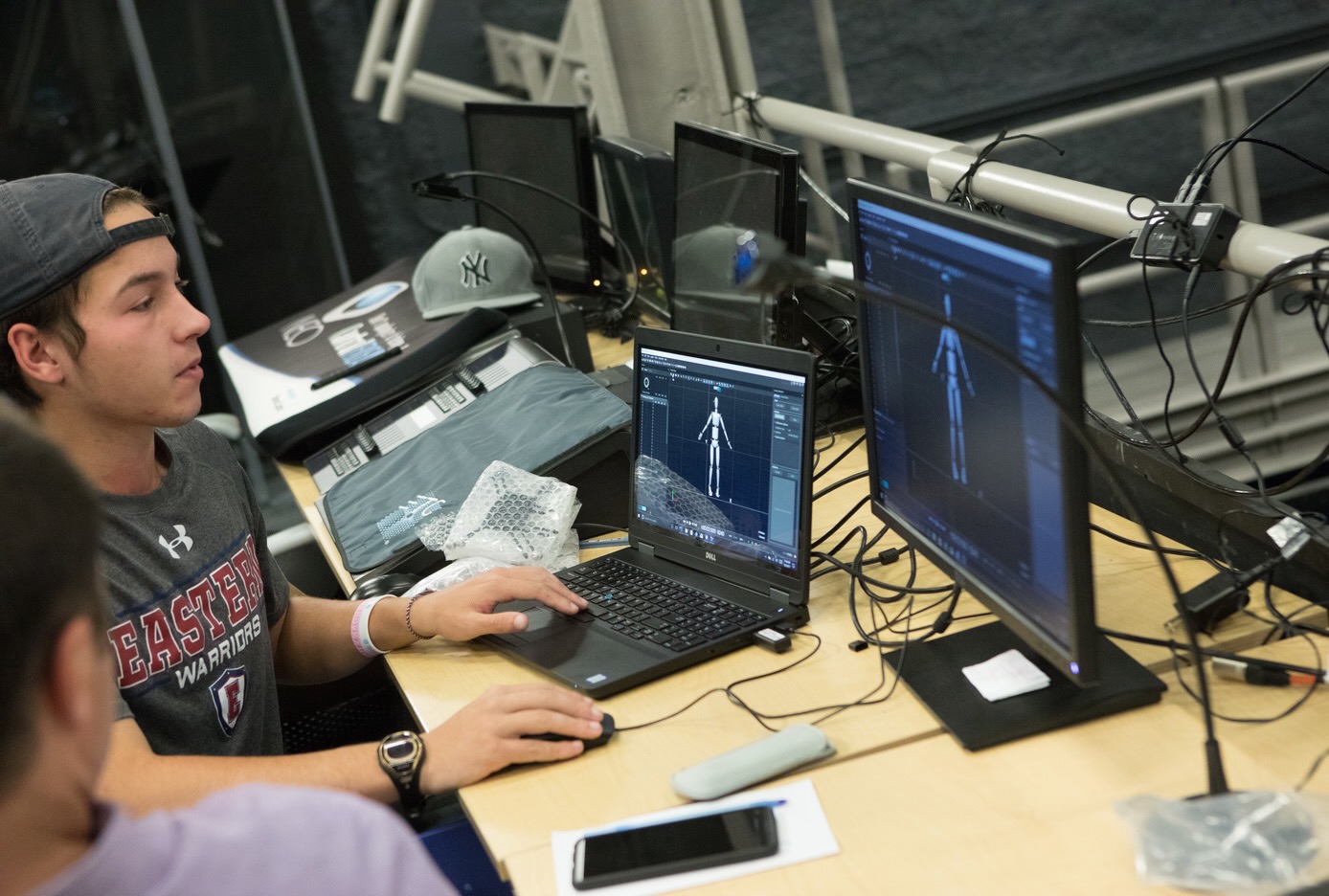
two students using a computer with motion capture software on the screen
  • Up to $12,500 per project
  • One-time/seed money
  • Supports operating expenses + faculty time
  • No new permanent lines


Proposals due February 20, 2026

About the Grants

Overview

Academic Innovation Project (AIP) Grants provide seed money/one-time funding for projects that will enable Eastern to invest/re-invest in the academic program.  Projects should enable the institution to: 

  • Build upon its position as a leader in public liberal arts education with a commitment to academic excellence
  • Provide exceptional student experiences
  • Support student progression, completion, and career preparation.

Grants may support operating expenses and faculty time.  New faculty and staff lines will continue to be supported through the faculty/staff line request process.

Curriculum actions supported by Academic Innovation Project Grants will be reviewed and implemented through the relevant governance processes.

Strategic Alignment

The work of the AIP Grants will support and be supported by the University’s Mission and Goals, and applicants are encouraged to align projects with Eastern’s emerging areas of strategic focus, which include:

  • Sharpening our academic identity to make it increasingly clear and compelling
  • Elevating student success and improving the overall student experience
  • Invigorating our relationships with the town and region to advance bolder and more imaginative initiatives together
  • Nurturing a university culture that continually seeks new opportunities and strives to operate at the leading edge of innovation
  • Bolstering our capabilities for attracting students from traditional and emerging populations
  • Vigorously projecting and protecting the values of the University, especially during periods of upheaval and challenge

Eligibility

  • Lead/co-lead must be full-time tenure-track/tenured instructional faculty.
  • Cross-department teams encouraged.

Projects may involve pilot programs informed by research and best practice, curricular redesign, or expansion of existing academic approaches—particularly where the work can demonstrate student impact, scalability, and sustainability. Examples include (but are not limited to):

  • New models of teaching and learning
  • Applied or career-connected learning experiences
  • Course or program redesigns to improve progression or completion
  • Research, creative, or experiential learning initiatives
  • Advising, mentoring, or student engagement structures linked to academic success

Allowable vs Unallowable Costs

Allowable expenses include:
  • Faculty time (reassigned time/FLC or summer stipend)
  • Student wages
  • Supplies, materials, and small equipment (under $5,000 per item)
  • Professional services or consultants
  • Travel directly related to the project
Unallowable expenses include:
  • New permanent faculty or staff lines
  • Recurring operational costs that cannot be sustained after the grant period
  • Major equipment purchases ($5,000+)

Frequently Asked Questions (FAQs)

  • The grants provide seed funding for innovative projects that enable Eastern to invest or re-invest in the academic program in ways that enhance academic excellence, student experience, progression, and career preparation.

  • Projects must be led or co-led by a full-time tenure-track or tenured member of the Instructional Faculty.

    Cross-divisional project teams are encouraged.

  • Project proposals may request up to $12,500.

  • Yes. Faculty may submit multiple proposals and/or participate on multiple project teams.

  • Allowable: Faculty time (reassigned time/FLC or stipend), student wages, supplies/materials, small equipment (<$5,000/item), consultants, and travel directly related to the project.

    Not allowable: New permanent personnel lines, major equipment ($5,000+), or ongoing costs that cannot be sustained after the grant period.

  • Multi-year projects may be considered, dependent on available funds and satisfactory progress and assessment outcomes after the first year.

  • Innovation may include pilot programs informed by research and best practice, redesigns, enhancements, or expansions of existing academic practices—particularly where the work demonstrates student impact and has the potential for sustainability or broader adoption.

  • Proposals will be evaluated on:

    • Potential for student impact
    • Alignment with institutional mission and academic priorities
    • Evidence of demand or demonstrated need
    • Feasibility of implementation
    • Potential for sustainability or continued impact
  • February 20, 2026

  • Submit the completed proposal and budget form to Kate Linderson (lindersonk@easternct.edu)

  • A review team including faculty, Academic Deans, and the Grants Officer will review proposals and make recommendations to the Provost.

    • Mid-project check-in and budget update (December 2026)
    • Final written report (May 2027)
    • Public presentation of project outcomes
    • Faculty time may be requested either as reassigned time/FLC during the academic year or as supplemental pay (summer or winter session).
    • Because reassigned time affects course scheduling and departmental staffing, faculty must consult with their Department Chair and Dean during proposal development to confirm feasibility and coverage.
    • Supplemental pay (aka stipends) will follow standard faculty compensation policies and payroll procedures.
  • Yes. Administrative Faculty are welcome to participate on project teams. However, only full-time tenure-track or tenured members of the Instructional Faculty may serve as project lead or co-lead. Administrative Faculty participation should be discussed with the relevant supervisor to ensure workload alignment.

  • AIP Grants are intended for pilot projects or targeted redesigns, rather than large-scale program launches. Proposed work should be feasible within one year and within the $12,500 budget limit.

    Examples of right-sized projects:

    • Redesigning a gateway course to improve progression or student success
    • Developing and piloting a new applied learning or undergraduate research experience
    • Creating a new mentoring, advising, or engagement structure within a major
    • Building curriculum modules that connect classroom learning with career preparation
    • Examples of projects not well suited for this grant:
    • Initiatives requiring new permanent staff or faculty lines
    • Large capital purchases or facility renovations
    • Multi-phase initiatives without a clear Year 1 deliverable and evaluation plan
  • Proposals may describe multi-year visions, but only Year 1 funding is awarded initially. Continuation will depend on, demonstrated progress and outcomes during the first year, and availability of funds for future years.