

The path to becoming a CPA is evolving. If you are considering graduate education as part of your accounting career plan, you may have questions about the traditional 150-credit-hour requirement, emerging alternative pathways, and whether earning a master’s degree still provides value in today’s changing environment.
Explore Eastern Connecticut State University’s online M.S. in Accounting to learn how graduate education can help you develop advanced accounting expertise while preparing for future opportunities in the profession. The program is designed to help students build deeper knowledge in areas such as financial reporting, taxation, auditing, and accounting systems while supporting pathways toward meeting CPA education requirements.
As states continue reviewing CPA licensure requirements, one thing remains consistent: accounting professionals need strong technical knowledge, practical experience, and a commitment to continued professional development.
What Is the 150-Hour CPA Requirement?
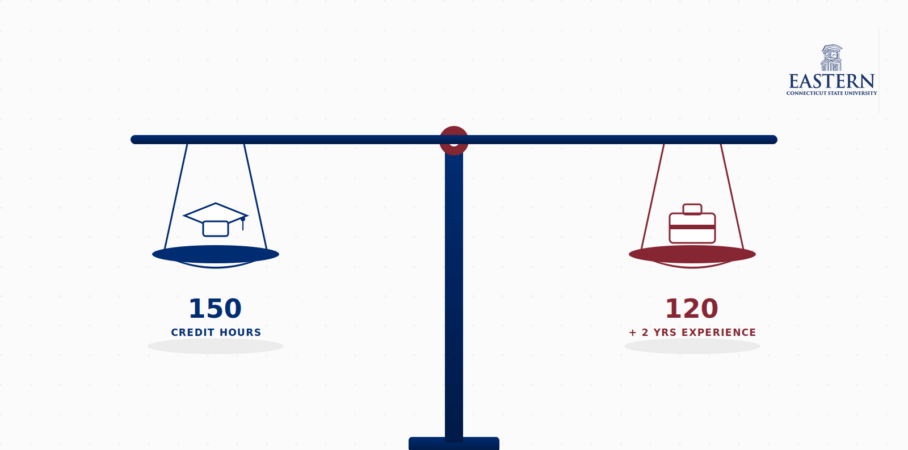
For decades, the traditional pathway to CPA licensure has included completing 150 semester hours of college education before earning a CPA license. Because most bachelor’s degree programs require approximately 120 credit hours, many candidates complete the additional 30 credit hours through graduate coursework, including a master’s degree in accounting.
The purpose of the 150-hour requirement has been to provide aspiring CPAs with additional preparation in areas such as:
- Advanced accounting principles
- Auditing and assurance
- Taxation
- Financial reporting
- Business and professional skills
Many candidates use graduate education to complete additional academic requirements while gaining specialized accounting knowledge that can support long-term career growth.
Why Are CPA Licensure Requirements Changing?
The accounting profession continues to face challenges related to workforce demand, changing career expectations, and the need to attract new professionals. In response, national accounting organizations have explored ways to provide additional flexibility while maintaining the standards expected of licensed CPAs.
The American Institute of Certified Public Accountants (AICPA) and National Association of State Boards of Accountancy (NASBA) have supported updates to the CPA licensure model that introduce additional pathways combining education, examination, and professional experience.
The goal of these changes is not simply to remove education requirements. Instead, reforms are focused on creating additional ways for candidates to demonstrate the knowledge and experience needed to succeed as accounting professionals.
M.S. in Accounting Online
Elevate your expertise with Eastern’s online M.S. in Accounting: a gateway to mastering advanced accounting principles and enhancing your career prospects. Explore the program to shape your future in the accounting profession.
What Are the New CPA Licensure Pathways?
CPA licensure requirements are established by individual state boards of accountancy, meaning changes occur state by state rather than through one national requirement.
Under the updated model pathway discussions from AICPA and NASBA, candidates may have multiple options, including:
- A traditional 150-hour education pathway
- A graduate degree pathway
- An alternative pathway that combines a bachelor’s degree, additional professional experience, and successful completion of the CPA Exam
NASBA outlines these evolving pathways and related mobility considerations in its CPA licensure updates.
Because requirements vary by jurisdiction, candidates should confirm current requirements with their state board of accountancy before choosing an education pathway. A directory of state boards is available through NASBA: NASBA State Boards of Accountancy Directory
120 vs. 150: Comparing the Two Approaches
| Traditional 150-Hour Pathway | Alternative Experience-Based Pathway | |
| Education | Bachelor’s degree plus additional coursework, often completed through graduate education | Bachelor’s degree with additional professional experience requirements |
| Primary focus | Advanced academic preparation before licensure | Expanded professional experience before licensure |
| Timeline | May allow candidates to complete education requirements before gaining required experience | May shift additional preparation from coursework into professional experience |
| Benefits | Provides advanced technical knowledge and specialized skills | May provide another route for candidates who prefer an experience-focused approach |
| Considerations | Requires investment in additional education | Requirements vary based on state adoption and implementation |
There is no universal “best” pathway. The right option depends on an individual’s career goals, financial considerations, preferred learning approach, and state requirements.
Does the Alternative Pathway Make a Master’s Degree Less Valuable?
Not necessarily. A master’s degree in accounting can provide benefits beyond meeting education requirements.
-
Develop Advanced Accounting Expertise
Graduate-level accounting coursework allows students to deepen their understanding of areas such as:
- Financial reporting
- Auditing
- Taxation
- Accounting information systems
- International accounting
- Business decision-making
This advanced knowledge can help professionals prepare for roles with increasing responsibility.
-
Build Skills for Career Advancement Potential
Accounting professionals often move into positions requiring analytical thinking, leadership, and strategic decision-making. Graduate education can help strengthen these skills while providing additional exposure to complex accounting topics.
-
Expand Career Opportunities
A master’s degree can support opportunities across multiple areas, including:
- Public accounting
- Corporate accounting
- Internal auditing
- Financial analysis
- Compliance
- Management roles
The value of graduate education extends beyond licensure preparation by helping professionals develop skills applicable throughout their careers.
How Is Eastern Connecticut State University’s Online M.S. in Accounting Designed for Today’s Accounting Landscape?
Eastern Connecticut State University’s online M.S. in Accounting is designed for students seeking advanced accounting education in a flexible online format.
The program offers:
An Accelerated Online Format
Eastern’s online M.S. in Accounting can be completed in as little as 12 months for eligible full-time students, allowing professionals to progress through graduate coursework efficiently while balancing other commitments.
Support for Students from Different Academic Backgrounds
The program provides an opportunity for students with different educational backgrounds to pursue advanced accounting knowledge, including those transitioning into the accounting field.
Coursework Focused on Modern Accounting Skills
Students develop knowledge in areas such as:
- Assurance services
- Advanced taxation
- International accounting
- Financial reporting
- Accounting systems
These areas reflect the technical expertise employers continue to value in accounting professionals.
Faculty With Professional and Academic Experience
Students learn from faculty who bring accounting knowledge and professional insight into the classroom, helping connect academic concepts with real-world applications.
Frequently Asked Questions
Is the 150-hour CPA requirement going away? Not universally. CPA requirements are determined by individual state boards of accountancy. Some states are adopting additional pathways, while others continue to follow traditional requirements. Candidates should verify current requirements with their state board.
What is the alternative CPA pathway? Some states are adopting pathways that combine a bachelor’s degree, professional experience, and CPA Exam completion as an alternative to the traditional 150-hour education pathway. Requirements vary by state.
Do I need a master’s degree to become a CPA? A master’s degree is not required in every situation, but many candidates pursue graduate education to complete additional coursework requirements while building advanced accounting expertise.
Is a master’s degree still valuable if my state adopts another pathway? Yes. Graduate education can provide advanced technical knowledge, professional development, and preparation for broader accounting and finance opportunities.
How do I know which CPA pathway applies to me? CPA requirements vary by state. Candidates should review current information from their state board of accountancy. NASBA State Boards of Accountancy Directory
Choose the CPA Preparation Path That Aligns with Your Goals
The accounting profession is changing, but the need for knowledgeable accounting professionals remains strong. Whether you pursue the traditional 150-hour pathway or another option available in your state, education and experience both play important roles in career development.
Eastern Connecticut State University’s online M.S. in Accounting provides an opportunity to build advanced accounting knowledge, strengthen professional skills, and prepare for future opportunities in accounting.
Learn more about Eastern Connecticut State University’s online M.S. in Accounting and explore how graduate education can support your accounting career goals.
CPA Licensure Disclaimer: CPA licensure requirements vary by state. Students should verify current requirements with their state board of accountancy before beginning an education pathway.