

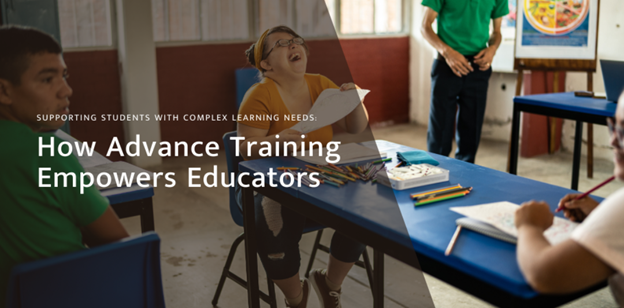
Supporting Students with Complex Learning Needs: How Advanced Training Empowers Educators
Supporting Students with Complex Learning Needs: How Advanced Training Empowers Educators
Today’s classrooms include students with a wide range of learning profiles, strengths, and challenges. Some students require additional support for emotional or behavioral needs, developmental disabilities, or communication differences that affect how they engage with instruction and peers. As schools continue to prioritize inclusive learning environments, educators are increasingly expected to respond with strategies that are informed, flexible, and student-centered.
A master’s in special education helps educators build the advanced knowledge and practical skills needed to support students with complex learning needs. Through graduate-level preparation, educators gain tools to better understand individual differences while creating learning environments that promote equity, engagement, and growth.
Understanding Complex Learning Needs in Today’s Schools
Complex learning needs often involve overlapping academic, behavioral, and developmental factors. Educators may work with students who experience:
- Emotional or behavioral challenges that affect attention, regulation, or social interaction
- Developmental disabilities that influence cognitive, adaptive, or social skills
- Communication differences that impact expressive or receptive language
- Multiple needs requiring coordinated instructional and behavioral supports
Because no two students present the same way, effective support depends on an educator’s ability to assess individual needs and adapt instruction accordingly. Advanced training strengthens this ability by grounding practice in research-based frameworks and inclusive principles.
Addressing Emotional and Behavioral Needs Through Informed Practice
Students with emotional or behavioral needs often benefit from predictable routines, consistent expectations, and supportive relationships. Without these supports, challenges can interfere with learning and classroom participation.
Through a master’s in special education, educators explore strategies such as:
- Functional behavior assessment–informed planning
- Trauma-informed instructional approaches
- Classroom structures that promote engagement and regulation
Graduate-level training encourages educators to view behavior as communication. This shift helps move classrooms away from punitive responses and toward proactive, supportive practices that foster student success.
Supporting Students With Developmental Disabilities
Students with developmental disabilities may require instruction that emphasizes individualized pacing, repetition, and functional skill development alongside academic learning. Educators must balance curriculum expectations with strategies that promote independence and meaningful participation.
Advanced preparation helps educators:
- Design differentiated instruction aligned with individual strengths
- Implement adaptive strategies and appropriate accommodations
- Collaborate with multidisciplinary teams to ensure consistency
- Support skill development across academic, social, and functional domains
By deepening their understanding of developmental processes, educators are better prepared to create learning experiences that support long-term growth and inclusion.
Online M.S. in Special Education
Embark on a transformative journey with an online M.S. in Special Education. Hone expertise, empower students, and open doors to impactful careers. Start your academic journey today.
Navigating Communication Differences in Inclusive Classrooms
Communication differences can significantly affect how students interact with instruction, peers, and educators. These differences may involve speech, language processing, or social communication challenges.
A master’s in special education prepares educators to:
- Collaborate effectively with speech-language professionals
- Use visual supports and alternative communication strategies
- Create classrooms that support diverse communication styles
- Encourage inclusive peer interaction and participation
These approaches improve accessibility and clarity for students with identified needs while benefiting the broader classroom community.
Advocacy, Inclusion, and Professional Growth
Educators supporting students with complex learning needs often serve as advocates—working with families, specialists, and school teams to ensure students receive appropriate services. Strong advocacy skills help educators navigate ethical considerations and collaborative decision-making.
Eastern Connecticut State University explores these themes in its article on advocacy and inclusion in special education, which highlights how inclusive practices contribute to equitable learning environments.
For educators considering advanced study, ECSU also outlines common motivations and professional goals in Top 4 Reasons Educators Pursue an Online Special Education Master’s Program—providing helpful context on how graduate education aligns with career growth and classroom impact.
Why Advanced Training Matters
While classroom experience is invaluable, advanced training offers deeper insight into research-based strategies and inclusive frameworks. A master’s in special education connects theory to practice, helping educators respond more effectively to evolving student needs.
According to the U.S. Bureau of Labor Statistics, special education remains a critical area within education, underscoring the importance of well-prepared professionals who can support diverse learners across settings.
Advancing Your Expertise With Eastern Connecticut State University
Eastern Connecticut State University’s Master of Science in Special Education is designed to help educators strengthen their expertise while supporting students with complex learning needs. The program emphasizes inclusive practice, applied learning, and professional growth.
Educators interested in expanding their impact can explore the Master of Science in Special Education online program to learn more about ECSU’s flexible, rigorous approach to graduate education.
Empowering Educators to Support Every Learner
Supporting students with complex learning needs requires knowledge, empathy, and intentional practice. Through advanced training, educators gain the tools to address emotional, behavioral, developmental, and communication differences with confidence.
A master’s in special education empowers educators to create inclusive learning environments where every student has the opportunity to thrive.